TL;DR:
- A solid camp setup workflow prioritizes pitching your tent and organizing sleep over other tasks to prevent chaos. Keeping zones separate, planning food storage while still light, and establishing a quick night reset ensure safety and efficiency during the trip. Preparing everything at home and following a deliberate sequence transforms camping into a calm, enjoyable experience.
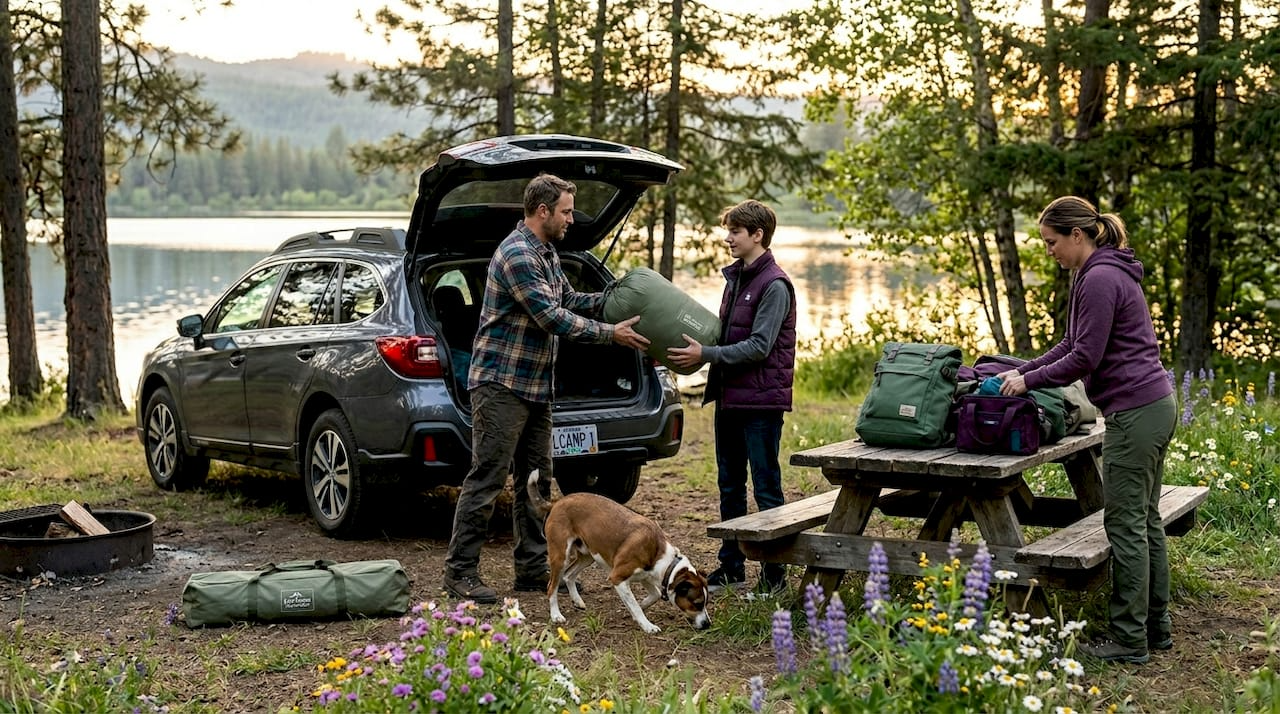
Most campers have been there: you pull into the site with 90 minutes of daylight left, bags everywhere, no system, and everyone's hungry before the tent is even up. A solid camp setup workflow changes that completely. Instead of reacting to each problem as it appears, you work through a sequence that gets shelter up first, zones organized second, and food ready before dark. This article walks you through that exact process, step by step, so every trip starts calmer and ends better.
Key takeaways
| Point | Details |
|---|---|
| Shelter and sleep go first | Pitching your tent and setting up your sleep system before anything else prevents bedtime chaos. |
| Zone separation improves safety | Keeping kitchen, sleep, and fire areas separated reduces wildlife risk and smoke intrusion. |
| Food storage needs daylight | Deciding where and how to store food while it's still light prevents rushed, error-prone decisions. |
| A night reset takes five minutes | Securing food, gear, and a consistent headlamp spot before you relax pays off every single night. |
| Repeatability is the goal | A repeatable camp setup cuts decision fatigue and gets camp ready faster each trip. |
Your camp setup workflow starts before you arrive
The biggest mistake campers make is treating setup as something that begins when they park the car. In reality, your camp setup workflow starts at home. The gear you pack, how you pack it, and what you know about the site before you get there all determine how smooth those first two hours will be.
Site research and gear selection
Before leaving home, check the campground for fire restrictions, bear box availability, and terrain type. Flat, elevated ground with good drainage is your target for tent placement. Wind direction matters too. Knowing which way it typically blows at your site helps you plan your kitchen placement later. For campground stays, check in at the office before you begin setup, grab a site map, and use every remaining minute of daylight.
Pack your gear so that the items you need first come out first. Tent and stakes at the top. Sleeping pad and bag right behind them. Kitchen gear buried deeper because it comes out later. This sounds obvious, but most people pack in reverse order and spend 20 minutes digging around on arrival.
Here is a quick reference for what to have ready before setup begins:
| Gear Category | Key Items | Priority |
|---|---|---|
| Shelter | Tent, rainfly, stakes, guy lines | 1st out of the bag |
| Sleep system | Pad, sleeping bag, pillow | 2nd out of the bag |
| Kitchen | Stove, fuel, cookware, food | 3rd, after shelter is done |
| Safety and lighting | Headlamp, first aid kit, bear canister | Staged near tent |
| Campsite comfort | Chairs, table, lantern | Set up last |
Pro Tip: Before every trip, check your packing list for campers against the specific conditions of your destination. A beach site and a mountain site need different gear priorities.
Review Leave No Trace guidelines before any trip. Knowing the rules around waste, fire, and impact before you arrive means you are not reading signs while trying to set up camp.
Step-by-step tent pitching and sleep system setup
This is where most campers lose time. They wander the site, debate the best tent spot for 15 minutes, then cook dinner before the sleeping gear is unpacked. By the time dark arrives, they are fumbling with sleeping bags by headlamp. Sequencing shelter and sleep first prevents that entirely.
Here is the sequence that works:
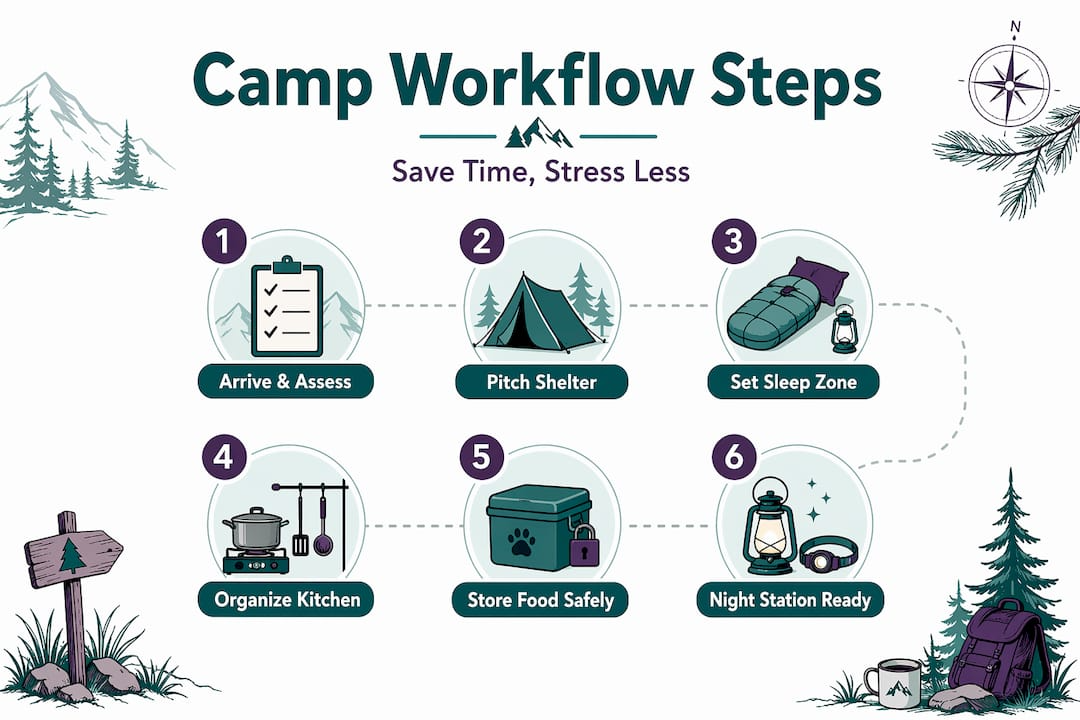
Park and scan within the first five minutes. Walk the site before unloading. Look for sloped ground, rocks under the soil, standing water, low-hanging branches, and anthills. Identify your tent zone before anything comes out of the car.
Choose your tent location deliberately. Flat ground is the goal, but slightly elevated is better than a depression that collects rain. Point the tent door away from prevailing wind if possible. Avoid placing the tent under dead branches.
Pitch the tent storm-ready from the start. Do not skip steps because the sky looks clear. Stake at 45 degrees away from the tent body, tension every guy line, and attach the rainfly before you do anything else. A tent that goes up properly once does not need to be fixed at midnight in the rain.
Set up your sleep system immediately after. Unroll the sleeping pad, shake out the bag, and place your "night station" items inside the tent. Night station means: headlamp on the left, shoes at the door, keys and phone in one pocket. Same spot. Every night.
Do a quick tent check before moving on. Pull each stake, tighten each guy line, and confirm the rainfly is not pooling water anywhere. Two minutes here prevents an hour of misery later.
Pro Tip: If you are camping in a new location, spend 60 seconds just sitting inside the pitched tent. You will immediately notice if the ground is uneven or if there is a rock you missed, before your sleeping pad is committed to that spot.
Campsite zone organization: kitchen, fire, and storage
Once shelter is secure, the campsite needs structure. Random gear piled near the tent is how food gets into your sleeping area and how you trip over a chair at 2 a.m. Separating your site into functional zones reduces mistakes and keeps wildlife away.
The three-zone model works like this:
- Sleep zone: The tent and surrounding area. Nothing edible lives here. Not a granola bar in a jacket pocket, not lip balm with a scent. Keep this zone clean.
- Kitchen zone: Set up downwind from the tent. Placing kitchen downwind keeps smoke and food odors from drifting into your shelter. This zone holds your stove, cookware, cooler, and water supply.
- Fire zone: Separate from the kitchen where possible, in a designated fire ring if the campground provides one. Clear a path between the fire zone and sleep zone so nobody trips over gear getting back to the tent at night.
Food storage done right
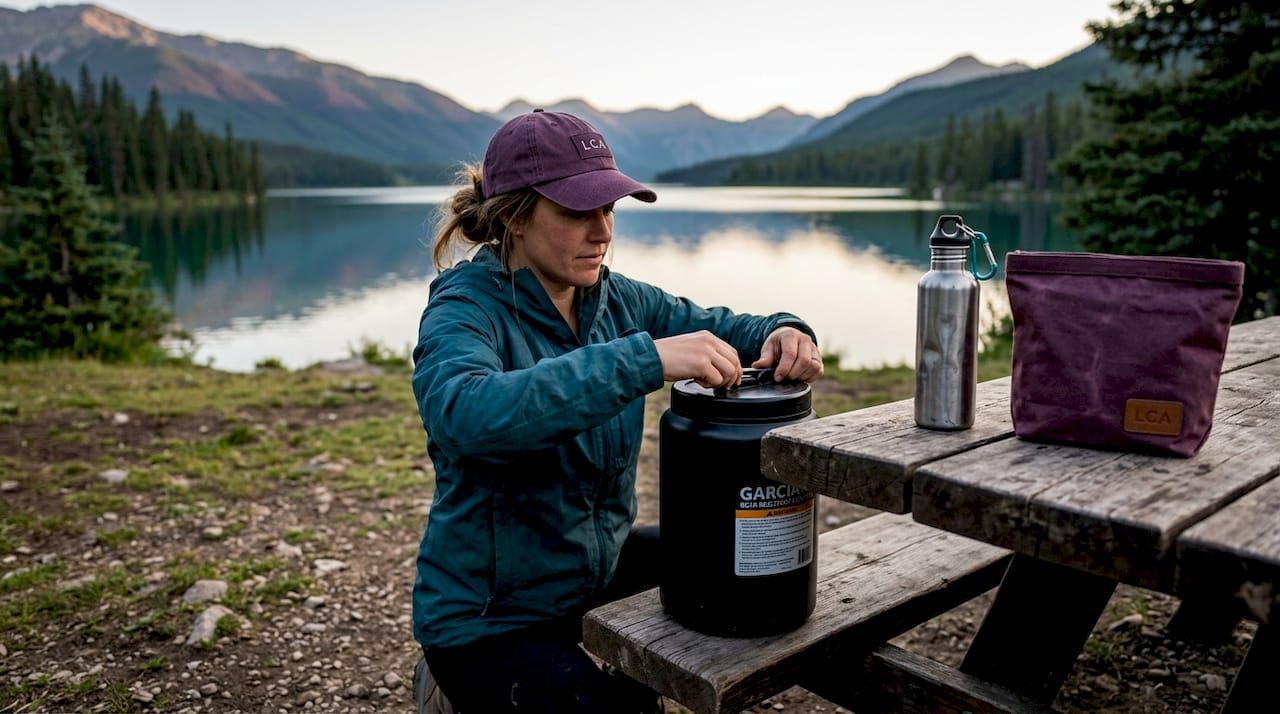
Food should be stored at least 100 feet from your sleeping area, using a bear canister, bear box, or locked vehicle. Perishables need to stay below 40°F. In bear country especially, pre-decide your food storage location while it is still light and you are still calm. Making that call mid-cooking when it is getting dark is how mistakes happen.
Pro Tip: Create a physical walking path between your zones by clearing sticks and gear off the ground. A clear path at dusk becomes a safety feature at midnight.
Here is a quick comparison of common food storage methods:
| Storage Method | Best For | Limitations |
|---|---|---|
| Bear canister | Backcountry, bear country | Bulky, limited space |
| Bear box (campground) | Car camping, established sites | Only at some campgrounds |
| Vehicle trunk | Most car camping situations | Heat can spoil food in summer |
| Hang bag (PCT method) | Backcountry, no canister required | Requires practice and proper tree |
Review camp safety procedures before any trip that puts you near wildlife. Knowing the rules ahead of time is the difference between a minor inconvenience and a dangerous encounter.
Finalizing setup: cooking early and the night reset
The last part of any effective camping routine is the one most people skip. They get camp set up, feel relieved, and then sit down. The night reset happens at bedtime when they realize the food is still out, the headlamp is missing, and the camp chair is blocking the tent door.
Cook early. Before the sun goes down. Rushing a hot meal in the dark is where burns happen, where pots tip, and where frustration spikes. Aim to have dinner done and dishes cleaned while you can still see without artificial light.
After eating, run through this five-minute night reset before you sit down to relax:
- Store all food, trash, and scented items in your bear canister or vehicle
- Place headlamp, shoes, and keys in your night station spot inside the tent
- Confirm the tent zipper is closed and the rainfly is properly tensioned
- Clear any tripping hazards between the kitchen zone and the tent door
- Do a quick fire check: fully extinguished, no embers
A five-minute night reset before bed secures food, organizes critical gear, and means your morning starts without the scramble of finding what you need.
"A repeatable camp setup workflow cuts decision fatigue and gets camp ready faster on every trip."
When things go sideways
Arriving after dark, unexpected rain, and gear that does not cooperate are real scenarios. When you arrive late, skip the chair and table. Tent, sleep system, food storage. That is the entire list until morning. When weather moves in fast, do not adjust the rainfly mid-storm. Stake it properly from the beginning and it holds. For late arrivals at established campgrounds, check in first even if it is quick so you have the site map and know the rules before you are in the dark.
My take on building a camp routine that actually holds
I have set up camp in the rain, in the dark, solo, with a group that could not agree on anything, and somewhere in the middle of all of it, I figured out what actually matters. The sequence is not optional.
Every time I have watched someone start with the kitchen, I have seen the same ending. They are rushing to find a sleeping bag at 10 p.m. while the fire dies. Starting with shelter and sleep is not just efficiency. It is the difference between feeling settled and feeling behind for the entire trip.
The night station was the single biggest improvement I made to my own routine. Headlamp on the left side of the tent door, shoes at the threshold, keys in the outer pocket of my bag. Every night. I stopped searching for things in the dark completely. It sounds small. It is not small at 3 a.m. when you need the bathroom.
The other thing I would tell any camper: do not underestimate zone separation. I used to set up camp instinctively, putting things wherever felt convenient. The first time I had a raccoon in my gear at 2 a.m., I understood why the kitchen needs to be downwind and why food storage is not a flexible rule.
A good beginner's guide to stress-free camping gives you the framework. But the real learning happens when you repeat the workflow enough times that it becomes automatic. That is when camping stops being a project and starts being the thing you actually came here for.
— Billy
Gear that makes your camp workflow faster
The right gear does half the work for you. At Lifecampadventure, we have tested the tents, cookware, and storage solutions that actually hold up when the workflow matters most. If you spend 20 minutes wrestling with a tent that should go up in five, or digging through a pack that was never organized for fast access, the gear is part of the problem. Our camping tent comparison covers the options that set up fast and stay stable in weather. For the kitchen zone, our cookware reviews for 2026 cover the tools that get dinner done before dark. And if you are still dialing in your gear list overall, the best camping gear for 2025 guide gives you a starting point built around real use.
FAQ
What is the correct order for setting up camp?
Pitch your tent and set up your sleep system first, then organize kitchen and storage zones, and cook dinner before dark. This sequence prevents bedtime chaos and keeps food odors away from your sleeping area.
How far should the kitchen be from the tent?
Keep your kitchen zone at least 100 feet from your sleeping area to reduce wildlife risk. Positioning it downwind from your tent also keeps smoke and food smells out of your shelter.
What should go in a camp night station?
A night station holds the items you need in the dark: headlamp, shoes, and keys placed in the same spot inside the tent every night. Consistent night station placement prevents fumbling and improves safety after dark.
How do you set up camp efficiently when arriving late?
Skip chairs, tables, and extras. Focus only on tent, sleep system, and food storage until morning. If you are at an established campground, check in first to get your site map before the office closes.
How do you store food safely at camp?
Use a bear canister, bear box, or locked vehicle and keep food at least 100 feet from your tent. Never store food inside the tent, and keep perishables below 40°F to prevent spoilage and reduce wildlife attraction.
