TL;DR:
- Wilderness first aid involves providing emergency care in remote environments where help is more than an hour away. It emphasizes extended patient management, improvisation, and evacuation decisions crucial for outdoor safety. Training levels, kit essentials, and preparation are vital components for effective wilderness medical response.
Wilderness first aid is the practice of providing emergency medical care in remote environments where definitive care is delayed by at least one hour. That one-hour threshold is the standard benchmark used by the Wilderness Medical Society and organizations like NOLS. It separates a sprained ankle on a city sidewalk from the same injury three miles into a backcountry trail. Knowing what wilderness first aid is, and how it differs from standard first aid, can determine whether someone walks out of the woods or gets carried out. This guide covers training levels, core skills, kit essentials, and how to prepare before your next trip.
What is wilderness first aid vs. urban first aid?
Wilderness first aid is not a faster version of standard first aid. It is a fundamentally different discipline built around one reality: help is not coming soon. In an urban setting, you stabilize a patient and wait for EMS. In the backcountry, you may be the only medical resource for hours or even days.
The defining criterion is the 1-hour delay threshold. If professional medical help is more than 60 minutes away, you are operating under wilderness medicine protocols. That changes everything from how you assess a patient to how you manage pain, monitor vital signs, and decide whether to move someone.
Several factors make emergency care in wilderness settings uniquely demanding:
- Environment: Cold, heat, rain, altitude, and wildlife all affect both the patient's condition and your ability to treat them.
- Limited supplies: You work with what you carried in. Improvisation is not optional; it is expected.
- Extended monitoring: Managing injuries over extended periods with limited resources requires continuous patient reassessment, not a one-time check.
- Evacuation decisions: You must decide whether to move a patient, how fast, and by what route. That judgment call has no urban equivalent.
Pro Tip: Before any backcountry trip, identify the nearest trailhead, road access point, and cell signal zone on your map. Knowing your evacuation options in advance cuts decision time in a real emergency.
What are the levels of wilderness first aid training?
Wilderness medical training is not one-size-fits-all. Three main certification levels exist, each designed for a different type of outdoor user.
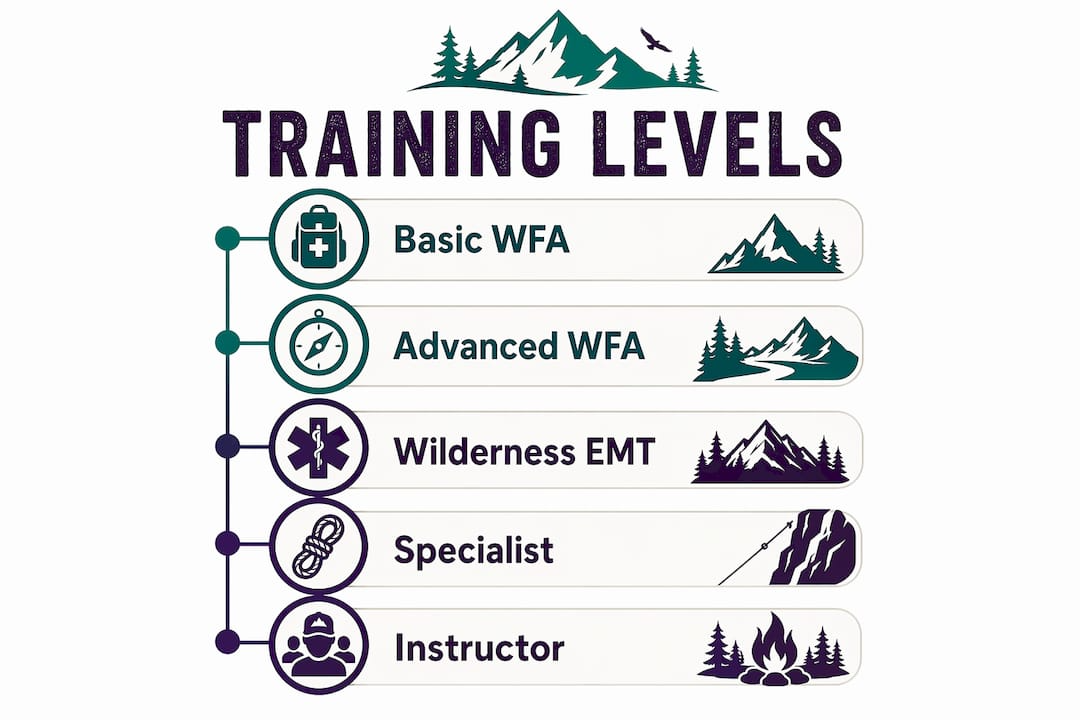
| Certification | Hours | Best For | Core Skills |
|---|---|---|---|
| Wilderness First Aid (WFA) | ~20 hours | Recreational hikers, trip leaders | Patient assessment, wound care, fracture management, evacuation basics |
| Wilderness First Responder (WFR) | 70–80 hours | Guides, search and rescue volunteers, outdoor educators | Advanced assessment, medication protocols, complex evacuation decisions |
| Wilderness EMT (WEMT) | 200+ hours | Professional responders, expedition medics | Full EMT scope combined with wilderness protocols |
Standard WFA courses run approximately 20 hours and are the right starting point for most recreational hikers and camping trip leaders. The Wilderness First Responder credential requires 70–80 hours and is the industry standard for professional outdoor guides and search and rescue volunteers. That difference in hours reflects a real difference in scope: WFR graduates can manage complex multi-system trauma, administer medications, and handle prolonged patient care over multiple days.
NOLS and the Wilderness Medical Society both offer recognized certifications at each level. NOLS courses are field-based and widely respected by outdoor employers. The Wilderness Medical Society publishes the clinical practice guidelines that most wilderness medicine curricula follow.
The Wilderness EMT combines a standard EMT certification with wilderness protocols. It is designed for professionals who work in both urban and remote medical environments, such as park rangers or expedition support staff.
Which skills does wilderness first aid emphasize?
The Patient Assessment System is the foundation of every wilderness first aid course. It gives responders a structured way to identify injuries and illnesses when no doctor is available to confirm a diagnosis. You learn to gather a full patient history, check vital signs repeatedly over time, and document changes.
Core practical skills taught in outdoor first aid training include:
- Wound management: Irrigation, closure, and infection monitoring over days, not hours.
- Fracture and dislocation care: Splinting with available materials like trekking poles, sleeping pads, or sticks.
- Hypothermia and heat illness: Recognizing and treating temperature emergencies with insulation and shade rather than hospital equipment.
- Anaphylaxis response: Using an epinephrine auto-injector and monitoring for rebound reactions.
- Spinal injury assessment: Deciding whether to immobilize a patient based on mechanism of injury and neurological signs.
The hardest skill to teach is evacuation decision-making. The most difficult mental challenge in wilderness medical response is deciding when to evacuate, because no simple algorithm covers every scenario. The Wilderness Medical Society defines urgent evacuation as any situation involving life-threatening conditions or rapidly deteriorating patient status. Non-urgent cases can be monitored and managed in the field. The gray area between those two categories is where training and judgment matter most.
Conditions that require evacuation include concussion, difficulty breathing, infection, or snake bites, as well as any injury that worsens despite treatment or cannot be managed with available skills and supplies. When in doubt, the guidance is clear: evacuate.
Pro Tip: Practice your patient assessment on hiking partners before you ever need it for real. Running through the steps on a healthy person builds the muscle memory that kicks in when stress is high.
How to build a wilderness first aid kit
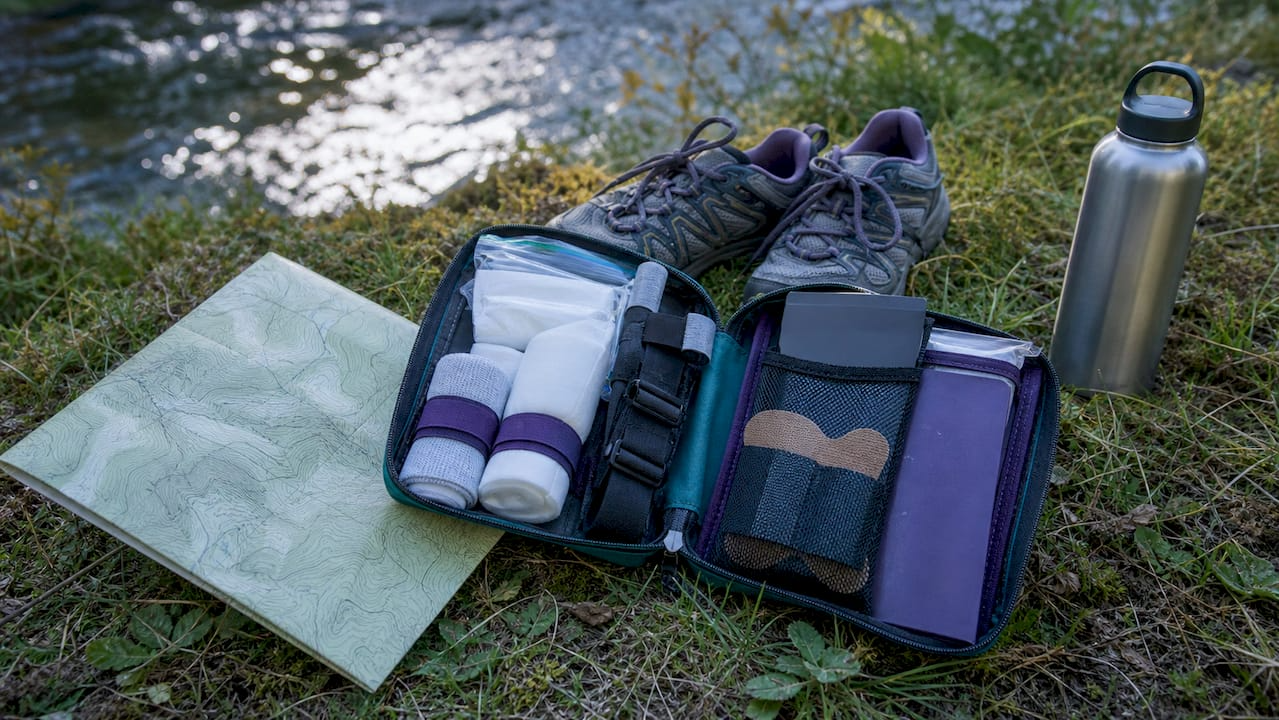
The best approach to your wilderness first aid kit is to buy a quality commercial kit first, then customize it for your specific trips. Commercial kits contain medical-grade tools that are difficult to source individually, including real tourniquets, SAM splints, and sterile wound care supplies.
Here is what every backcountry kit should include:
- Tourniquet: A CAT (Combat Application Tourniquet) or SAM XT. These cost $30 or more but are non-negotiable for severe extremity bleeding.
- Wound care: Irrigation syringe, antiseptic wipes, closure strips, and non-stick dressings in multiple sizes.
- Splinting materials: SAM splints and elastic bandages for fractures and sprains.
- Medications: Ibuprofen, diphenhydramine (Benadryl), antacids, and prescription epinephrine if you carry it.
- Blister care: Moleskin, hydrocolloid bandages, and a needle for draining intact blisters.
- Diagnostics: Nitrile gloves, a CPR face shield, a small penlight, and a SAM splint that doubles as a writing surface for patient notes.
Never substitute a rubber band or improvised strap for a real tourniquet. Uncontrolled bleeding can become fatal in 3–5 minutes. Improvised versions lack the mechanical advantage to stop arterial bleeding in a limb.
Customize your kit based on trip length, group size, and destination. A solo day hike needs a lighter kit than a five-day group expedition into bear country. Check expiration dates on medications and replace used items after every trip. Your kit should evolve with your experience and the specific risks of each environment you enter. For a deeper look at what to include in a first aid kit for outdoor use, Lifecampadventure has a full breakdown of outdoor kit essentials.
How should you prepare for wilderness medical emergencies?
Preparation for wilderness survival first aid starts before you leave the trailhead. Gear and training together create a real safety margin. Neither one alone is enough.
- Get certified. Take a WFA course at minimum before leading any group into the backcountry. NOLS, the Wilderness Medical Society, and SOLO Wilderness Medicine all offer courses across the country. Recertify every two years since protocols update and skills fade.
- Know your kit. Carrying a first aid kit you have never opened is nearly useless. Practice using every item before you need it under stress.
- Plan your route with evacuation in mind. Identify exit points, road access, and areas with cell or satellite coverage. Share your itinerary with someone who will call for help if you do not check in.
- Carry communication tools. A satellite communicator like a Garmin inReach or SPOT device gives you two-way messaging from anywhere. Cell phones are unreliable in most backcountry terrain.
- Practice basic wilderness survival first aid principles. Stop bleeding first, protect the airway second, prevent hypothermia third. That priority order holds in almost every wilderness emergency.
Proper training and equipment can mean the difference between life and death in remote settings. That is not an overstatement. It is the reason wilderness medicine exists as a separate discipline. For a full preparation checklist before your next trip, Lifecampadventure covers the key steps in outdoor emergency preparation.
Key takeaways
Wilderness first aid is a distinct medical discipline requiring extended patient care, evacuation judgment, and improvised treatment in environments where professional help is over an hour away.
| Point | Details |
|---|---|
| The 1-hour rule defines WFA | Any situation where EMS is more than 60 minutes away requires wilderness medicine protocols. |
| Training level should match your role | Recreational hikers need WFA (20 hours); guides and SAR volunteers need WFR (70–80 hours). |
| Evacuation decisions are the hardest skill | No algorithm covers every case; training builds the judgment to categorize urgent vs. non-urgent. |
| Buy commercial kits, then customize | Medical-grade tools like CAT tourniquets and SAM splints are the non-negotiable baseline. |
| Preparation happens before the trailhead | Route planning, communication tools, and kit familiarity matter as much as the gear itself. |
Why wilderness first aid changed how i think about every trip
I used to treat a first aid kit as a box I checked before leaving. Bandages, some ibuprofen, a pair of gloves. That changed the first time I watched an instructor walk through a real patient assessment on a simulated trauma scenario in the field. The speed at which a manageable situation becomes life-threatening without the right response is genuinely sobering.
The evacuation decision is what most people underestimate. You can memorize wound care steps from a book. Deciding whether a patient with a head injury and mild confusion needs to be carried out immediately or monitored overnight requires something different. It requires practice under pressure, and that only comes from hands-on wilderness first aid skills training with real scenarios.
My honest view: most outdoor enthusiasts are underprepared, and most of them know it. A 20-hour WFA course is not a huge time investment relative to the hours people spend planning gear lists and researching trails. The kit matters too, but a quality kit without training is just weight in your pack. Get the training first. Build the kit around what you learn. Then update both as your trips get more ambitious.
— Billy
Gear up for the trail with Lifecampadventure
Being ready for a wilderness medical emergency starts with having the right gear in your pack before you hit the trail.

Lifecampadventure carries survival kits and essentials built for real backcountry conditions, not just car camping. From emergency supplies to durable outdoor equipment, every product is chosen with reliability in mind. If you are building out your kit or upgrading your gear before a big trip, the essential camping gear guide is a strong place to start. Prepare thoughtfully, pack smart, and go farther with confidence.
FAQ
What is wilderness first aid in simple terms?
Wilderness first aid is emergency medical care provided in remote settings where professional help is more than one hour away. It covers patient assessment, treatment, and evacuation decisions using limited supplies.
How long does a wilderness first aid course take?
A standard WFA course takes approximately 20 hours and is designed for recreational hikers and trip leaders. The more advanced Wilderness First Responder certification requires 70–80 hours.
What should i include in a wilderness first aid kit?
Every kit should include a CAT tourniquet, SAM splints, wound irrigation supplies, sterile dressings, blister care, nitrile gloves, and basic medications like ibuprofen and diphenhydramine. Customize from a quality commercial baseline.
When should you evacuate someone in the wilderness?
Evacuate when a patient has a condition you cannot manage with available skills and supplies, when their condition worsens despite treatment, or when they show signs of concussion, breathing difficulty, infection, or a snake bite.
Is wilderness first aid the same as wilderness survival first aid?
They overlap but are not identical. Wilderness survival first aid focuses on keeping yourself and others alive in a survival scenario. Wilderness first aid is a broader medical discipline covering assessment, treatment, and evacuation for any injury or illness in a remote setting.
