TL;DR:
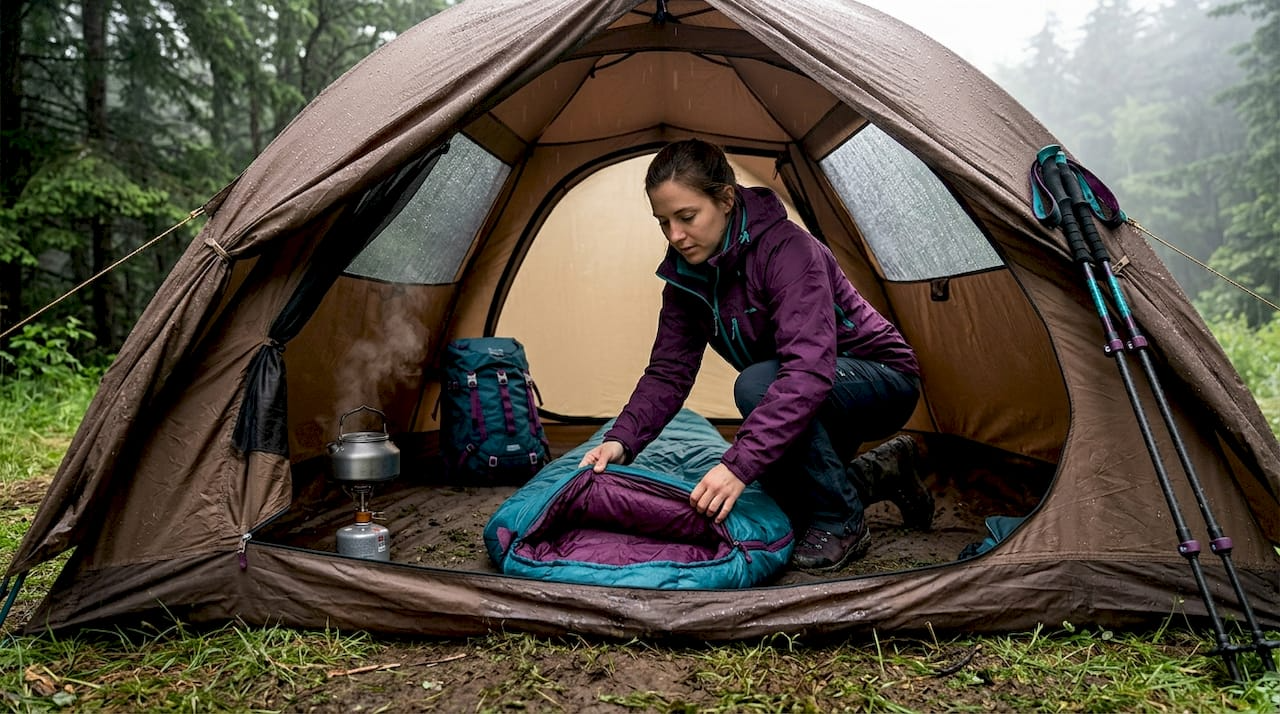
- Synthetic sleeping bags use hydrophobic fibers that retain warmth when wet, making them ideal for humid or rainy conditions. They dry faster, are easier to care for, and offer predictable performance, but are heavier and have a shorter lifespan than down bags. They are best suited for wet climates, beginner campers, and those who prioritize low maintenance and budget-friendly gear.
Synthetic sleeping bags are defined by their use of engineered polyester fibers that retain warmth and loft even when saturated with moisture, making them the most reliable insulation choice for campers facing rain, humidity, or condensation. Technologies like Climashield Apex and PrimaLoft have pushed synthetic insulation closer to down in warmth-to-weight performance while maintaining that critical wet-weather advantage. If you camp in the Pacific Northwest, hike during shoulder seasons, or simply want gear that forgives a wet night, understanding why synthetic sleeping bags outperform alternatives in damp conditions is the starting point for smarter gear decisions. Performance standards like ISO 11092 validate these thermal properties under controlled conditions, giving you measurable confidence in what you're buying.
Why synthetic sleeping bags outperform down when it rains
The core difference between synthetic and down insulation comes down to one scenario: moisture exposure. Down insulation excels in warmth-to-weight ratio and compressibility when completely dry, but down loses loft catastrophically when saturated, collapsing the air pockets that create warmth. A soaked down bag can lose 80 to 90 percent of its insulating value, turning a 20°F rated bag into something that barely keeps you warm at 50°F.
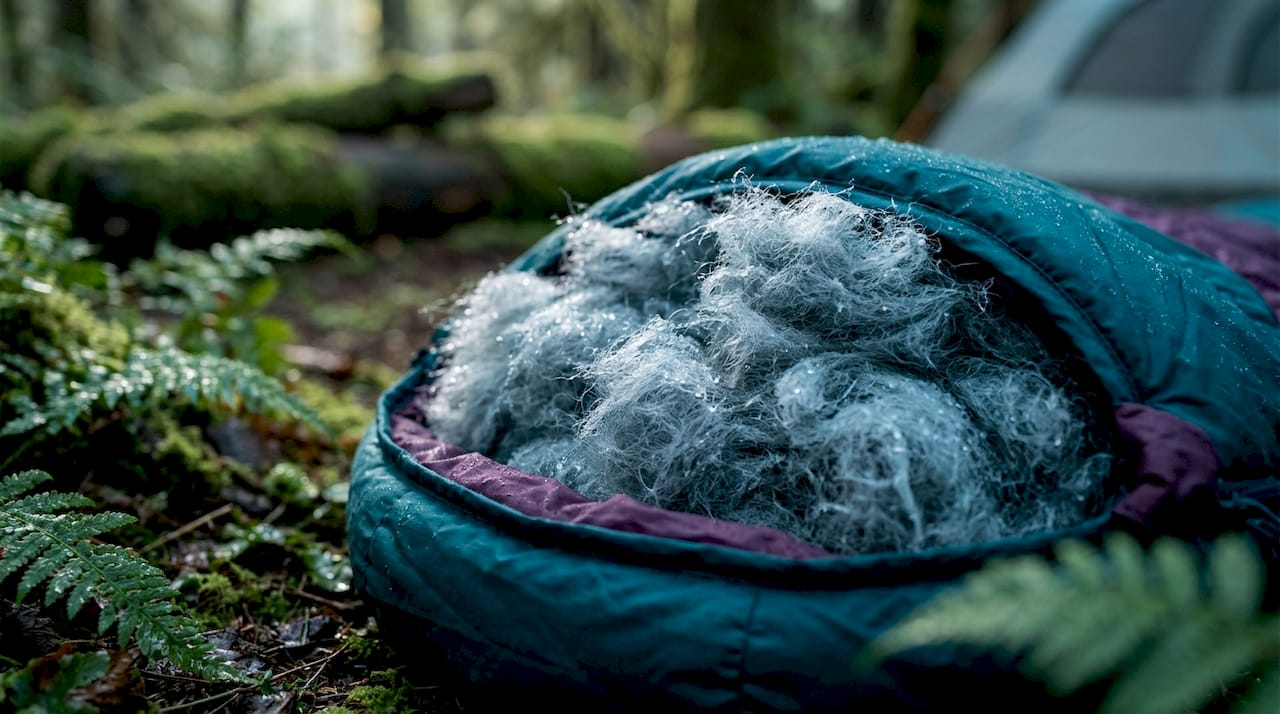
Synthetic insulation works differently. The hydrophobic polyester fibers resist moisture absorption and maintain their loft structure even when wet. A 2026 field test from Backpacker.com confirmed that synthetic insulation outperforms down in wet conditions across extended use. That means you stay warmer on a rainy night even if your bag gets damp from condensation, a leaky tent seam, or a river crossing gone wrong.
Drying time is another practical factor. Synthetic bags dry significantly faster than down bags after exposure to moisture. Down clusters clump together when wet and require careful, time-consuming drying with tennis balls in a dryer to restore loft. Synthetic fibers shed water more readily and return to functional loft within hours of air drying.
It's worth noting that hydrophobic down treatments improve water resistance but do not make down waterproof. In sustained wet conditions over multiple days, treated down still underperforms synthetic. For campers who regularly face moisture, that distinction matters.
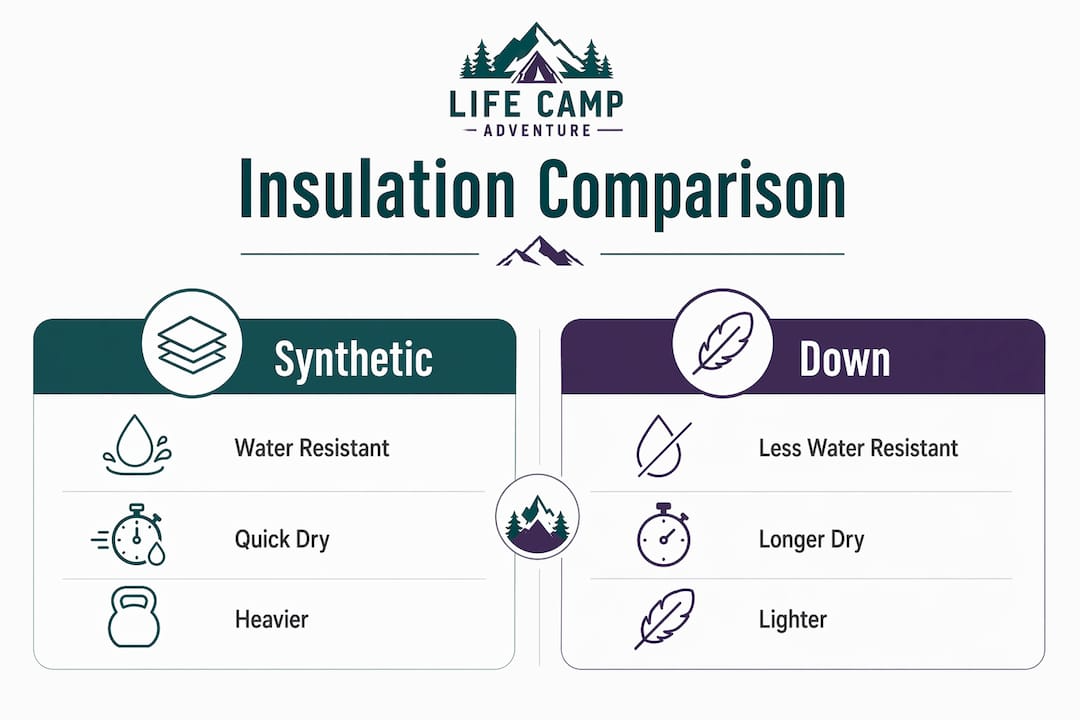
| Feature | Synthetic insulation | Down insulation |
|---|---|---|
| Wet performance | Retains loft and warmth | Collapses, loses 80-90% insulation |
| Drying time | Fast (hours) | Slow (requires careful drying) |
| Weight and bulk | 30-40% heavier and bulkier | Lighter and more compressible |
| Lifespan | 3-7 years | 10-20+ years with care |
| Cost | Lower upfront | Higher upfront |
Pro Tip: If you camp in mixed conditions, store your synthetic bag loosely in a large mesh sack rather than compressed in its stuff sack. This preserves fiber loft between trips and extends the bag's effective lifespan.
What are the real trade-offs of choosing synthetic insulation?
Choosing synthetic over down is a decision that balances conditions, weight restrictions, budget, and maintenance willingness. No insulation type wins across every category, and understanding where synthetic falls short helps you make a smarter call.
Weight and bulk are the most significant drawbacks. Synthetic bags are typically 30 to 40% heavier and less compressible than down bags with an equivalent temperature rating. For a thru-hiker counting every ounce on a 500-mile trail, that difference compounds over weeks. For a car camper driving to a trailhead, it barely registers.
Lifespan is another honest trade-off. Synthetic insulation typically lasts 3 to 7 years before losing significant loft, compared to down's 10 to 20-plus years with proper care. This is because synthetic fibers degrade with repeated compression and washing more quickly than down clusters. If you camp 30 or more nights per year, you may replace a synthetic bag twice in the time a well-maintained down bag remains functional.
Cost works in synthetic's favor. A quality synthetic bag rated to 20°F typically costs 30 to 50 percent less than a comparable down bag. For beginners, families, or campers who don't want to invest heavily before knowing how often they'll use the gear, that price gap is meaningful.
Here's where synthetic clearly wins beyond wet performance:
- Ease of care: Synthetic bags are machine washable and more forgiving to rough handling than down, which requires specialized detergents and careful drying cycles.
- Allergy-friendly: Synthetic materials produce no allergic reactions, unlike some down products.
- Consistent performance: Synthetic insulation delivers predictable warmth across varying humidity levels, with no surprise performance drops on humid nights.
- Lower replacement anxiety: Because synthetic bags cost less, replacing a worn bag doesn't feel like a major financial loss.
Pro Tip: When comparing bags at a gear shop, compress each bag fully in your fist and release it. A synthetic bag with continuous-filament construction, like those using Climashield Apex, will spring back more consistently than short-staple synthetic, indicating better durability and compression resistance.
When does a synthetic sleeping bag make the most sense?
Matching your bag to your environment is the single most important gear decision you can make before a trip. Synthetic sleeping bags are the best choice for wet climates and humid zones, and for campers who prioritize easy maintenance and budget-friendly gear. Here's how to match the insulation type to your actual camping reality:
- You camp in the Pacific Northwest, Southeast, or tropical regions. These environments combine high humidity with frequent rain, creating sustained moisture exposure that defeats down insulation over multi-day trips.
- You're a beginner camper. Synthetic bags forgive mistakes. A first-time camper who doesn't know how to manage condensation inside a tent, or who stores a damp bag improperly, will suffer far less with synthetic than with down.
- You prioritize car camping or base camping. When weight and pack volume aren't limiting factors, the advantages of down become less relevant. Synthetic bags shine in these scenarios because you're not carrying them on your back for miles.
- You're on a budget. Spending less on a sleeping bag leaves more budget for other critical gear like a quality tent, sleeping pad, or rain jacket.
- You want low-maintenance gear. Synthetic bags go in a standard washing machine with regular detergent. Down bags require a front-loading machine, specialized soap, and careful drying. For campers who want to clean gear quickly and move on, synthetic wins.
- You face repeated or prolonged moisture exposure. As Backpacker.com's 2026 testing confirmed, faster drying and wet insulation retention make synthetic the safer choice when moisture exposure is expected to be repeated or prolonged.
For thru-hikers or alpine climbers where every gram counts and conditions are dry and cold, a quality down sleeping bag may still be the better call. Many experienced campers carry a synthetic bag for wet-season trips and a down bag for dry, cold expeditions.
How to care for synthetic sleeping bags to maximize performance
Proper care extends the life of a synthetic bag and keeps it performing at its rated temperature. The good news is that synthetic bags require less delicate care than down, but a few specific habits make a real difference over years of use.
Washing is straightforward. Use a front-loading machine on a gentle cycle with a mild, non-detergent soap or a standard liquid detergent. Top-loading machines with agitators can stress synthetic fibers and seams. Wash your bag at least once per season, or after every five to seven nights of use in humid conditions.
Drying matters more than most campers realize. Tumble dry on low heat and check the bag every 20 minutes to redistribute fill. Synthetic fibers can melt or clump under high heat. Air drying works too, but lay the bag flat rather than hanging it, which can stress seams and shift fill unevenly.
Storage is where most campers damage their synthetic bags without knowing it. Limiting excessive compression during storage is critical because synthetic fibers degrade faster than down clusters when kept tightly packed for months. Store your bag loosely in a large cotton or mesh storage sack, never in the compressed stuff sack it came in.
For a broader approach to extending the life of all your outdoor gear, Lifecampadventure's gear maintenance guide covers repair techniques, storage practices, and inspection routines that apply across your full kit.
Key takeaways
Synthetic sleeping bags are the most reliable insulation choice for campers facing wet, humid, or variable conditions because they retain warmth when wet, dry faster than down, and require minimal maintenance.
| Point | Details |
|---|---|
| Wet-weather performance | Synthetic insulation retains loft and warmth when wet; down loses up to 80-90% of insulating value when saturated. |
| Weight and bulk trade-off | Synthetic bags are 30-40% heavier and bulkier than down for the same temperature rating. |
| Lifespan difference | Synthetic lasts 3-7 years; down lasts 10-20+ years with proper care. |
| Best use scenarios | Ideal for wet climates, car camping, beginners, and budget-conscious campers. |
| Care advantage | Machine washable with standard detergent; store loosely to preserve fiber loft. |
The night a synthetic bag made the difference
I've camped with both down and synthetic bags across enough wet seasons to have a clear opinion: the campers who get into trouble are usually the ones who chose weight savings over weather reality. I've watched a well-equipped backpacker pull a soaked down bag out of a tent after a night of condensation and realize they were looking at a cold, miserable morning with gear that had failed them. Their bag was expensive, well-rated, and completely useless in that moment.
My honest view is that most recreational campers overestimate how often they camp in truly dry conditions. Humidity alone, without a drop of rain, degrades down performance over a multi-night trip. Synthetic bags don't have that vulnerability. The consistent wet-weather performance of technologies like Climashield Apex has made the weight penalty increasingly acceptable, especially as synthetic construction has improved.
Where I think people go wrong is treating the synthetic vs. down decision as permanent. I carry both. A synthetic bag goes in my pack for spring trips in the Cascades or any trip where I know I'll face sustained rain. A down bag comes out for dry winter camping where cold and weight are the primary concerns. Pairing the right insulation to the right conditions is the actual skill. The role sleeping bags play in reliable outdoor rest goes beyond temperature ratings. It's about choosing gear that performs under the conditions you'll actually face, not the conditions you hope for.
— Billy
Gear up with Lifecampadventure for your next wet-weather trip

Lifecampadventure carries a full range of synthetic sleeping bags rated for three-season and cold-weather use, built for campers who need reliable warmth in damp and variable conditions. Each bag is selected for ease of care, durability, and performance in real outdoor environments, not just lab ratings. Whether you're heading out for a weekend in the rain or setting up a base camp for a week-long expedition, the right sleeping bag is the foundation of a comfortable night. Browse essential camping gear to build out your full kit, or explore quality camping equipment matched to the conditions you actually camp in.
FAQ
Why do synthetic sleeping bags perform better in wet conditions?
Synthetic insulation uses hydrophobic polyester fibers that maintain loft and warmth even when wet, while down clusters collapse and lose up to 80 to 90 percent of their insulating value when saturated. This makes synthetic the more reliable choice for rainy or humid camping environments.
Are synthetic sleeping bags warmer than down bags?
Down bags generally provide more warmth per ounce when dry, but synthetic bags deliver more consistent warmth in wet or humid conditions where down performance drops significantly. For damp climates, synthetic insulation is the more dependable option.
How long does a synthetic sleeping bag last?
Synthetic sleeping bags typically last 3 to 7 years before losing significant loft, compared to down bags which can last 10 to 20-plus years with proper care. Storing your synthetic bag loosely and washing it correctly extends its usable life.
Can you machine wash a synthetic sleeping bag?
Synthetic sleeping bags are machine washable on a gentle cycle using mild detergent, making them significantly easier to maintain than down bags. Use a front-loading machine and tumble dry on low heat to protect the fibers and seams.
Who should choose a synthetic sleeping bag over down?
Synthetic sleeping bags suit beginner campers, car campers, budget-conscious buyers, and anyone camping in wet or humid climates. Campers who want easy-care and reliable gear in variable weather conditions get the most value from synthetic insulation.
