
Over 5 million skin cancer cases are diagnosed yearly in the US, largely caused by UV radiation from the sun. For outdoor enthusiasts and families, understanding sun protection isn't just about avoiding sunburn. It's about preventing long-term skin damage, reducing cancer risk, and ensuring every adventure stays safe. This guide covers UV risks, debunks common myths, compares protection methods, and delivers actionable tips to keep your family protected outdoors.
Key takeaways
| Point | Details |
|---|---|
| UV damage is serious | UV radiation causes DNA damage leading to skin cancer and premature aging. |
| Myths hinder protection | A base tan provides minimal protection, and sunscreen requires frequent reapplication. |
| Multiple methods work best | Combining SPF30+ sunscreen, UPF clothing, hats, and shade blocks over 85% of UV exposure. |
| Vitamin D needs are minimal | Brief unprotected exposure 2-3 times weekly suffices without increasing skin cancer risk. |
| Daily habits matter | Checking UV Index, reapplying sunscreen, and seeking shade during peak hours ensure safety. |
Why sun protection matters: understanding UV radiation risks
Ultraviolet radiation penetrates skin and causes direct DNA damage, which is the primary cause of skin cancers including melanoma, squamous cell carcinoma, and basal cell carcinoma. This cellular damage accumulates over time, turning seemingly harmless sunny days into long-term health threats. Over 5 million people in the US face skin cancer diagnoses each year, with UV exposure as the leading culprit.Beyond cancer, UV radiation triggers immediate sunburn, accelerates premature skin aging, and creates chronic damage that shows up as wrinkles, dark spots, and leathery texture. Every unprotected hour outdoors adds to this cumulative harm. Understanding these risks transforms how you approach outdoor safety for families, shifting sun exposure from casual to calculated.
The UV Index scale quantifies daily radiation levels from 0 to 11+, with readings of 3 or above indicating moderate or higher risk requiring protection. Daily UV risk fluctuates based on location, time of day, season, and weather conditions. Checking the UV Index before heading out helps you time activities and layer protection appropriately.
Key sun protection goals include:
- Minimizing UV-induced DNA damage to prevent skin cancer
- Avoiding painful sunburn that signals acute skin injury
- Reducing cumulative exposure that accelerates aging
- Protecting vulnerable areas like face, neck, ears, and hands
Recognizing when UV levels spike, typically between 10 AM and 4 PM, allows you to plan shade breaks or indoor activities during peak danger hours. This awareness turns sun protection from reactive to proactive, keeping your family safer on every outdoor adventure.
Common misconceptions and truths about sun protection
Many outdoor enthusiasts believe a base tan offers meaningful protection against sunburn. Reality check: a tan provides only an SPF of about 3 to 4, which is insufficient for safe sun exposure. This minimal protection creates a false sense of security, encouraging longer unprotected time outdoors and increasing skin damage risk.
Another widespread myth claims sunscreen applied once in the morning lasts all day. Sunscreen breaks down from UV exposure, sweat, and friction, losing effectiveness within two hours. Reapplication every two hours and immediately after swimming or heavy sweating is essential to maintain protection. Skipping this step leaves skin vulnerable during extended outdoor activities.
Cloudy days fool many people into thinking sun protection is unnecessary. Up to 80% of UV rays penetrate clouds, meaning overcast weather still delivers significant radiation exposure. Relying on cloud cover as natural protection frequently results in unexpected sunburn and cumulative skin damage.
Additional misconceptions include:
- Believing darker skin doesn't need sunscreen (it does, just with lower immediate burn risk)
- Thinking waterproof sunscreen never needs reapplication (water-resistant formulas still require refreshing)
- Assuming winter sun is harmless (UV reflects off snow, doubling exposure)
Understanding these truths supports consistent and effective sun protection behavior. Dismissing myths allows you to make informed decisions about when, where, and how to protect your family. Integrating accurate knowledge with family camping safety tips ensures every outdoor experience prioritizes health without sacrificing fun.
Comparing sun protection methods: how different gear and products work
Broad-spectrum SPF 30+ sunscreen blocks approximately 97% of UVB rays but requires proper application and frequent reapplication. Apply generously to all exposed skin 15 minutes before sun exposure, using about one ounce (a shot glass full) for full body coverage. Water-resistant formulas extend protection during swimming or sweating but still need refreshing every two hours.
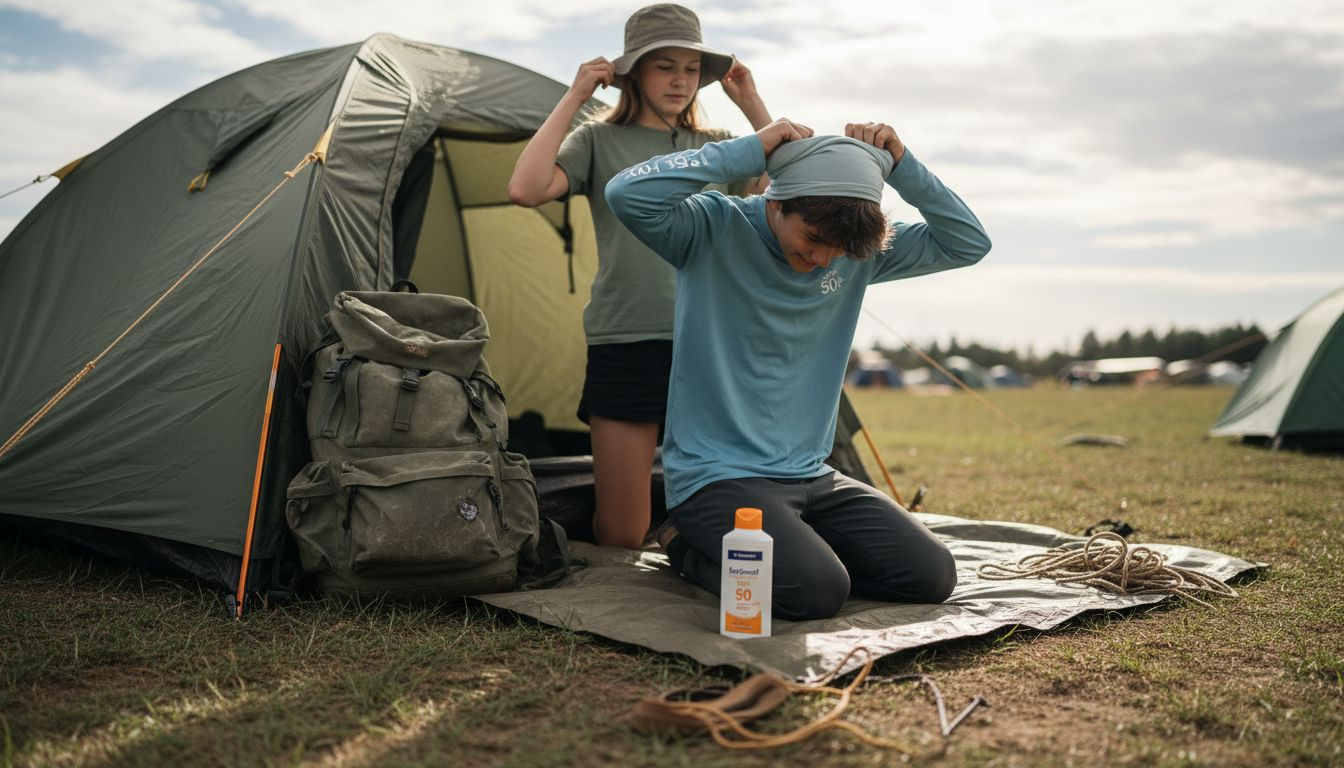
UPF 50+ clothing physically blocks up to 98% of UV radiation, providing permanent daily protection without reapplication. Unlike sunscreen that can rub off or degrade, UPF-rated fabrics maintain their protective properties through washing and wear. Long-sleeve shirts, pants, and specialized outdoor apparel offer consistent coverage for prolonged exposure.
Wide-brim hats shield your face, neck, and ears from direct UV rays, reducing exposure to these vulnerable areas by up to 70%. Look for hats with at least a 3-inch brim all around. Seeking shade under trees, umbrellas, or canopies further decreases direct radiation, especially during peak UV hours between 10 AM and 4 PM.
| Method | UV Blocking | Reapplication Needed | Best Use Case |
|---|---|---|---|
| Sunscreen SPF 30+ | ~97% UVB | Every 2 hours | Exposed skin areas |
| UPF 50+ Clothing | ~98% UV | Never | Full-day coverage |
| Wide-Brim Hat | ~70% face/neck | Never | Facial protection |
| Shade | ~75% direct UV | N/A | Peak hour refuge |
Combining multiple methods decreases total UV exposure by over 85%, creating layered defense that compensates if one method fails. Wearing UPF clothing under a hat while using sunscreen on exposed areas and taking shade breaks maximizes safety. This approach proves especially valuable for families with children, whose thinner skin burns faster.
Pro Tip: Choose lightweight, breathable UPF clothing for comfort during active pursuits. Moisture-wicking fabrics keep you cool while maintaining sun protection, making it easier to wear protective gear all day.
Selecting weatherproof apparel and essential camping gear with built-in UV protection simplifies preparation and ensures consistent coverage during every outdoor adventure.
Balancing sun exposure: vitamin D needs vs protection
Vitamin D synthesis requires sun exposure, but only minimal unprotected exposure of 5 to 15 minutes several times a week is needed. This brief exposure on arms and legs during mid-morning or late afternoon easily satisfies vitamin D requirements without prolonged UV damage. Excessive sun exposure for vitamin D synthesis unnecessarily raises skin cancer risk.Sunscreen and protective clothing do not typically cause vitamin D deficiency when this minimal exposure occurs. Your body efficiently produces vitamin D during short unprotected periods, storing it for weeks. Concerns about deficiency often overestimate the sun exposure needed and underestimate dietary sources like fortified milk, fatty fish, and supplements.
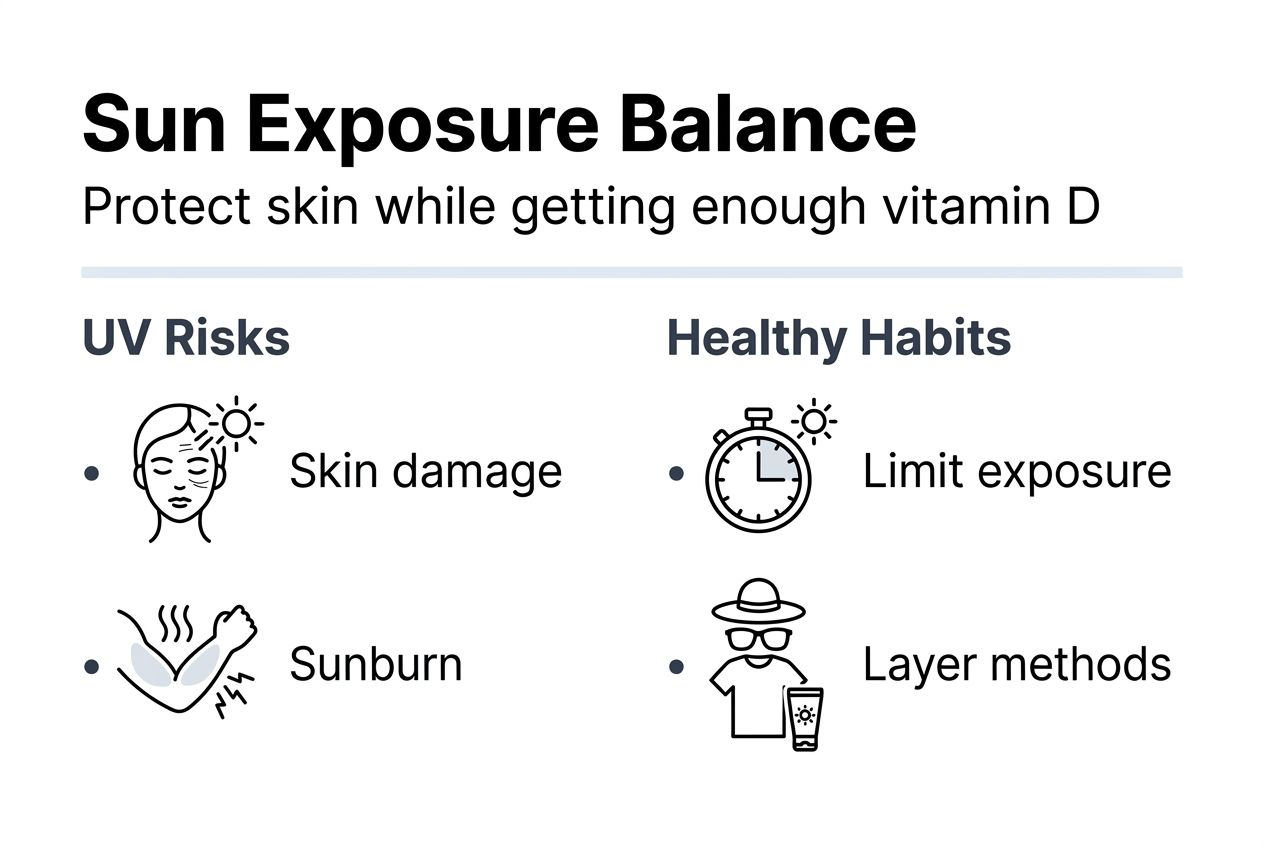
Balancing protection with vitamin D needs supports long-term skin health and overall wellness. Encourage safe timing by exposing skin briefly during lower UV periods rather than extended midday sessions. Layering protection after initial exposure allows you to enjoy outdoor activities without compromising vitamin D status.
Key balance strategies include:
- Exposing forearms and lower legs for 10 minutes 3 times weekly
- Timing exposure during early morning or late afternoon when UV Index is lower
- Using dietary sources and supplements as primary vitamin D sources
- Protecting face and neck consistently due to higher cancer risk in these areas
For outdoor enthusiasts spending hours hiking, camping, or exploring, this minimal exposure naturally occurs during setup, breaks, or transitions between protected and unprotected states. Focusing on outdoor survival basics includes understanding that brief sun contact won't derail vitamin D levels while comprehensive protection prevents cumulative damage.
Practical sun protection tips for outdoor enthusiasts and families
Check the daily UV Index before outdoor activities and plan protection levels accordingly. UV Index apps and weather forecasts provide real-time data, helping you decide when extra precautions are necessary. On high UV days (index 6+), prioritize shade and full coverage gear.
- Apply broad-spectrum SPF 30+ sunscreen generously on all exposed skin 15 minutes before going outside.
- Reapply sunscreen every two hours and immediately after swimming or heavy sweating.
- Wear UPF-rated clothing and wide-brim hats for prolonged exposure, especially during peak UV hours.
- Seek shade between 10 AM and 4 PM when UV rays are strongest and most damaging.
- Educate all family members, especially children, on sun protection importance and make it a routine.
- Carry extra sunscreen and protective gear for longer outings to ensure coverage throughout the day.
- Use sunglasses with UV protection to shield eyes from radiation damage and reduce cataract risk.
Layering multiple protection methods provides the most effective defense. Combining sunscreen with UPF clothing, hats, and shade creates backup if one method fails or wears off. This redundancy proves critical during extended family adventures where reapplication schedules can slip.
Pro Tip: Keep a sun protection kit in your vehicle or backpack with travel-size sunscreen, a spare hat, and lightweight UPF sleeves. Having gear readily available removes excuses and ensures you're always prepared.
Integrating these habits with camping safety tips for families and exploring outdoor adventure examples ensures every outing balances fun with health. Consistent sun protection becomes second nature, allowing you to focus on creating memories rather than managing burns.
Discover trusted outdoor gear for safe adventures
Equipping your family with quality sun protection gear transforms good intentions into effective action. At Life Camp Adventure, we understand that reliable outdoor equipment makes the difference between risky exposure and confident exploration. Our curated selection includes UPF-rated clothing, durable hats, and camping essentials designed for families who prioritize safety without sacrificing comfort.
Explore our essential camping gear to find protective apparel, shade solutions, and accessories that keep UV radiation at bay. Compare options with our camping tents comparison to select shelters offering built-in sun protection. Understanding why choosing camping equipment matters helps you invest in gear that supports long-term outdoor health for your entire family.
Frequently asked questions about sun protection outdoors
How often should I reapply sunscreen during outdoor activities?
Reapply sunscreen every two hours and immediately after swimming, heavy sweating, or toweling off. Sunscreen breaks down from UV exposure and physical activity, losing effectiveness over time.
Is a tan a safe way to protect against sunburn?
No, a tan provides only minimal protection equivalent to SPF 3 to 4, which is insufficient for safe sun exposure. Tanning itself indicates skin damage and increases long-term cancer risk.
Can I get sunburned on cloudy days?
Yes, up to 80% of UV rays penetrate clouds, meaning overcast conditions still deliver significant radiation exposure. Always use sun protection regardless of cloud cover.
What is the best clothing for sun protection while hiking?
UPF 50+ rated long-sleeve shirts and pants offer the best protection, blocking up to 98% of UV radiation. Choose lightweight, moisture-wicking fabrics for comfort during active pursuits.
How much sun exposure do I need for vitamin D without risking skin damage?
Brief unprotected exposure of 5 to 15 minutes on arms and legs 2 to 3 times weekly satisfies vitamin D needs. Prolonged exposure for vitamin D is unnecessary and increases skin cancer risk.
