TL;DR:
- Insulated jackets trap still air to keep your body warm by reducing heat loss in cold weather. They work best when paired with proper layering and windproof shells, especially in damp or windy conditions. Choosing between down and synthetic insulation depends on your climate and activity level to maximize warmth and performance.
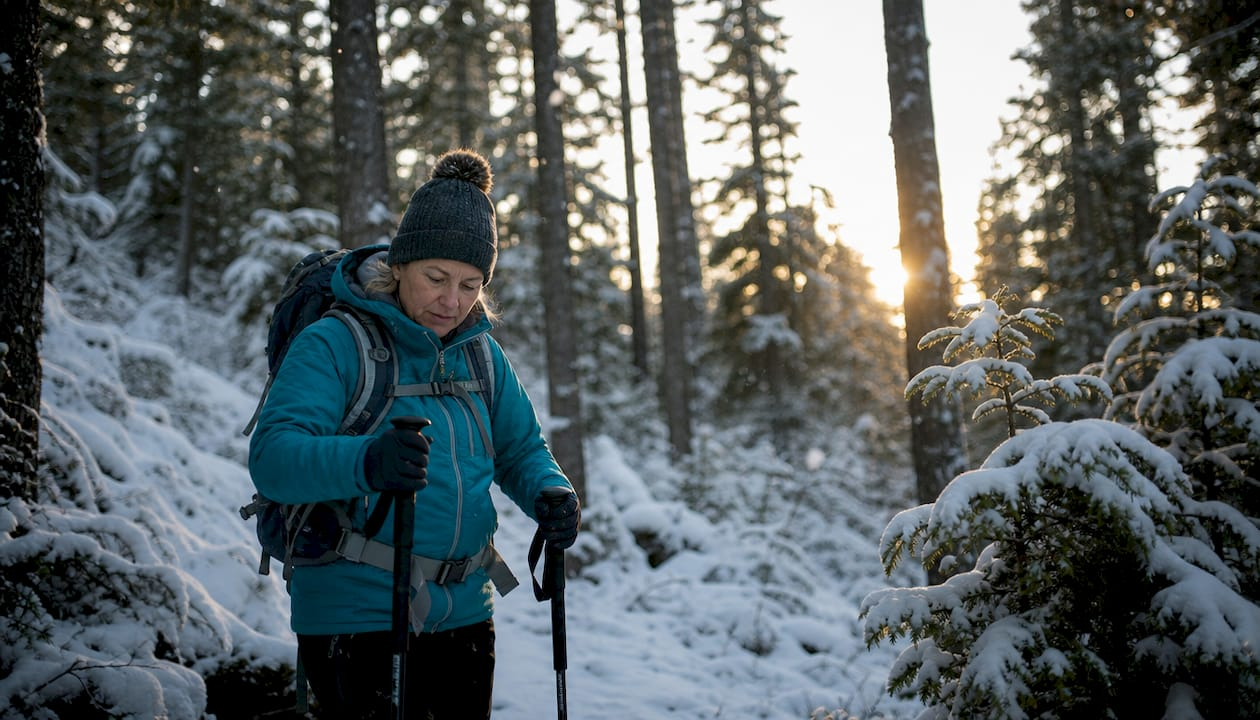
Insulated jackets are garments engineered to retain your body heat by trapping warm air close to your skin, making them the most effective cold-weather layer for outdoor activities. The term "insulated jacket" covers a broad category of outerwear built around one core principle: trapping still air to slow heat loss from your body. Whether you choose down fill or synthetic insulation, the science behind why insulated jackets work is the same. Understanding that science helps you pick the right jacket, layer it correctly, and stay warm when conditions turn harsh.
Why insulated jackets trap heat better than regular outerwear
A regular jacket blocks wind and rain. An insulated jacket does something fundamentally different: it creates a microclimate of warm, still air between you and the cold. Insulation does not generate heat. It preserves the heat your body already produces by slowing the three main pathways of heat loss.
The three heat loss mechanisms
Heat leaves your body through conduction (direct contact with cold surfaces), convection (moving air carrying warmth away), and radiation (heat radiating outward from your skin). Insulation addresses all three at once. The lofted fill material creates thousands of tiny air pockets that resist conductive transfer, block convective airflow, and reduce radiant loss.
The outer shell of an insulated jacket plays an equally critical role. Windproof and waterproof shells prevent cold air from penetrating the insulation layer and collapsing those air pockets. Without a protective shell, even the best fill loses its effectiveness within minutes in a stiff breeze.
| Heat loss type | How it works | How insulation counters it |
|---|---|---|
| Conduction | Heat transfers through direct contact | Trapped air pockets resist direct transfer |
| Convection | Moving air carries warmth away | Lofted fill blocks airflow through the jacket |
| Radiation | Body heat radiates outward | Dense insulation layer reflects and retains radiant heat |
| Wind penetration | Cold air collapses air pockets | Windproof outer shell maintains loft integrity |
Pro Tip: Shake your jacket before putting it on. Restoring loft before you wear it maximizes the trapped air volume and improves warmth immediately.
What are the main types of insulation, and how do they compare?
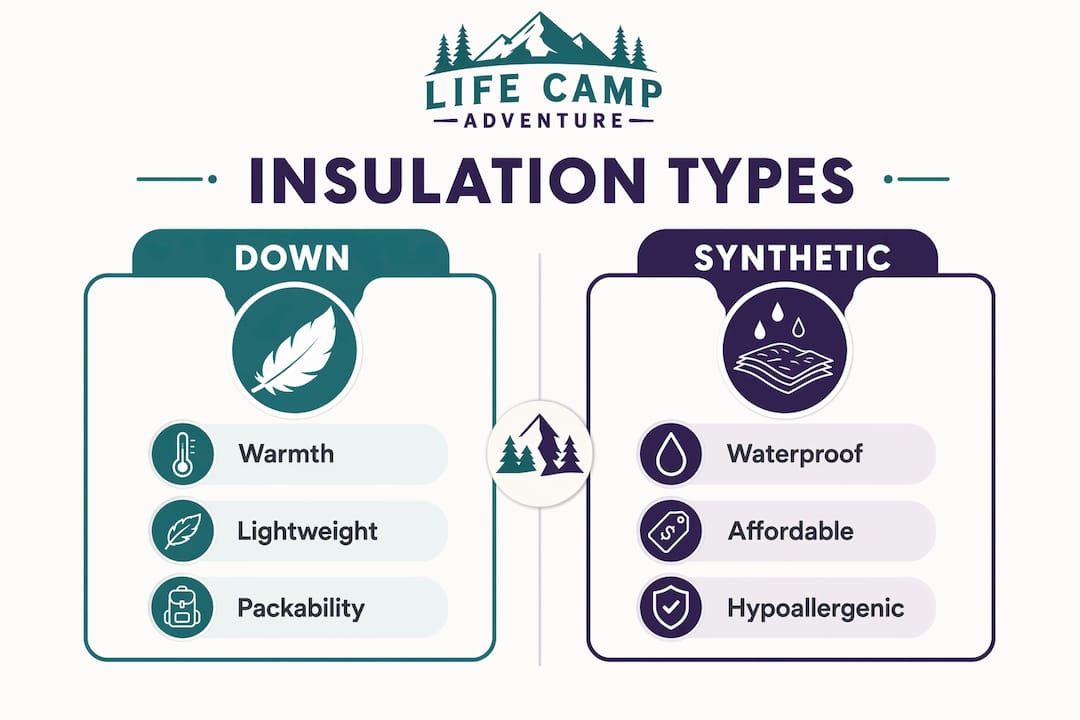
The two dominant insulation materials are down and synthetic fill. Each has a distinct performance profile, and choosing between them is one of the most consequential decisions you make when buying a jacket.
Down insulation
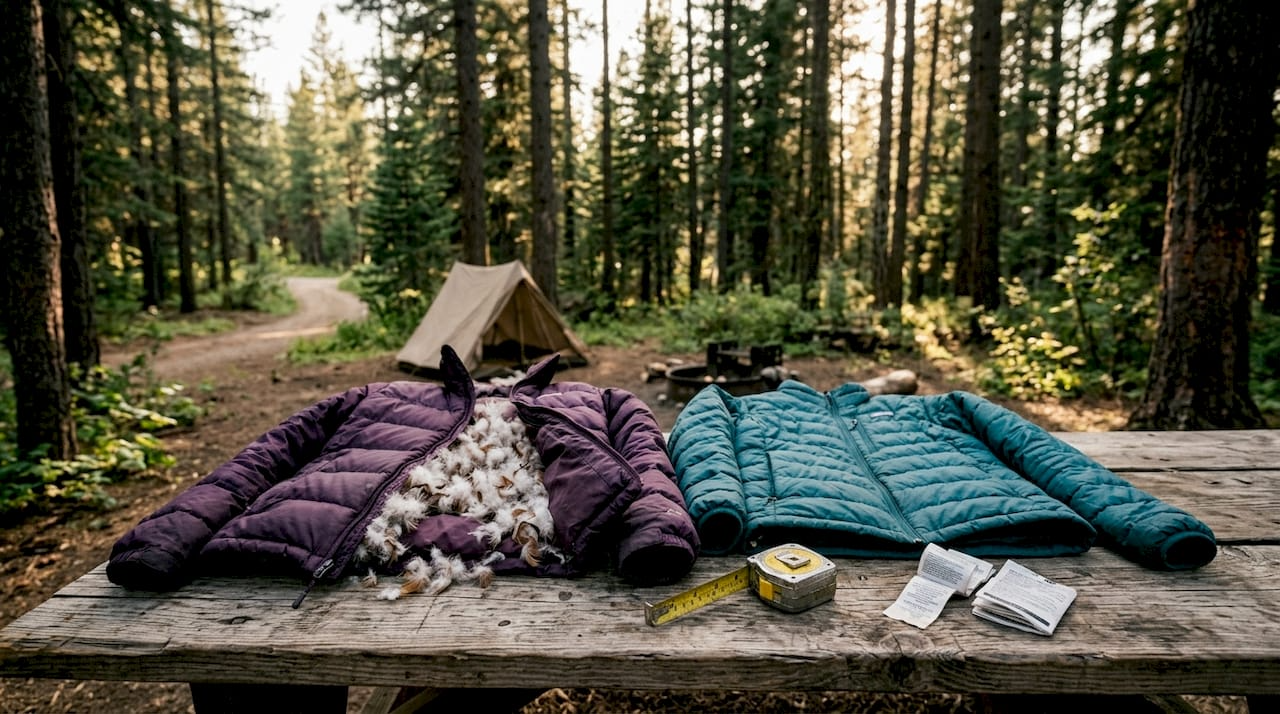
Down comes from the underfeathers of geese or ducks. It delivers the best warmth-to-weight ratio of any natural or synthetic fill, compresses tightly into a stuff sack, and rebounds to full loft when unpacked. A high fill-power down jacket (rated 700 or above) packs smaller than a water bottle and weighs less than a pound while providing serious warmth in dry, cold conditions.
The critical weakness of down is moisture. When down gets wet, the clusters clump together, loft collapses, and warmth drops sharply. Down also requires specific care, including low-heat tumble drying with tennis balls to restore loft after washing. For dry alpine environments or cold-weather camping in low-humidity conditions, down is the superior choice. For wet climates or high-sweat activities, it is a liability.
Synthetic insulation
Synthetic fill is made from polyester fibers engineered to mimic the loft of down. It performs reliably in damp or wet conditions because the fibers do not absorb water the way down clusters do. Synthetic insulation at 80g/m² or more retains effective warmth between 23°F and 50°F even when damp. That temperature range covers the majority of three-season outdoor activities in North America.
Synthetic fill is also hypoallergenic, less expensive than premium down, and easier to care for. The trade-off is bulk and weight. A synthetic jacket with equivalent warmth to a 700-fill down jacket will be noticeably heavier and will not compress as tightly. For wet-condition performance, synthetic is the more reliable choice.
| Feature | Down insulation | Synthetic insulation |
|---|---|---|
| Warmth-to-weight ratio | Excellent | Good |
| Compressibility | Excellent | Moderate |
| Moisture resistance | Poor | Good |
| Drying speed | Slow | Fast |
| Durability | High (with proper care) | High |
| Cost | Higher | Lower |
| Hypoallergenic | No | Yes |
Pro Tip: If you spend time in the Pacific Northwest, coastal environments, or anywhere with frequent rain, choose synthetic fill or a down jacket with a Durable Water Repellent (DWR) treated shell as a minimum standard.
How to layer with an insulated jacket for outdoor activities
Layering is the most effective system for managing warmth and moisture across changing conditions. The three-layer system, base layer, insulation layer, and shell layer, works because each layer handles a specific job. Understanding layering principles prevents the most common mistake outdoor adventurers make: sweating into their insulation and then freezing when they stop moving.
The base layer moves moisture away from your skin. Merino wool and polyester base layers both wick sweat effectively. Cotton fails at this job because it absorbs moisture and holds it against your skin. The insulation layer, your jacket, traps the warm air your body generates. The shell layer blocks wind and precipitation from penetrating the insulation.
Moisture-wicking base layers paired with breathable insulation are critical for high-exertion activities like hiking, skiing, and trail running. Sweat buildup inside an insulation layer destroys warmth almost instantly because water conducts heat 25 times faster than air. That single fact explains why so many people feel cold despite wearing a quality jacket.Active insulation garments designed for breathability outperform static insulated parkas during high-exertion activities. Active insulation uses thinner, more breathable fill that allows moisture vapor to escape while still retaining warmth. Static insulation, the thick puffer jacket style, is better suited for stationary or low-activity use like belaying, watching a game, or standing at a ski resort base.
Layering dos and don'ts:
- Do wear a moisture-wicking base layer against your skin on every cold-weather outing
- Do choose active insulation for hiking, skiing, and running
- Do add a windproof shell over your insulation layer in exposed terrain
- Do vent or remove your insulation layer during high-exertion climbs to prevent sweat buildup
- Don't wear cotton as a base layer in cold or wet conditions
- Don't rely on insulation alone without a shell in windy or rainy conditions
- Don't compress your insulation layer under a tight pack for extended periods without adjusting
Common insulation challenges and how to prevent them
Most cold feelings despite wearing a quality insulated jacket trace back to three preventable causes: compression, moisture intrusion, and wind penetration. These failure modes are more responsible for poor jacket performance than the jacket's inherent warmth rating.
Compression is the most overlooked problem. Backpack straps press directly against the jacket's insulation layer, collapsing loft and eliminating trapped air in the contact zones. This creates cold spots across your shoulders and upper back. Lifting your pack straps slightly during rest stops allows the insulation to re-loft and recover warmth. Compression collapses loft in storage too, which is why stuffing a jacket into a tight stuff sack for weeks at a time degrades its long-term performance.
Moisture intrusion from sweat or rain is the fastest way to lose warmth. Wet insulation loses its air pockets and its ability to insulate. Synthetic fill retains some warmth when damp, but down loses nearly all of its effectiveness. The solution is a two-part approach: manage internal moisture with a breathable base layer, and block external moisture with a DWR-treated or waterproof shell.
Wind penetration disrupts the still-air microclimate that insulation depends on. Even a light wind can push cold air through a non-windproof jacket and strip warmth from the insulation layer. A windproof outer shell is the most effective fix. For activities in exposed ridgelines, open plains, or ski runs, never rely on an insulated jacket without a windproof layer over it.
Key prevention strategies:
- Adjust pack straps every 30 minutes during long carries to restore loft
- Store insulated jackets loosely, never compressed, to preserve long-term loft
- Layer a waterproof shell over down jackets in rain or high-humidity conditions
- Choose synthetic fill for activities where sweating is unavoidable
- Always pair insulation with a windproof shell in exposed outdoor environments
Key Takeaways
Insulated jackets work by trapping still air close to your body, and their effectiveness depends equally on fill quality, shell protection, and moisture management.
| Point | Details |
|---|---|
| Insulation preserves heat, not generates it | Your body creates warmth; the jacket's job is to stop it from escaping. |
| Down excels in dry cold | Choose down for dry alpine conditions where weight and packability matter most. |
| Synthetic wins in wet conditions | Synthetic fill at 80g/m² or more retains warmth even when damp, unlike down. |
| Moisture is the biggest threat | Water conducts heat 25 times faster than air, making sweat management critical. |
| Compression destroys loft | Backpack straps and tight storage collapse insulation and create cold spots. |
What I've learned after years of cold-weather outdoor use
The biggest mistake I see outdoor adventurers make is treating an insulated jacket as a standalone solution. They buy a quality jacket, skip the shell, skip the base layer, and then wonder why they're cold. The jacket is doing its job. The system around it is failing.
The second mistake is choosing insulation based on marketing rather than climate. Down is genuinely exceptional, but only in the right conditions. I've watched hikers on wet Pacific Coast trails soak their down jackets through in an hour and spend the rest of the day colder than if they'd worn nothing at all. A mid-weight synthetic jacket would have kept them warm the entire time. Choosing between down for backpacking and synthetic for mixed conditions is not a matter of preference. It is a matter of matching the tool to the environment.
The third thing most guides skip: active insulation is one of the most underrated categories in cold-weather gear. A breathable active insulation piece worn during a hard uphill push keeps you warm without soaking through. Static puffer jackets are for stops, not movement. If you run hot on the trail, an active insulation layer will change how you experience cold-weather hiking entirely.
My honest recommendation is to own both types if your budget allows. Use down for dry, cold, low-exertion days. Use synthetic for wet weather, high-output activities, and any situation where you cannot control moisture. Pair both with a windproof shell and a proper base layer, and you will stay warm in conditions that defeat single-layer solutions every time.
— Billy
Gear up for cold weather with Lifecampadventure
Cold-weather adventures demand more than a single jacket. Lifecampadventure carries a full range of outdoor gear built for adventurers who take conditions seriously, from insulated layering essentials to windproof shells and essential camping gear for every season.

Whether you are planning a winter camping trip, a high-altitude hike, or a ski season in the backcountry, the right gear starts with understanding what each piece does. Lifecampadventure's outdoor adventure gear reviews cover the full system, from base layers to shells, so you can build a kit that performs in real conditions. Browse the full catalog and find gear matched to how and where you actually adventure.
FAQ
What is the difference between insulated and regular jackets?
A regular jacket blocks wind and rain but does not add meaningful warmth. An insulated jacket contains fill material, either down or synthetic, that traps still air and retains your body heat in cold conditions.
Are insulated jackets worth it for winter outdoor activities?
Yes. Insulated jackets are the most weight-efficient way to retain body heat in cold weather. The benefits of insulated jackets are most pronounced in temperatures below 50°F, where an uninsulated layer provides insufficient warmth for extended outdoor exposure.
How do I choose between down and synthetic insulation?
Choose down for dry, cold conditions where packability and warmth-to-weight ratio matter most. Choose synthetic insulation for wet climates, high-exertion activities, or any situation where moisture management is a priority.
How do I prevent my insulated jacket from losing warmth?
Avoid compressing the jacket under pack straps for extended periods, keep it dry with a waterproof shell in rain, and store it loosely rather than stuffed tightly. These three habits preserve loft and maintain warmth over the jacket's full lifespan.
Can I wear an insulated jacket without a shell layer?
You can in calm, dry conditions. In wind or rain, a shell layer is necessary. Wind penetrates most insulated jackets and collapses the still-air microclimate that provides warmth, making a windproof outer layer the most effective way to protect your insulation.
