TL;DR:
- Emergency blankets primarily reflect body heat and do not generate warmth, making them radiant barriers rather than insulators. They perform best when layered with insulation and used alongside dry ground pads, especially in cold, wet, or windy conditions. Material quality significantly influences performance; PET blankets are more durable and effective than cheap PE options for serious outdoor use.
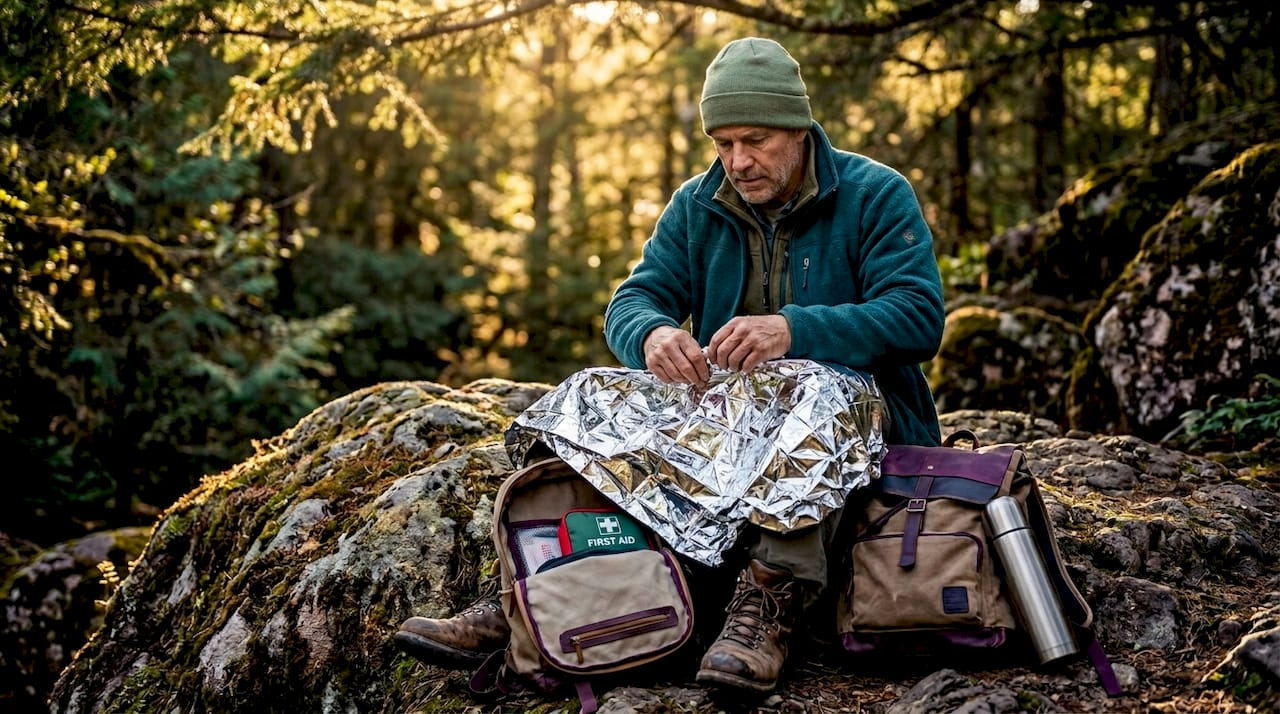
Most people toss an emergency blanket into their bag and never think twice about it. That's actually the problem. Understanding why emergency blankets work, and more importantly, where they fall short, is what separates prepared adventurers from people caught in genuinely dangerous situations. These thin, crinkly sheets are not magic. They're precision tools. And when you know exactly how they function, you can use them to stay safe when it matters most.
Key takeaways
| Point | Details |
|---|---|
| Radiant barriers, not insulators | Emergency blankets reflect body heat back but do not generate warmth or replace insulation layers. |
| Material quality matters | PET blankets outperform PE options in cold, wet conditions and should be the standard for serious kits. |
| Multi-use survival tools | Beyond warmth, emergency blankets work as shelters, vapor barriers, ground covers, and signaling devices. |
| Pair with insulation always | Solo use in wet or windy conditions leaves you exposed; layering with insulation is critical. |
| Check specs before you buy | Look for verified reflectivity above 95% and tensile strength above 12 MPa, not marketing labels. |
Why emergency blankets are widely misunderstood
The most common belief is that emergency blankets warm you up. They do not. What they actually do is slow down how fast you lose heat. There's a real difference, and that distinction can shape how you use them in the field.
Emergency blankets reflect up to 90% of body heat rather than generating any warmth themselves. They work as radiant barriers, bouncing the infrared energy your body already produces back toward you instead of letting it escape. Think of it like placing a mirror in front of a lamp. The mirror doesn't create light, it redirects it.This means if you're already cold, the blanket's effectiveness drops fast. It can only reflect heat you're producing. If your core temperature is falling rapidly and you're not generating enough body heat, a single emergency blanket won't reverse the situation alone. Emergency blankets are radiant barriers, not insulators, and that framing should guide every decision you make about how and when to use them.
What emergency blankets actually protect against
Radiant heat loss happens when your body emits infrared radiation into cooler air around you. This is the biggest form of heat loss in cold, dry conditions. Emergency thermal blankets address this specific mechanism well. But they offer almost no protection against conductive heat loss, which is what happens when you lie on cold ground or sit in cold water. And they provide minimal insulation value against convective loss, the wind pulling heat away from your body.
Emergency blankets perform poorly alone in wet, windy conditions and must always be used as part of a layered system. That's not a flaw. It's just physics. Knowing this upfront means you can build your kit around the blanket's actual strengths.
Pro Tip: Always carry a closed-cell foam pad or sit pad alongside your emergency blanket. Ground insulation is often more critical than overhead insulation because conductive heat loss from cold ground can drop your core temperature faster than wind chill.
Material types and what they mean for performance
Not every emergency blanket is built the same. The material determines how the blanket performs in real conditions, how long it survives, and whether it's worth using more than once.
| Material | Durability | Temp Performance | Best For |
|---|---|---|---|
| Polyethylene (PE) | Low, brittle | Fails below 5°C | Single-use, budget kits |
| Metallized Polyester (PET) | High, flexible | Stays flexible to -20°C | Outdoor, medical, cold-weather use |
| Hybrid woven fabric | Very high | All temperatures | Reusable, premium applications |
Standard polyethylene blankets are what you typically find in cheap first aid kits. They crinkle loudly, tear along fold lines, and PE becomes brittle and fails at temperatures below 5°C. For a controlled indoor emergency or a one-time use, they'll do. For winter hiking or a multi-day expedition, they're genuinely unreliable.
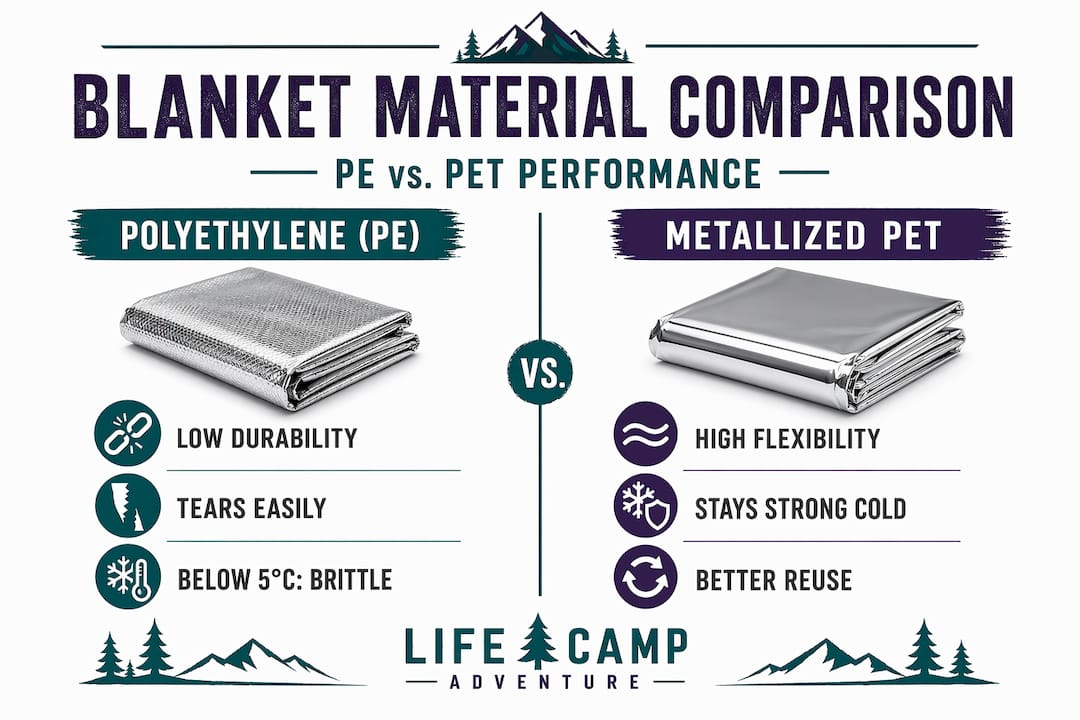
Metallized PET blankets are the step up you actually want. PET retains flexibility and structural integrity down to around -20°C, making it usable in genuinely cold environments where PE would crack and fail. The film resists tearing and holds its reflective coating much better over repeated folds and packs.
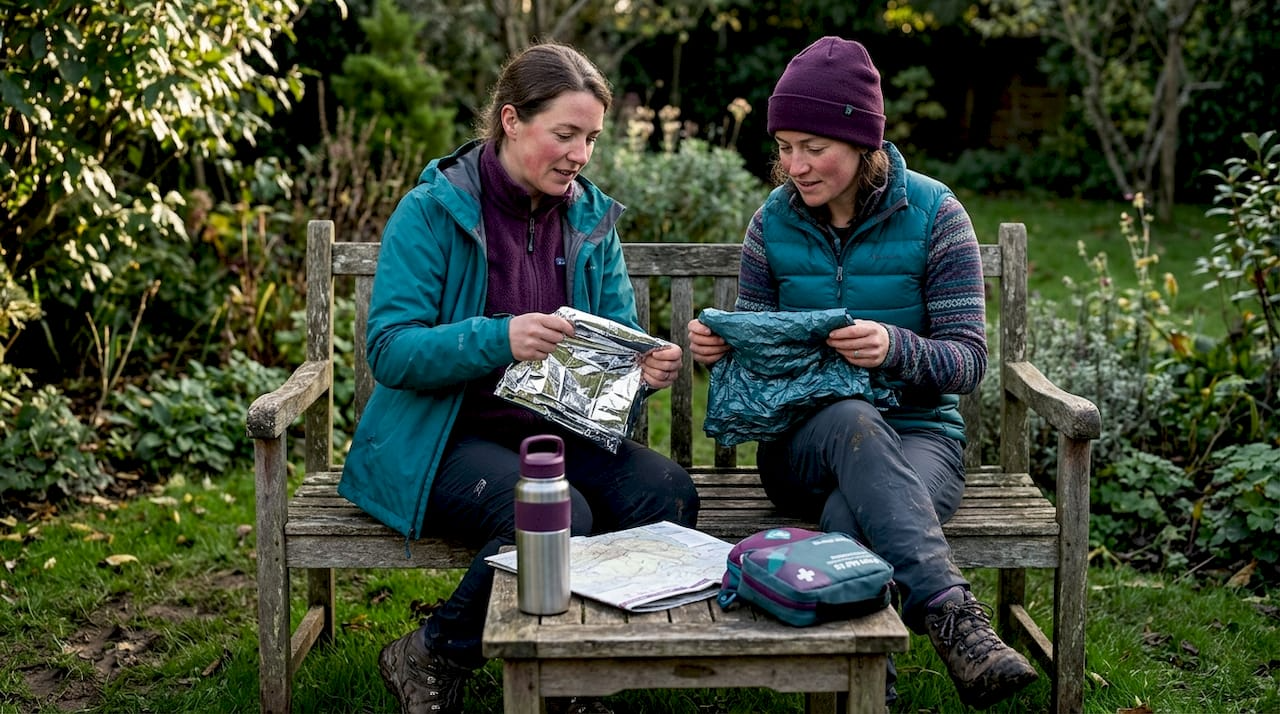
Hybrid woven fabrics take it further still. These are the blankets designed for reuse, with breathable constructions that prevent condensation buildup inside the wrap. They weigh more and cost more, but for professional rescue teams or serious mountaineers, the tradeoff is worth it. When you check emergency blanket effectiveness, the material is the first thing to look at.
Pro Tip: Marketing labels like "ultra-reflective" tell you nothing useful. Ask for verified reflectivity measurements and tensile strength ratings instead. Quality blankets meet at least 95% reflectivity and 12 MPa tensile strength.
Practical uses beyond staying warm
The benefits of emergency blankets extend well past their basic warmth-retaining function. When you understand their physical properties, a whole set of additional applications opens up.
Here are the most practical emergency blanket applications you should know:
- Hypothermia aid in a layered system: For the best results in cold emergencies, the ideal approach follows a four-layer wrap: a vapor barrier, insulation, and wind barrier working together. The emergency blanket serves as the vapor barrier layer, trapping moisture while the insulation handles warmth.
- Shelter construction: Stretched between trees or draped over trekking poles, a blanket forms a functional emergency bivy or lean-to. Pair it with paracord and you have a fast windbreak that also retains radiant heat inside the shelter space. Check out Lifecampadventure's guide to emergency outdoor shelter for full setup techniques.
- Ground cover and vapor barrier: Ground insulation dramatically reduces conductive heat loss. Laying a blanket shiny-side up between your sleeping pad and the cold ground reflects earth-radiated cold away from your sleeping system.
- Visual signaling: The reflective surface of emergency thermal blankets can be seen from aircraft or across open terrain for miles in direct sunlight. Angle the blanket toward the sun and sweep it slowly to create a flash signal.
- Solar reflector and passive heating: Point the metallized surface toward the sun and reflect heat into a shelter, toward a person in shock, or around a campfire to redirect heat output. This passive heating application is underused and surprisingly effective.
- Rain and wind protection: Wrapped around the torso and secured, a blanket acts as a wind barrier that also sheds rain. It won't breathe, but in a genuine emergency where hypothermia risk is high, that's the right trade.
The weight tradeoff makes all of this possible. Emergency blankets typically weigh between 45 and 70 grams while handling a temperature range from -20°C to +50°C. You're getting multi-use survival value for less weight than a granola bar. Understanding the uses of emergency blankets fully is what justifies carrying one on every single trip.
How to use an emergency blanket correctly
Knowing why use survival blankets is one thing. Using them well is another. A few specific practices separate an effective setup from one that barely helps.
- Orient the metallized side inward. The shiny side must face your body. Proper orientation with the metallized side facing inward is what makes the reflection work. Wrapping it backward means radiating heat outward instead of back toward you.
- Seal the edges without compressing the body. Gaps let heat escape rapidly, especially around the neck and feet. But avoid wrapping so tightly that you compress clothing layers. Insulating air pockets in your clothing are doing real work. Crush them and you lose that benefit.
- Layer with insulation for conduction protection. Especially on cold ground and in wet conditions, the blanket alone won't cut it. Check Lifecampadventure's winter camping tips for building a complete cold-weather layering system.
- Handle carefully to prevent tearing. Especially with PE blankets, avoid pulling along fold lines. Open them slowly and fold along natural creases rather than fighting the material.
- Store in original packaging until needed. Refolding a used blanket loosely reduces the number of stress points created on the film, extending its useful life in non-emergency situations.
- Know when not to rely solely on it. A single blanket cannot treat established hypothermia without additional insulation and dry clothing. If someone is already shivering hard or confused, the blanket is one part of the response, not the whole answer.
Pro Tip: For cold-weather camping, pre-wrap your sleeping bag in a PET emergency blanket before entering it. This dramatically increases the effective temperature rating of the bag by adding a radiant reflection layer on the outside.
Choosing the right emergency blanket for your kit
The market is full of options and the quality range is enormous. Here's what to actually look for when building your preparedness kit:
- Match the blanket to your use case. A PE single-use blanket makes sense in a car emergency kit where you'll likely never need it. A PET reusable blanket belongs in your hiking pack or outdoor first aid kit where you might need it to perform reliably in real cold.
- Verify quality specs. Quality blankets meet reflectivity above 95% and tensile strength above 12 MPa. If the product page doesn't list these numbers, that's a red flag.
- Check seam quality and edge finishing. Poorly finished edges fray and tear from those points outward. Run your finger along the edge. If it feels raw or sharp, the blanket won't survive real use.
- Plan for replacement. Audit your kits at least once a year. A blanket that's been repacked loosely or stored in heat and humidity for years may have degraded reflective coating. Replace it on schedule rather than finding out in the field.
- Consider size. A full-body blanket should cover a 6-foot person with enough overlap to seal in warmth at the feet and shoulders. Check dimensions before purchasing.
Lifecampadventure's guide to multi-use outdoor gear walks through how to build a layered kit where every item serves multiple purposes, including your emergency blanket.
My take on emergency blankets after years in the field
I've seen people pull emergency blankets out in the middle of a cold, wet situation and immediately feel better about their odds. That false confidence worries me more than not having the blanket at all.
In my experience, the biggest danger is treating these as a standalone solution. I've watched well-intentioned rescuers wrap a mildly hypothermic hiker in a single emergency blanket and assume that was enough. It wasn't. The hiker was soaked. The wind was cutting. The blanket couldn't address any of that.
What I've learned is that the importance of emergency blankets becomes real when you understand exactly where they fit in a system. They're not a substitute for dry insulation. They're not a replacement for shelter. But paired correctly, they do something nothing else in your pack does: reflect the heat you're already generating back where it belongs.
My honest advice is to carry at least two. Use one as a ground layer and one for wrapping. Practice deploying your blanket at home so you know which side faces which direction before your hands are shaking from the cold. And read enough about cold weather safety that you'll know when to escalate beyond the blanket.
The people who get the most out of survival gear are the ones who understand it deeply enough to use it without thinking.
— Billy
Gear up with Lifecampadventure for every adventure

At Lifecampadventure, we stock emergency blankets and survival essentials that meet real performance standards. Not marketing claims. Every product in our preparedness range is chosen with the kind of scrutiny that matters when conditions turn serious. Whether you're planning your first overnight hike or building a serious emergency kit for your vehicle, family, or base camp, our gear is selected to perform when it counts. Browse our outdoor survival gear to find blankets, bivies, first aid tools, and the rest of the layered system you actually need. You can also explore our full camping gear comparison for kitting out your next adventure from the ground up.
FAQ
What do emergency blankets actually do?
Emergency blankets work as radiant barriers, reflecting up to 90% of the body heat you're already producing back toward you. They do not generate heat or provide traditional insulation.
Why use survival blankets if they don't insulate?
Radiant heat loss is one of the primary ways the body loses warmth in cold, dry conditions. Blocking that specific heat loss mechanism buys critical time in survival situations, especially when paired with proper insulation layers.
How do emergency blankets work in wet or windy conditions?
They perform poorly as standalone tools in wet or windy environments because they cannot address conductive or convective heat loss. Pairing them with insulation and a wind barrier dramatically improves their effectiveness.
What's the difference between PE and PET emergency blankets?
Polyethylene blankets are cheaper but become brittle below 5°C and tear easily. PET blankets maintain flexibility down to -20°C and hold up to real field conditions far better.
How often should you replace an emergency blanket?
Inspect blankets at least once a year. Replace any blanket that has been deployed, stored in extreme heat, or shows signs of delamination or coating loss. A degraded reflective surface is far less effective than the packaging suggests.
