TL;DR:
- Synthetic outdoor gear made from engineered fibers offers superior durability, moisture resistance, and performance. It outperforms natural materials in wet conditions, dries faster, and is more suitable for humid environments despite a shorter lifespan. Choosing synthetic gear with eco-credentials benefits the environment through longer use, recyclability, and reduced laundering impact.
Synthetic gear is defined as outdoor equipment and apparel made from engineered fibers like polyester, nylon, and carbon-fiber composites, designed to outperform natural materials in durability, weather resistance, and lifecycle sustainability. For eco-conscious outdoor enthusiasts, the question of why choose synthetic gear comes down to one core fact: well-designed synthetic materials deliver better performance across more conditions while generating a lower environmental footprint over time. Brands like Patagonia and Arc'teryx have built entire product lines around synthetic insulation technologies such as Climashield and PrimaLoft, proving that performance and sustainability are not opposing goals. This article breaks down the technical, comparative, and environmental case for synthetic gear so you can make smarter choices on every adventure.
Why choose synthetic gear for outdoor performance?
Synthetic gear earns its place in your pack through a specific set of physical properties that natural fibers simply cannot replicate at scale. Synthetic fibers offer superior strength, abrasion resistance, quick drying, and elasticity unmatched by natural fibers. That combination matters most when you are three days into a wet trail and your insulation layer needs to keep working regardless of moisture.
The technical advantages of synthetic materials come from their engineered fiber architecture. Here is what that means in practice:
- Abrasion resistance: Polyester and nylon fibers resist surface wear far better than wool or cotton, which fray and thin under repeated friction from pack straps and rocky terrain.
- Moisture management: Synthetic fibers do not absorb water into the fiber itself. They wick moisture away from your skin and dry quickly, keeping you warmer and more comfortable in rain or high-output activity.
- Strength-to-weight ratio: Carbon-fiber composites reduce structural weight by 20–30% compared to aluminum in load-bearing gear like trekking poles and tent frames. That weight savings adds up fast on a multi-day trip.
- Design flexibility: Engineered fibers can be woven, knitted, or layered in configurations that natural fibers cannot achieve, allowing manufacturers to target specific performance outcomes like stretch, breathability, or wind resistance.
Pro Tip: When selecting synthetic insulation, look specifically for continuous filament fibers like Climashield rather than short-staple alternatives. Continuous filament fibers outperform others for heavy use and repeated washing, meaning your jacket holds its shape and loft far longer under real trail conditions.
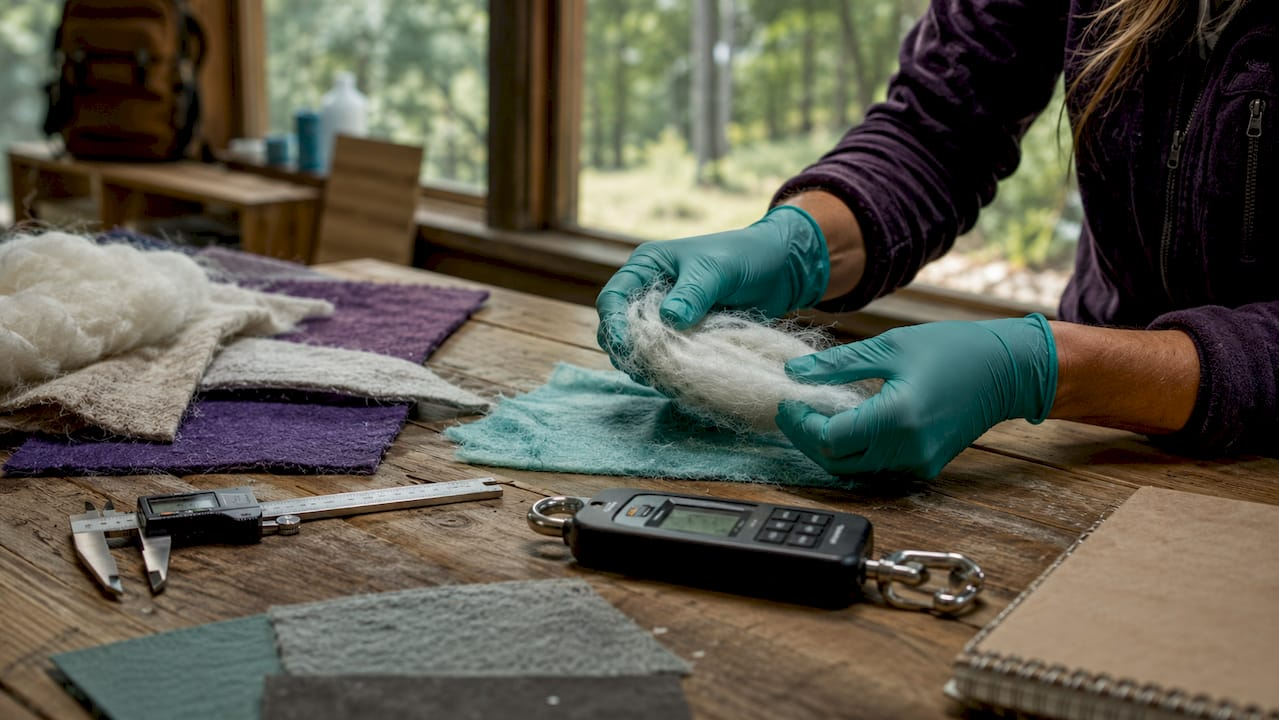
Understanding resistance in outdoor fabrics is the foundation for choosing gear that actually lasts. Fiber architecture determines whether your gear survives five seasons or falls apart after two.
How does synthetic gear compare to natural alternatives?
The synthetic gear vs natural gear debate is not about which material is universally better. It is about which material performs better for your specific conditions and priorities. The table below makes that distinction clear.
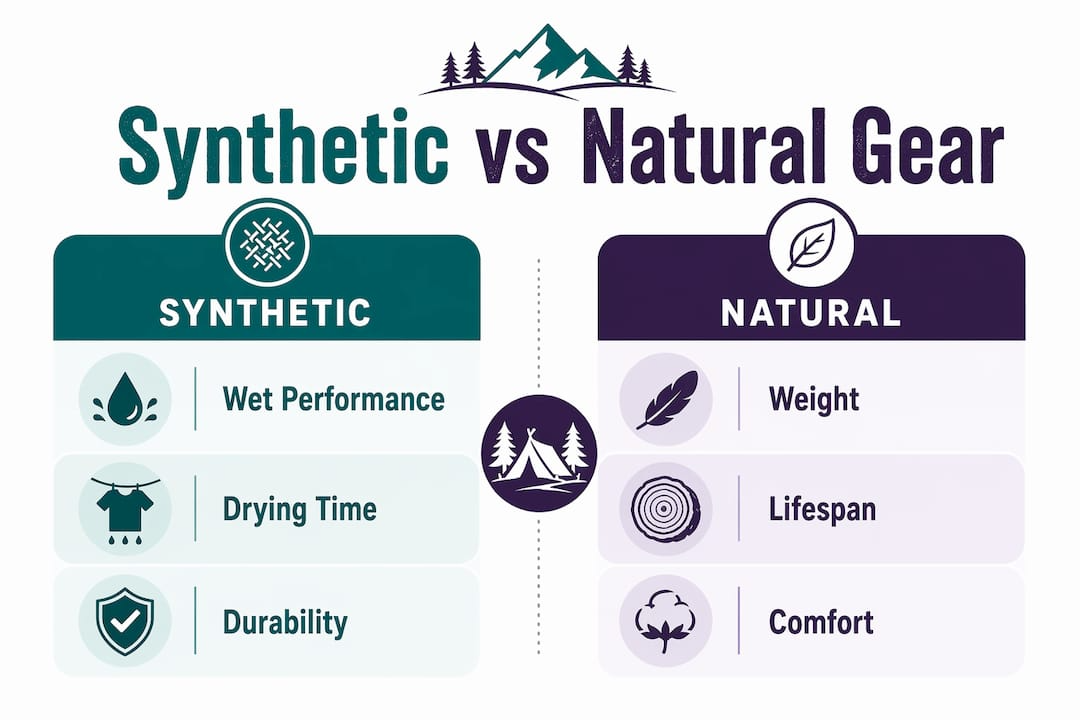
| Factor | Synthetic gear | Natural gear (down/wool/cotton) |
|---|---|---|
| Wet condition performance | Retains insulation when wet; dries fast | Down collapses when wet; cotton stays damp |
| Weight | 20–30% heavier than down insulation | Down is lighter for equivalent warmth |
| Lifespan | 3–7 years before compression fatigue | Down lasts 15–25+ years with proper care |
| Cost | Generally lower due to scalable manufacturing | Higher upfront cost, especially for quality down |
| Maintenance | Machine washable; low care requirements | Requires specialized washing and drying |
| Humid/wet climate suitability | Excellent | Poor to moderate |
The lifespan gap is the most honest argument for natural materials. Down sleeping bags and jackets can last 15–25 years with proper care. Synthetic insulation typically reaches compression fatigue within 3–7 years, at which point loft loss is permanent and replacement is necessary. That is a real cost and environmental consideration.
Where synthetic gear clearly wins is in multi-activity, multi-climate use. If you are kayaking in the morning and hiking in the afternoon, or if your gear regularly gets soaked and needs to perform again the next day, synthetic materials are the practical choice. Experts confirm that gear selection should balance moisture risks with weight preferences, favoring synthetic for humid conditions. For dry alpine environments where weight is the top priority, high-quality down still has a strong case.
The comparison also extends to down sleeping bags for backpacking, where the weight advantage of down becomes more pronounced on long-distance routes with minimal precipitation risk.
What sustainability benefits do synthetic materials offer?
The assumption that natural equals sustainable is one of the most persistent myths in outdoor gear. Natural does not inherently mean more sustainable. Durability and use-phase energy impact often favor well-designed synthetic gear over natural alternatives. Sustainability experts point to product lifespan and function over raw material origin as the more accurate measure of environmental impact.
Here is where synthetic gear builds a credible sustainability case:
- Reduced laundering energy: Synthetic fabrics lower environmental impact through faster drying and less frequent washing. A synthetic base layer that dries overnight on the trail requires far fewer wash cycles than a cotton equivalent over a season.
- Durability reducing replacement frequency: Gear that lasts longer means fewer units manufactured, shipped, and disposed of. Even with a 3–7 year synthetic insulation lifespan, a well-maintained synthetic jacket replaces multiple cheaper cotton alternatives.
- Circular economy potential: Synthetics allow design-for-recycling innovations that offset fossil fuel concerns. Advances in bio-based synthetic fibers and improved mechanical recycling are making it possible to close the loop on synthetic gear at end of life.
- Shape retention reducing ironing: Synthetics maintain their shape better than natural fibers, which means less energy spent on care over the garment's life.
The honest caveat is that synthetic fibers are petroleum-derived and shed microplastics during washing. That is a real environmental cost. The response from the industry has been practical: wash bags like the Guppyfriend filter microplastics at the source, and newer bio-based synthetics reduce fossil fuel dependency.
Pro Tip: To maximize both lifespan and environmental benefit, wash synthetic gear in cold water on a gentle cycle, use a microplastic-catching wash bag, and air dry instead of using a dryer. Following a proper gear maintenance routine can extend synthetic gear life by years, reducing your total replacement footprint significantly.
How to choose the right synthetic gear for your adventures
Choosing the right synthetic gear requires matching fiber technology to your specific activity, climate, and values. Here is a practical framework for making that decision.
Define your primary weather exposure. If you regularly hike or camp in wet or humid conditions, synthetic insulation is the clear choice. If you operate in dry, cold alpine environments and pack weight is critical, a down-synthetic hybrid may serve you better.
Match fiber type to activity intensity. High-output activities like trail running or ski touring generate significant body heat and sweat. Look for lightweight synthetic base layers in polyester or nylon with directional moisture-wicking construction. For static warmth in camp, a thicker synthetic insulation layer with Climashield or PrimaLoft technology delivers reliable loft.
Evaluate fiber architecture before buying. Selecting the right synthetic fiber architecture reduces failures like pilling, clumping, and shape loss under real outdoor conditions. Ask whether the insulation uses continuous filament or short-staple construction. Continuous filament lasts longer and washes better.
Check eco-credentials at the point of purchase. Look for certifications like bluesign, OEKO-TEX, or recycled content labels (such as recycled polyester from plastic bottles). These are not marketing claims. They represent third-party verification of environmental standards in manufacturing.
Consider a mixed-insulation system. Many experienced backpackers use synthetic insulation in high-moisture zones (hoods, shoulders, underarms) combined with down in the core. This approach captures the wet-weather reliability of synthetic where it matters most while keeping overall pack weight manageable.
Factor in total cost of ownership. Synthetic gear has a lower upfront cost due to scalable manufacturing processes. Over a 5-year period, a well-maintained synthetic jacket may cost less per year of use than a premium down alternative, especially when you account for specialized down care products and professional cleaning.
Reviewing outdoor gear materials in detail before purchasing helps you understand exactly what you are buying and why it will or will not hold up in your specific conditions.
Key takeaways
Synthetic gear is the most practical and sustainable choice for outdoor adventurers who prioritize wet-weather performance, lower maintenance, and lifecycle environmental responsibility.
| Point | Details |
|---|---|
| Wet-weather performance | Synthetic insulation retains warmth and dries fast when wet, unlike down. |
| Fiber architecture matters | Continuous filament fibers like Climashield outperform short-staple for durability and washability. |
| Sustainability is lifecycle-based | Faster drying and less laundering reduce energy use over a garment's full lifespan. |
| Lifespan trade-off is real | Synthetic insulation lasts 3–7 years versus 15–25+ for down; plan for replacement. |
| Eco-credentials are verifiable | Look for bluesign, OEKO-TEX, or recycled content certifications at purchase. |
My honest read on synthetic gear in 2026
I have spent years testing gear across wet Pacific coast trails and dry desert plateaus, and the conversation around synthetic versus natural materials has shifted significantly. The old framing was simple: down is lighter and warmer, synthetic is cheaper and wetter-proof. That framing is now outdated.
What I have seen in practice is that the best outdoor adventurers do not pick a side. They pick the right tool for the specific job. A synthetic insulated jacket is my default choice for anything involving water, whether that is river crossings, coastal camping, or shoulder-season trips where rain is unpredictable. I do not worry about it. It gets wet, I shake it out, it works again.
Where I push back on the synthetic-first narrative is on lifespan. Compression fatigue is real and it is not reversible. I have replaced synthetic sleeping bags that lost meaningful loft after four hard seasons. That replacement has an environmental cost that honest advocates need to acknowledge. The answer is not to avoid synthetic gear. The answer is to buy quality, care for it properly, and get every possible season out of it before replacing.
The sustainability story around bio-based synthetics and recycled fibers is genuinely exciting. It is not fully mature yet, but the direction is right. For eco-conscious adventurers, buying recycled-content synthetic gear today is one of the most concrete material choices you can make.
— Billy
Gear up with Lifecampadventure's synthetic outdoor collection
Lifecampadventure curates synthetic outdoor gear selected for real-world durability, verified eco-credentials, and performance across diverse conditions. Every product in our collection is chosen with the same criteria this article outlines: fiber quality, weather reliability, and long-term value. Whether you are building your first kit or upgrading a worn-out layer, our camping gear comparison gives you a clear, honest look at the best synthetic options available right now. You can also explore our top-rated gear picks for 2026, organized by activity type and climate. Gear that performs is gear that lasts, and gear that lasts is gear that costs the planet less.
FAQ
What is synthetic gear made from?
Synthetic gear is made from engineered fibers including polyester, nylon, and carbon-fiber composites. These materials are designed to deliver specific performance properties like moisture resistance, abrasion resistance, and elasticity.
Is synthetic gear better than down in wet conditions?
Synthetic insulation outperforms down when wet because it retains loft and insulating ability even when saturated. Down collapses when wet and takes significantly longer to dry, making synthetic the safer choice in humid or rainy environments.
How long does synthetic outdoor gear last?
Synthetic insulation typically lasts 3–7 years before compression fatigue reduces loft permanently. Hard-shell synthetic fabrics and base layers can last longer with proper care and cold-water washing.
Is synthetic gear a sustainable choice for eco-conscious adventurers?
Synthetic gear can be the more sustainable choice when you factor in its full lifecycle. Faster drying, less frequent laundering, and advances in recycled-content fibers and design-for-recycling all reduce total environmental impact compared to natural alternatives that require more intensive care.
What certifications should I look for when buying synthetic gear?
Look for bluesign, OEKO-TEX Standard 100, or recycled content labels such as GRS (Global Recycled Standard). These certifications verify that the manufacturing process and materials meet independently audited environmental and safety standards.
