TL;DR:
- Lightweight cookware reduces physical fatigue and increases packing space for outdoor trips.
- Thin-walled materials like titanium heat quickly, saving fuel and enhancing cooking efficiency.
- The best cookware depends on trip type, balancing weight, durability, and cooking needs.
Every ounce you carry on the trail adds up faster than you think. A clunky pot set that seems fine in your kitchen can feel like a brick after five miles of elevation gain. Most campers don't realize how much cookware weight shapes their whole outdoor experience, from how far they hike to how much they enjoy the meals at camp. Whether you're planning a quick weekend escape or a multi-day backpacking push, this guide walks you through the real benefits, the right materials, the honest trade-offs, and how to make the smartest cookware choice for every type of adventure.
Key Takeaways
| Point | Details |
|---|---|
| Saves weight and space | Choosing lightweight cookware keeps your pack manageable for weekend trips or long hikes. |
| Boosts cooking efficiency | Light cookware and smart features help you cook faster and save crucial fuel in the outdoors. |
| Material matters | Titanium is best for solo travelers, while aluminum suits groups and stainless steel offers durability. |
| Know the trade-offs | Heavier cookware is better for car camping and gourmet meals, so match your gear to your adventure. |
The real benefits of lightweight cookware
Now that you know why cookware weight matters outdoors, let's break down the biggest benefits.
When your pack is light, your legs last longer. That's not a marketing line. It's trail math. Every pound you shave off your load reduces the cumulative strain on your knees, hips, and shoulders over miles of hiking. Cookware is one of the easiest places to cut weight without giving up function.
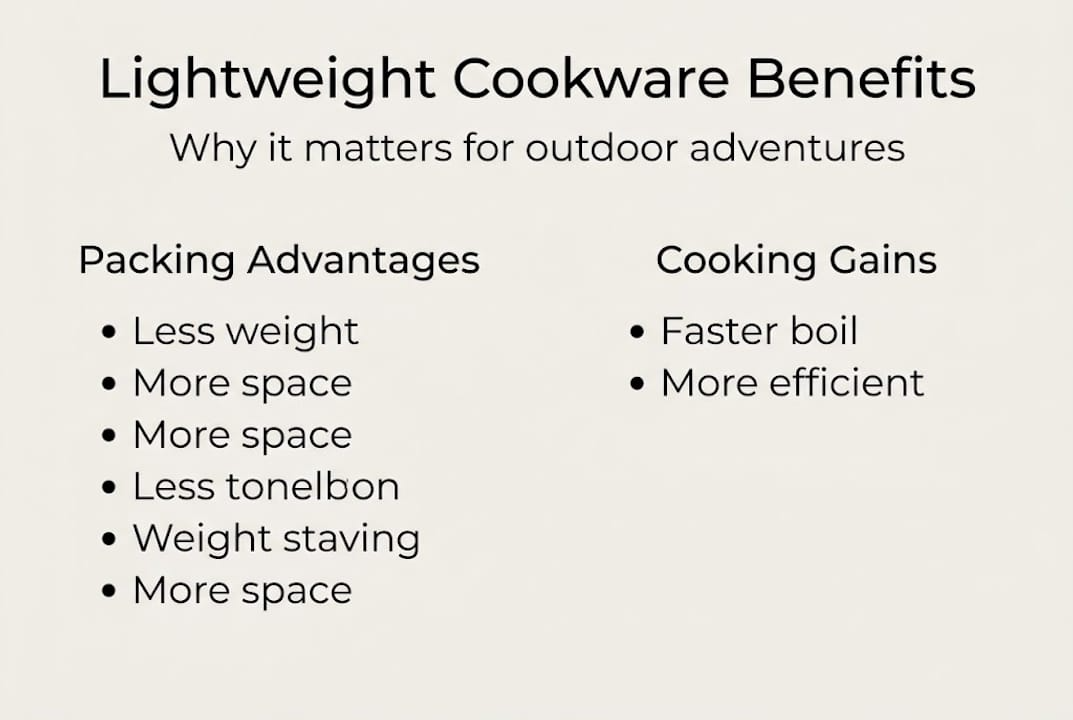
The compact cookware benefits go beyond simple weight savings. Modern lightweight sets are engineered to nest inside each other, fold flat, and pack into spaces that traditional pots simply can't reach. That means more room for food, clothing, and safety gear.
Here's what you actually gain when you switch to lightweight cookware:
- Less physical fatigue on longer hikes and multi-day trips
- More available backpack space for food, layers, and essentials
- Faster camp setup because compact sets are easier to unpack and organize
- Greater trip flexibility since lighter loads make spontaneous route changes possible
- Lower barrier for beginners who want to try backpacking without feeling overwhelmed by gear weight
Stat to know: Lightweight cookware improves portability and packability with nesting designs, foldable handles, and collapsible options that save space in backpacks for weekend trips and backpacking.
Even on a simple two-night trip, choosing a 6-ounce titanium pot over a 22-ounce stainless set is a noticeable difference. Your shoulders will thank you by day two. And when you're less tired, you actually enjoy the campsite instead of just collapsing into it.
Lightweight cookware also opens the door to more spontaneous adventures. When gearing up takes less effort and packing fits inside a daypack, you stop making excuses and start hitting the trail more often.
How lightweight cookware improves cooking efficiency
Once you pack lighter, what about actually cooking? Here's how it changes your camp kitchen experience.
Thin-walled titanium and hard-anodized aluminum conduct heat quickly. Your water boils faster. Your food is ready sooner. You use less fuel. That last point matters more than most people expect, especially on longer trips where every ounce of gas canister weight counts.
| Cookware type | Average boil time (1L) | Fuel used per boil | Best for |
|---|---|---|---|
| Titanium (basic) | 4.5 min | ~6g | Solo fast-packing |
| Aluminum with heat exchanger | 2.5 min | ~3.5g | Efficiency-focused campers |
| Stainless steel | 6 min | ~8g | Durability-first campers |
| Cast iron | 10+ min | ~14g | Car camping, base camps |
Heat exchangers are fins welded to the bottom of a pot that trap flame and direct it across the base more efficiently. According to testing from backcountry cooking experts, heat exchangers can cut boiling time by half and save over 2 ounces of fuel on a five-day trip. That's almost a full extra meal's worth of cooking power.
For efficient meal prep for backpacking, this efficiency compounds fast. Shorter boil times mean you spend less time hovering over a stove in the wind and more time eating, resting, or exploring.
Fast heating also reduces the chance of scorching food. When a pot comes to temperature quickly and evenly, you avoid the frustrating hot spots that burn oatmeal or unevenly cook rice.
Pro Tip: If you're unsure whether to upgrade outdoor cookware, start by checking your current pot's weight. If it's over 12 ounces for a solo set, you're likely carrying more than you need.
Material matters: Choosing the right lightweight cookware
You're sold on lighter gear, but which material should you trust? Let's break it down.
Not all lightweight cookware is created equal. The material you choose affects heat distribution, durability, cost, and how your meals actually turn out. Each option has a clear best-use case.
| Material | Weight (solo pot) | Heat distribution | Durability | Best use case |
|---|---|---|---|---|
| Titanium | Under 4oz | Uneven | Very high | Solo fast-packing |
| Hard-anodized aluminum | 5 to 8oz | Even | Moderate | Group camping, everyday use |
| Stainless steel | 10 to 14oz | Moderate | Very high | All-conditions camping |
Titanium is the gold standard for weight. A solo titanium pot can weigh under 4 ounces, making it a top pick for ultralight backpackers covering big miles. The trade-off is uneven heat distribution, which means you need to stir frequently or use a lower flame.
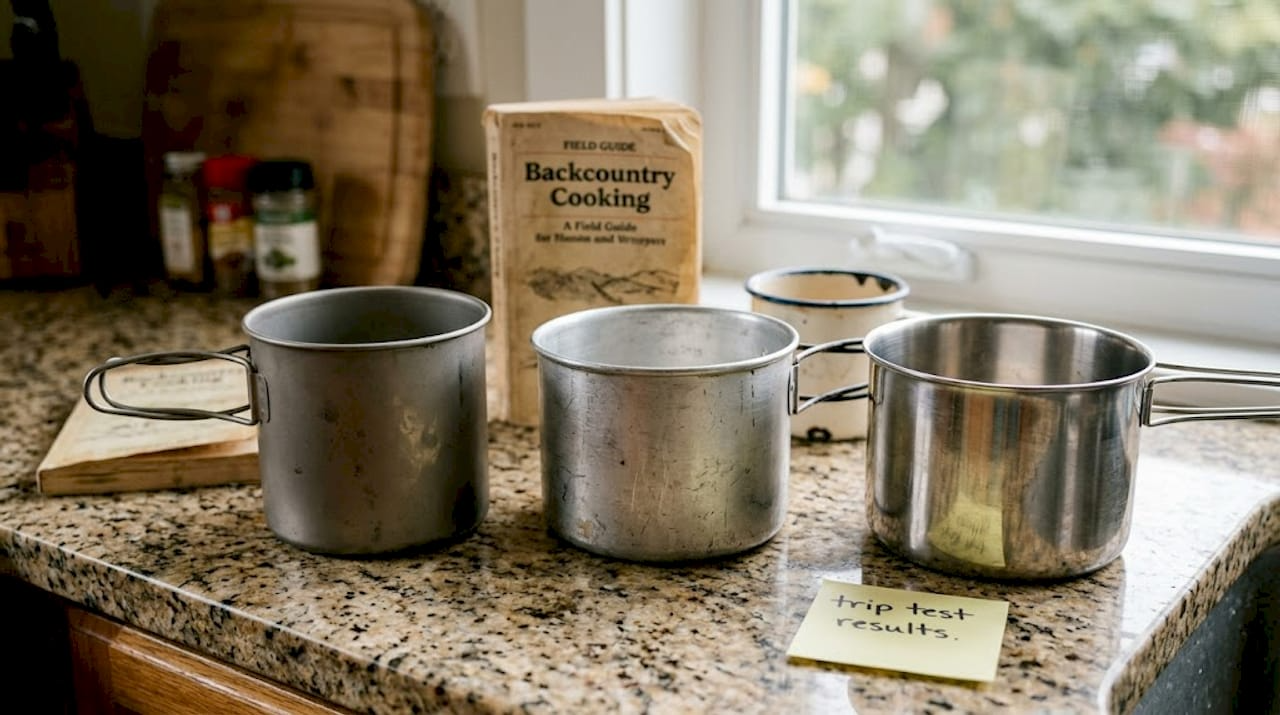
Aluminum is the sweet spot for most campers. It's affordable, reasonably light, and heats more evenly than titanium. Groups prefer aluminum sets because they handle larger portions without the hot spots that frustrate single-pot cooking.
Stainless steel is heavier but nearly indestructible. If you abuse your gear or cook over open flames regularly, stainless holds up. It's not the ultralight choice, but it earns its place on rugged, long-distance expeditions.
Pro Tip: Check out camping cookware reviews to compare real user experiences across materials before committing to a set. Prioritize wide bases and heat exchangers for efficiency, and match material to your typical group size and cooking style.
For more on field cooking techniques, the backcountry cooking guide breaks down what to expect when cooking away from a traditional camp stove setup.
When lightweight isn't always better: Trade-offs to consider
But before you toss all your heavy pans, here's when heavier cookware might actually make sense.
Lightweight cookware solves specific problems. It is not a universal upgrade. There are camping situations where dragging out the heavy cast iron skillet is absolutely the right call.
Situations where heavier cookware wins:
- Car camping and base camps where you drive to your site and weight is irrelevant
- Gourmet camp cooking requiring even heat control for meats, pancakes, or baked goods
- Cooking over open fire where cast iron's mass protects against flame fluctuations
- Large group meals where big, heavy pots handle volume and even cooking better
- Cold-weather base camps where thick-walled pots retain heat longer between uses
"Not for car camping or gourmet cooking where weight and space are not issues. Heavy cast iron and steel are better for even heat and durability over fire."
Cast iron in particular is hard to beat for campfire cooking. Its mass absorbs heat and distributes it in a way that lightweight titanium simply cannot replicate. A cast iron skillet over coals produces a sear that would make any ultralight pot jealous.
Read up on outdoor cooking tips to understand when your cooking goals should actually drive your gear choices, not the other way around.
Lightweight sets also tend to have shorter lifespans under heavy use. Thin aluminum can dent. Titanium can warp over very high flames. If you cook aggressively or share gear across seasons and multiple people, a more durable mid-weight set may cost less over time. Pairing the right cookware with equally thoughtful shelter choices, like lightweight tents, creates a smarter overall gear system without sacrificing comfort.
The rule is simple: match your cookware to your trip type. Weight alone is not the goal. The goal is enjoying the food and the experience.
Our take: What most people miss when choosing cookware weight
Weighing all these factors, here's our hard-won insight from years outdoors.
Most people approach cookware shopping the same way they approach buying running shoes: they fixate on one number. For runners, it's cushioning score. For campers, it's ounces. And both miss the full picture.
The lightest titanium pot in the world won't make your outdoor meals better if your cooking style needs even heat or a bigger cook surface. We've talked to hundreds of campers who bought ultralight setups and then quietly went back to their aluminum pots because the food just tasted better.
What actually makes trips memorable is the combination of manageable weight and genuinely good meals. That balance looks different for everyone. A solo thru-hiker running 20-mile days needs different cookware than a group of four setting up a weekend basecamp in the mountains.
Smart gear choices save weight where it counts most and keep the cooking enjoyable. The best place to start is thinking about your backpacking meal prep tips before you ever look at cookware specs. When you know what you're cooking, choosing the right pot becomes obvious.
Don't obsess over shaving the last half ounce. Obsess over whether you'll enjoy every meal you cook out there.
Explore top-rated lightweight gear for your next adventure
Ready to upgrade your camp kitchen or find lightweight gear that suits your plans?
At Life Camp Adventure, we put gear through its paces so you don't have to guess. Our detailed camping cookware reviews break down every major option by weight, material, heat performance, and real-world usability.
Browse our full best camping gear comparisons to find the right set for your adventure style, from minimalist solo kits to full group setups. Not sure where to start? Learn why choose camping equipment that actually fits how you explore. We're here to help you gear up with confidence and get out there.
Frequently asked questions
Does lightweight cookware save fuel when camping?
Yes. Lightweight cookware, especially sets with heat exchangers, boils water faster and can save over 2 ounces of fuel on a five-day trip compared to standard pots.
What is the lightest material for outdoor cookware?
Titanium is the lightest common option, with solo pots often weighing under 4 ounces, making it the go-to choice for ultralight backpackers covering long distances.
Is lightweight cookware good for car camping?
Not necessarily. For car camping, heavier cast iron or steel sets provide better even heat and durability over open fire, which matters more than weight when you're driving to your site.
How can I make my camp kitchen lighter without compromising on meals?
Choose nesting, collapsible cookware with foldable handles, and plan meals that use one pot. Simple, calorie-dense meals prepared with versatile gear keep weight down without sacrificing satisfaction.
