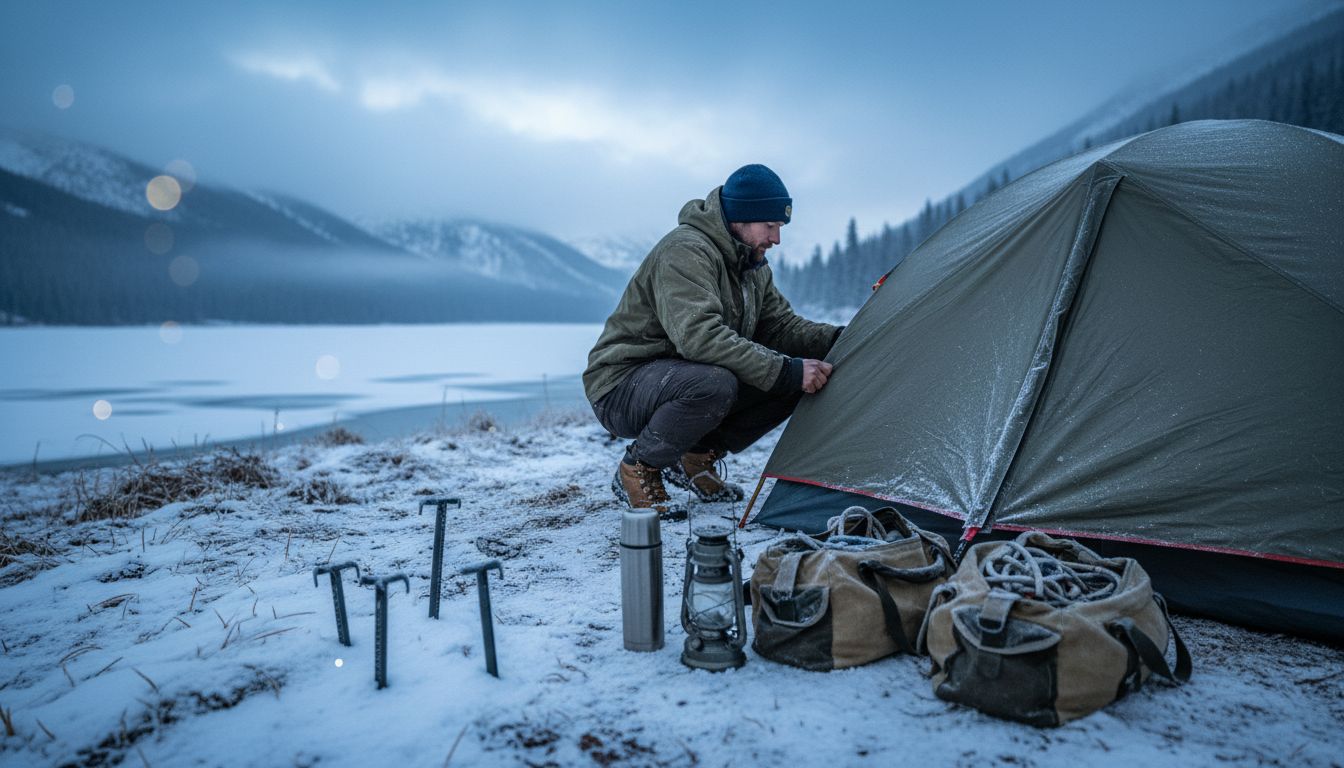
Why Choose Four Season Tents for Year-Round Camping
Most American campers are surprised to learn that fewer than 15 percent have ever tried a true four season tent. This matters because winter expeditions and severe weather adventures are growing more popular across the country, but many outdoor enthusiasts still rely on standard gear that may not offer critical protection. Discovering how four season tents are defined, why their reputation is often misunderstood, and what these shelters actually provide can change the way you prepare for extreme environments.
Key Takeaways
| Point | Details |
|---|---|
| Four Season Tents Are Not All-Weather Solutions | They are primarily designed for extreme winter conditions, not suitable for all four seasons. |
| Construction Features Enhance Performance | Key characteristics include robust pole structures, reinforced fabrics, and minimal mesh areas for heat retention. |
| Critical Ventilation Management Is Essential | Proper airflow is vital to prevent condensation and maintain thermal efficiency in extreme situations. |
| Common Mistakes Can Compromise Safety | Misjudging weight, space, and ventilation needs can lead to dangerous conditions during winter expeditions. |
Four Season Tents Defined and Debunked
The term four season tent sounds impressive, but what does it actually mean? Contrary to popular belief, these specialized camping shelters aren't magical solutions that work perfectly in every single weather condition. Research from singular alpinism reveals that the terminology can be somewhat misleading, as these tents are primarily optimized for harsh winter environments rather than truly functioning across all four seasons.
At its core, a four season tent represents a robust shelter engineered to withstand extreme weather conditions, particularly challenging alpine and winter scenarios. These tents feature reinforced designs with heavier fabrics, stronger pole structures, and enhanced weather resistance compared to standard three season camping tents. Their construction prioritizes durability and protection against wind, snow, and freezing temperatures, which means they often come with trade-offs like increased weight and reduced ventilation.
Key characteristics that distinguish four season tents from standard camping shelters include:
- Robust pole structures capable of supporting heavy snow loads
- Minimal mesh areas to prevent heat loss and block wind
- Steeper wall angles to help shed snow and prevent accumulation
- Reinforced fabric materials with higher denier ratings
- Lower profile designs that resist wind and maintain internal warmth
Understanding these distinctions helps campers make informed decisions about whether a four season tent matches their specific outdoor adventure requirements. While excellent for winter mountaineering and extreme conditions, these specialized tents might not be the most comfortable or practical choice for summer backpacking or warm weather camping.
Key Design Features and Materials Explained
Four season tents represent a sophisticated engineering challenge, demanding specialized material selection and precise structural design to withstand extreme environmental conditions. The core components that define these robust shelters include advanced fabric technologies, innovative pole systems, and strategic architectural approaches that prioritize survival in challenging alpine and winter environments.
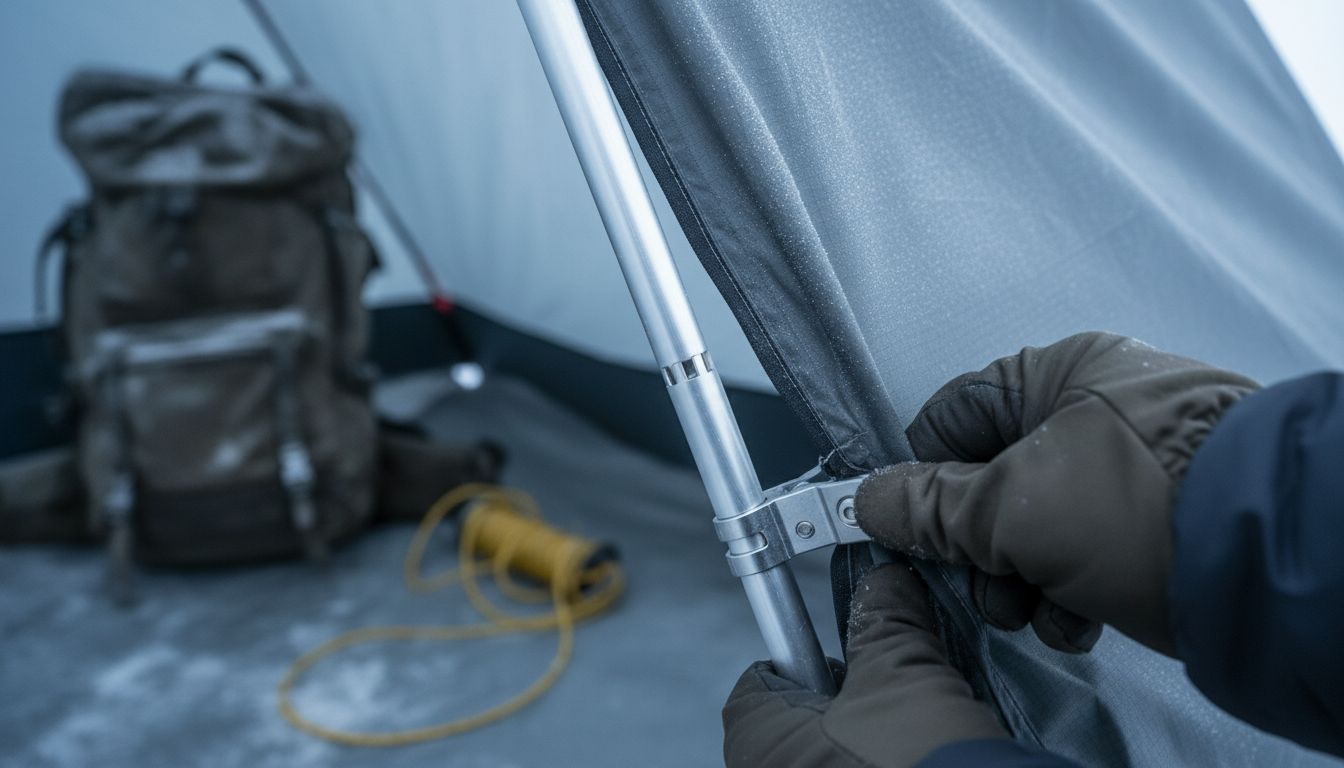
The fabric selection for four season tents is critical, with manufacturers typically employing high-performance materials like ripstop nylon and polyester composites. These textiles are engineered with specialized coatings that enhance water resistance, increase tear strength, and provide superior UV protection. Denier ratings typically range between 40D to 75D, indicating a dense, durable fabric construction that can resist punctures, abrasion, and extreme weather stress.
Structural design elements that set four season tents apart include:
- Geodesic or semi-geodesic pole configurations for maximum stability
- Reduced ventilation zones to minimize heat loss
- Steep, angular wall designs to deflect wind and shed snow
- Reinforced attachment points and guy line systems
- Extended rainfly coverage for enhanced weather protection
The pole framework represents another crucial engineering aspect, with most four season tents utilizing aluminum or carbon fiber materials. Aluminum poles offer an optimal balance between strength, weight, and durability, while carbon fiber provides exceptional lightweight performance for mountaineering and extreme alpine expeditions. These pole systems are typically designed with multiple intersection points and cross-bracing techniques to distribute structural stress and maintain tent integrity under challenging conditions.
Performance in Extreme Weather Conditions
Four season tents are engineered to be the ultimate survival shelters, designed to withstand the most punishing environmental challenges that nature can unleash. Their performance goes far beyond typical camping gear, transforming into critical lifeline shelters when temperatures plummet and wind speeds become treacherous. These specialized shelters must provide reliable protection in scenarios where standard tents would catastrophically fail.
Critical ventilation management becomes paramount in extreme conditions, as internal microclimate control can mean the difference between survival and hypothermia. The sealed environment necessary for winter protection creates unique challenges, particularly around moisture management. Condensation from human breath and body heat can rapidly accumulate, potentially creating dangerous damp conditions that compromise thermal efficiency and increase cold-related health risks.Key performance metrics for four season tents in extreme environments include:
- Wind resistance up to 50-60 mph sustained winds
- Snow load capacity supporting 20-30 pounds per square foot
- Temperature retention capabilities down to -20°F
- Rapid setup mechanisms for emergency shelter deployment
- Structural integrity in wind-driven snow and ice conditions
The true test of a four season tent lies in its ability to provide a stable, protected microenvironment when external conditions become life-threatening. Professional mountaineers and expedition teams rely on these shelters as more than just temporary structures - they represent critical survival infrastructure that must perform flawlessly under the most demanding alpine and polar conditions. Engineered with precision and built with advanced materials, these tents transform hostile wilderness environments into survivable spaces.
Benefits Over Three-Season Tents
Four season tents represent a quantum leap in outdoor shelter technology, offering capabilities that dramatically surpass traditional three-season tent designs. While three-season tents are optimized for mild to moderate weather conditions, four season tents are engineered as true survival platforms capable of withstanding extreme environmental challenges that would compromise standard camping shelters.
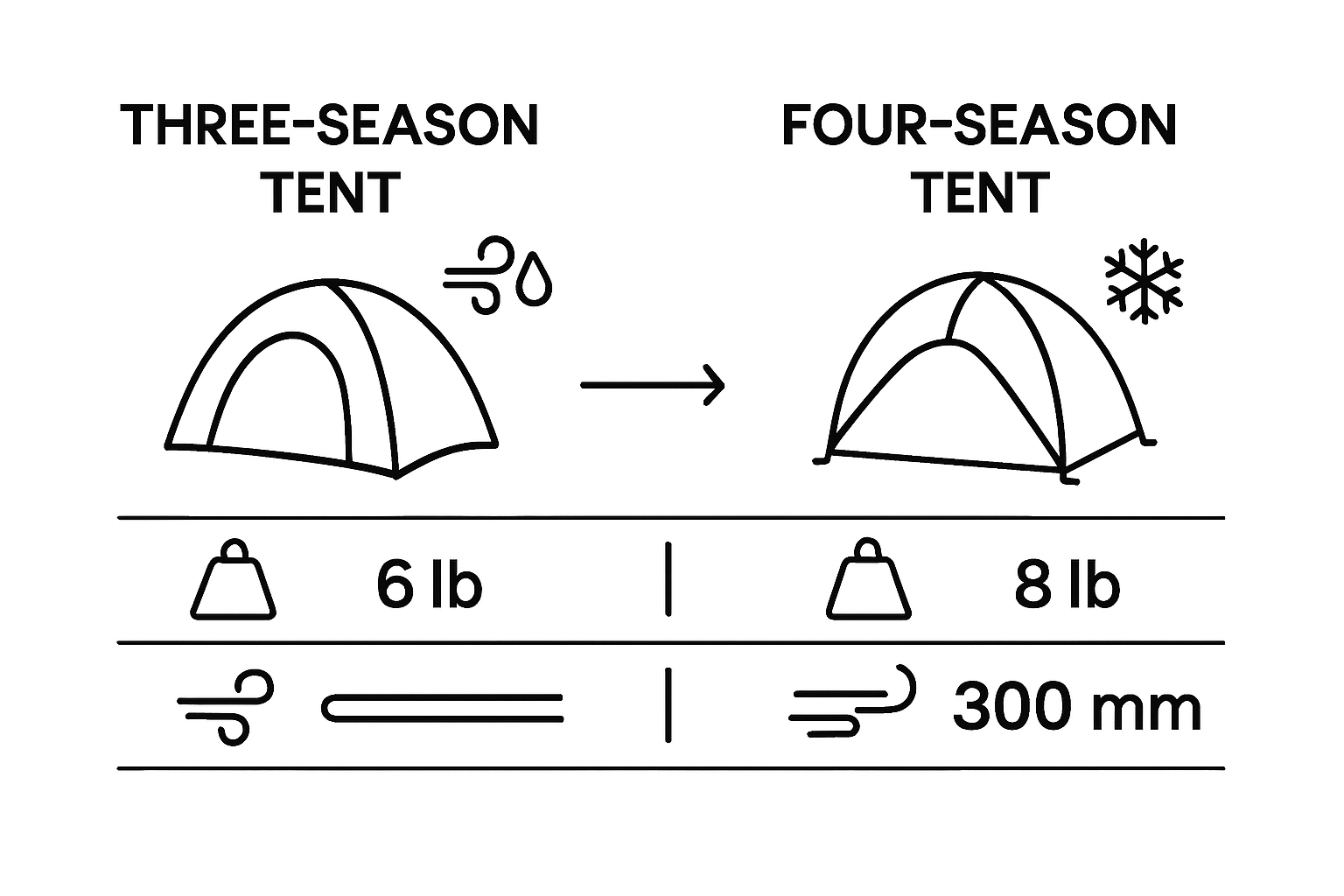
Key comparative advantages of four season tents include:
- Substantially higher wind resistance (50-60 mph vs. 25-35 mph)
- Snow load capacity supporting 20-30 pounds per square foot
- Enhanced thermal retention capabilities
- Lower profile designs that minimize wind interference
- More durable materials with higher denier ratings
- Specialized ventilation systems for moisture management
The fundamental difference lies in engineering philosophy. Three-season tents are essentially lightweight temporary shelters designed for fair weather camping, while four season tents function as critical survival infrastructure. They represent an investment in safety, transforming potentially life-threatening outdoor conditions into manageable environments through meticulous design, advanced materials, and exceptional structural integrity. For serious adventurers operating in unpredictable or extreme landscapes, four season tents aren't just an option - they're a necessity.
Common Mistakes When Selecting Four Season Tents
Choosing the right four season tent requires more than just picking the most expensive or rugged-looking option. Outdoor enthusiasts frequently make critical errors that can compromise their safety and comfort in extreme environments, turning what should be an adventure into a potentially dangerous situation. Understanding these common pitfalls is crucial for making an informed purchasing decision.
Ventilation management represents a critical overlooked aspect when selecting specialized winter shelters. Many buyers mistakenly focus solely on insulation and wind resistance, neglecting the essential need for strategic airflow. Without proper ventilation systems, internal condensation can rapidly accumulate, creating dangerous moisture conditions that increase hypothermia risks and compromise the tent's thermal efficiency.
Common mistakes campers make when selecting four season tents include:
- Prioritizing weight over structural integrity
- Ignoring specific environmental performance requirements
- Underestimating necessary interior space for winter gear
- Purchasing tents without understanding their specific temperature ratings
- Failing to consider pole strength and snow load capabilities
- Overlooking the importance of multiple ventilation points
The most critical error is treating four season tents as interchangeable with standard camping shelters. These are precision-engineered survival tools, not mere temporary coverings. Professional mountaineers and extreme environment adventurers understand that selecting the wrong tent can mean the difference between a challenging expedition and a life-threatening situation. Careful research, understanding your specific environmental needs, and investing in quality construction are the keys to finding a four season tent that truly performs when conditions become unforgiving.
Gear Up for Year-Round Adventure with Four Season Tents
When extreme weather strikes, having the right shelter can mean the difference between discomfort and survival. This article highlights the critical importance of choosing a four season tent engineered for durability, superior wind resistance, and moisture management. If you want to avoid common pitfalls like poor ventilation or insufficient snow load capacity you need reliable gear designed for the toughest environments.
Life Camp Adventure understands these challenges and is dedicated to equipping every adventurer with cutting-edge camping essentials. Explore our carefully selected range of four season tents that combine robust materials and advanced designs to keep you safe and comfortable no matter the season.
Take control of your outdoor experience today. Visit Life Camp Adventure to find the perfect four season tent that matches your extreme environment needs. Don’t wait for harsh weather to test your gear. Browse our collections and invest in your safety and comfort with trusted, expert-approved camping solutions designed for true adventurers.
Frequently Asked Questions
What are the main differences between four season tents and three season tents?
Four season tents are designed to withstand extreme weather conditions, featuring robust pole structures, heavier fabrics, and better insulation compared to three season tents, which are optimized for milder weather.
When should I use a four season tent?
A four season tent is ideal for winter mountaineering, extreme weather camping, and alpine conditions where heavy snow, strong winds, and low temperatures are expected.
How important is ventilation in a four season tent?
Ventilation is crucial in a four season tent to manage internal moisture and prevent condensation, which can lead to damp conditions and increase the risk of hypothermia.
What factors should I consider when choosing a four season tent?
When choosing a four season tent, consider factors such as weight, interior space for gear, pole strength, snow load capacity, temperature ratings, and the effectiveness of the ventilation systems.
Recommended
- 240240150cm Spring Quick Opening Four-Person Family Tent Camping Tent Brown
- 8 Person Camping Tent Setup in 60 Seconds with Rainfly & Windproof Tent with Car
- VEVOR 12 Person Canvas Glamping Bell Tent, Breathable Waterproof Large Yurt Tent
- The Essential Guide to Weatherproof Tents
- 10 Best Tent For 4 Person Backpacking: Top Picks For Outdoor Adventures - Tent Explorer
