TL;DR:
- A quality down sleeping bag can be nearly one pound lighter than its synthetic equivalent at the same temperature rating, greatly benefiting backpackers. Down excels in dry climates, offering superior packability, durability, and warmth retention, making it ideal for US terrain like Utah and Colorado. Proper care and moisture management extend the lifespan of down gear, solidifying its long-term value despite initial higher costs.
A full pound lighter. That's the real-world difference between a quality down sleeping bag and its synthetic equivalent at the same temperature rating, and on mile fifteen of a Utah canyon trail, you feel every ounce you didn't leave at the trailhead. If you've been wrestling with the decision between down and synthetic insulation, you're not alone. The choice is genuinely important, and the wrong call affects your pack weight, your sleep quality, and how you feel every morning you wake up in the backcountry. This guide breaks down exactly why choose down sleeping bags when performance and weight both matter.
Understanding down insulation and its benefits
Down comes from the soft, fluffy underlayer of feathers found beneath the outer plumage of geese and ducks. Unlike synthetic fibers, which mimic insulation through flat or crimped strands, down insulation uses three-dimensional clusters that create tiny air pockets trapping body heat efficiently. Each cluster acts like a tiny heat-holding sphere. Stack thousands of those together and you get extraordinary warmth relative to how little the material actually weighs.
Fill power is the key spec to understand here. It measures how many cubic inches one ounce of down occupies when allowed to expand fully. A 600 fill power bag is decent. An 800 fill power bag is noticeably lighter and more compressible for the same warmth rating. A 950+ fill power bag, like those used in premium ultralight designs, is in a different category entirely. Higher fill power means you need less material to achieve the same insulation, which directly translates to a smaller, lighter package.
For backpackers obsessed with packing tips for backpackers, this math matters. Here's what the benefits of down sleeping bags look like in practical terms:
- Weight: A well-made down bag at 20°F can weigh under two pounds. A synthetic equivalent often pushes three pounds or more.
- Packability: Down compresses into a stuff sack roughly the size of a Nalgene bottle. Synthetic bags resist compression and stay bulky.
- Warmth retention overnight: Down maintains consistent loft through an eight-hour sleep, even as temperatures drop before dawn.
- Longevity: With proper care, a quality down bag outlasts most synthetic options by over a decade.
- Feel: Backpackers consistently report that down feels more comfortable against the body, conforming naturally without the "stiff blanket" sensation some synthetic bags produce.
Now that you understand the basics, let's explore the key differences that separate down from synthetic in head-to-head use.
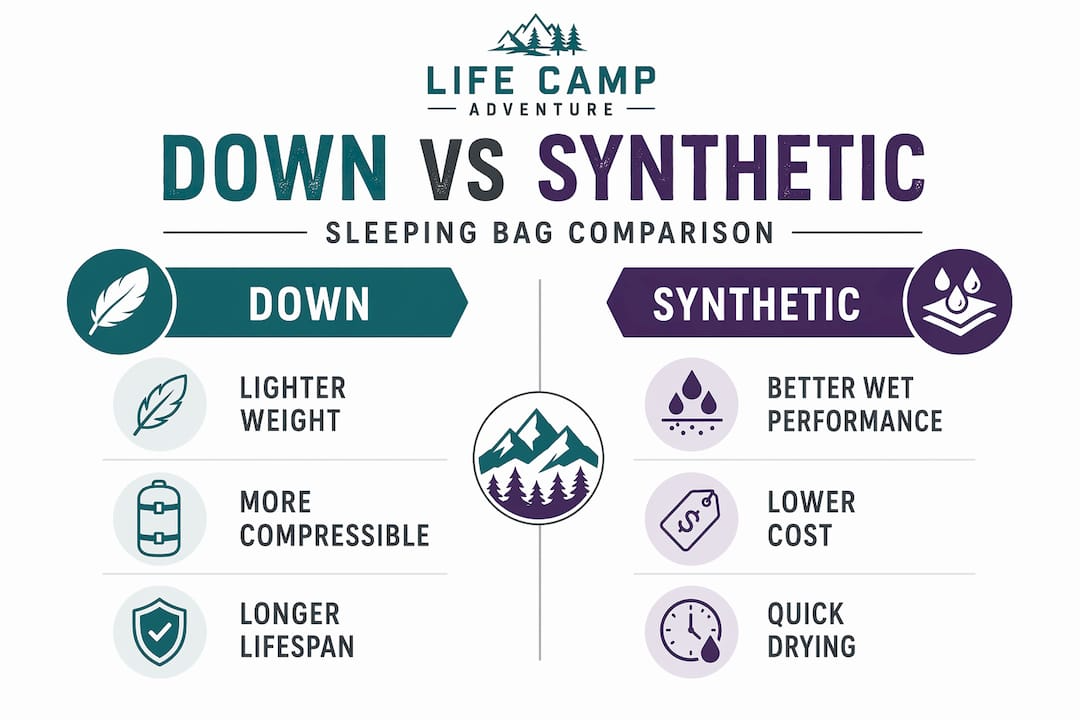
Comparing down and synthetic sleeping bags: weight, warmth, and durability
Understanding the benefits leads us to examine critical differences and real downsides worth knowing before you spend your money.
The weight gap is not subtle. An 800 fill power down bag weighs 25 to 30 percent less than a synthetic bag with the same temperature rating. Over a five-day trip, that savings changes how your shoulders and hips feel every afternoon. Synthetic bags are heavier because they require more fill material to achieve the same insulation value, and that material doesn't compress nearly as well.
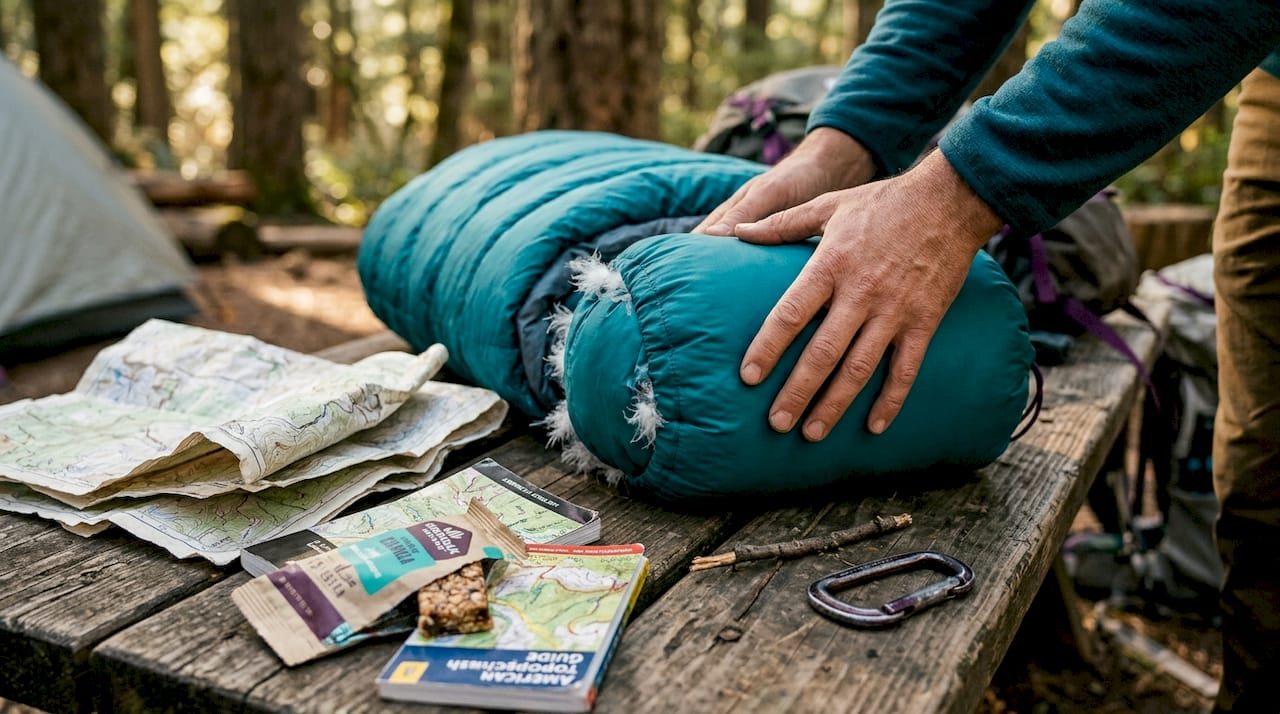
Here's a straightforward comparison:
| Feature | Down sleeping bag | Synthetic sleeping bag |
|---|---|---|
| Weight (20°F bag) | 1.5 to 2.5 lbs | 2.5 to 4 lbs |
| Compressed size | Very small (water bottle) | Large (football sized) |
| Warmth when wet | Poor | Good |
| Drying time | Slow (hours to days) | Fast |
| Lifespan with care | 15 to 20 years | 3 to 5 years |
| Upfront cost | Higher | Lower |
| Best climate | Dry | Wet or humid |
Down bags do require more careful maintenance. Here's what that looks like in practice:
- Hand wash or use a front-loading machine on a gentle cycle with a down-specific cleaner.
- Never wring or twist a wet down bag. The clusters tear easily.
- Store in an uncompressed state in a large, breathable cotton sack.
- Re-waterproof the shell fabric periodically with a DWR spray treatment.
Pro Tip: A synthetic bag makes sense as a backup or camp bag for car camping in rainy Pacific Northwest conditions. But for dry-climate backpacking where ounces count, down wins.
Key considerations: water sensitivity and care for down sleeping bags
Knowing water sensitivity and care techniques helps you keep your down sleeping bag performing at its best, trip after trip.
The single biggest knock against down is moisture. Down loses nearly all insulating loft when wet and can take days to fully dry, which is a serious problem in the backcountry where you can't just toss it in a dryer. When those clusters get soaked, they clump together and collapse, and your "warm" bag becomes a cold, soggy shell.
The good news is that modern gear and smart habits make this problem very manageable. Follow these steps to protect and maintain your down bag:
- Use a waterproof stuff sack or dry bag. Pack your sleeping bag inside before it goes in your pack, not after. River crossings and surprise afternoon storms won't warn you first.
- Choose hydrophobic treated down. Many current bags use down that's been treated to resist moisture absorption. It's not waterproof, but it buys you time.
- Dry the bag every morning when possible. Hang it over your shelter or a sun-exposed boulder for even 20 minutes to drive out condensation from your breath overnight.
- Wash with a specialized cleaner. Regular detergent strips the natural oils from the clusters, permanently reducing loft. Use products made specifically for down.
- Dry on low heat with tennis balls. Washing down bags properly and drying with tennis balls restores loft by breaking apart clumped clusters, improving warmth and extending lifespan significantly.
- Never store compressed. Keeping a down bag stuffed long-term crushes the clusters and kills loft permanently. Store it loose in a breathable cotton bag or hang it in a closet.
Understanding packable gear benefits goes hand in hand with knowing how to protect your investment once you're out there.
Pro Tip: After each trip, lay your bag flat or hang it for 24 hours before storing. This simple habit alone extends the life of the bag by years.
Why down sleeping bags are ideal for US dry climates and lightweight backpacking
With clear evidence supporting down for dry, weight-conscious use, let's highlight exactly why it dominates for American backcountry travel.
Most of the legendary backpacking terrain in the United States is dry. The Colorado Rockies, Utah's canyon country, the Sierra Nevada, and the desert southwest all share low humidity and low precipitation during peak backpacking season. That environment plays directly to down's strengths and minimizes its one real weakness. Down's 3D clusters create air pockets that offer greater warmth per weight, making it ideal for dry US West backpacking environments like Utah and Colorado.
The weight savings are real and felt. A quality 20°F down bag can run a full pound lighter than a synthetic equivalent. On a five-day trip, you'll notice that difference in your shoulders by day two. Many experienced backpackers report less overall fatigue, better posture on climbs, and faster daily mileage after switching from synthetic to down.
Here's why down sleeping bags for camping and backpacking in dry American terrain make the most sense:
- Dry air means moisture exposure is predictable and manageable with basic precautions.
- Reduced pack weight improves mobility on technical terrain like talus fields and steep switchbacks.
- Better compression means room in your pack for an extra layer, a camera, or more food.
- Down's natural temperature regulation performs well across the wide overnight temperature swings common in high-altitude desert environments.
- Most backpackers should choose down for dry climates because weight savings and packability profoundly impact the trail experience, with water sensitivity manageable through proper care.
Exploring the advantages of backpacking is always more enjoyable when your pack isn't fighting you every step.
By the numbers: A typical 20°F synthetic bag weighs around 3.5 lbs. A comparable down bag weighs roughly 2.3 lbs. That's 1.2 lbs saved per trip, every trip.
Example of high-quality down sleeping bags: Feathered Friends Swallow UL20
This premium example illustrates the benefits discussed, positioning down as the top choice for serious users who want the best warmth-to-weight on the market today.
The Feathered Friends Swallow UL20 is about as close to "best-in-class" as a down sleeping bag gets for backpacking. The Feathered Friends Swallow UL20 uses 950+ fill power goose down, weighing just 1 lb 11.3 oz for a 20°F bag, and it performs reliably down into the low 30°F range in real conditions. For context, most 20°F synthetic bags weigh more than twice that.
| Spec | Feathered Friends Swallow UL20 |
|---|---|
| Fill power | 950+ |
| Weight (regular) | 1 lb 11.3 oz |
| Temperature rating | 20°F |
| Shell material | Lightweight ripstop nylon |
| Shape | Mummy |
What makes it worth the price for serious users:
- 950+ fill power means exceptional warmth in an absurdly small package.
- Minimalist design sheds every gram that isn't essential to warmth and function.
- Mummy cut traps heat effectively but fits snugly on broader shoulders, so try before you commit if you're a bigger build.
- High-quality shell fabric resists moisture and pilling better than budget options.
- Repairability: Feathered Friends designs bags with long-term ownership in mind, offering repair services that extend the life of the bag by years.
Check out our full rundown on the best outdoor sleeping bags for more options across fill powers and price points.
The overlooked truths about choosing down sleeping bags
Most articles tell you down is lighter and synthetic handles moisture better, then leave you to figure out the rest. Here's what that framing misses.
The water sensitivity argument against down is almost always overstated for the majority of American backpackers. If you're hiking the John Muir Trail, the Zion Narrows approach, or the Collegiate Peaks loop, you're not paddling a kayak. Your sleeping bag lives inside your pack. A dry bag liner costs less than $20 and eliminates 90 percent of the moisture risk entirely. Most backpackers prioritize down despite its water sensitivity because weight savings and packability profoundly impact the trail experience. The tradeoff is not as scary as it's made out to be.
The longevity argument also gets underplayed. People balk at paying $450 for a down bag when a synthetic costs $180. But when you look at ultralight gear benefits over time, a 20-year down bag at $450 costs $22.50 per year. A 4-year synthetic at $180 costs $45 per year. Down is the cheaper option long-term, and it performs better the whole time.
One genuinely underrated strategy: pair a quality down sleeping bag with a synthetic insulated jacket for camp use. Your jacket handles moisture exposure while you're cooking and moving around. Your bag stays dry inside your shelter. You get the weight savings of down insulation in your bag and the moisture resilience of synthetic where you actually need it.
Choosing down means accepting that your gear requires attention. You wash it right, dry it right, store it right. That's not a burden. It's just ownership. The backpackers who take care of their gear are the same ones still using the same bag ten years from now, and they'll tell you it was worth every bit of the learning curve.
Explore top outdoor gear choices to complement your down sleeping bag
Now that you understand why down sleeping bags excel, the next step is making sure the rest of your kit is pulling its weight too.
At Life Camp Adventure, we believe your sleeping bag is only as good as the gear surrounding it. A lightweight down bag deserves a shelter that won't slow you down, and accessories that match its performance. Whether you're ready to compare camping tents to find the best match for your style of travel, need help choosing camping equipment that fits your budget and terrain, or want to browse our full roundup of best camping gear for 2025 and beyond, we've done the research so you don't have to. Every recommendation on our site comes from genuine field use, not spec sheets.
Frequently asked questions
Why do down sleeping bags lose warmth when wet?
Down clusters clump together when wet, collapsing the air pockets that trap heat and causing a major drop in insulation. Down loses nearly all insulating loft when wet and can take days to fully dry in backcountry conditions.
How much lighter is a down sleeping bag compared to a synthetic one?
An 800 fill power down bag weighs 25 to 30 percent less than a synthetic bag with the same temperature rating, which often works out to a full pound lighter for a 20°F bag.
How long do down sleeping bags typically last with proper care?
Quality down bags last 15 to 20 years with proper maintenance, far outlasting synthetic bags which typically degrade after 3 to 5 years of regular use.
What maintenance does a down sleeping bag require?
Down bags need washing with a specialized down cleaner and drying on low heat with tennis balls to restore full loft. Washing and drying with tennis balls restores warmth and extends the bag's lifespan, and storing the bag uncompressed in a breathable sack prevents long-term loft damage.
Is down still a good choice in wet climates?
Down is less ideal in consistently wet or humid conditions since moisture destroys its insulating ability. Synthetic insulation is safer for those regions, though a hydrophobic-treated down bag with strict moisture management can still work well if you're disciplined about keeping it dry.
