TL;DR:
- Bear-proof containers are durable, bear-resistant storage units that prevent bears from accessing human food in wilderness areas. They are essential for wildlife protection, legal compliance, and reducing bear injuries, with the best options being IGBC-certified hard-sided canisters. Using the correct size, storing all scented items inside, and avoiding external attachments help ensure safety and regulatory compliance during backcountry trips.
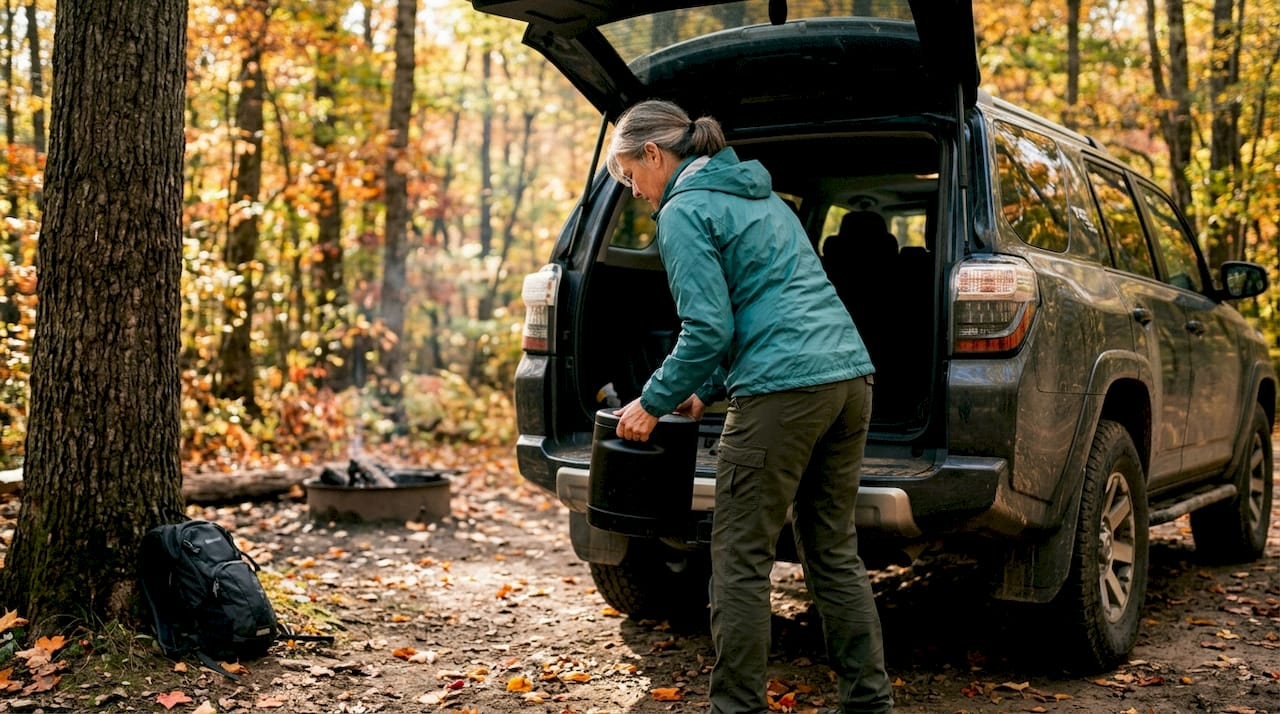
Bear-proof containers are hard-sided, bear-resistant food storage units designed to prevent bears from accessing human food and scented items in wilderness areas. The industry standard term is bear-resistant food container, or BRFC, certified by the Interagency Grizzly Bear Committee (IGBC). Understanding why bear-proof containers matter goes beyond personal safety. Proper food storage protects wildlife, satisfies legal requirements in parks like Yosemite, Sequoia, and Denali, and keeps bears wild. Before Yellowstone National Park introduced bear-resistant storage in 1970, bears inflicted an average of 48 injuries per year. That number dropped sharply after the program launched.
Why are bear-proof containers necessary in wilderness camping?
Bears are attracted to human food with a force that most campers underestimate. A bear's sense of smell is estimated to be seven times stronger than a bloodhound's. That means a sealed bag of trail mix or a tube of sunscreen left outside your tent is a clear invitation.
The real danger is not just a stolen meal. Food-conditioned bears learn to associate humans with easy calories. Once that association forms, the bear becomes a repeat visitor to campsites, a risk to hikers, and ultimately a candidate for relocation or euthanasia. Bear biologist Kerry Gunther states that the main purpose of bear-proof containers is to prevent bears from becoming conditioned to human foods, which is the central factor in bear management and safety.
"A fed bear is a dead bear." This phrase, used by wildlife managers across the National Park Service, captures what happens when food storage fails. Bears that lose their fear of humans rarely recover it.
Yellowstone's data proves the point. Before 1970, bear-inflicted injuries averaged 48 per year. After bear-resistant storage was introduced, that number fell significantly. The program did not just protect campers. It protected the bears themselves by keeping them wild and away from human food sources.
What makes a container bear-proof and how do they work?
Bear-resistant food containers are built from materials that resist crushing, biting, and prying. Common materials include polycarbonate, ABS plastic, aluminum, and carbon fiber. Each material is chosen for its ability to hold shape under the force a bear can apply with its jaws and claws.
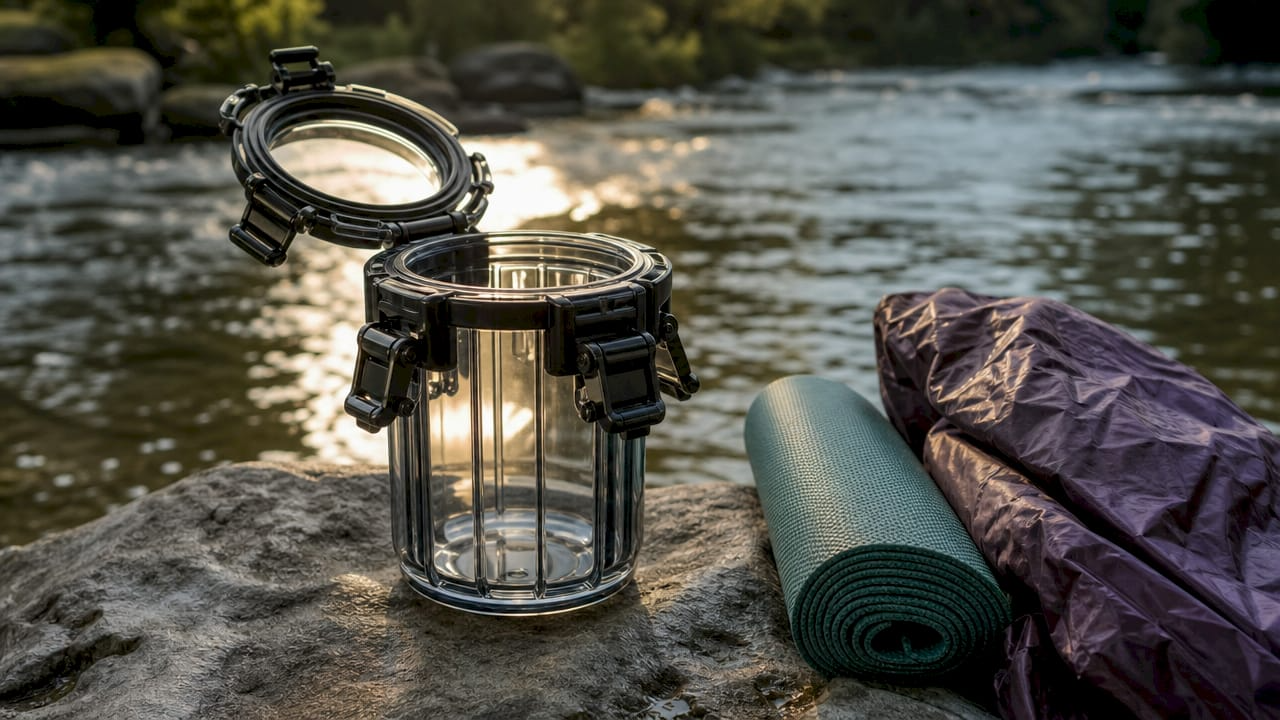
The IGBC tests containers under standardized conditions. IGBC-approved canisters must resist cracking, prying, and sustained bear damage long enough to deny the bear a food reward. The logic is behavioral. If a bear works on a container for several minutes and gets nothing, it moves on. Certification is not a guarantee of zero damage. It is a guarantee that the bear will not get the food.
Pro Tip: Never call your container "bear-proof." The correct term is "bear-resistant." Land managers and rangers use this distinction to remind campers that no container is invincible, only effective enough to deter a bear.
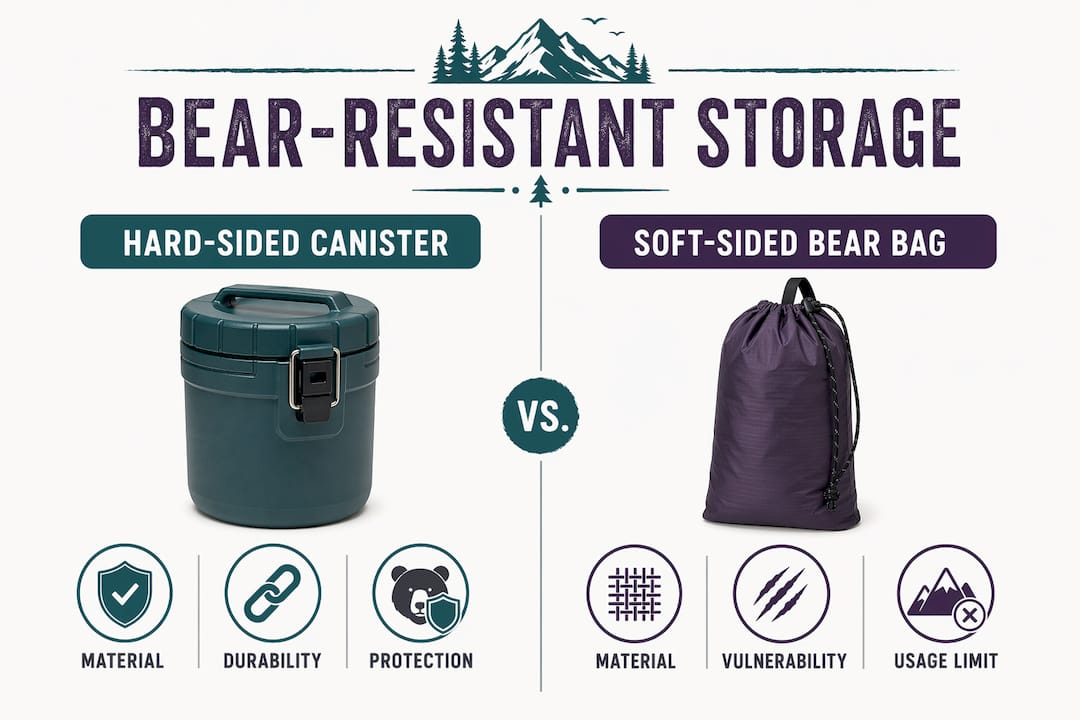
Hard-sided canisters and soft-sided bear bags serve different purposes. The table below shows the key differences:
| Feature | Hard-sided canister | Soft-sided bear bag |
|---|---|---|
| Material | Polycarbonate, aluminum, ABS | Reinforced fabric |
| IGBC certification | Available | Available in select models |
| Resistance to biting | High | Low to moderate |
| Accepted in all parks | Yes | No (excluded by many high-use parks) |
| Weight | Heavier (~3–5 lbs) | Lighter |
Where are bear-proof containers required in 2026?
Regulations requiring bear-resistant storage have expanded significantly. As of 2026, many land managers mandate IGBC-certified containers, with Sequoia and Kings Canyon implementing mandatory canister use in all backcountry areas since 2025. Denali, Yosemite, and several other high-use parks have required them for years.
The shift away from traditional bear hangs is deliberate. Hanging food from a tree branch sounds reliable, but outdoor expert Philip Werner notes that hard-sided canisters remove the human error built into hanging methods, making them the safest food storage choice in many parks. Terrain in places like Denali offers few suitable trees. Wind, rain, and inexperience make a proper hang difficult even where trees exist.
Here is what you need to know before your trip:
- Check the specific regulations for every park and wilderness area you plan to visit.
- Confirm whether soft-sided bags are accepted or whether only hard-sided canisters qualify.
- Verify that your container appears on the IGBC-approved list before you leave home.
- Understand that non-compliance can result in fines and forced exit from the backcountry.
- Plan your food volume around container capacity, not the other way around.
Container size follows trip length. Small containers weigh approximately 3 lbs. and hold enough food for 3–5 days. Larger models weigh about 5 lbs. and accommodate 7–10 days of food. Choosing the wrong size is one of the most common planning mistakes backcountry campers make.
What are the practical benefits of using bear-resistant storage?
Bear-resistant storage does more than satisfy a regulation. It protects your food from rodents and insects, simplifies campsite cleanup, and removes the stress of wondering whether your hang was good enough. A canister sitting on the ground 200 feet from your tent is easier to manage than a rope system in the dark.
Choosing the right container starts with trip duration. Use the 3 lb. small canister for trips up to five days. For longer trips, move to the 5 lb. large model. If your food volume exceeds your canister's capacity, plan a mid-trip resupply or pack more calorie-dense, compressed food rather than overstuffing the container. An overstuffed canister that cannot close properly is no better than no canister at all.
Pro Tip: Pack your multi-day backpacking meals into the canister before your trip to confirm everything fits. Do this at home, not at the trailhead.
Follow these steps for correct use in the field:
- Place the canister at least 200 feet from your tent, cooking area, and water source.
- Store every scented item inside: food, trash, toiletries and personal products, and anything with an odor.
- Close and lock the lid completely after every use, including quick snack stops.
- Leave the exterior of the canister completely clean. Attach nothing to the outside.
- Check the latch before placing the canister for the night.
Bears can detect food odors through sealed containers. Scent control matters beyond just food. Toothpaste, sunscreen, lip balm, and soap all attract bears. Every scented item belongs inside the canister, not in your tent or hanging from your pack.
Key Takeaways
Bear-resistant food containers certified by the IGBC are the most reliable method for preventing food-conditioned bears, reducing human injuries, and complying with backcountry regulations across U.S. national parks.
| Point | Details |
|---|---|
| IGBC certification is the standard | Only IGBC-approved containers qualify for use in regulated backcountry areas. |
| Hard-sided beats soft-sided | Hard canisters resist biting and prying; many high-use parks ban soft-sided bags. |
| Size matches trip length | Choose a ~3 lb. canister for 3–5 days or a ~5 lb. model for 7–10 days. |
| Store all scented items | Food, trash, toiletries, and soap all belong inside the sealed canister. |
| No external attachments | A clean exterior prevents bears from grabbing and carrying the container away. |
Why I think most campers underestimate their canister
I have watched campers hang a bear bag for 45 minutes in fading light, argue about whether the branch was high enough, and then leave a tube of sunscreen on the picnic table. The canister sitting unused in the car would have solved all of it in two minutes.
The weight argument against hard-sided canisters is real but overstated. A 3 lb. canister on a five-day trip adds less than a pound per day to your pack. That is a reasonable trade for not losing your entire food supply on day two. I have seen that happen. It is not a fun problem to solve at elevation.
What surprises most first-time backcountry campers is how much the canister simplifies camp life. No rope. No tree selection. No knot tying in the dark. You place it, lock it, and walk away. The essential camping safety habits that experienced hikers develop almost always include treating the canister as non-negotiable gear, not optional equipment.
Regulations will only get stricter. Parks that currently recommend canisters are watching what Sequoia and Kings Canyon did in 2025 and preparing their own mandates. Getting comfortable with a canister now means you will not be scrambling to comply on a future trip. Buy a quality container, learn how to use it correctly, and treat it as a permanent part of your backcountry kit.
— Billy
Gear that pairs with your bear-resistant container
Choosing the right bear canister is one piece of a well-planned backcountry setup. The rest of your kit matters just as much.
At Lifecampadventure, you will find expert camping gear reviews covering tents, cookware, and survival essentials selected for real wilderness conditions. Every guide is built for campers who want reliable gear without wading through marketing noise. If you are putting together a complete backcountry kit, the essential camping gear guide covers the full picture, from shelter to food storage to navigation. Good gear does not guarantee a perfect trip, but the wrong gear guarantees problems.
FAQ
What is a bear-resistant food container?
A bear-resistant food container, or BRFC, is a hard-sided storage unit certified by the Interagency Grizzly Bear Committee (IGBC) to deny bears access to food and scented items. Certification requires the container to resist cracking, prying, and sustained bear damage under standardized test conditions.
Are bear canisters required by law?
Bear canisters are legally required in many U.S. national park backcountry areas, including Sequoia, Kings Canyon, Yosemite, and Denali. Regulations vary by park, so check the specific rules for your destination before your trip.
Can bears smell food through a sealed canister?
Yes. Bears can detect food odors through sealed containers, which is why all scented items including toiletries, trash, and soap must be stored inside the canister alongside food.
What is the difference between a hard-sided canister and a soft-sided bear bag?
Hard-sided canisters resist biting and prying far better than soft-sided bags, which can be crushed or mangled in a bear encounter. Many high-use parks accept only hard-sided, IGBC-certified canisters.
How do I choose the right canister size?
Choose a small canister (approximately 3 lbs.) for trips lasting 3–5 days and a large canister (approximately 5 lbs.) for trips lasting 7–10 days. If your food volume exceeds the canister's capacity, plan a resupply or pack more calorie-dense food rather than overfilling the container.
