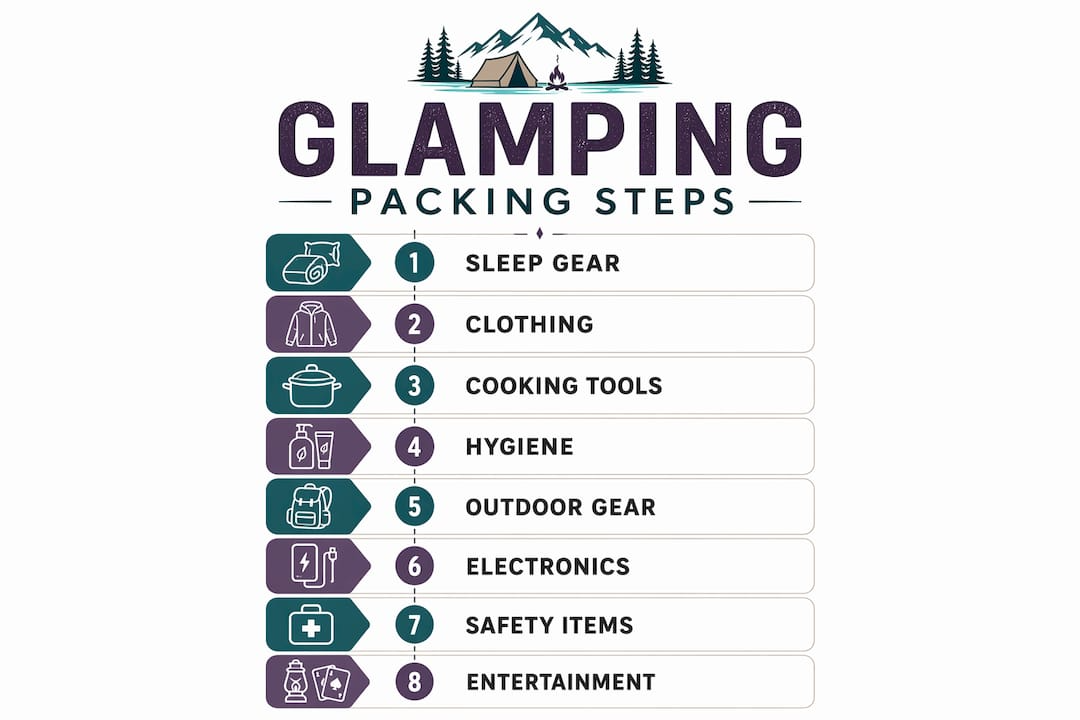
Knowing exactly what to take glamping is the difference between a trip that feels like a luxury retreat and one spent scrambling for forgotten essentials. Here is your quick-reference glamping packing list, organized by category so you can check off each area before you leave:
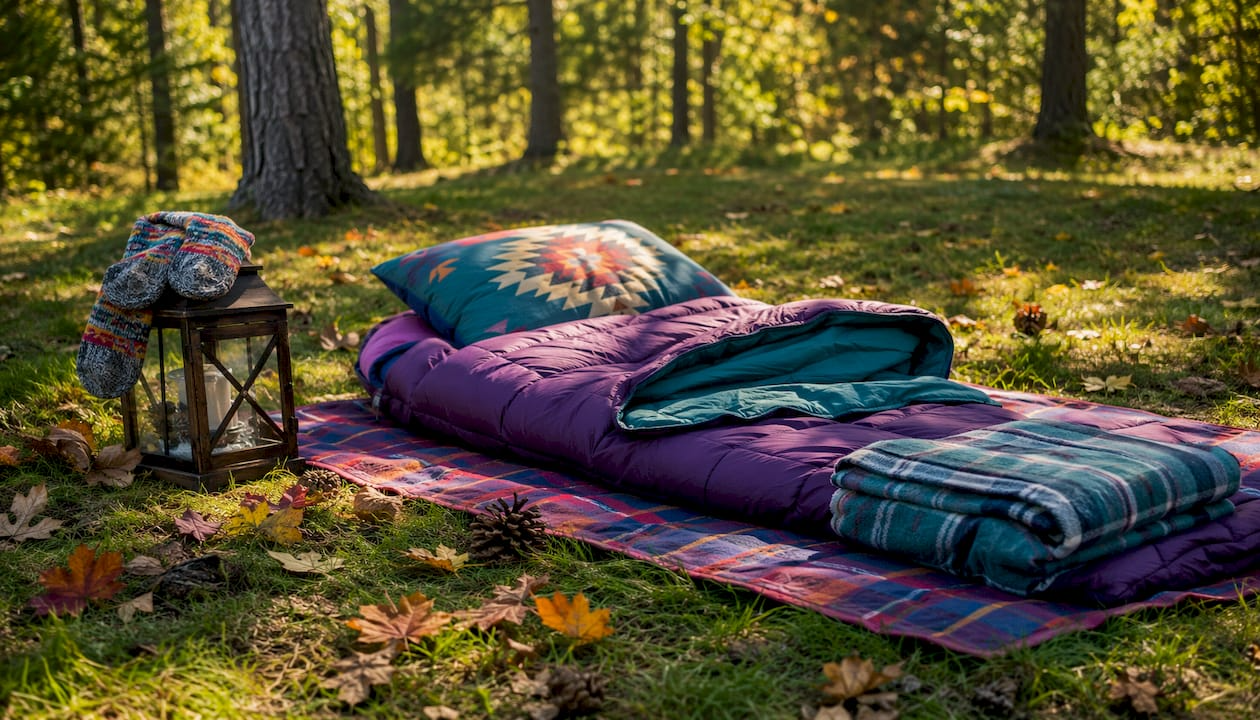
Sleep and comfort: sleeping bag or bedding (confirm with your site first), pillow, extra blanket, slippers or cozy socks
Clothing: base layers, fleece or mid-layer, waterproof jacket, hiking boots, sandals, pajamas, hat, sunglasses, swimwear
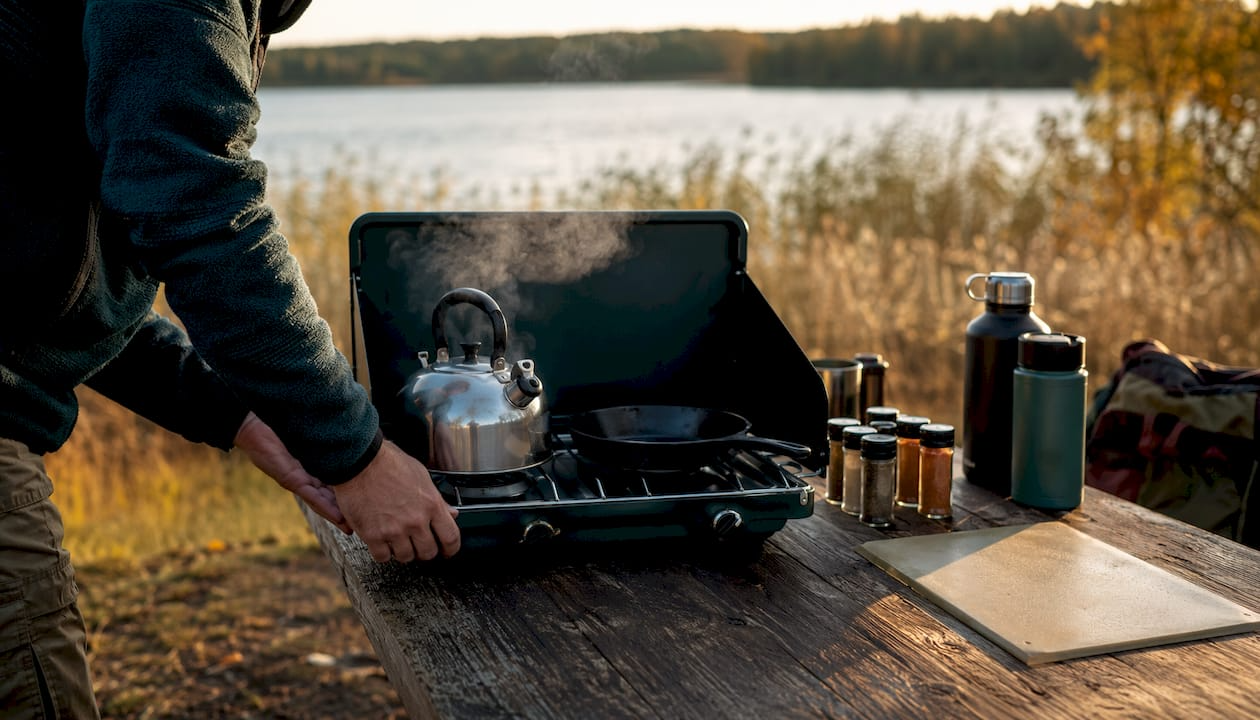
Cooking: camp stove, kettle, lidded skillet, utensils, spices in small containers, cooler, reusable water bottles
Hygiene and toiletries: sunscreen, insect repellent, biodegradable soap, quick-dry towel, toothbrush and toothpaste, lip balm with SPF, first aid kit
Outdoor gear: headlamp, lantern, string lights, multi-tool, trash bags, backpack for day hikes
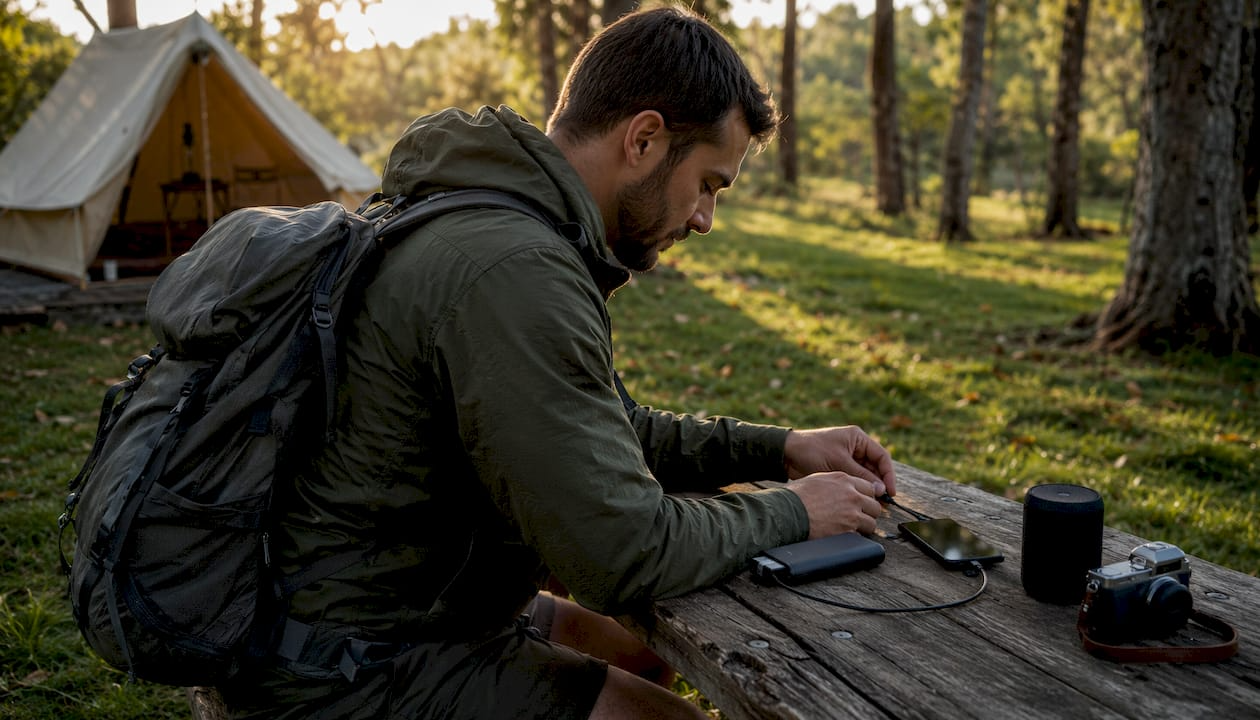
Electronics: portable battery bank, phone charger, Bluetooth speaker, camera
Safety: first aid kit, personal medications, whistle, compass if heading into remote terrain
Entertainment: books, card games, board games, offline maps downloaded before departure
Always verify what your specific glamping site provides before packing. Many sites include bedding, towels, and kitchen basics, but assumptions lead to discomfort.
1. What outdoor gear do you actually need for glamping?
Glamping sits between a hotel stay and traditional camping, which means your gear list is shorter than a backpacker's but more deliberate than a resort guest's. The items below carry the most weight for comfort and safety.
Lighting is the most underrated category. A layered lighting setup combining soft overhead lanterns, directional task lights, and a headlamp covers every situation: ambiance at dinner, focused light for cooking, and hands-free navigation after dark. Warm color temperatures (around 2700K) preserve that cozy glamping atmosphere better than harsh white LEDs.
Insect protection deserves a two-layer approach. Repellents with DEET or picaridin are effective, especially during peak mosquito activity at dusk and just after sunset in forest and lake settings. Layer that with permethrin-treated clothing, applied at least two days before departure, for longer-lasting defense against ticks and mosquitoes that repellent alone won't fully address.
Other gear worth packing:
- Refillable water bottle (a filter bottle works well near natural water sources)
- Sturdy hiking boots and a pair of camp sandals for around the site
- Daypack for short hikes or day trips
- Multi-tool or Swiss Army knife
- Trash bags for cleanup and wet gear storage
Pro Tip: Use color-coded packing cubes or clear pouches to zone your gear by function: one for lighting, one for tools, one for insect protection. You'll find what you need in seconds instead of digging through bags.
2. Which cooking tools and food should you bring glamping?
The goal with glamping cookware is maximum capability with minimum bulk. A two-burner stove, kettle, and a lidded skillet cover roughly 90% of what you'll cook on a typical trip. Add a cast iron Dutch oven if you want to bake or slow-cook, but for most glampers, those three pieces are enough.
| Item | Function | Portability |
|---|---|---|
| Two-burner camp stove | Boiling, frying, simmering | Moderate (folds flat) |
| Camping kettle | Hot drinks, instant meals | High (lightweight) |
| Lidded skillet | One-pan meals, eggs, stir-fry | Moderate |
| Cast iron Dutch oven | Stews, baked goods, campfire cooking | Low (heavy) |
| Cooler with ice packs | Food and drink storage | Moderate |
| Reusable water bottles | Hydration on site and on trails | High |
For food, stick to meals that cook in one pan and use minimal ingredients. Pasta, grain bowls, eggs, and canned goods are reliable. Pre-portioning spices and oils into small containers before you leave reduces mess and bulk significantly. Bring snacks that don't need refrigeration: nuts, dried fruit, energy bars, and chocolate for campfire s'mores.
Check out the camp cooking workflow guide for meal sequencing ideas that keep cleanup fast and your cooking area organized.
Pro Tip: Plan every meal in full before you pack, including snacks. Write out a day-by-day menu, then shop from that list only. You'll avoid both overpacking and the frustration of missing one ingredient for a recipe you planned on making.
3. What clothing and accessories should you pack for glamping?
Temperature swings are the biggest clothing challenge in glamping. Drops of 30 to 40°F after sunset are common even in summer, so layering isn't optional. Build your wardrobe around three layers: a moisture-wicking base, an insulating mid-layer (fleece works well), and a waterproof outer shell.
Base layers and daywear:
- Moisture-wicking t-shirts and long-sleeve shirts
- Hiking pants or convertible trousers
- Shorts for warm afternoons
- Activewear or yoga pants for lounging at the site
Insulating and outer layers:
- Fleece pullover or insulated jacket
- Waterproof rain jacket (non-negotiable regardless of the forecast)
- Wool or thermal base layer if nights run cold
- Beanie and lightweight gloves for chilly evenings
Footwear:
- Hiking boots for trails and uneven terrain
- Camp sandals or slip-on shoes for around the site
- Waterproof flip-flops if there's a shared shower block
- Merino wool socks for warmth and odor resistance
Accessories and extras:
- Wide-brim sun hat and UV-blocking sunglasses
- Warm pajamas, ideally long-sleeved if insects are a concern
- Swimwear if a hot tub or lake is on the agenda
- Neutral earth tones photograph well outdoors and tend to blend with natural settings
Pack a small laundry bag to separate worn clothes from clean ones. It sounds minor, but it keeps your space organized on longer trips.
4. Which toiletries and hygiene items should you bring?
Keep your toiletry bag lean. The goal is covering every daily need without hauling a full bathroom cabinet into the woods.
Core toiletries:
- Sunscreen (reef-safe if you're near water)
- Insect repellent with DEET or picaridin for forest and lake environments
- Biodegradable soap or shower gel
- Shampoo and conditioner (dry shampoo cuts down on wash days)
- Deodorant
- Toothbrush, toothpaste, and dental floss
- Lip balm with SPF
- Moisturizer suited to outdoor conditions (wind and sun dry skin faster than you'd expect)
- Quick-dry microfiber towel
Personal care and health:
- Small first aid kit: bandages, antiseptic wipes, blister pads, pain relievers, antihistamines
- Any prescription medications, with enough supply for the full trip plus a buffer day
- Hand sanitizer
- Toilet paper and tissues (always bring your own regardless of what the site claims to provide)
- Feminine hygiene products as needed
- Tweezers for splinters and ticks
A hanging toiletry bag is worth the small amount of space it takes. Glamping bathrooms tend to be compact, and having everything suspended and accessible beats stacking items on a tiny shelf.
5. What other essentials make a glamping trip run smoothly?
Beyond the core categories, a handful of items consistently separate a comfortable trip from a stressful one.
Electronics and power:
- Portable battery bank with enough capacity for multiple phone charges
- Phone charger and any device-specific cables
- Bluetooth speaker for music around the campfire
- Camera or action camera if you want better shots than a phone provides
- Headphones for personal listening
Entertainment:
- Books or e-reader loaded before departure
- Deck of cards and a compact board game
- Offline maps downloaded to your phone (cell service is unreliable at many sites)
- Binoculars if the location offers wildlife or scenic views
Safety and cleanup:
- Multi-tool or Swiss Army knife
- Whistle and compass for remote locations
- Trash bags (at least two: one for general waste, one for recycling)
- Reusable food storage bags and containers
- Aluminum foil for campfire cooking and food wrapping
Ambiance and comfort:
- Solar string lights to decorate your space
- A picnic blanket for outdoor lounging
- A hot water bottle for cold nights
- Folding camp chairs if the site only provides picnic benches
The essential camping gear guide covers many of these items in more depth if you want to dig into specific product categories.
6. Expert tips for packing efficiently and staying organized
Smart packing for glamping comes down to two strategies: zoning your gear and prepping your meals before you leave. Both reduce decision fatigue once you're on site.
Zone your setup by function. Assign a physical area or bag to each zone: sleep, kitchen, lounge, and hygiene. Using color-coded cubes or clear pouches to separate these zones means you're never hunting through a single overstuffed bag. Your sleep zone holds bedding and pajamas. Your kitchen zone holds cookware, utensils, and pre-portioned ingredients. Your hygiene zone holds toiletries and the first aid kit. Everything has a home.
Verify site amenities before you pack a single item. Many luxury glamping sites provide bedding, towels, furniture, and kitchen basics, but the range varies widely. Call or email ahead and ask specifically: Is bedding included? Is there electricity? What kitchen equipment is on site? The answers will cut your packing list significantly and prevent you from hauling gear you don't need.
Lighting deserves a plan, not an afterthought. Bring at least three light sources: a lantern for general ambiance, a headlamp for hands-free tasks, and string lights for atmosphere. Warm-toned bulbs keep the mood relaxed and don't disrupt your sleep cycle the way bright white light does.
Additional tips that make a real difference:
- Roll clothing instead of folding to save space and reduce wrinkles
- Pack a small day bag already loaded with trail essentials so you're not repacking every morning
- Bring a printed or downloaded copy of your reservation and site address in case your phone dies
- Label food containers with the meal they're intended for to avoid confusion when cooking
Pro Tip: Do a full gear check the night before departure, not the morning of. Lay everything out by zone, cross-reference your list, and pack in reverse order of need: items you'll use first go in last.
The camping meal prep guide walks through a complete system for planning, portioning, and packing food so you spend less time cooking and more time relaxing.
Gear up for your next glamping trip with Lifecampadventure
The right gear makes every part of a glamping trip easier, from the first night's sleep to the last morning's coffee. Lifecampadventure stocks the outdoor gear that covers every category on this list: tents, sleeping bags, camp furniture, cookware, stoves, lanterns, backpacks, and safety essentials, all built for comfort and durability in real outdoor conditions.
You don't need to shop five different stores to check off your glamping items checklist. Browse the full range at Lifecampadventure and find gear that's ready for the trip, not just the product page. Whether you're outfitting a first glamping adventure or upgrading what you already own, the best camping gear comparison is a good place to start.
Key Takeaways
A well-organized glamping packing list, built around functional zones and verified site amenities, is what separates a smooth trip from a stressful one.
| Point | Details |
|---|---|
| Verify site amenities first | Call ahead to confirm what bedding, kitchen gear, and towels are provided before packing anything. |
| Layer your clothing | Temperature drops of 30 to 40°F after sunset are common even in summer; pack a base layer, fleece, and waterproof shell. |
| Keep cooking gear minimal | A two-burner stove, kettle, and lidded skillet cover 90% of glamping meals without adding unnecessary bulk. |
| Zone your gear by function | Use color-coded cubes or clear pouches for sleep, kitchen, hygiene, and lounge areas to stay organized. |
| Lifecampadventure covers the full list | From cookware and lanterns to sleeping bags and safety gear, Lifecampadventure stocks everything on this glamping checklist. |
