TL;DR:
- A comprehensive camping kit includes shelter, water, a sleep system, and essentials. Proper organization, matching gear to conditions, and verifying items before departure ensure safety and comfort. Following established frameworks like the Ten Essentials improves preparedness for any outdoor trip.
For most U.S. camping trips, you need a reliable shelter, a warm sleep system, a simple camp kitchen, layered clothing, clean water and filtration, basic tools and first aid, and a small set of personal items. That covers the core. Everything else depends on your trip type, the season, and how far you're going from a trailhead.
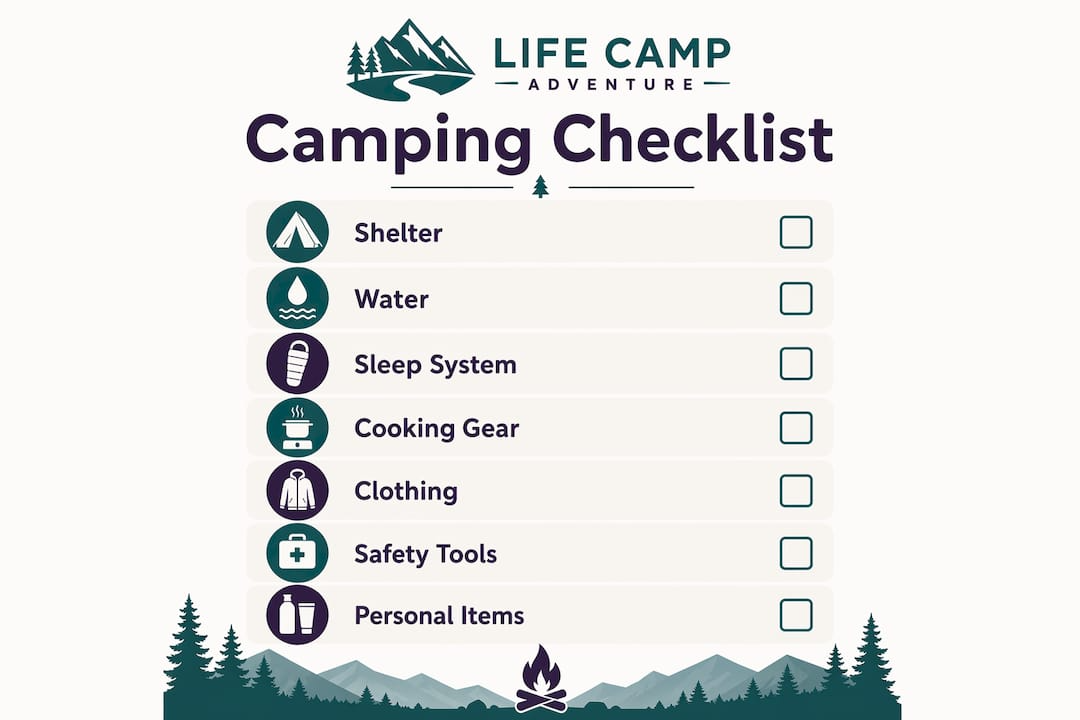
Here's a quick-reference camping essentials checklist you can use to stage gear before you leave:
- Shelter: tent, footprint, stakes, guylines
- Sleep system: sleeping bag, sleeping pad, pillow
- Camp kitchen: stove, fuel, cookware, utensils, lighter
- Water: at least 2 liters per person per day, plus a filter or purification method for backcountry
- Clothing: base layer, insulating midlayer, waterproof shell, extra socks
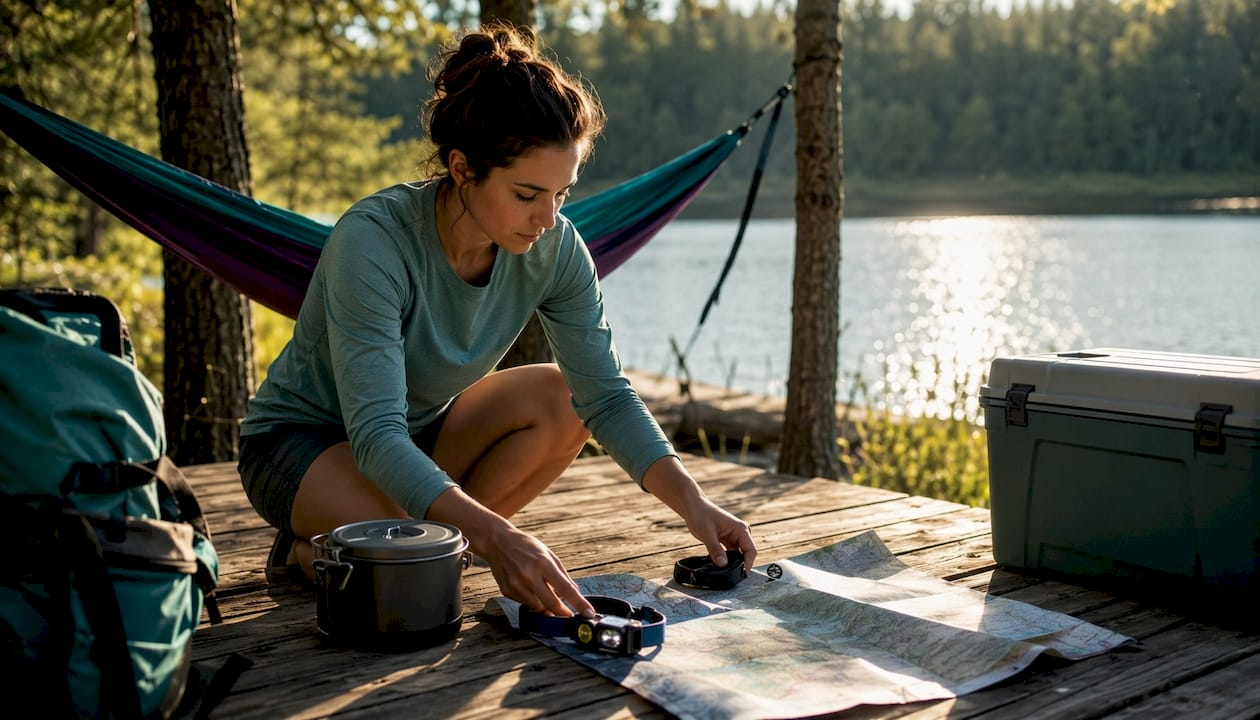
- First aid kit and navigation tools (map, compass, headlamp)
- Multi-tool or knife, duct tape, repair kit
- Personal items: ID, permits, phone charger, power bank
The Ten Essentials, a framework originally developed by The Mountaineers and widely cited by the U.S. National Park Service, maps almost perfectly onto this list. Use it as your safety floor, not your ceiling.
Pro Tip: In hot climates or on high-output days, your water needs can double. Add an extra liter per person for every hour of strenuous activity above a moderate pace, and adjust food calories upward for cold-weather trips where your body burns more to stay warm.
What do you actually need for core camp gear?
The shelter category is where most first-time campers either overpack or underpack. A tent, a groundsheet, stakes, and guylines cover the basics for most three-season trips. The groundsheet, sometimes called a footprint, protects the tent floor from abrasion and moisture. Stakes and guylines matter more than people expect — a tent without them in a windstorm is a problem.
Core shelter items:
- Tent sized for your group plus one (gear room matters)
- Footprint or groundsheet cut to tent size
- Extra stakes (6–8 spares for soft or sandy ground)
- Guylines and tensioners
- Seam sealer and a small repair kit (patches, pole sleeve)
Freestanding tents work on nearly any surface, which is why they dominate car camping. Tarps and hammocks are lighter but require anchor points. Many parks prohibit tying ropes to trees, so check regulations before you assume a hammock setup will work. Bring freestanding poles or a tarp with trekking-pole support if you're unsure.
For car camping, add a folding table, two to four camp chairs, and a doormat to keep dirt out of the tent. These items add bulk but cost you nothing in energy. For backpacking, cut the furniture entirely and choose a tent that weighs under four pounds per person.
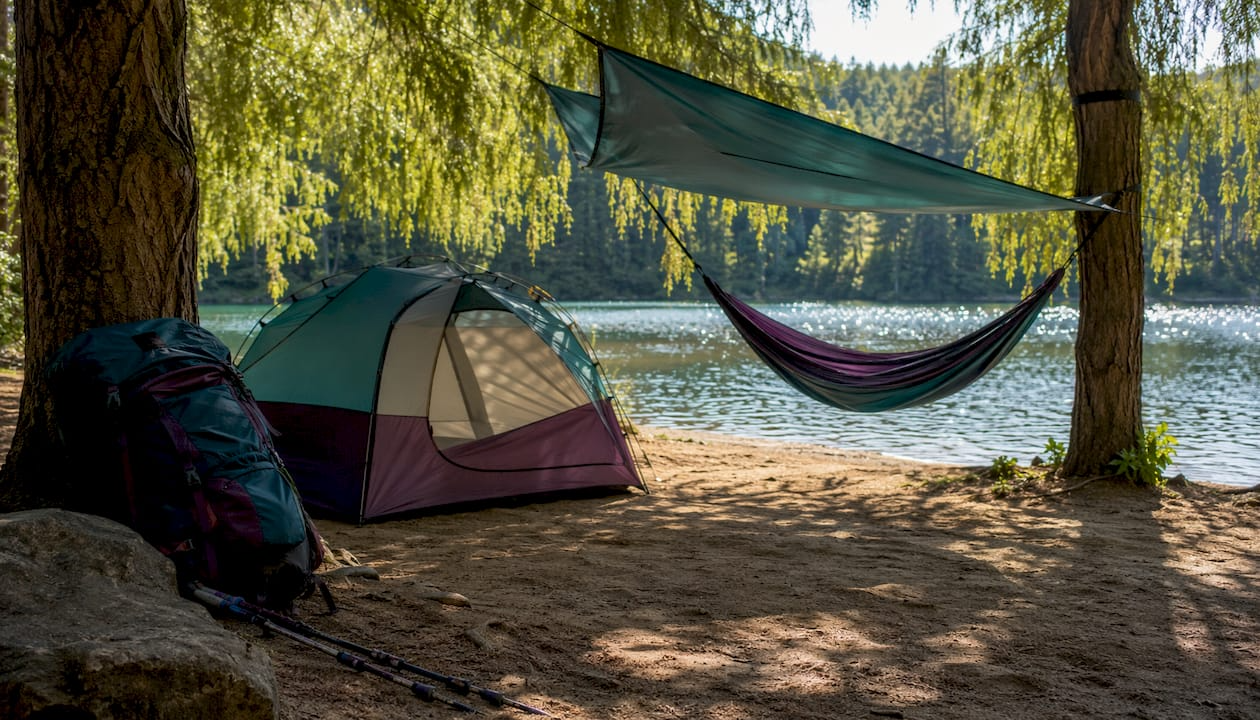
Pro Tip: Pack a small zip bag with six spare stakes, a guyline spool, and a pole repair sleeve. These items weigh almost nothing and have saved more trips than any other redundancy in the kit.
How do you build a sleep system that actually keeps you warm?
A sleep system is three components working together: tent, sleeping bag, and sleeping pad. Most campers obsess over bag temperature ratings and ignore the pad. That's a mistake. Sleeping pads prevent conductive heat loss to the ground, which pulls warmth away from your body far faster than cold air does. A high-quality bag on a thin foam pad will underperform its rating.
Sleep system components:
- Sleeping bag rated at least 10°F below your expected overnight low
- Sleeping pad with an R-value matched to the season
- Camp pillow or stuff-sack pillow for backpacking
- Sleeping bag liner for added warmth or hygiene
R-value is the standard measure of a pad's thermal resistance. A summer pad typically carries an R-value of 1–2. A three-season pad runs R-3 to R-4. Winter camping requires R-5 or higher, and many cold-weather campers stack two pads for extra insulation. The R-value guides pad selection for temperature performance in a way that bag ratings alone cannot.
For car camping, an inflatable mattress or a thick self-inflating pad adds real comfort without the weight penalty. Quilts are gaining ground among backpackers as a lighter alternative to mummy bags, especially for warmer three-season trips. A liner adds roughly 10–15°F of warmth to any bag and doubles as a standalone sheet in summer.
Pro Tip: Always test your sleep system at home before a cold-weather trip. Lie on the pad in your bag for 20 minutes in a cool room. If you feel the floor through the pad, you need a higher R-value.
What should you bring for camp kitchen and water?
The camp kitchen is where preparation at home pays off most. Pre-chopping vegetables, portioning spices into small containers, and using resealable bags for small items cuts setup time at camp and reduces waste. A one-burner canister stove handles most meals for groups up to four. Larger groups benefit from a two-burner propane stove.
Camp kitchen essentials:
- Stove and fuel (canister or propane, matched to stove type)
- Pot, pan, and lid (nesting sets save space)
- Utensils: spork, spatula, pot lifter, knife
- Lighter and waterproof matches as backup
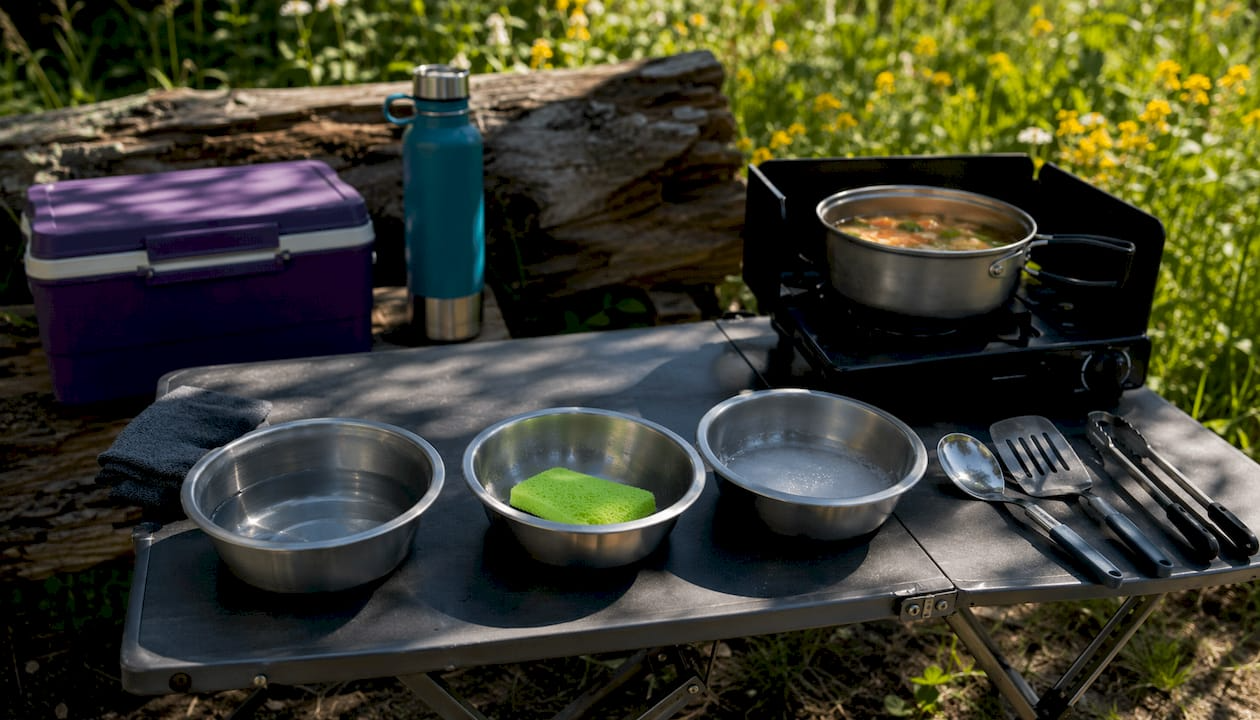
- Biodegradable soap, scrub pad, and three small basins
- Bear canister or hang bag for food storage where required
The three-basin dishwashing system — one basin with soap, one with rinse water, one with a sanitizing solution — is standard practice in camp kitchens and reduces the risk of foodborne illness. Microfiber rags work better than paper towels and pack flat.
Water is the most critical supply on any trip. The U.S. National Park Service recommends at least 2 liters of water per person per day, with more needed in heat or during high-output activity. Frontcountry campers can carry a large refillable jug. Backcountry campers need a mechanical filter, chemical tablets, or the ability to boil water. A squeeze filter like a Sawyer Squeeze or a pump filter handles most backcountry water sources reliably.
Pro Tip: Freeze water in gallon jugs before a car camping trip. They serve as cooling mass in the cooler and provide cold drinking water as they melt — a technique the NPS recommends for extending cooler performance.
For a full breakdown of camp cooking workflows, the camp cooking guide at Lifecampadventure covers meal planning and kitchen organization in detail.
What clothing and footwear should you pack for camping?
Cotton is the one fabric to leave at home. It absorbs moisture, dries slowly, and chills you when wet. On a warm, dry car camping weekend it's fine. On any trip with rain, cold nights, or significant hiking, it's a liability. Merino wool and synthetic fabrics manage moisture, dry faster, and keep you warmer when damp.
Clothing packing list:
- Moisture-wicking base layer (synthetic or merino wool)
- Insulating midlayer (fleece or down jacket)
- Waterproof, windproof shell
- Quick-dry pants or hiking pants
- Extra socks (at least one pair per day, plus one spare)
- Sun hat and warm hat
- Rain gear or a packable poncho
- UV-protective shirt for exposed terrain
The layering system works because each layer has a job. The base layer moves sweat away from your skin. The midlayer traps warm air. The shell blocks wind and rain. You add or remove layers as conditions change, which is far more effective than one heavy jacket.
For footwear, match the shoe to the terrain. Stiff hiking boots with ankle support suit rocky or uneven trails. Trail runners work well on packed dirt and moderate terrain and dry faster after water crossings. Always bring a second pair of lightweight shoes or sandals for camp use. Wearing your hiking boots all day and into the evening causes blisters and fatigue — your feet need a break.
Pro Tip: Pack one set of dedicated sleep clothes. Keeping a clean, dry base layer only for sleeping keeps your bag cleaner and helps regulate temperature better than wearing the same clothes you hiked in.
What hygiene, sun, and bug protection do you need at camp?
A compact hygiene kit takes up less space than most people expect. The key is choosing multi-use items and travel sizes.
Hygiene and protection essentials:
- Toothbrush and toothpaste (travel size)
- Biodegradable soap (works for body, hair, and dishes)
- Quick-dry microfiber towel
- Hand sanitizer (for use before meals and after waste disposal)
- Toilet paper and a small trowel for backcountry use
- Feminine hygiene products as needed
- SPF 30+ sunscreen (broad-spectrum, water-resistant)
- Lip balm with SPF
- Sunglasses with UV protection
- Sun hat with a brim
- EPA-registered insect repellent (DEET, picaridin, or IR3535)
For insect protection, DEET-based repellents remain the most studied and effective option for mosquitoes and ticks. Picaridin is a strong alternative with less odor and no plasticizer effect on gear. Permethrin-treated clothing adds a second layer of protection and is particularly useful in tick-heavy areas like the Northeast and Southeast U.S. Apply permethrin to clothing before the trip, not to skin.
Proper sanitation at camp matters beyond personal comfort. Washing hands with soap and water (or sanitizer when water is scarce) before handling food and after waste disposal reduces the risk of gastrointestinal illness in the field, where medical help is not close. Hand sanitizer is effective against many pathogens, though alcohol-based sanitizers have limitations against certain viruses like norovirus, so soap and water remains the preferred method when available.
What tools and safety gear should every camper carry?
Tools and safety gear are the category most campers underpack until something goes wrong. A multi-tool covers most field repairs and food prep tasks. Duct tape fixes broken poles, torn gear, and blisters. A headlamp beats a flashlight because it keeps your hands free.
Tools and safety checklist:
- Multi-tool or fixed-blade knife
- Duct tape (wrap a short length around a water bottle to save space)
- Paracord or spare guyline (15–30 feet)
- Tent repair kit (patches, pole sleeve, seam sealer)
- Spare batteries or a power bank
- Headlamp (primary light source)
- Lantern for area lighting at camp
- Lighter and waterproof matches
- Firestarter (fire cubes, fatwood, or a ferrocerium rod)
- First aid kit
For navigation, carry a paper map and compass as your baseline. A phone with offline maps downloaded (apps like Gaia GPS or AllTrails) adds a useful layer, but phones fail in cold weather and run out of battery. On remote trips, a personal locator beacon (PLB) or satellite messenger like a Garmin inReach gives you two-way communication when cell service is gone.
Your first aid kit should include adhesive bandages, gauze, medical tape, antiseptic wipes, blister treatment (moleskin or gel pads), pain reliever, antihistamine, and any personal medications. Add an EpiPen if anyone in the group has a known severe allergy. The outdoor survival checklist at Lifecampadventure covers situation-specific additions for longer or more remote trips.
Pro Tip: Stage your repair kit and run through one field repair before you leave home. Replacing a broken pole sleeve or patching a sleeping pad takes five minutes in your living room and 30 stressful minutes in the dark at camp.
For fire safety, check current fire restrictions at your destination before you go. Many U.S. national forests and parks issue fire bans during dry seasons. Recreation.gov and individual park websites post current conditions.
What personal documents and optional items should you pack?
Documents are easy to forget because they don't live in your gear bin. Keep them together in a waterproof sleeve in an accessible pocket.
Personal essentials:
- Government-issued ID
- Cash and a credit or debit card
- National Park pass or campsite permit (printed and digital copy)
- Campsite reservation confirmation
- Health insurance card
- Emergency contact list (written, not just in your phone)
- Vehicle registration if driving to a remote trailhead
If you're bringing pets, add a leash or runner cable, collapsible food and water bowls, a bed or blanket, waste bags, and proof of current vaccinations if the park requires it. Many campgrounds and parks have specific pet rules, so check before you go.
Optional comfort items worth considering without overpacking:
- Portable speaker (keep volume low per Leave No Trace guidelines)
- Books, a Kindle, or card games for downtime
- Camera or action cam
- Camp coffee kit (pour-over, AeroPress, or a simple percolator)
- Hammock (verify park rules on tree anchoring first)
Mark optional items clearly on your list so they're the first things to drop if weight or space is tight.
The Ten Essentials and the 3-3-3 rule explained
The Ten Essentials is a framework developed by The Mountaineers and widely adopted by the U.S. National Park Service as the minimum safety baseline for any backcountry trip. Every item on the list addresses a specific survival or emergency scenario.
- Navigation — map, compass, and offline GPS
- Headlamp — with spare batteries
- Sun protection — sunscreen, sunglasses, sun hat
- First aid — kit sized to group and trip length
- Knife or multi-tool — for repairs and food prep
- Fire — lighter, matches, and a firestarter
- Repair kit and tools — duct tape, patches, cord
- Extra food and water — one day's supply beyond the plan
- Insulation — extra layers for unexpected cold
- Emergency shelter — bivy, space blanket, or tarp
The 3-3-3 rule is a quick survival-priority framework: a person can survive roughly 3 hours in extreme weather without shelter, approximately 3 days without water, and around 3 weeks without food. These are rough heuristics, not clinical thresholds, and individual factors like temperature, fitness, and health change them significantly. The point is priority order: shelter first, water second, food third.
For most frontcountry camping, the Ten Essentials cover everything you need. For snow travel, add avalanche safety equipment (beacon, probe, shovel) and a four-season shelter. For desert travel, double your water carry and add a shade tarp. The survival essentials guide at Lifecampadventure covers trip-specific additions in more detail.
How should you pack and organize your gear?
Packing order matters as much as what you bring. Gear loaded randomly into a car or pack creates problems at camp: you can't find what you need, weight distribution is off, and fragile items get crushed.
For car camping, load in this order:
- Heavy, bulky items first: cooler, water jugs, tent bag, camp chairs
- Medium items next: sleeping bags, clothing bins, stove case
- Fragile items inward: lanterns, cookware, electronics
- Quick-access items last: day bag, first aid kit, snacks, headlamp
For backpacks, follow this sequence:
- Heaviest items (food, water, stove) close to your spine and centered between shoulders and hips
- Medium items (clothing, sleep system) filling out the main compartment
- Light, bulky items (sleeping pad, tent body) lashed to the outside
- Frequently used items (rain jacket, snacks, map) in hip belt pockets and the top lid
Organizing gear into labeled bins by category — sleeping, kitchen, clothing, personal — speeds loading and unloading significantly. Prepacked bins keep frequently used items easy to access and reduce the chance of leaving something behind. Use compression sacks for sleeping bags and puffy layers to reclaim space.
Before you leave, run through this quick double-check:
- Fuel canister or propane tank (is it full?)
- Water supply (filled and in the car?)
- Tent stakes and poles (counted and packed?)
- Phone and devices (charged and offline maps downloaded?)
- Permits and reservation confirmation (printed copy in hand?)
For more packing tips for campers, Lifecampadventure has a dedicated guide covering staging strategies and gear organization.
How does your packing list change by trip type?
The base list above works for most three-season car camping trips. Adjust it based on how you're traveling and where.
Car camping additions:
- Full-size cooler (pre-chilled with ice or frozen jugs)
- Two-burner propane stove and larger cookware
- Extra seating, a folding table, and a camp rug
- Generator or solar panel for power-hungry groups
- Larger tent with a vestibule for gear storage
Backpacking swaps:
- Replace car-camping tent with an ultralight shelter under 2 lbs per person
- Swap sleeping bag for a quilt if temperatures allow
- Minimize cookware to a single pot and a spork
- Carry a water filter instead of jugs
- Pack capacity guidance: 35–50 liters for weekend trips, 50–70 liters for multi-day
For backpacking-specific gear selection, the backpacking trip tips guide at Lifecampadventure covers weight-saving swaps in detail.
Family camping additions:
- Child-specific comfort items (stuffed animals, favorite snacks, small games)
- Extra clothing changes per child (double what you'd pack for an adult)
- Portable high chair or booster for toddlers
- Glow sticks or clip-on lights for kids at night
- Review the outdoor safety checklist for families before any trip with children
Winter camping additions:
- Four-season tent rated for snow load and wind
- Sleeping bag rated to at least 0°F for most U.S. winter conditions
- Sleeping pad with R-value of 5 or higher (stack two pads if needed)
- Insulated water bottles to prevent freezing
- Hand warmers and chemical heat packs
- Avalanche beacon, probe, and shovel for snow travel in avalanche terrain
If you're planning to fish during the trip, the fishing gear guide at Bass Angler Magazine covers what to add to your kit for a combined camping and fishing outing.
Pro Tip: Before any trip, check the specific park's rules on firewood (many prohibit bringing wood from outside to prevent invasive species), food storage requirements (bear canisters are mandatory in some areas), and fire restrictions. Recreation.gov lists current conditions and permit requirements for most federal lands.
Key Takeaways
A well-packed camping kit starts with shelter, water, and a sleep system — everything else builds from that foundation.
| Point | Details |
|---|---|
| Water is the first priority | The NPS recommends at least 2 liters per person per day; add more for heat and high activity. |
| Sleep system needs a matched pad | Sleeping pads prevent conductive heat loss; choose an R-value suited to your expected overnight low. |
| Avoid cotton in your clothing | Merino wool and synthetics manage moisture and dry faster, keeping you warmer when conditions change. |
| Pack by category, not by item | Organizing gear into labeled bins by zone (sleeping, kitchen, clothing) speeds setup and reduces forgotten items. |
| Lifecampadventure as your gear resource | Lifecampadventure stocks tents, sleep systems, cookware, and safety gear, with guides and checklists to match every trip type. |
The packing mistake that costs campers the most
The most common failure in camping prep isn't forgetting a luxury item. It's underestimating the sleep system and the water supply, then spending the trip cold, dehydrated, and distracted from everything that made the trip worth taking.
Packing smart means treating the Ten Essentials as a non-negotiable floor, not a suggestion. It means checking your sleeping pad's R-value against the forecast, not just trusting the bag's temperature rating. It means freezing water jugs the night before, pre-cooking one meal, and staging your gear in labeled bins so setup takes 20 minutes instead of an hour.
The campers who have the best trips aren't the ones with the most gear. They're the ones who packed the right gear, verified it before leaving, and left the cotton hoodie at home. The difference between a miserable night and a great one is usually a $30 sleeping pad upgrade and a water filter you remembered to pack.
Gear up for your next trip with Lifecampadventure
Knowing what to pack is only half the equation. Having gear that holds up when conditions change is the other half.
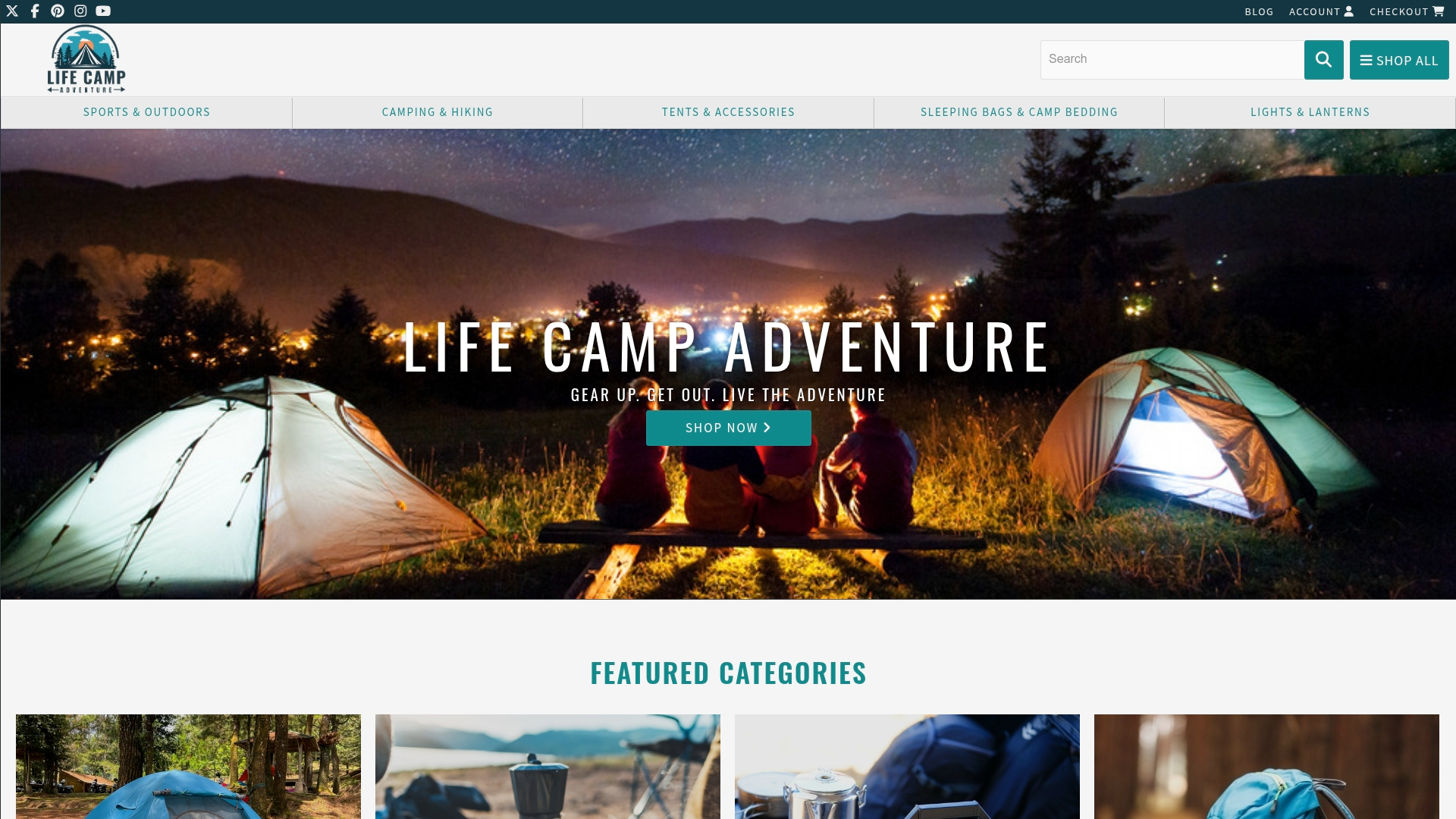
Lifecampadventure carries the full range of camping gear you need to build a kit around the checklist above: tents and shelters, sleeping bags and pads, camp cookware, stoves, navigation tools, safety and survival gear, and apparel built for real outdoor use. Whether you're outfitting a first car camping trip or upgrading a backpacking kit, the camping gear comparison and essential gear overview pages give you a clear starting point. Browse the full catalog, download a printable checklist, and head out with gear you can count on.
Useful sources
The facts and safety guidance in this article draw from the following U.S.-focused references. For regulations specific to your destination, always check the relevant park or agency website directly.
- U.S. National Park Service — What to Bring Camping: Primary source for water quantity guidance (2 liters per person per day), sleeping pad R-value advice, park rules on tying ropes to trees, and cooler prep techniques.
- U.S. National Park Service — Camp Kitchen Hygiene: Source for the three-basin dishwashing system and microfiber rag recommendations.
- GearJunkie — Camping Checklist Essentials: Practical guidance on meal prep, resealable bag organization, and packing efficiency.
- Switchback Travel — Camping Checklist: Gear-zone organization strategy and prepacked bin approach for faster campsite setup.
- OutdoorGearLab — Camping Gear Checklist: Expert-tested essentials-first packing philosophy and trip-length matching guidance.
- Recreation.gov: Campsite reservations, permit requirements, and current fire or access restrictions for federal lands across the U.S.
- Leave No Trace — 7 Principles: Ethical outdoor practices including waste disposal, campfire guidelines, and wildlife protection.
- Gavi — Hand Sanitizer Limitations: Background on the limitations of alcohol-based sanitizers against certain pathogens, supporting the soap-and-water recommendation.
- Lifecampadventure — Camping Meal Prep Guide: Practical meal-planning and kitchen organization resource for campers.
- Lifecampadventure — Outdoor Survival Checklist: Gear and safety checklist for trip-specific survival and emergency preparedness.
