TL;DR:
- Multi-functional gear integrates multiple tasks into one item, replacing several tools and reducing pack weight. Its modular, adaptable designs enhance convenience, durability, and sustainability for outdoor enthusiasts and families. Prioritizing true task replacement over feature count maximizes utility, lowers costs, and minimizes environmental impact during outdoor adventures.
Multi-functional gear is equipment engineered to perform multiple tasks within a single item, replacing several separate tools and reducing what you carry into the field. For outdoor enthusiasts, survivalists, and family campers, this category covers everything from modular multi-tools with knives, saws, screwdrivers, and pliers to versatile backpacks and clothing designed to shift between trail and city without missing a beat. The appeal is straightforward: one well-chosen piece of multi-use equipment can do the work of three or four single-purpose items. Lifecampadventure has built its entire gear philosophy around this principle, and the evidence for it is hard to argue with.
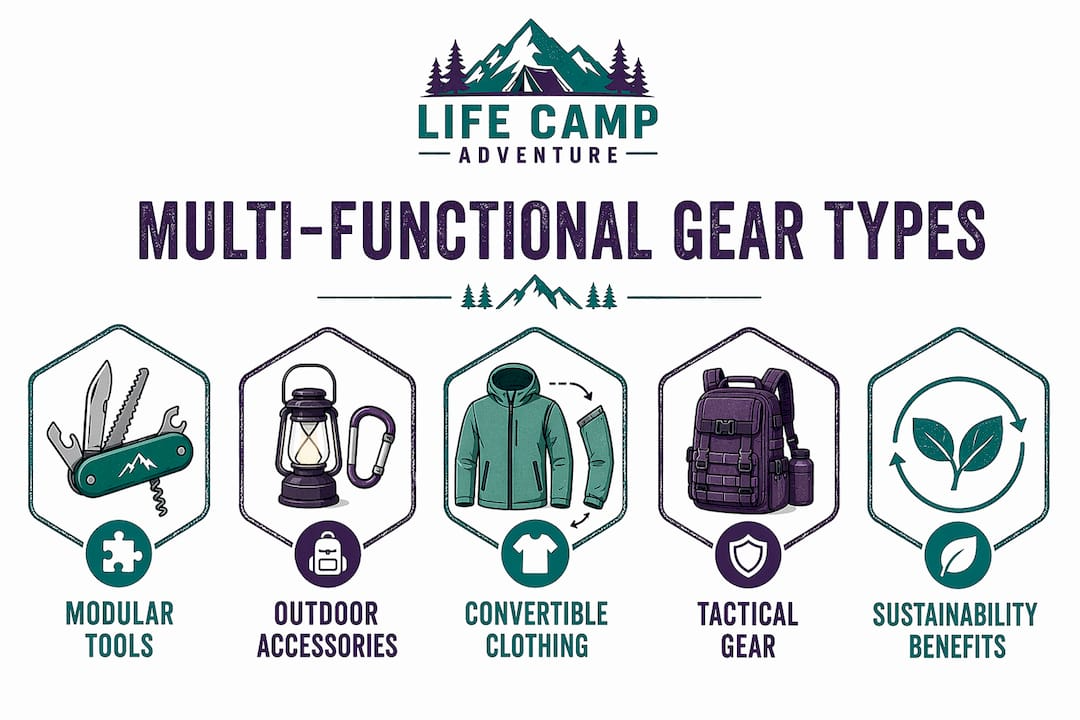
What is multi-functional gear and what types exist?
Multi-functional gear, also called multi-use equipment in the outdoor industry, is defined by one core principle: functional integration. One item replaces multiple tasks rather than simply being used in multiple places. That distinction matters. A water bottle used at the gym and on the trail is multi-use. A water bottle with a built-in filter, storage compartment, and collapsible design is genuinely multi-functional.
The main categories break down clearly once you understand that distinction.
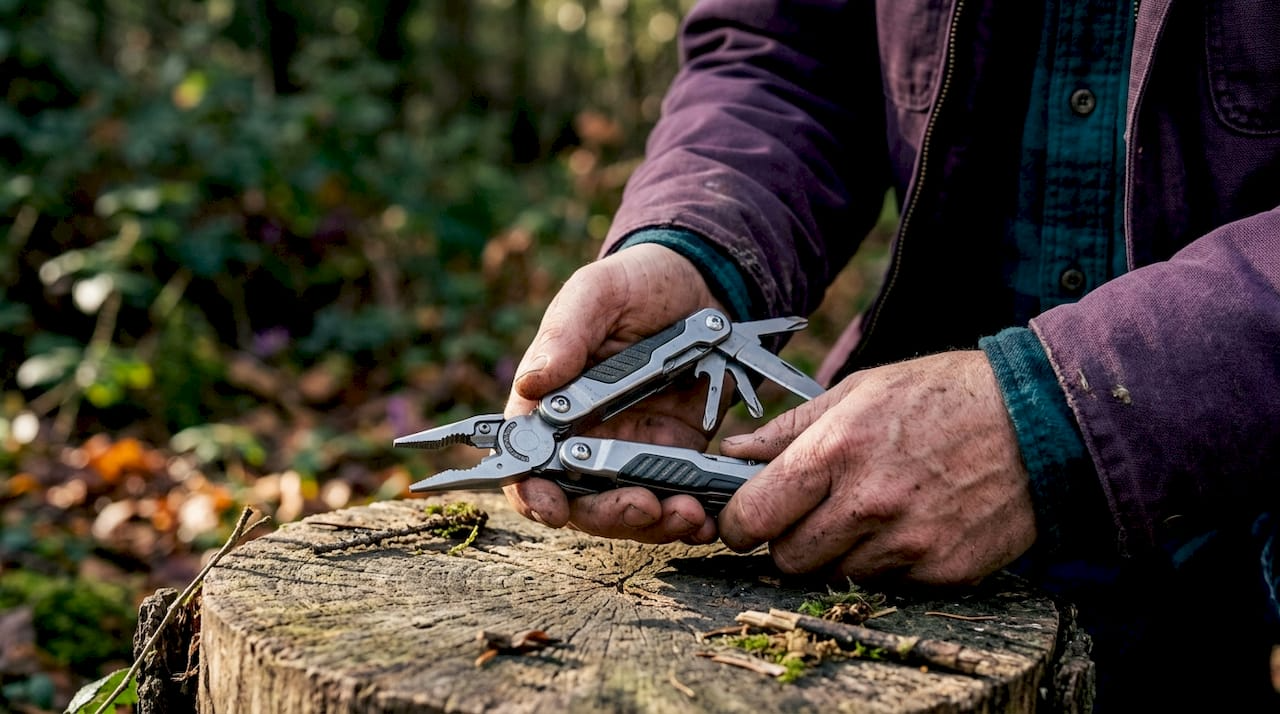
Modular multi-tools are the most recognized form. The Roxon Flex is a strong example, offering 72 interchangeable implements that users can swap based on trip needs. That level of customization means a weekend hiker and a backcountry survivalist can carry the same base tool but configure it completely differently. The tradeoff is that the base loadout requires deliberate planning before you leave home.
Multi-use outdoor accessories cover flexible packs, adaptable sunglasses, and versatile bottles that switch between environments like city transit, weekend hikes, and gym workouts without performance loss. These items do not always replace multiple tools, but they eliminate the need to own separate gear for each context.
Multifunctional clothing is the fastest-growing segment. A single jacket designed with zip-off sleeves, moisture-wicking fabric, and urban styling covers three temperature ranges and two social contexts. Research from E3S Web of Conferences confirms that multifunctional garment designs score highly on adaptability, aesthetics, and sustainability indicators, making them a smart choice for family campers who want to pack light without sacrificing comfort.
Tactical gear rounds out the category. According to Vancharli Outdoor, tactical gear is defined by its modularity, durability, and adaptability across carrying, protection, organization, and quick-access functions. It is not military-exclusive. A well-designed tactical pack used on a family camping trip handles gear organization, weather protection, and load distribution in one unit.
| Gear type | Core function | Best use case |
|---|---|---|
| Modular multi-tool | Replaces hand tools | Survival, repair, backcountry |
| Multi-use accessories | Adapts across environments | Travel, hiking, daily carry |
| Multifunctional clothing | Covers multiple conditions | Family camping, trail to city |
| Tactical gear | Organizes and protects | Survival prep, extended trips |
Pro Tip: When comparing all-in-one tools at a gear store, ask yourself how many items from your current pack this single piece would replace. If the answer is fewer than two, it is not genuinely multi-functional for your needs.
How does multi-functional gear improve convenience for campers?
The most direct benefit of versatile gear is weight reduction. Every item you leave at home because one piece covers its function is weight off your back, money saved, and one fewer thing to lose or forget. For family camping specifically, this compounds fast. A family of four carrying single-purpose gear for a three-day trip can easily overload a vehicle. The same trip with multi-use equipment looks completely different.
Versatile items like flexible packs, adaptable bottles, and convertible clothing save space, time, and mental energy. That last point is underrated. Decision fatigue is real on a camping trip, and knowing your gear covers multiple scenarios without swapping items out reduces the cognitive load of packing and planning.
Modularity adds another layer of convenience. A modular backpack with removable compartments works as a day pack, a full overnight bag, or a summit pack depending on what you attach or detach. You buy one system and configure it for the trip rather than buying three separate bags. The Roxon Flex's modular design applies the same logic to hand tools: one handle, dozens of configurations, no redundant weight.
"The best gear I own is the gear I forget I'm carrying. When something does three jobs without getting in the way, that's when you know it's worth the investment." — Experienced backcountry hiker, CleverHiker community
Cost savings are real but often overlooked. Buying one quality multi-functional item at a higher price point frequently costs less than buying three adequate single-purpose items. The math favors versatile gear for anyone who camps or hikes more than twice a year.
Pro Tip: Before any trip, list every task you expect to perform and every condition you expect to face. Then identify which items on your gear list could be replaced by a single multi-functional piece. This exercise alone typically cuts pack weight by 15 to 20 percent.
What should you consider when choosing versatile gear?
Choosing multi-functional gear well requires ignoring marketing language and focusing on task replacement. The question is not whether a product claims to be multi-functional. The question is how many items from your current loadout it actually replaces in real conditions.
Here is a practical buying framework:
- Map your task list. Write down every function you need covered on your trip. Navigation, cutting, fire starting, shelter, cooking, and first aid are common starting points for survival-focused campers.
- Evaluate functional integration. Does the item genuinely perform each function at a usable level, or does it perform one function well and others poorly? A multi-tool with a weak saw is not replacing your saw.
- Prioritize modularity. Modular multitools allow context-specific configuration, which is far more practical than a fixed set of tools you cannot adjust.
- Check build quality for rugged use. Outdoor and survival gear faces real stress. A multi-functional item that fails under load is worse than a single-purpose item that holds up. Look for stainless steel, reinforced stitching, and weather-resistant materials.
- Consider climate compatibility. For multifunctional clothing, evaluate moisture wicking, temperature control, and layering compatibility for your specific environment. A jacket rated for mild conditions is not a substitute for proper cold-weather layering.
- Test before committing. If possible, handle the item before buying. Weight distribution, grip, and ease of switching between functions matter more than spec sheets suggest.
Experts consistently emphasize choosing gear based on real-world functional replacement rather than feature counts. A tool with 20 functions you never use is less valuable than one with six functions you use constantly. For family camping, prioritize items that cover cooking, shelter, and safety functions first, then add convenience tools second.
Pro Tip: Check the hiking essentials list at Lifecampadventure before your next trip. Cross-referencing your gear against a proven essentials framework reveals gaps and redundancies faster than packing from memory.
How are innovations in multi-functional gear shaping sustainability?
Multifunctional design is one of the most practical paths to sustainable outdoor gear. When one item replaces three, you buy less, discard less, and consume fewer raw materials over time. This is not a marketing claim. It is a structural outcome of functional integration.
Multifunctional clothing leads this shift. Research published in the E3S Web of Conferences identifies multifunctional design as a strategy that directly supports UN Sustainable Development Goal 12, which targets responsible consumption and production. A garment worn across five contexts extends its useful life and reduces the frequency of replacement purchases. For family campers, that means fewer items in the gear closet and less waste over a decade of outdoor use.
Modular gear supports sustainability through repairability. A modular multi-tool like the Roxon Flex allows users to replace a single broken implement rather than discarding the entire tool. That repair model extends product lifespan significantly and reduces the cost of ownership over time.
"Multifunctional clothing reduces garment accumulation and textile waste while promoting resource efficiency, contributing to circular fashion systems." — E3S Web of Conferences, 2025
Adaptive gear blending technical performance with versatile styling is the next frontier. Products that move from a technical trail environment to an urban setting without looking out of place extend their use case beyond outdoor activities. That crossover design reduces the total number of garments a person needs to own, which compounds the sustainability benefit across an entire wardrobe.
The outdoor gear industry is moving toward modular, repairable, and multi-context designs as a response to both consumer demand and environmental pressure. For buyers, this trend means more genuinely useful options at every price point, and a stronger case for investing in quality multi-functional pieces rather than accumulating single-purpose gear.
| Innovation area | Sustainability benefit | Practical outcome |
|---|---|---|
| Multifunctional clothing | Reduces garment accumulation | Fewer items purchased per year |
| Modular multi-tools | Enables part replacement | Longer product lifespan |
| Adaptive crossover design | Extends use contexts | Less total gear owned |
Key takeaways
Multi-functional gear delivers the most value when chosen based on actual task replacement, not feature count or marketing claims.
| Point | Details |
|---|---|
| Core definition | Multi-functional gear integrates multiple functions into one item, replacing separate tools. |
| Modularity matters | Modular designs like the Roxon Flex allow trip-specific configuration for real-world utility. |
| Sustainability advantage | Multifunctional clothing and modular tools reduce waste and extend product lifespan. |
| Buying criteria | Evaluate task coverage, build quality, and climate compatibility before purchasing. |
| Convenience payoff | Versatile gear reduces pack weight, cost, and decision fatigue across all trip types. |
Why versatility beats specialization more often than you think
I have carried both ends of the spectrum. There was a period where I packed a dedicated tool for every task, convinced that specialization meant performance. What it actually meant was a heavier pack, more to organize, and more to lose. The shift to genuinely multi-functional gear changed how I approach every trip.
The mistake most people make is confusing feature count with functional value. A multi-tool with 20 implements sounds impressive until you realize you use four of them and the rest add weight and complexity. The best multi-use gear is not the gear with the most features. It is the gear that covers your specific task list with the fewest items.
Multifunctional clothing is where I see the biggest gap between what people know and what they practice. Most campers still pack separate layers for every condition when a well-chosen convertible jacket and a moisture-managing base layer cover the same range. The weight savings are real, and the packing simplicity is worth more than most people expect until they experience it.
One thing I would tell any new camper: build your loadout around function gaps, not gear categories. Ask what tasks you need covered, then find the fewest items that cover all of them. That mindset leads you directly to multi-functional gear without needing to be convinced of its value.
— Billy
Gear up with Lifecampadventure
Lifecampadventure carries the multi-use equipment, modular multi-tools, and versatile outdoor accessories that make every trip lighter and more capable. Whether you are planning a family camping weekend, a backcountry survival trip, or a day hike, the right multi-functional gear makes the difference between a pack that works and one that weighs you down.
Browse the expert gear comparisons at Lifecampadventure to find trusted product selections reviewed for real-world performance. From choosing camping equipment that covers multiple functions to finding the right modular multi-tool for your kit, Lifecampadventure gives you the information and the products to pack smarter and adventure with confidence.
FAQ
What is multi-functional gear, exactly?
Multi-functional gear is equipment designed to perform multiple tasks within a single item, replacing the need to carry separate tools. Examples include modular multi-tools, convertible clothing, and versatile packs that adapt across environments.
How is multi-functional different from multi-use gear?
Multi-functional gear replaces multiple tasks with one item, while multi-use gear refers to a single item used across different contexts. A filtered water bottle is multi-functional; a standard bottle used at the gym and on the trail is multi-use.
What are the best types of multi-functional gear for family camping?
Modular multi-tools, convertible clothing, and flexible packs offer the highest value for family camping by reducing total gear count and pack weight without sacrificing coverage across cooking, shelter, and safety tasks.
How do I evaluate whether a multi-functional item is worth buying?
Focus on how many items from your current loadout the piece genuinely replaces at a usable performance level. Gear that replaces multiple tools in real conditions justifies its price; gear that only claims to is not worth the investment.
Does multi-functional gear support sustainability?
Yes. Multifunctional clothing and modular tools reduce garment accumulation, extend product lifespan through repairability, and lower total consumption, directly supporting responsible purchasing practices for outdoor enthusiasts.
