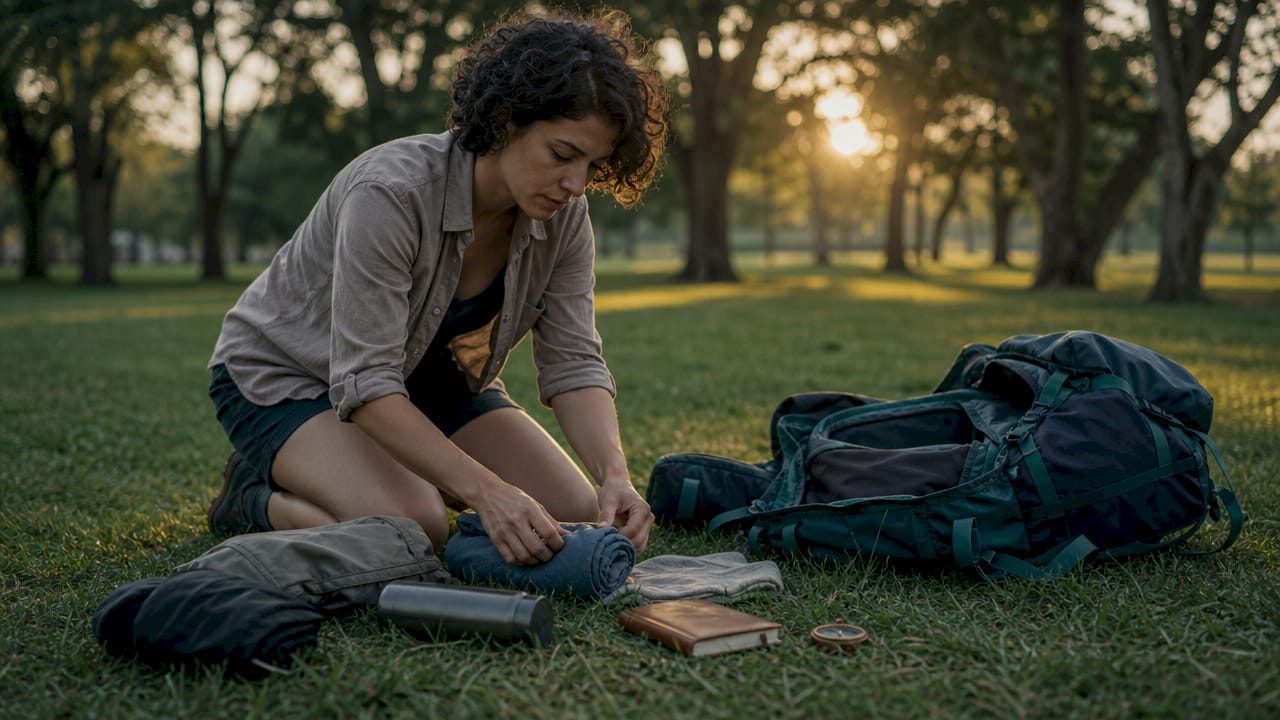
TL;DR:
- Minimal packing involves bringing only essential items tailored to each trip, using a 30–40L pack and capsule wardrobe. It reduces physical fatigue, costs, and environmental impact while increasing convenience and mental clarity. Using techniques like rolling clothes and planning laundry helps travelers pack intentionally and efficiently.
Minimal packing is the practice of carrying only the items you genuinely need for a trip, prioritizing versatility and weight reduction over comfort padding. The industry term for this approach is minimalist travel, and it applies equally to weekend camping trips and multi-week international adventures. Over 80% of frequent travelers regret overpacking, which means the problem is nearly universal. Frequent travelers who adopt this method rely on standards like 30–40L packs and capsule wardrobes to stay light, mobile, and stress-free. The payoff is real: less physical strain, lower costs, and a clearer head from the moment you leave home.
What is minimal packing and why does it matter?
Minimal packing means selecting only the items that serve a clear, defined purpose on your specific trip. Nothing goes in the bag because it "might be useful." Every item earns its place.
The practical standard for minimalist travel is a 30–40L backpack. A capsule wardrobe of 7–10 versatile clothing pieces fits comfortably inside that volume for trips lasting 2–4 weeks. That number sounds impossibly small until you factor in laundry and layering, which together cover almost every condition you will encounter.
The mental side matters just as much as the physical side. A smaller wardrobe means fewer decisions each morning. Less gear means less to track, less to lose, and less to worry about. Minimalist travel is not about deprivation. It is about intentional packing that keeps your attention on the experience rather than the luggage.
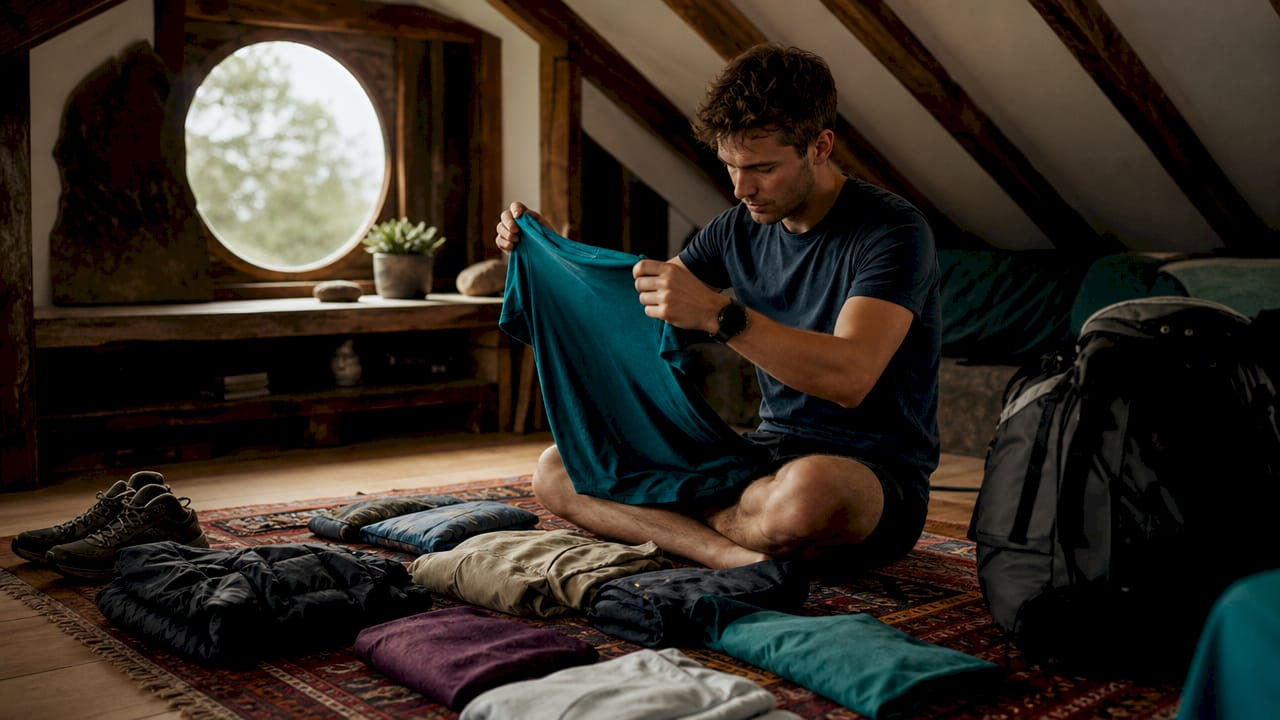
What are the main benefits of minimal packing for travel and outdoor activities?
Light packs reduce physical fatigue on long travel days. Carrying a 40-pound bag through an airport or up a trail burns energy you could spend on the actual adventure. Reducing pack weight directly conserves energy and improves mobility across every leg of a trip.
The financial benefits are concrete and immediate:
- No checked bag fees. A carry-on only strategy saves $30–$70 per flight on most domestic carriers.
- Faster airport movement. No baggage claim means you clear the terminal in minutes, not an hour.
- Fewer lost items. Everything you own is on your back and in your sight.
- Lower replacement costs. Less gear means less gear to break, lose, or replace.
Environmental impact is a real consideration too. Packing less means consuming less. Travelers who buy consumables locally rather than packing full-size bottles generate less plastic waste and support local economies.
"Minimalist packing is about intentionality rather than deprivation. The goal is to avoid 'just-in-case' items, not to suffer without what you need."
The mental benefit of a capsule wardrobe is decision fatigue reduction. When you have three shirt options instead of ten, you make the choice faster and move on. That mental clarity compounds over a two-week trip into noticeably lower stress.
How to pack minimally: practical techniques and expert strategies
The most effective approach to light packing combines a proven clothing system with smart organization tools. Start with the clothing, then build around it.
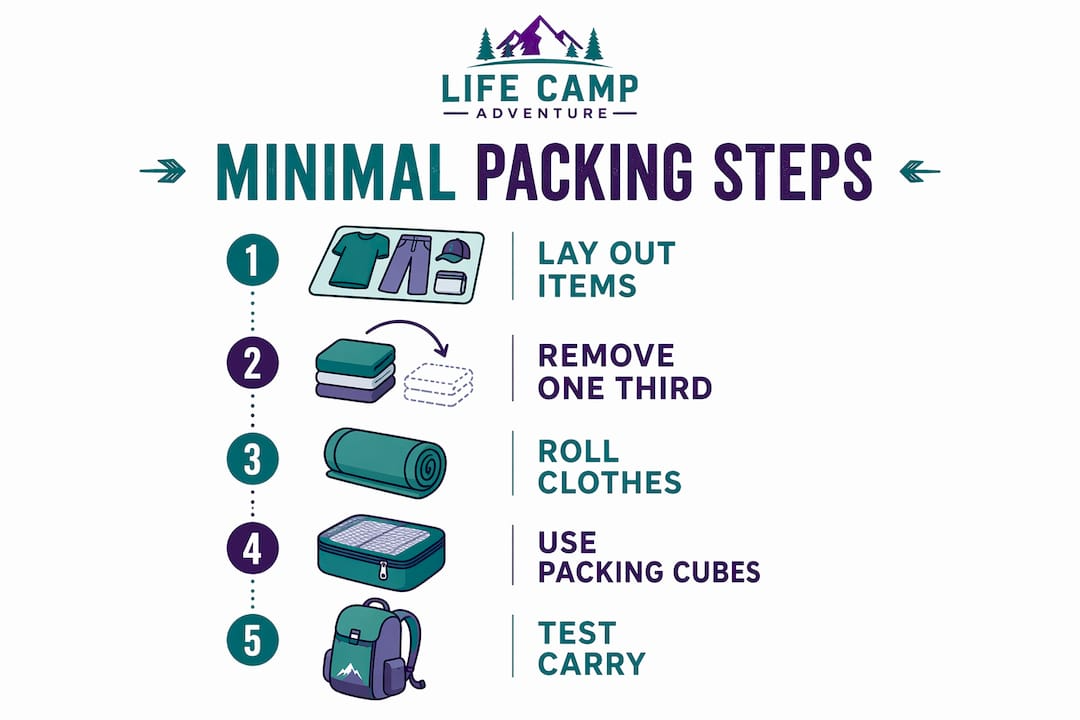
Step-by-step packing method
- Build a capsule wardrobe. Choose 3–4 tops, 2–3 bottoms, one mid-layer, and one outer layer. Every piece must work with at least two others.
- Roll, don't fold. Rolling clothes saves 25–35% of space compared to traditional folding and reduces wrinkles at the same time.
- Use packing cubes for category isolation. Packing cubes keep clothing types separated and accessible, not just compressed. One cube for tops, one for bottoms, one for electronics.
- Wear your bulkiest items in transit. Wearing your heaviest jacket and boots on travel days frees significant bag space and keeps you within carry-on limits.
- Plan for laundry. On trips longer than one week, regular laundry planning eliminates the need for extra clothing entirely. Quick-dry fabrics make this practical even without a laundromat.
- Buy consumables locally. Shampoo, sunscreen, and similar items are available almost everywhere. Pack travel-sized amounts for the first 48 hours, then replenish on arrival.
- Cut every "just-in-case" item. If you cannot name a specific day and situation where you will use it, leave it behind.
Pro Tip: Lay out everything you plan to pack, then remove one-third of it before you zip the bag. Most travelers are surprised to find they never missed what they left behind.
| Technique | Space or Weight Saved | Best For |
|---|---|---|
| Rolling clothes | 25–35% space savings | All clothing types |
| Wearing bulky items in transit | Frees 10–15% of pack volume | Jackets, boots, heavy layers |
| Buying consumables locally | Eliminates 1–2 lbs of liquid weight | Trips over 48 hours |
| Packing cubes | Faster access, better organization | Multi-stop trips |
For outdoor adventures specifically, packable and lightweight gear makes the biggest difference. A shelter that compresses to the size of a water bottle beats a bulky tent every time.
What common mistakes do travelers make when attempting to pack minimally?
Most travelers fail at minimal packing before they ever leave home. The mistakes are predictable, and knowing them in advance is the fastest way to avoid them.
- Packing for worst-case scenarios. Bringing a heavy rain jacket "just in case" for a trip to a dry climate is the most common error. Check the actual forecast and pack for the likely conditions, not every possible one.
- Underestimating laundry. Travelers who skip laundry planning end up packing seven days of clothing for a seven-day trip. That doubles the clothing load. Quick-dry fabrics and planned laundry stops solve this completely.
- Choosing single-use gear. A dedicated rain cover, a separate day bag, and a specialized hiking towel each take space. Multi-use items like a merino wool base layer that works as a sleep shirt and a hiking top cut that waste in half.
- Ignoring the transit-day strategy. Skipping the bulky-item wearing strategy on travel days is a missed opportunity. Boots and a jacket worn on the plane take zero bag space.
- Poor organization inside the pack. Without packing cubes or a clear system, travelers dig through everything to find one item. That chaos leads to repacking, wasted time, and forgotten gear.
Pro Tip: Do a test pack two days before departure. Carry the bag for 30 minutes around your neighborhood. If your shoulders ache, the bag is too heavy. Remove items until it feels comfortable.
The essential guide to packing light for outdoor adventures covers gear-specific decisions in more depth, particularly for multi-day trail trips where weight management is critical.
What does a minimal packing checklist look like for different trip types?
A minimal packing checklist changes based on trip length and activity type, but the core categories stay the same: clothing, toiletries, documents, and gear.
| Category | Weekend Trip (2–3 days) | Extended Trip (2–4 weeks) |
|---|---|---|
| Tops | 2–3 | 3–4 (quick-dry) |
| Bottoms | 1–2 | 2–3 |
| Underwear/socks | 3 pairs | 4–5 pairs (wash regularly) |
| Outerwear | 1 layer | 1 layer (worn in transit) |
| Toiletries | Travel-sized kit | Minimal kit, replenish locally |
| Bag size | 20–30L | 30–40L |
| Documents | ID, card, phone | ID, card, phone, copies |
For camping and outdoor adventure trips, the checklist expands to include gear essentials without ballooning in weight:
- Shelter: a compact, packable tent or bivy rated for your conditions
- Sleep system: a sleeping bag and liner suited to the temperature range
- Navigation: a map, compass, or GPS device
- First aid: a compact first aid kit sized for your group and trip length
- Cooking: a single lightweight stove and one pot
- Water: a filter or purification tablets
The 30–40L pack standard holds for most adventure trips when gear is chosen for packability. Every item on the outdoor checklist should compress or fold flat. Bulky, single-use gear is the fastest way to blow past that volume limit. The adventure travel packing list for 2026 offers a current, tested framework for travelers heading into the field this year.
Key Takeaways
Minimal packing works because it forces intentional choices, and intentional choices produce lighter loads, lower costs, and more freedom on every trip.
| Point | Details |
|---|---|
| Core definition | Minimal packing means carrying only items with a clear, specific purpose for your trip. |
| Standard pack size | A 30–40L backpack with 7–10 clothing pieces covers most trips up to four weeks. |
| Top space-saving technique | Rolling clothes saves 25–35% of pack space compared to folding. |
| Biggest mistake to avoid | Packing "just-in-case" items inflates pack weight without adding real value. |
| Outdoor adventure rule | Every gear item should compress or fold flat to stay within a 30–40L volume limit. |
Why the mental shift matters more than the gear
I have packed for trips on five continents, and the single biggest variable was never the bag or the gear. It was the mindset going into the packing session.
The first time I forced myself to a 30L bag for a three-week trip, I stood in front of my bed looking at a pile of "essentials" that would have filled a checked bag twice over. Cutting that pile down felt like a loss. It wasn't. By day three, I was moving faster, spending less, and thinking about the trip rather than the luggage.
The travelers I see struggling most with light packing are not struggling with gear choices. They are struggling with the fear of not having enough. That fear is almost always wrong. Pharmacies, laundromats, and gear shops exist everywhere you are likely to travel. The world is not a remote wilderness where you must carry everything you could ever need.
Start smaller than feels comfortable. Pack for three days, even if your trip is ten. Do laundry on day four. You will discover that the items you left behind were never missed, and that discovery changes how you pack forever. The freedom of a light bag is not a travel hack. It is a different relationship with the trip itself.
— Billy
Gear built for travelers who pack with purpose
Minimal packing works best when your gear is chosen to match the approach. Bulky, heavy equipment undermines every space-saving technique you apply to your clothing.
Lifecampadventure builds and curates outdoor gear specifically for travelers and adventurers who want reliable performance without unnecessary weight. From compact shelters to lightweight cookware, every product is selected with packability in mind. The best camping gear comparison for 2025 breaks down top-rated options across categories so you can make fast, confident decisions. For adventurers who want a complete picture of what to carry, the 7 essential types of camping gear guide covers every category without the filler. Pack less. Go further.
FAQ
What does minimal packing mean?
Minimal packing means carrying only the items you need for a specific trip, with no extras included for vague "just-in-case" scenarios. The standard approach uses a 30–40L pack and a capsule wardrobe of 7–10 versatile clothing pieces.
How many clothes do I need for a two-week trip with minimal packing?
A capsule wardrobe of 3–4 tops, 2–3 bottoms, and 4–5 pairs of underwear covers two weeks when you plan laundry every 5–7 days. Quick-dry fabrics make this practical even without access to a laundromat.
What is the best technique for saving space when packing minimally?
Rolling clothes saves 25–35% of pack space compared to folding and reduces wrinkles. Combining rolling with packing cubes for category isolation gives you the best organization and the most usable volume.
Does minimal packing work for camping and outdoor adventures?
Minimal packing works for outdoor adventures when gear is chosen for packability. A compact tent, a compressible sleeping bag, a lightweight stove, and a small first aid kit cover the core needs within a 30–40L pack.
What is the biggest mistake people make when trying to pack minimally?
The most common mistake is packing for worst-case scenarios rather than likely conditions. Intentional packing means choosing gear for the trip you are actually taking, not every trip you could imagine taking.
