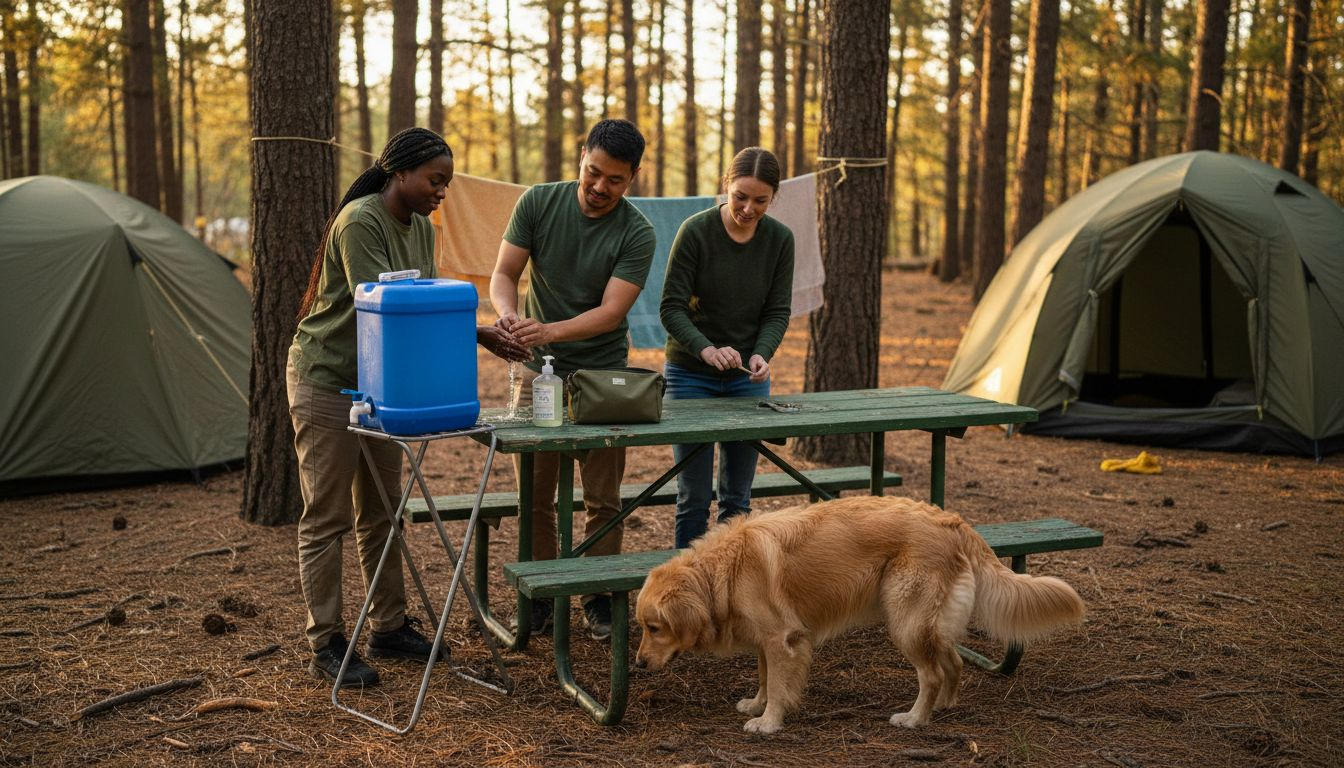
Every parent faces questions about keeping their children healthy while exploring the outdoors. For beginner campers and families in the United States, understanding camp hygiene is not just about personal comfort but about protecting everyone from illness and maintaining dignity in wilderness settings. By unpacking common myths and highlighting best practices, this guide empowers families to stay safe, enjoy their camping adventures, and avoid health risks that many misunderstand when heading to American campgrounds.
Key Takeaways
| Point | Details |
|---|---|
| Understanding Camp Hygiene | Camp hygiene encompasses personal cleanliness, effective waste management, and disease prevention essential for health during outdoor activities. |
| Debunking Common Myths | Misconceptions about hygiene, like the effectiveness of hand sanitizer or the safety of stream water, can lead to serious health risks. |
| Importance of Preparation | Proper planning, including a well-equipped hygiene kit and knowledge of sanitation practices, is crucial for maintaining health in wilderness settings. |
| Engaging Families in Hygiene Practices | For families, creating structured routines and using educational methods can make hygiene practices enjoyable and effective for all ages. |
Camp Hygiene Defined and Major Myths
Camp hygiene is more complex than simply staying clean during outdoor adventures. Camp hygiene refers to the comprehensive set of practices that maintain personal cleanliness, prevent disease transmission, and protect individual and group health in wilderness environments.
At its core, camp hygiene involves three critical interconnected elements:
- Maintaining personal cleanliness
- Managing waste effectively
- Preventing infectious disease transmission
Many campers misunderstand camp hygiene, believing it's optional or unnecessary. However, water, sanitation, and hygiene practices are fundamental to preventing illness and ensuring safety in outdoor settings.
Some prevalent myths about camp hygiene can put campers at significant risk. Here are the most common misconceptions:
- Myth 1: Hand sanitizer completely replaces handwashing
- Myth 2: Water from streams is always safe to drink
- Myth 3: Personal hygiene doesn't matter in wilderness environments
These myths can lead to serious health consequences. WASH programs emphasize that hygiene isn't just about cleanliness—it's about preventing disease transmission and maintaining human dignity.
Here's a comparison of common camp hygiene myths versus the actual facts and potential health impacts:
| Myth | Reality | Health Impact if Ignored |
|---|---|---|
| Hand sanitizer fully replaces washing | Handwashing is more effective at removing dirt and pathogens | Increased illness risk from missed germs |
| Stream water is always safe | Untreated water can carry harmful microorganisms | Risk of waterborne diseases |
| Personal hygiene doesn't matter outdoors | Cleanliness limits disease transmission in all environments | More frequent camp illnesses and outbreaks |
Effective camp hygiene requires understanding that water, sanitation, and personal cleaning practices are deeply interconnected. Simply having access to water isn't enough; campers must also know proper treatment techniques, understand contamination risks, and implement consistent hygiene behaviors.
Pro tip: Always pack biodegradable soap, carry multiple water treatment methods, and create a dedicated hygiene kit with essential cleaning supplies before your camping trip.
Core Areas of Camp Hygiene Outdoors
Camp hygiene in outdoor environments encompasses far more than basic cleanliness. Wilderness hygiene involves a comprehensive approach to maintaining health, safety, and personal well-being in challenging outdoor settings.
The core areas of camp hygiene can be broken down into several critical components:
- Water management and purification
- Personal cleanliness protocols
- Waste disposal and environmental protection
- Sanitation infrastructure
- Disease prevention strategies
Sanitation infrastructure plays a crucial role in maintaining camp hygiene. This includes:
- Establishing designated toilet areas
- Creating handwashing stations
- Implementing waste collection systems
- Designing spaces that minimize contamination risks
Proper camp hygiene is about more than staying clean—it's about protecting human dignity and preventing health risks in challenging environments.
Outdoor camp hygiene practices demand meticulous attention to environmental factors. Campers must understand how their actions impact both personal health and the surrounding ecosystem, recognizing that improper waste management can lead to significant health and environmental consequences.
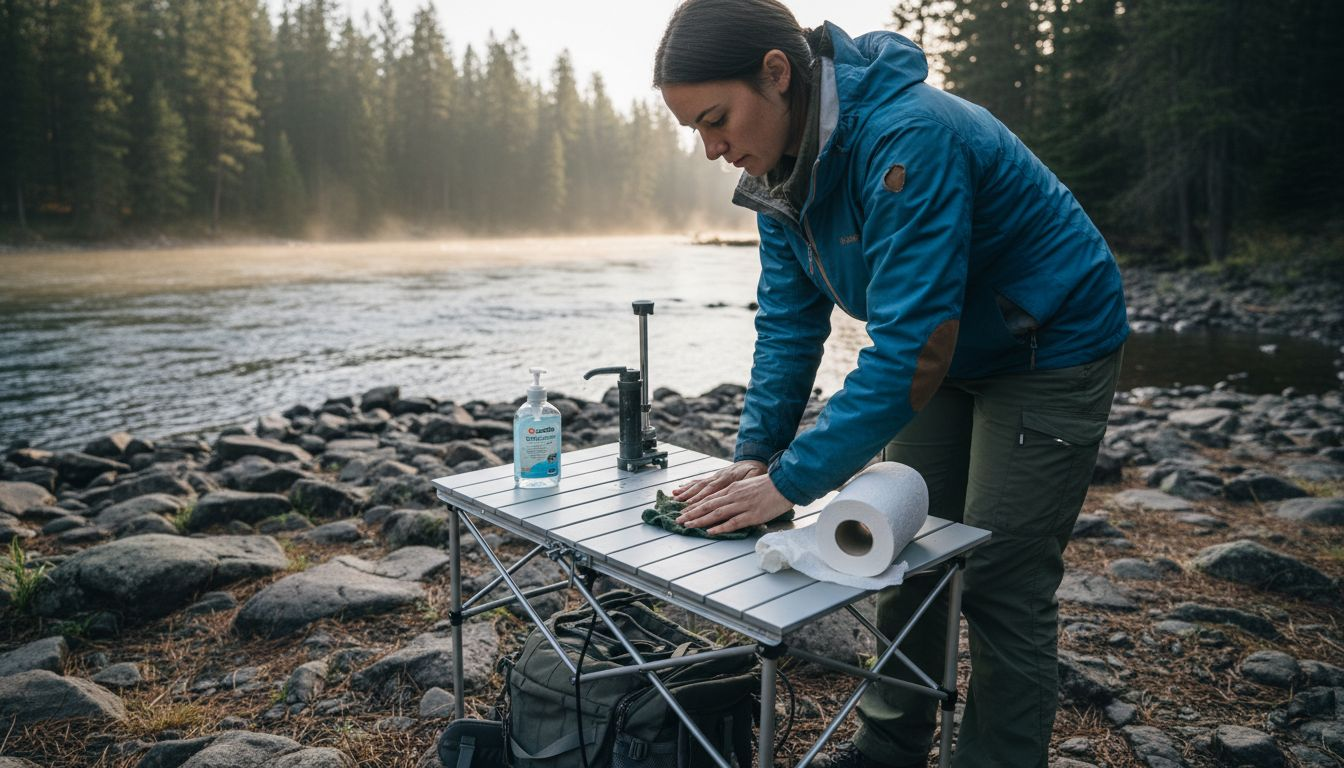
Environmental management is equally critical. This involves monitoring potential breeding sites for insects, managing potential contamination sources, and ensuring that camping areas remain clean and safe for all users.
Pro tip: Create a dedicated hygiene kit with multipurpose biodegradable soap, hand sanitizer, water purification tablets, and compact waste management tools to ensure comprehensive outdoor cleanliness.
Types of Hygiene Practices at Camp
Camping requires a strategic approach to maintaining personal and environmental cleanliness. Camp hygiene practices encompass multiple critical areas designed to protect individual health and preserve the surrounding natural environment.
The primary types of hygiene practices at camp can be categorized into several essential domains:
- Personal hygiene management
- Food handling and preparation
- Waste disposal protocols
- Water treatment and sanitation
- Environmental protection strategies
Personal hygiene represents the cornerstone of camp health maintenance. This includes:
- Regular handwashing with biodegradable soap
- Maintaining clean clothing and bedding
- Managing personal waste discreetly
- Practicing dental hygiene
- Controlling body odor and skin cleanliness
Effective camp hygiene is not just about personal comfort—it's about protecting the entire camping community's health and well-being.
Behavior change communication plays a crucial role in sustaining proper hygiene practices. Campers must understand not just the how, but the why behind each hygiene protocol to ensure consistent implementation.
Environmental hygiene demands equal attention. This involves managing potential contamination sources, controlling insect breeding sites, and ensuring that camping areas remain clean and safe for all users. Responsible campers recognize that their personal hygiene practices directly impact the broader ecosystem.
Pro tip: Develop a compact, multipurpose hygiene kit with travel-sized essentials that address personal cleaning, waste management, and environmental protection to streamline your camp hygiene approach.
Essential Camp Hygiene Supplies and Gear
Preparing for a camping trip requires strategic planning, especially when it comes to maintaining personal hygiene in outdoor environments. Hygiene gear is not just about comfort—it's a critical component of health and safety in wilderness settings.
Essential camp hygiene supplies can be categorized into several key groups:
- Personal cleaning items
- Water treatment equipment
- Waste management tools
- Sanitation protection gear
- Specialized health maintenance supplies
Critical personal hygiene supplies include:
- Biodegradable camping soap
- Quick-dry microfiber towels
- Hand sanitizer with high alcohol content
- Compact toothbrush and toothpaste
- Moisture-wicking underwear and socks
- Multipurpose wet wipes
- Lightweight, fast-drying clothing
Emergency sheltering supplies provide valuable insights into comprehensive hygiene preparedness. These recommendations highlight the importance of versatile, lightweight gear that addresses multiple personal care needs.Effective camp hygiene is about being prepared, not just clean—it's your first line of defense against potential health risks in outdoor environments.
Water treatment represents another crucial aspect of camp hygiene equipment. Campers should carry multiple water purification methods, such as portable filters, chemical treatment tablets, and UV sterilization devices, to ensure safe drinking water under various conditions.
Pro tip: Invest in a compact, waterproof hygiene kit with multipurpose items that minimize weight while maximizing health protection and personal comfort during outdoor adventures.
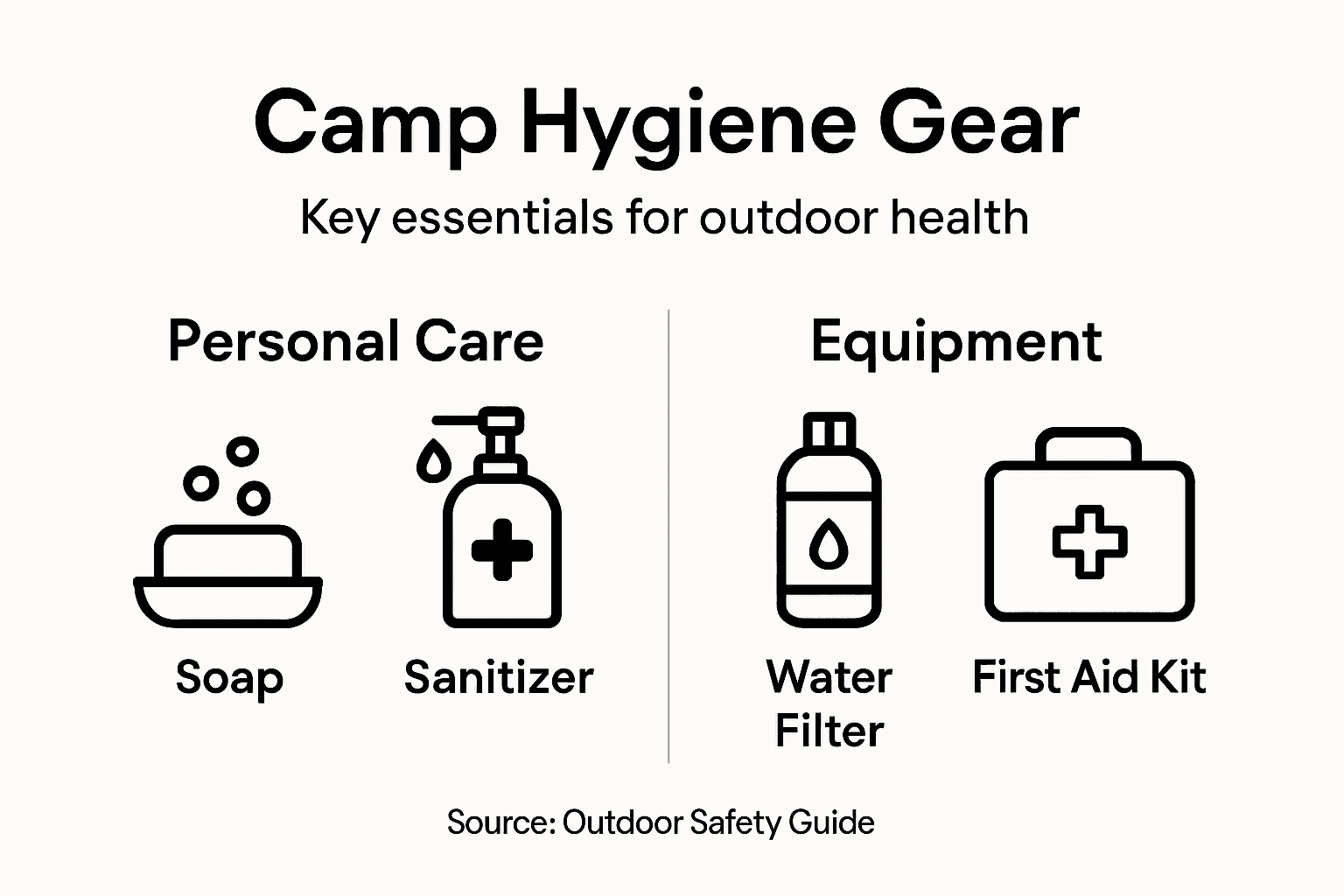
This summary shows how essential hygiene supplies contribute to overall camp safety:
| Gear Category | Primary Purpose | Value for Campers |
|---|---|---|
| Personal cleaning items | Remove dirt and pathogens | Lower infection, increased comfort |
| Water treatment equipment | Purify hydration sources | Safe drinking, prevent illness |
| Waste management tools | Safe disposal of waste | Reduced contamination risk |
| Sanitation protection gear | Barrier against germs | Enhanced group safety and hygiene |
Risks, Mistakes, and What to Avoid
Navigating camp hygiene requires understanding potential pitfalls that can compromise personal and group health. Wilderness hygiene risks extend far beyond basic discomfort, potentially leading to serious medical complications if not managed carefully.
The most critical risks in camp environments include:
- Waterborne disease transmission
- Cross-contamination between individuals
- Environmental pathogen exposure
- Improper waste management
- Compromised personal immune responses
Common mistakes campers make that increase health vulnerabilities include:
- Neglecting hand hygiene protocols
- Using untreated water sources
- Failing to separate clean and contaminated equipment
- Ignoring personal waste management
- Sharing personal hygiene items
- Improper food handling techniques
- Inadequate cleaning of shared spaces
Emergency camp hygiene strategies emphasize the importance of proactive risk management. Understanding potential transmission pathways allows campers to create robust protective strategies that minimize health risks.Prevention is always more effective than treatment—especially in remote camping environments where medical resources are limited.
Environmental risks demand careful navigation. Campers must remain vigilant about potential contamination sources, understand local ecological conditions, and implement comprehensive hygiene protocols that protect both personal and group health.
Pro tip: Always pack a comprehensive first aid kit with water purification tools, create a dedicated hygiene station at your campsite, and establish clear personal and group hygiene protocols before your trip begins.
Practical Routines for Families and Beginners
Camping hygiene for families requires a structured, educational approach that transforms complex health practices into engaging, manageable activities. Family hygiene routines are not just about cleanliness—they're opportunities to teach critical life skills and build resilience in outdoor environments.
Key components of effective camp hygiene routines for families include:
- Establishing clear personal cleaning schedules
- Creating designated hygiene stations
- Teaching age-appropriate cleaning techniques
- Making hygiene practices fun and interactive
- Developing consistent accountability systems
Practical routine strategies for families and beginners involve:
- Morning hygiene checklist
- Handwashing protocol before meals
- Personal cleaning station setup
- Shared responsibility for group cleanliness
- Teaching waste management techniques
- Creating reward systems for consistent hygiene
Structured daily activities support the development of sustainable hygiene habits. Visual aids, consistent reminders, and role modeling can transform potentially challenging routines into positive, memorable experiences.Successful camp hygiene is about creating habits, not enforcing rigid rules—make it engaging, not intimidating.
For beginners, the key is starting simple and building complexity gradually. Introduce basic concepts like proper handwashing, personal item management, and waste disposal in ways that feel natural and non-threatening.
Pro tip: Create a colorful, laminated hygiene checklist for each family member, using stickers or small rewards to make maintaining camp cleanliness an exciting group challenge.
Elevate Your Camp Hygiene with Trusted Gear from Life Camp Adventure
Maintaining effective camp hygiene is essential to protect yourself and your group from illness and environmental risks during outdoor adventures. This article highlights key challenges such as managing safe water, practicing proper handwashing, and disposables management to prevent disease transmission and maintain dignity in the wilderness. You need reliable gear designed to support these critical hygiene practices in any setting.
Discover high-quality camping essentials that help you implement comprehensive camp hygiene routines confidently. From biodegradable soap and water purification tools to waste management supplies, Life Camp Adventure equips you with adventure-ready products tailored for comfort and durability. Visit Life Camp Adventure now to secure your hygiene kit and take charge of your health outdoors before your next trip. Don't wait to experience the peace of mind that comes with being fully prepared.
Explore products that align with proven wilderness hygiene principles and make your next camping experience safer and more enjoyable at Life Camp Adventure.
Frequently Asked Questions
What are the key elements of camp hygiene?
Camp hygiene involves maintaining personal cleanliness, managing waste effectively, and preventing infectious disease transmission in wilderness environments.
Why is proper hand hygiene important while camping?
Proper hand hygiene is crucial while camping to remove dirt and pathogens effectively. Handwashing reduces the risk of illness, while hand sanitizer does not eliminate all types of germs.
How can I ensure my water is safe to drink while camping?
To ensure safe drinking water while camping, always treat water from streams and lakes using purification methods such as filters, chemical tablets, or UV sterilization devices to eliminate harmful microorganisms.
What tools should I include in my camp hygiene kit?
Your camp hygiene kit should include biodegradable soap, hand sanitizer, a compact toothbrush and toothpaste, multipurpose wet wipes, and water purification tablets to maintain personal cleanliness and environmental protection.
