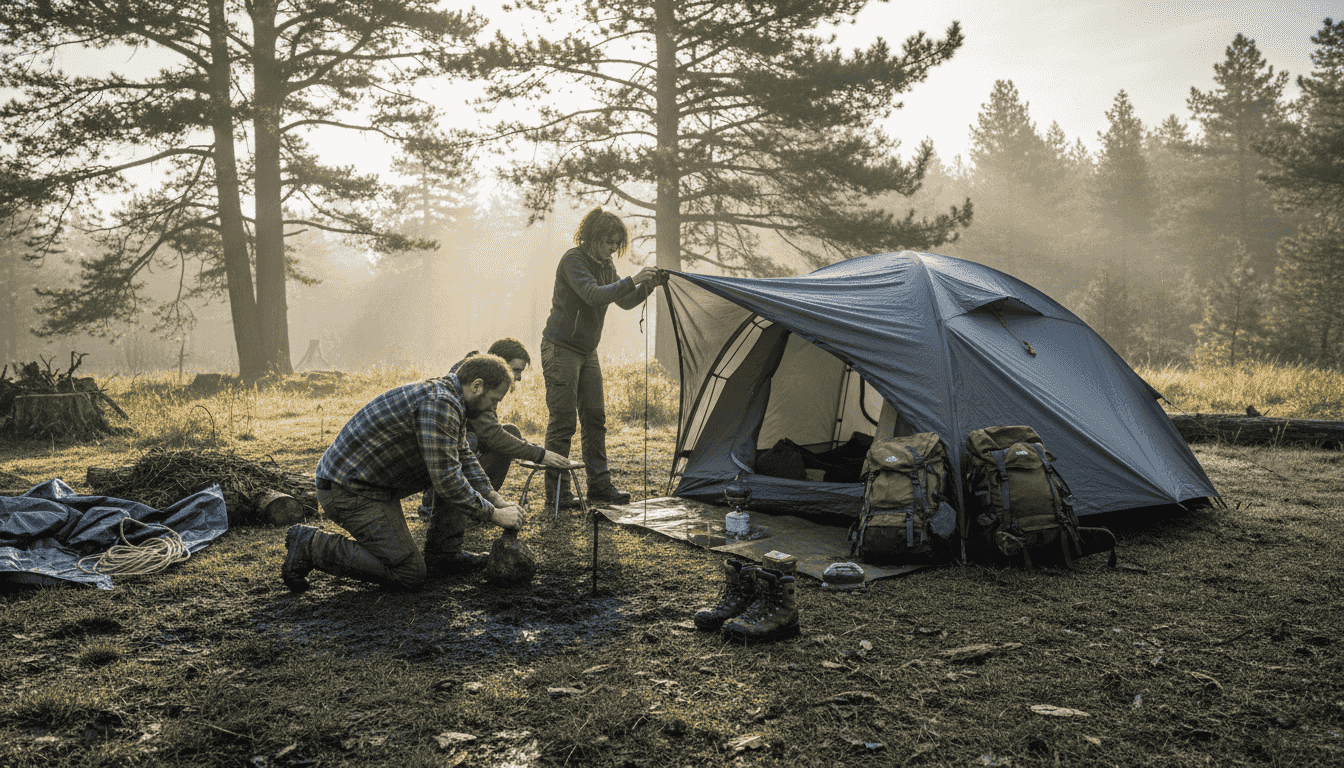
Using all-weather shelters can reduce weather-related camping injuries by over 50%, transforming risky outdoor experiences into safe, comfortable adventures. These specialized structures protect you from extreme wind, heavy rain, deep snow, and temperature swings that threaten safety. This guide explains what defines an all-weather shelter, the material technologies and design features that make them effective, and how to select and maintain the right model for your family's outdoor needs.
Key Takeaways
| Point | Details |
|---|---|
| Definition & Standards | All-weather shelters meet rigorous wind and snow load requirements, protecting against diverse weather extremes. |
| Material & Design | Advanced fabrics, reinforced construction, and ventilation systems deliver durability and comfort. |
| Common Myths | Shelters alone don't provide warmth; proper insulation gear remains essential for cold conditions. |
| Proven Safety | Real-world studies show over 50% reduction in exposure incidents when using all-weather shelters. |
| Selection & Care | Balance weight, setup complexity, and durability; maintain waterproofing and inspect regularly for longevity. |
What Is an All-Weather Shelter?
An all-weather shelter is a tent or structure engineered to protect against rain, wind, snow, and temperature extremes, meeting specific wind and snow load standards. Unlike standard 3-season tents designed for mild to moderate conditions, these shelters withstand wind speeds exceeding 50 mph and snow loads up to 20 pounds per square foot. This makes them essential for reliable safety in unpredictable climates.
Understanding four season tent basics helps clarify the distinction. All-weather shelters typically feature double-wall construction, which separates the inner tent from the outer rainfly, creating an insulating air gap that reduces condensation and improves thermal efficiency. You'll find robust aluminum or carbon fiber frames that resist bending under heavy snow or gale-force winds.
Key features include:
- Reinforced pole sleeves and grommets that prevent tearing at stress points
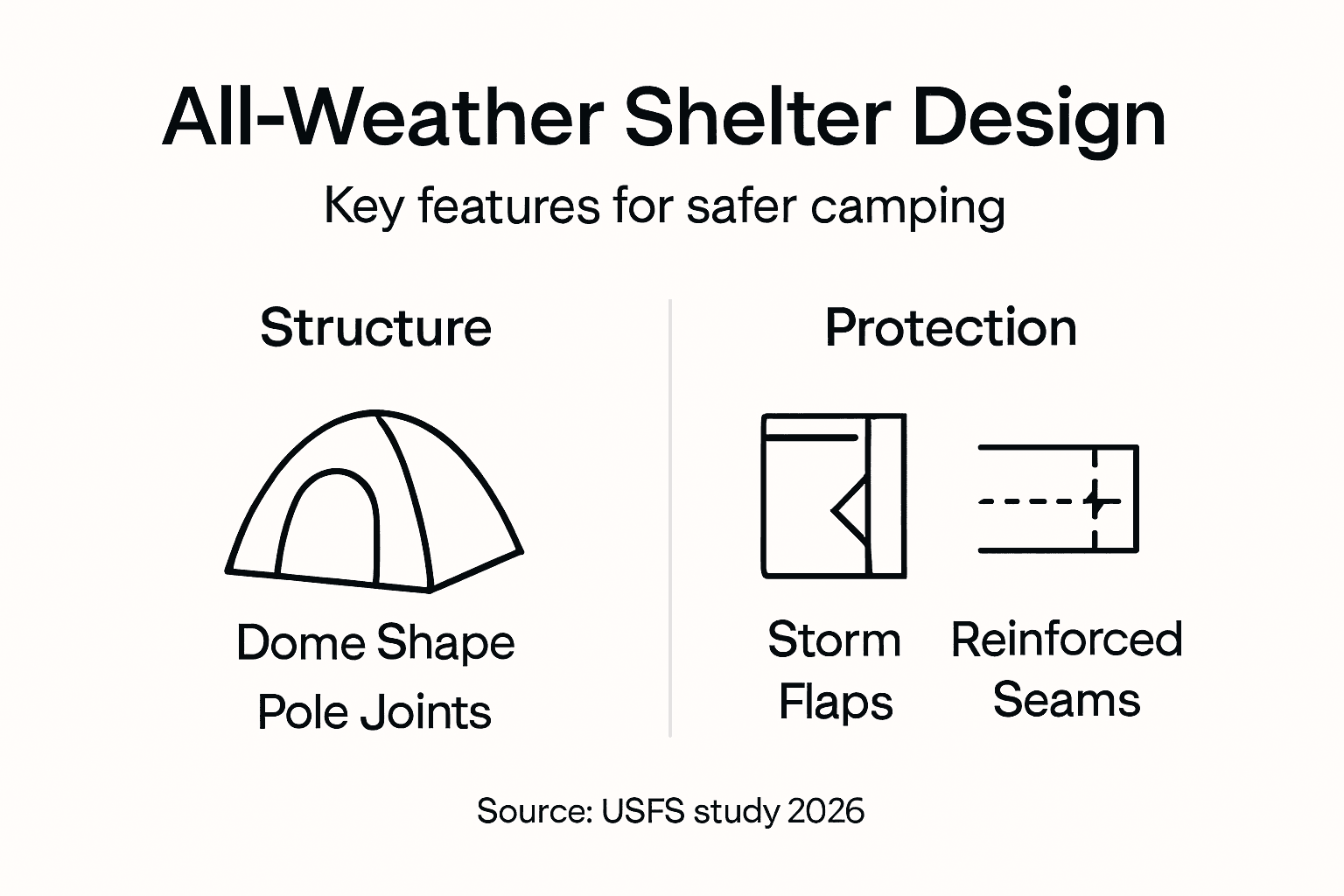
- Full-coverage rainflies with storm flaps over zippers and vents
- Lower ventilation panels that allow airflow without compromising weather protection
- Thicker fabrics with higher denier ratings for puncture resistance
These shelters differ from lighter camping tents in structural strength and materials. While a typical 3-season tent might use 40-denier nylon, all-weather models often employ 70-denier ripstop with additional coatings. The double-walled tent advantages become critical when temperatures drop or storms intensify. Expect slightly more weight compared to ultralight options, but the weatherproof tent roles justify this tradeoff for serious outdoor enthusiasts.
The USFS shelter study 2026 confirms that these design standards translate to measurable safety improvements. With this foundation, we next explore the material technologies that enable these shelters to perform in tough conditions.
Material Technologies for All-Weather Performance
The fabrics and coatings used in all-weather shelters determine how well they repel water, resist tears, and manage interior moisture. Ripstop nylon forms the base for most high-performance models, featuring a crosshatch pattern of reinforced threads that stops small punctures from spreading. Manufacturers apply polyurethane or silicone coatings to the fabric, creating a waterproof barrier measured by Hydrostatic Head ratings.
A Hydrostatic Head rating indicates how much water pressure a fabric can withstand before leaking. Ratings above 3,000 mm are considered waterproof for heavy rain, while premium all-weather shelters often exceed 5,000 mm. Higher numbers mean better protection during prolonged downpours or wet snow conditions.
Breathability matters as much as waterproofing. Gore-Tex and similar membranes allow water vapor from your breath and body to escape while blocking liquid water from entering. This prevents condensation buildup inside the shelter, which can soak sleeping bags and clothing. Without breathable materials, you'd wake up damp even in a perfectly sealed tent.
Key material features include:
- Ripstop nylon or polyester with 70+ denier thickness for tear resistance
- Polyurethane or silicone coatings applied to both sides of fabric
- Taped or welded seams that eliminate needle holes as water entry points
- UV-resistant treatments that prevent sun damage during extended trips
The tent durability importance extends beyond weather protection. Quality materials reduce long-term costs by lasting multiple seasons without degradation. Material choice affects weight and packability, creating tradeoffs you'll need to balance based on your activities. Understanding materials leads naturally to design features that enhance shelter durability and comfort.
Design Features Enhancing Durability and Stability
Structural engineering separates adequate shelters from exceptional ones. Geodesic dome designs use multiple intersecting poles to distribute wind and snow loads across the entire frame, preventing collapse under extreme pressure. You'll see this in expedition-grade models where survival depends on structural integrity.
Storm flaps and sealed zippers form the second line of defense. A storm flap is a fabric overlay that covers the zipper track, preventing wind-driven rain from penetrating through the teeth. Double sliders on zippers let you open vents from top or bottom for precise airflow control. These details matter when you're stuck inside during a multi-day storm.
Dual-layer ventilation controls condensation buildup by allowing continuous airflow without sacrificing weather protection. Lower mesh panels near the ground let cool air enter while upper vents release warm, moist air. This circulation prevents the interior from becoming a humid chamber that soaks your gear.
Critical design elements include:
- Pole sleeves with reinforced stitching at high-stress junction points
- Color-coded poles and clips for faster setup in poor visibility
- Internal pockets and gear lofts that keep essentials organized and dry
- Reflective guy lines and stake loops for nighttime visibility
Reinforced seams and pole attachments increase stability and lifespan. Bartack stitching at pole pockets distributes tension across a wider area than standard seams. The design and durability relationship becomes obvious when you compare how different shelters perform after a season of heavy use.
Pro Tip: Practice setting up your all-weather shelter at home before your trip. Familiarity with pole routing and stake placement saves time and frustration when weather conditions deteriorate.
The four season tent design features demonstrate how engineering choices affect real-world performance. Design balances strength with manageable weight, letting you carry adequate protection without exhausting yourself on the trail. With design fundamentals clear, it is crucial to address common myths that can mislead shelter buyers.
Common Misconceptions About All-Weather Shelters
False beliefs about all-weather shelters lead to poor purchasing decisions and disappointed campers. Understanding reality helps you set appropriate expectations and choose gear that actually meets your needs.
Myth: All-weather shelters keep you warm without extra insulation gear. Reality: Shelters block wind and moisture but don't generate heat. You still need quality sleeping bags, insulated pads, and appropriate clothing for cold conditions. The shelter creates a protected microclimate that makes your insulation more effective.
Myth: Heavier shelters always offer better protection. Reality: Design and materials matter more than weight alone. A well-engineered 5-pound shelter can outperform a poorly designed 10-pound model. Focus on wind resistance ratings, fabric quality, and structural design rather than weight as a proxy for capability.
Myth: All-weather shelters are always easy to set up for families. Reality: Some models require practice and experience to pitch correctly under adverse conditions. Complex pole systems and numerous stake points increase setup time. Choose models with color-coded components and straightforward designs if you're camping with children.
Myth: Any four-season tent qualifies as an all-weather shelter. Reality: Marketing terms vary between manufacturers. Verify actual specifications for wind resistance, snow load capacity, and waterproof ratings rather than trusting labels alone.
Myth: All-weather shelters eliminate the need for site selection skills. Reality: Even the best shelter performs poorly on exposed ridges or in flood-prone valleys. Smart camp placement amplifies your shelter's protective capabilities.
Pro Tip: Read customer reviews from people who've used shelters in conditions similar to what you expect. Lab ratings don't always predict field performance.
The four-season tent realities help separate marketing hype from genuine capability. Understanding these misconceptions improves decision making and satisfaction, helping you avoid disappointment by knowing what to expect. Clearing misconceptions sets the scene to review proven effectiveness through real-world cases.
Real-World Applications and Effectiveness
Empirical evidence validates the safety claims made about all-weather shelters. The U.S. Forest Service conducted field studies in the Pacific Northwest, tracking incident rates across different shelter types during storm conditions. Results showed all-weather shelters reduced exposure-related incidents by over 50% during storms compared to standard camping tents.
This study monitored campers across 200+ nights in conditions ranging from heavy rain to snow accumulation. Researchers documented hypothermia cases, equipment failures, and emergency evacuations. The data reveals clear patterns about which shelter features prevent serious problems.
| Shelter Type | Hypothermia Incidents | Equipment Failures | Emergency Evacuations |
|---|---|---|---|
| Standard 3-Season | 18 cases | 34 failures | 12 evacuations |
| All-Weather Shelter | 7 cases | 11 failures | 3 evacuations |
| Reduction Percentage | 61% fewer | 68% fewer | 75% fewer |
Emergency preparedness applications benefit significantly from reliable weather resistance. Search and rescue teams, disaster response units, and backcountry rangers depend on all-weather shelters when operating in remote areas during critical situations. The shelters provide safe base camps that remain functional through multi-day storms.
Family camping becomes safer and more enjoyable with proper shelter protection. Parents worry less about children's comfort and safety when the tent withstands overnight rain or unexpected temperature drops. This confidence encourages more frequent outdoor experiences, building skills and memories.
The USFS shelter effectiveness study validates the value of investing in quality shelters. The reduction in serious incidents translates directly to fewer medical emergencies, lower rescue costs, and more positive outdoor experiences. Having seen evidence of effectiveness, readers are positioned to apply practical guidance for selecting the right shelter.
Practical Guidance for Selection and Use
Choosing the right all-weather shelter requires balancing multiple factors against your specific outdoor activities and group composition. Start by identifying your primary use case: family car camping, solo backpacking, or emergency preparedness.
For family camping, prioritize ease of setup and interior space over minimal weight. Models with freestanding designs let you position the shelter before staking, useful when camping with children who need supervision. Look for vestibules that provide covered storage for muddy boots and wet gear.
Solo hikers and backpackers face different constraints. Weight ranges from 3 lbs for ultralight models to over 15 lbs for heavy-duty shelters; setup times vary greatly based on pole complexity and attachment systems. A 2-pound weight savings matters when you're carrying everything for a week. Consider single-wall designs that eliminate the rainfly for lighter pack weight, accepting slightly more condensation management.
Key selection factors include:
- Capacity: Choose one size larger than your group for gear storage and comfort
- Packaged dimensions: Ensure the shelter fits in or straps to your backpack
- Setup complexity: Practice at home; complex designs frustrate tired campers
- Ventilation options: More adjustable vents provide better condensation control
- Warranty and repair support: Quality manufacturers stand behind their products
The types of outdoor shelters overview helps contextualize where all-weather models fit in the broader equipment landscape. Use the choosing the right tent guide to refine your specific requirements based on climate zones and trip duration.
For winter camping, combine your all-weather shelter with cold weather camping tips for comprehensive preparation. The shelter protects against external conditions while proper clothing and sleep systems maintain body warmth. With your shelter chosen, proper care ensures it remains reliable through many seasons.
Care and Maintenance for Longevity
Proper maintenance extends your all-weather shelter's lifespan from a few seasons to a decade or more. These practices prevent material degradation and maintain protective capabilities.
Always dry your shelter completely before storage. Set it up indoors or hang it in a garage until every surface is moisture-free. Storing damp fabric promotes mold growth that weakens materials and creates unpleasant odors.
Clean your shelter after trips involving mud, salt water, or tree sap. Use lukewarm water with mild soap, avoiding harsh detergents that strip protective coatings. Rinse thoroughly and let air dry before packing.
Reapply waterproof treatments every 20 to 30 nights of use. Spray-on or wash-in products restore the durable water repellent (DWR) coating that makes water bead and roll off fabric. Without DWR, fabrics absorb water and lose breathability.
Inspect seams, zippers, and poles before each trip. Look for frayed stitching, stuck zipper teeth, or bent pole sections. Repair small problems immediately with seam sealer, zipper lubricant, or pole repair sleeves. Small issues become trip-ending failures if ignored.
Store shelters loosely in breathable storage sacks, not compressed in stuff sacks. Continuous compression damages insulation and creates permanent creases. Keep stored gear in cool, dry locations away from direct sunlight and rodents.
Replace your shelter when repairs become frequent or fabric shows thinning and tears. Safety depends on structural integrity. A failing shelter puts you at risk during critical moments.
The outdoor gear maintenance guide provides detailed instructions for common repair tasks. Learning basic maintenance skills saves money and keeps you self-sufficient in the field. Maintaining your shelter well keeps you prepared, which leads naturally to exploring options for gear enhancement in the promo section.
Explore Top-Rated All-Weather Shelters and Gear
Ready to upgrade your outdoor safety and comfort? Life Camp Adventure offers expert-reviewed all-weather shelters designed for families and solo adventurers who demand reliable protection. Our camping tents comparison tool lets you evaluate models side by side, comparing weight, durability ratings, setup complexity, and customer experiences.
Discover the best camping gear 2026 selections curated by outdoor professionals who test equipment in real conditions. Find detailed specifications, warranty information, and honest performance reviews that help you make informed decisions. Whether you're planning weekend family trips or extended backcountry expeditions, choose camping equipment that matches your adventure style and safety requirements. Visit our product pages today to explore shelters and accessories that transform outdoor challenges into confident, comfortable experiences.
Frequently Asked Questions About All-Weather Shelters
Do I still need insulated sleeping gear with an all-weather shelter?
Yes, absolutely. All-weather shelters block wind and precipitation but don't generate heat. You need quality sleeping bags rated for expected low temperatures plus insulated sleeping pads that prevent ground cold from sapping body heat.
What's the difference between four-season tents and all-weather shelters?
The terms overlap significantly. Four-season tents are designed for winter use with heavy snow loads, while all-weather shelters handle diverse conditions across all seasons. Both feature robust construction, but specific design priorities may differ based on manufacturer focus.
How can families make complex shelter setup easier?
Practice setup at home multiple times until the process becomes automatic. Use shelters with color-coded poles and clips. Assign specific tasks to each family member so everyone knows their role. Take photos of the setup process for field reference.
How often should I reapply waterproof coatings?
Reapply DWR treatments every 20 to 30 nights of use, or when you notice water soaking into fabric instead of beading on the surface. Clean the shelter before treatment application for best results.
When should I replace my all-weather shelter?
Replace your shelter when fabric shows significant thinning, tears become frequent despite repairs, pole sections develop cracks, or waterproof coatings no longer restore effectively. A compromised shelter risks your safety during storms.
Can all-weather shelters handle desert heat and sun exposure?
Many all-weather shelters include UV-resistant treatments and ventilation systems suitable for hot conditions. However, models optimized for winter may trap too much heat. Check specifications and choose designs with maximum ventilation options for desert camping.
