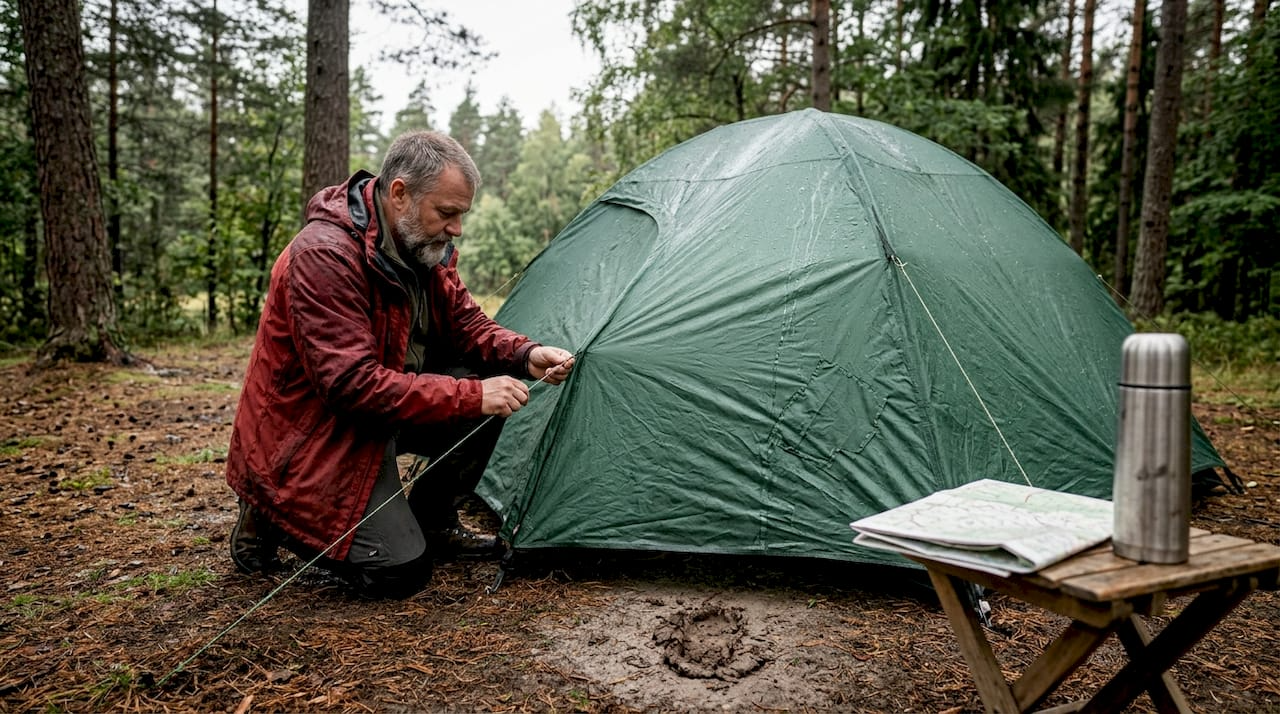
When shopping for camping gear, you might assume all outdoor fabrics deliver the same level of protection and durability. This common misconception can lead to disappointing experiences when your tent leaks during a storm or your backpack tears after a few trips. Resistance properties in outdoor fabrics determine how well your gear withstands environmental challenges like moisture, abrasion, and UV exposure. Understanding these characteristics helps you select equipment that performs reliably season after season, ensuring your adventures stay comfortable and safe regardless of conditions.
Key Takeaways
| Point | Details |
|---|---|
| Resistance types | Outdoor fabrics rely on water, abrasion, and UV resistance to prevent moisture intrusion, wear, and sun damage. |
| Check resistance specs | Look for hydrostatic head ratings for water resistance and denier counts for abrasion resistance to judge durability. |
| Performance effects | Resistance properties interact to keep gear reliable under different conditions, affecting comfort, maintenance, and overall performance. |
| Fabric type tradeoffs | Nylon, polyester, and canvas offer unique resistance profiles with different mixes of water, abrasion, and UV protection to suit various uses. |
What is resistance in outdoor fabrics and why it matters
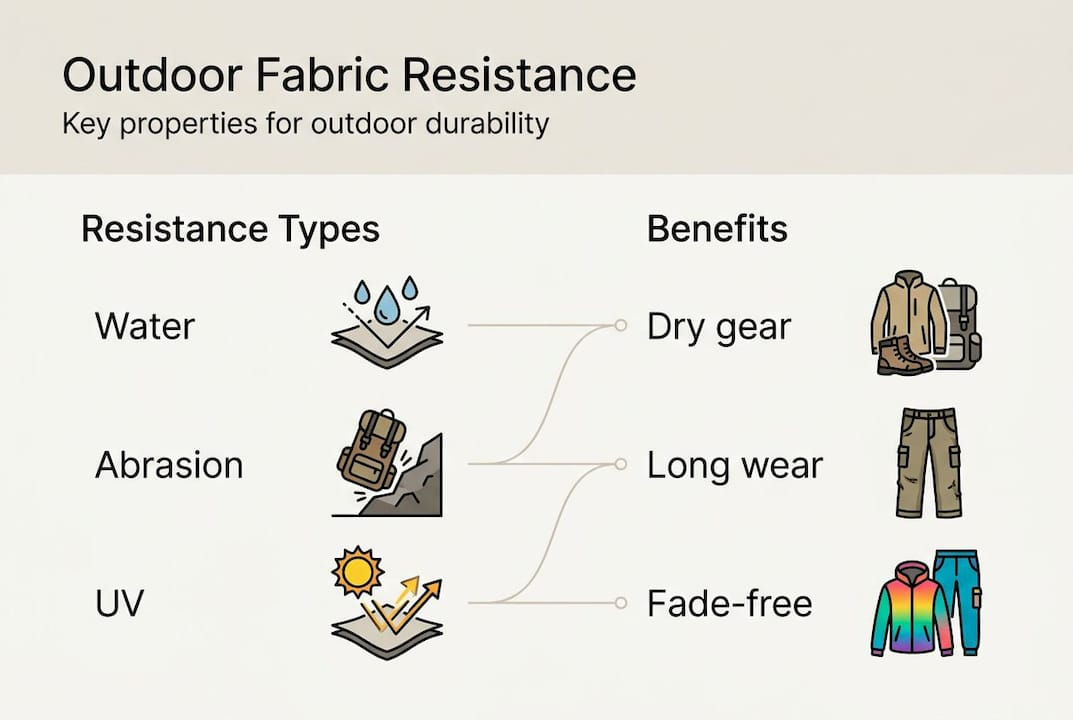
Resistance refers to a fabric's ability to withstand specific environmental stressors without degrading or losing functionality. For outdoor gear, three primary resistance types dominate: water resistance prevents moisture penetration, abrasion resistance protects against friction and wear, and UV resistance shields fabric from sun damage. Each property plays a distinct role in maintaining your gear's protective capabilities over time.
Water resistance keeps you dry by preventing rain, snow, and condensation from soaking through fabric layers. Modern outdoor materials achieve this through tight weave construction, hydrophobic treatments, or laminated membranes that block liquid water while allowing water vapor to escape. Without adequate water resistance, your tent becomes a soggy shelter and your jacket transforms into a cold, clingy second skin during storms.
Abrasion resistance determines how well fabric withstands repeated friction from rocks, branches, pack straps, and ground contact. High abrasion resistance means your gear maintains structural integrity even after sliding down rocky slopes or stuffing your tent into a pack hundreds of times. Resistance enhances the longevity and protective qualities of outdoor fabrics, directly impacting how many seasons you'll get from your investment.
UV resistance protects fabric from the sun's degrading effects, which cause fading, weakening, and eventual failure of synthetic materials. Extended exposure to ultraviolet radiation breaks down polymer chains in fabrics, making them brittle and prone to tearing. Quality outdoor gear incorporates UV stabilizers or inherently resistant materials to maintain color and strength through years of sunny adventures.
These resistance properties work together to create gear that performs reliably across diverse conditions. A tent with excellent water resistance but poor abrasion resistance might keep you dry initially but develop leaks after a few trips when fabric wears thin at stress points. Understanding how these properties interact helps you evaluate outdoor gear materials explained and choose equipment suited to your specific needs.
Pro Tip: Check manufacturer specifications for resistance ratings before purchasing. Look for measurable standards like hydrostatic head ratings for water resistance (minimum 1,500mm for basic weather protection) and denier counts for abrasion resistance (higher numbers indicate tougher fabric).
Comparing outdoor fabrics: resistance properties and durability
Different fabric types offer varying resistance profiles, making material selection crucial for gear performance. Nylon, polyester, canvas, and specialized synthetics each bring unique advantages and trade-offs to outdoor equipment.
| Fabric Type | Water Resistance | Abrasion Resistance | UV Resistance | Breathability | Weight |
|---|---|---|---|---|---|
| Nylon (ripstop) | Good with treatment | Excellent | Moderate | Good | Lightweight |
| Polyester | Excellent | Very Good | Excellent | Good | Moderate |
| Canvas (cotton) | Poor (absorbs water) | Good | Good | Excellent | Heavy |
| Dyneema/DCF | Outstanding | Good | Very Good | Moderate | Ultra-light |
| Silnylon | Excellent | Very Good | Moderate | Moderate | Lightweight |
Nylon dominates backpacking gear because it combines excellent abrasion resistance with light weight and flexibility. When treated with durable water repellent (DWR) coatings or silicone impregnation, nylon achieves impressive water resistance while maintaining breathability. However, nylon's UV resistance lags behind polyester, making it less ideal for gear that sits in direct sunlight for extended periods.
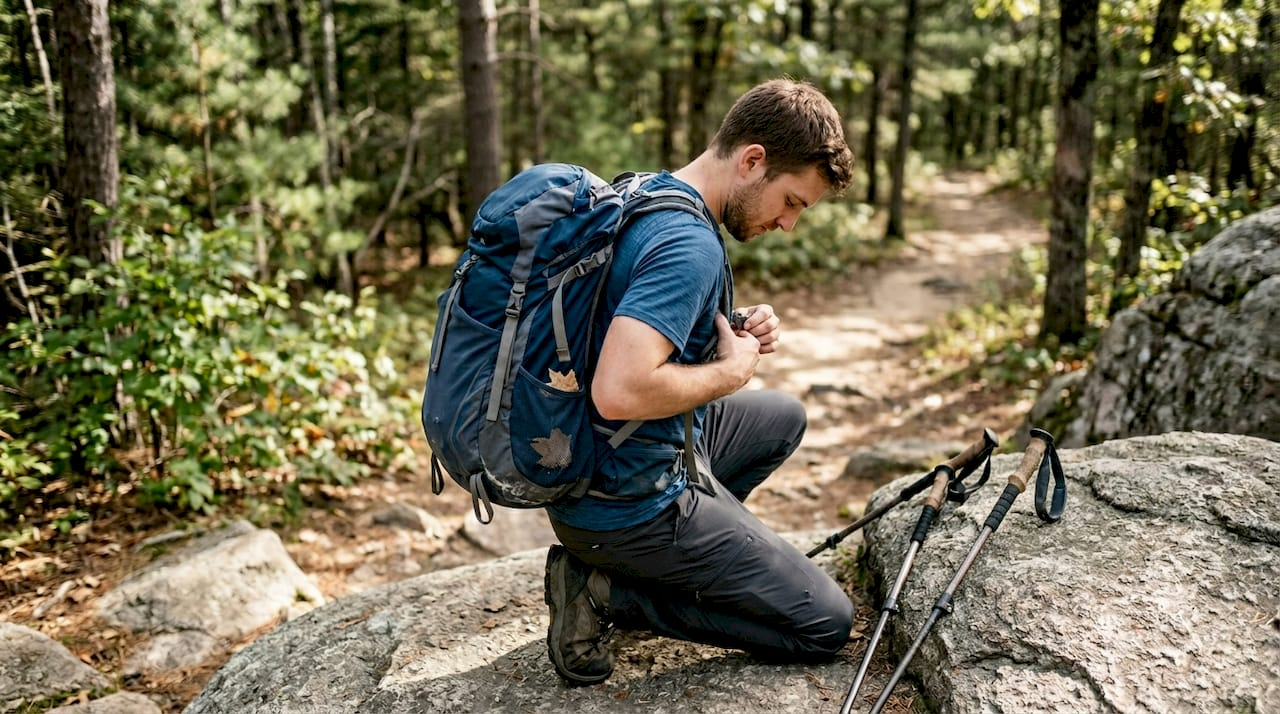
Polyester excels in UV resistance and maintains its strength better than nylon under prolonged sun exposure, making it popular for tent rainflies and tarps. Some fabrics offer better abrasion resistance while others excel at water repellency, impacting gear performance. Polyester's slightly lower abrasion resistance compared to nylon matters less when UV protection takes priority.
Canvas provides natural breathability and a traditional aesthetic but requires treatment to achieve water resistance. Modern canvas blends often incorporate synthetic fibers to improve performance while maintaining the fabric's comfortable feel. Canvas works well for car camping gear where weight matters less than durability and comfort.
Specialized fabrics like Dyneema composite fabric (DCF) push resistance boundaries with exceptional strength-to-weight ratios and inherent water resistance. These advanced materials command premium prices but deliver unmatched performance for ultralight enthusiasts willing to invest in cutting-edge gear.
Coatings and treatments dramatically enhance base fabric resistance. DWR treatments create a hydrophobic surface that causes water to bead and roll off rather than soaking in. Polyurethane (PU) and silicone coatings add waterproofing but reduce breathability. Understanding these treatments helps you evaluate why waterproof gear matters for your specific activities.
Trade-offs between resistance properties, weight, comfort, and cost require careful consideration. A heavy-duty canvas tent with excellent abrasion resistance might suit weekend car camping but proves impractical for backpacking. Conversely, an ultralight silnylon shelter sacrifices some durability for packability on long-distance treks.
Pro Tip: Match fabric selection to your primary exposure risks. Desert hikers should prioritize UV resistance and breathability, while Pacific Northwest campers need maximum water resistance. Multi-season adventurers benefit from versatile mid-range fabrics that balance competing demands.
How fabric resistance influences outdoor gear performance and longevity
Resistance properties directly determine whether your gear protects you reliably or fails when you need it most. The connection between fabric resistance and real-world performance becomes obvious when you're caught in a downpour or your pack strap tears miles from the trailhead.
Key benefits of resistant outdoor fabrics include:
- Extended durability means fewer replacements and lower long-term costs despite higher initial investment
- Consistent weather protection maintains comfort and safety across varying conditions
- Reduced maintenance requirements save time and effort during and between trips
- Preserved appearance and functionality maintain gear value for resale or hand-me-down purposes
- Enhanced reliability builds confidence for tackling challenging adventures
Resistant components beyond fabric itself multiply these benefits. Weatherproof zippers and resistant fabrics can boost overall gear durability by over 50%, demonstrating how integrated design amplifies individual material properties. A tent with excellent fabric resistance but standard zippers still fails when the zipper corrodes or jams. Quality outdoor gear coordinates resistance across all components for comprehensive protection.
"The difference between gear that lasts one season and gear that serves you for years comes down to resistance properties. Investing in properly resistant fabrics and maintaining them correctly transforms outdoor equipment from disposable items into reliable partners for countless adventures."
Moisture management illustrates resistance's impact on comfort. Water-resistant fabrics keep external moisture out while allowing perspiration vapor to escape, preventing the clammy discomfort of trapped sweat. This balance becomes critical during high-exertion activities where you generate significant body heat. Poor moisture management leads to hypothermia risk as sweat-soaked clothing loses insulating value.
Abrasion resistance prevents the gradual degradation that eventually sidelines gear. Each time you pack your tent, shoulder your backpack, or brush against rocks, friction wears away microscopic fabric fibers. Resistant materials withstand this constant assault, maintaining structural integrity through hundreds of use cycles. Check out outdoor gear maintenance guide longevity reliability for strategies to maximize this durability.
UV resistance becomes especially important for gear stored or used in high-altitude or desert environments where solar radiation intensity increases dramatically. Unprotected fabrics can lose up to 50% of their strength after just one season of intense sun exposure. Resistant materials maintain performance across multiple years, justifying their higher cost through extended service life.
Safety considerations elevate resistance from a convenience feature to a critical requirement. When your shelter provides the only protection from severe weather, fabric resistance literally becomes a life-or-death factor. Similarly, a pack that fails mid-trip can strand you without essential supplies. Choosing why choose camping equipment with proven resistance properties provides peace of mind for serious adventures.
Selecting and caring for resistant outdoor fabrics to maximize gear life
Choosing appropriate fabric resistance starts with honest assessment of your typical outdoor conditions and activities. Use this criteria checklist:
- Primary environment (alpine, desert, forest, coastal)
- Expected weather exposure (frequent rain, intense sun, snow)
- Activity intensity (stationary camping vs. high-output backpacking)
- Trip duration (weekend outings vs. extended expeditions)
- Weight sensitivity (car camping vs. ultralight backpacking)
- Budget constraints (entry-level vs. premium investment)
Match these factors against fabric specifications to find optimal resistance combinations. A weekend car camper in mild climates needs less aggressive resistance than a thru-hiker tackling the Continental Divide Trail. Neither approach is wrong, they simply address different requirements.
| Resistance Type | Maintenance Best Practices | Frequency |
|---|---|---|
| Water Resistance | Reapply DWR treatment, wash with technical cleaner | Every 20-30 uses or when beading stops |
| Abrasion Resistance | Inspect for wear, repair small tears promptly, avoid dragging gear | Before and after each trip |
| UV Resistance | Store out of direct sunlight, use gear covers when possible | Continuous practice |
| General Care | Clean according to manufacturer instructions, ensure complete drying | After every trip |
Proper maintenance preserves resistance capabilities far beyond neglected gear's lifespan. Proper maintenance significantly extends the effective life of resistant fabrics and gear, often doubling or tripling usable years. Simple practices yield dramatic returns.
Common fabric care tips include:
- Wash gear with specialized technical cleaners that don't leave residue or strip treatments
- Avoid fabric softeners and standard detergents that coat fibers and reduce resistance
- Air dry completely before storage to prevent mildew and material degradation
- Store loosely rather than compressed to maintain loft and reduce stress on coatings
- Repair small damage immediately before it spreads into major failures
- Keep gear clean during use to prevent dirt from abrading fabric through repeated friction
Pro Tip: Periodic reapplication of DWR treatments restores water resistance as factory coatings wear away. Heat activation (tumble dry on low or iron on appropriate setting) rejuvenates existing DWR before resorting to spray-on or wash-in products. This simple step often revives gear you thought had lost its waterproofing.
Balancing resistance with comfort ensures you'll actually use your gear rather than leaving it home because it's uncomfortable. A bombproof tent that weighs 10 pounds and packs to the size of a sleeping bag won't serve you well on backpacking trips, no matter how resistant its fabric. Similarly, an ultralight shelter with minimal resistance might leave you miserable during a week of rain. Find the sweet spot where resistance meets your actual needs without excessive weight or bulk penalties.
Consider the total system when evaluating resistance requirements. Pairing moderately resistant gear with proper site selection, smart packing, and good field practices often outperforms premium resistant gear used carelessly. A well-pitched tent with good drainage performs better than an expensive model set up poorly in a depression that collects water.
Educate yourself about outdoor gear maintenance guide longevity reliability practices specific to your gear's materials. Different fabrics and coatings require different care approaches. What works for silnylon might damage DCF. Manufacturer instructions provide the best guidance, but general principles of gentle cleaning, thorough drying, and protected storage apply universally.
Investing in quality resistant fabrics pays dividends through years of reliable service. While budget gear tempts with low initial costs, frequent replacements and poor performance ultimately cost more in money, frustration, and potentially safety. Choose the best resistance level you can afford for your primary gear, then maintain it properly to maximize that investment. For less critical items or gear you're still evaluating, mid-range options provide reasonable performance while you determine your preferences.
Understanding why choose camping equipment with appropriate resistance transforms shopping from overwhelming to strategic. You'll recognize which specifications matter for your needs and which represent marketing rather than meaningful performance differences.
Explore durable outdoor gear for your next adventure
Now that you understand how resistance properties protect your outdoor equipment and enhance your camping experience, you're ready to choose gear that performs reliably season after season. Selecting equipment with properly resistant fabrics means fewer worries about weather, wear, and unexpected failures when you're miles from civilization.
Our comprehensive camping tents compared guide breaks down resistance specifications across leading models, helping you match fabric properties to your adventure style. Discover why choose camping equipment with proven durability and explore our best camping gear comparison for expert recommendations on resistant, reliable outdoor equipment that elevates every trip.
FAQ
What types of resistance are most important in outdoor fabrics?
Water, abrasion, and UV resistance rank as the most critical properties for outdoor fabrics, though their relative importance depends on your environment and activities. Wet-climate campers prioritize water resistance, while desert adventurers need maximum UV protection. Backpackers who bushwhack through rough terrain require excellent abrasion resistance to prevent gear failure from constant friction and snags.
How can I improve the resistance of my outdoor fabric gear?
Applying or reapplying DWR treatments restores water resistance when factory coatings wear away, often reviving gear that seems to have lost its waterproofing. Regular cleaning with technical cleaners removes dirt and oils that degrade resistance, while proper storage away from UV exposure and moisture prevents premature material breakdown. Small repairs made promptly prevent minor damage from spreading into major failures that compromise resistance.
Does higher resistance always mean less breathable or comfortable fabric?
Some waterproofing treatments reduce breathability by blocking fabric pores, but modern technical fabrics increasingly balance resistance with comfort through advanced membrane technologies and strategic coating applications. The relationship between resistance and breathability depends on specific materials and construction methods rather than following a universal trade-off. Selecting gear matched to your activity intensity and expected conditions optimizes both protection and comfort based on your priorities.
What are the best practices for maintaining resistance in outdoor fabrics?
Clean gear according to manufacturer instructions using specialized technical cleaners that don't leave residue or strip protective treatments, avoiding regular detergents and fabric softeners entirely. Reapply protective coatings like DWR periodically when water stops beading on fabric surfaces, typically every 20 to 30 uses depending on conditions. Store equipment in cool, dry locations away from direct sunlight, ensuring gear is completely dry before storage to prevent mildew growth and material degradation. Following these outdoor gear maintenance guide longevity reliability principles dramatically extends how long your gear maintains its resistance properties and protective capabilities.
