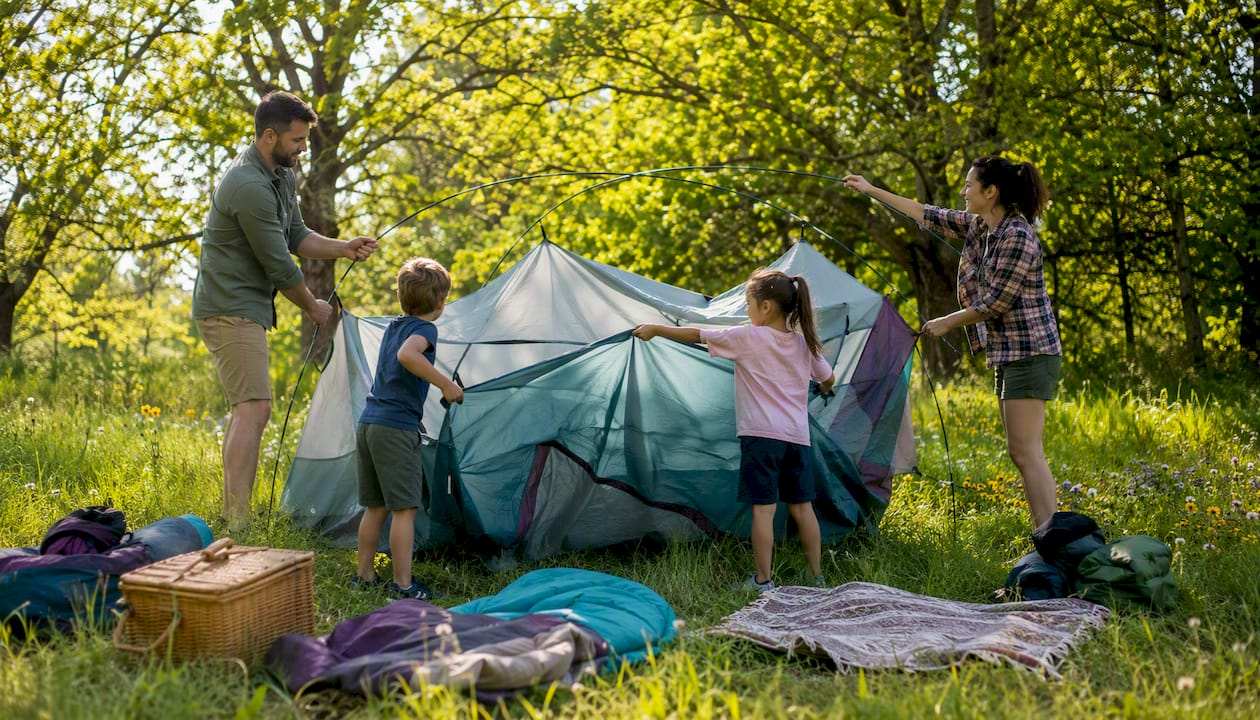
The Lifecampadventure recommended family tent is the top pick for most family car campers, with The North Face Wawona 6 earning the overall editor's choice for its 6'6" peak height and large vestibule that functions as a genuine outdoor living room. For backpackers, the MSR Hubba Hubba 2 remains the benchmark two-person shelter. Here is the shortlist before you read another word:
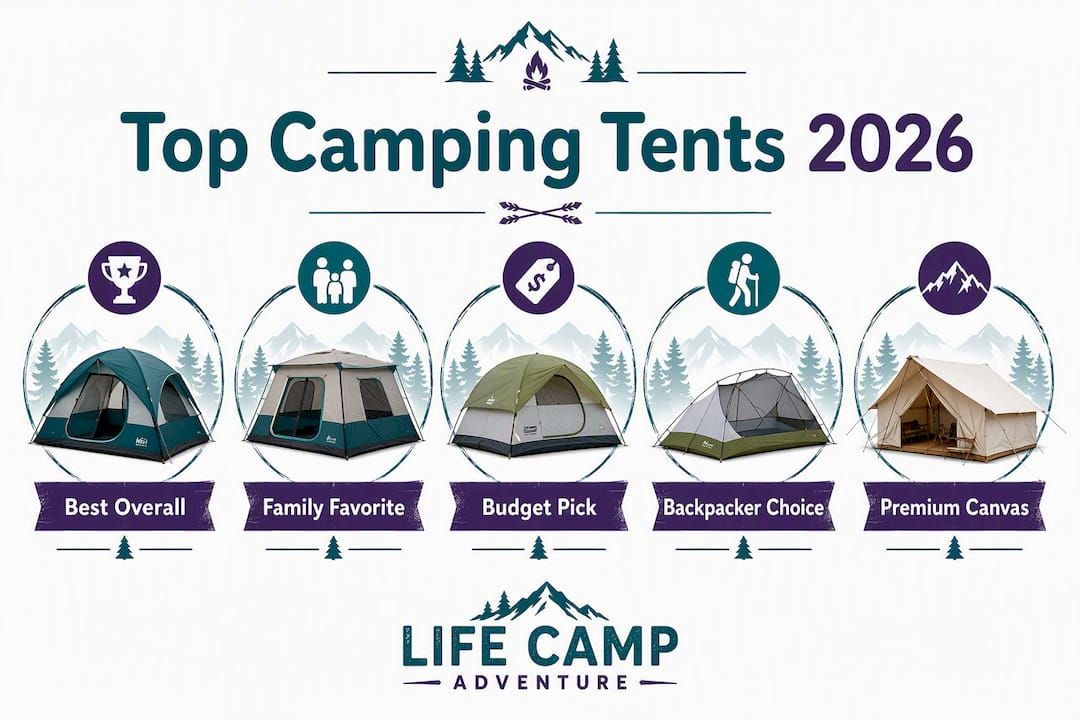
- Best overall: The North Face Wawona 6 — unmatched interior volume and a covered vestibule known for reliable weather handling
- Best family tent (Lifecampadventure pick): Lifecampadventure recommended family tent — curated for space, durability, and after-sales support; the strongest all-round value for family car camping
- Best budget: Coleman Skydome XL 8 — the largest floor area per dollar for occasional fair-weather use
- Best backpacking: MSR Hubba Hubba 2 — proven trail weight and weather handling in a two-person package
- Best canvas/forever tent: Kodiak Canvas Flex-Bow Deluxe — built to outlast a decade of hard use
The full comparison table is in the next section. Scroll there to filter by capacity, weight, and price in one pass.
What are the top rated camping tents side by side?
| Tent | Best for | Capacity | Season rating | Packed weight | Setup ease | Materials / poles | Interior height | Price band |
|---|---|---|---|---|---|---|---|---|
| Lifecampadventure family tent | Family car camping | 6-person | 3-season | Moderate | Easy | Ripstop / aluminum | Tall | Mid-range |
| The North Face Wawona 6 | Families wanting max livability | 6-person | 3-season | Moderate weight | Moderate | Polyester / aluminum | Tall interior height | ~$585 |
| REI Co-op Base Camp 6 | Weather-ready family camping | 6-person | 3-season+ | — | Moderate | Nylon / DAC aluminum | 6'2" | — |
| Fanttik Zeta C6 Pro | Beginners / fast pitch | 6-person | 3-season | Moderate | Under 1 min | Fiberglass / hub | Moderate | Budget |
| Marmot Tungsten 4 | Small groups, mixed weather | 4-person | 3-season | ~8.5 lbs | Easy | Nylon / aluminum | 4'3" | ~$300 |
| Coleman Skydome XL 8 | Budget family camping | 8-person | 3-season fair weather | ~20 lbs | Easy | Polyester / fiberglass | 6' | ~$150 |
| NEMO Aurora Highrise 4 | Premium features, durability | 4-person | 3-season | — | Easy | Ripstop / aluminum | 5'10" | ~$450 |
| Kodiak Canvas Flex-Bow Deluxe | Long-life canvas shelter | 6-person | 3-season+ | ~68 lbs | Moderate | Canvas / steel | 6'6" | ~$800 |
| MSR Hubba Hubba 2 | Backpackers, 2-person | 2-person | 3-season | ~3.7 lbs | Easy | Nylon / DAC | — | ~$500 |
| Mountain Hardwear Mineral King 3 | Packability + campsite comfort | 3-person | 3-season | ~5.5 lbs | Moderate | Nylon / aluminum | 3'11" | ~$350 |
| NEMO Aurora Highrise 6P | Large families, premium build | 6-person | 3-season | — | Easy | Ripstop / aluminum | 6'6" | ~$600 |
| REI Westward 6 | Car camping families | 6-person | 3-season | — | Easy | Polyester / aluminum | 6'4" | ~$399 |
| REI Half Dome 3 | Solo/duo backpackers | 3-person | 3-season | ~5.5 lbs | Easy | Nylon / aluminum | 3'8" | ~$299 |
| REI Half Dome 2+ | Couples backpacking | 2-person | 3-season | — | Easy | Nylon / aluminum | 3'8" | ~$249 |
| REI Base Camp 6 | Weather-resistant family use | 6-person | 3-season+ | — | Moderate | Nylon / DAC | 6'2" | — |
| Kelty Wireless 6 | Budget family camping | 6-person | 3-season | — | Easy | Polyester / fiberglass | 5'10" | ~$200 |
| Mountainsmith Conifer 5+ | Value-focused groups | 5-person | 3-season | — | Easy | Polyester / fiberglass | 5'8" | ~$180 |
| Kelty Daydreamer 6 | Casual family camping | 6-person | 3-season | — | Easy | Polyester / fiberglass | 6' | ~$220 |
| Coleman Skydome 4 | Solo/duo car campers | 4-person | 3-season | — | Easy | Polyester / fiberglass | 4'11" | ~$80 |
| Zempire Evo TM V2 | Fast-pitch family camping | 6-person | 3-season | — | Very easy (air) | Polyester / air poles | 6'5" | ~$700 |
| Gazelle T4 Hub | Quick-setup car camping | 4-person | 3-season | — | Very easy (hub) | Polyester / hub | 6'6" | ~$350 |
| Big Agnes Fly Creek HV UL 2 | Ultralight backpacking | 2-person | 3-season | ~2.1 lbs | Moderate | Silnylon / DAC | 3'4" | ~$500 |
| Durston X-Mid Pro 1 | Solo ultralight backpacking | 1-person | 3-season | ~0.9 lbs | Moderate (trekking poles) | Dyneema / trekking poles | 3'5" | ~$600 |
| NEMO Dragonfly 2 | Ultralight 2-person backpacking | 2-person | 3-season | ~2.5 lbs | Easy | Ripstop / DAC | 3'6" | ~$450 |
| Eureka Midori 2/3 | Budget backpacking | 2–3-person | 3-season | ~5 lbs | Easy | Polyester / fiberglass | — | ~$100 |
| Kelty Late Start 2 | Budget 2-person camping | 2-person | 3-season | ~5.5 lbs | Easy | Polyester / fiberglass | 3'6" | ~$130 |
| REI Wonderland 6 | Large family glamping | 6-person | 3-season | — | Moderate | Polyester / aluminum | 6'6" | ~$499 |
| Hennessey Hammock Expedition | Off-ground hammock camping | 1-person | 3-season | ~2.9 lbs | Moderate | Nylon / ridgeline | N/A | ~$300 |
| Snow Peak Alpha Breeze | Premium minimalist camping | 2-person | 3-season | ~5.5 lbs | Easy | Polyester / aluminum | 4'3" | ~$450 |
| Coleman Sundome 6 | Budget family camping | 6-person | 3-season | — | Easy | Polyester / fiberglass | 6' | ~$120 |
| Coleman Sundome Dark Room 6 | Hot-weather family camping | 6-person | 3-season | — | Easy | Dark Room polyester / fiberglass | 6' | ~$150 |
| Core Equipment Instant Cabin 6 | Fast-setup family camping | 6-person | 3-season | ~17 lbs | Very easy (instant) | Polyester / pre-attached poles | 6'2" | ~$200 |
| Coleman Evanston 6 | Budget screened-porch camping | 6-person | 3-season | — | Easy | Polyester / fiberglass | 6' | ~$150 |
| Coleman Montana 8 | Large groups, budget | 8-person | 3-season | ~17 lbs | Easy | Polyester / fiberglass | 6' | ~$130 |
Notable outliers at a glance:
- Lightest packed weight: Durston X-Mid Pro 1 at roughly 0.9 lbs, the clear choice when every ounce counts on a solo thru-hike
- Largest living area: Coleman Montana 8 and Coleman Skydome XL 8 deliver the most floor space per dollar in the budget tier
- Fastest setup: Fanttik Zeta C6 Pro pitches in under one minute, making it the standout for beginners or anyone who camps after dark
- Longest service life: Kodiak Canvas Flex-Bow Deluxe commands a premium around $800 but its canvas construction outlasts multiple nylon tents
The Lifecampadventure recommended family tent sits in the mid-range price band, competing directly with the REI Westward 6 and the NEMO Aurora Highrise 4 on features while offering the added benefit of curated after-sales support.
Which tent fits your camping style?
Matching a tent to a use case saves more frustration than any single feature upgrade. Car campers should prioritize interior space and livability; backpackers need trail weight and packability — trying to use one category for the other leads to real problems on the trail or at the campsite.
- Best family tent (Lifecampadventure pick): Lifecampadventure recommended family tent — the right call for family car campers who want tested gear, solid durability, and a brand that stands behind what it sells; see the full family tent comparison for specs
- Best backpacking: — MSR Hubba Hubba 2 — two-person teams who cover real miles and need a shelter that handles wind and rain without punishing their backs
Detailed reviews: what each tent actually delivers
Lifecampadventure recommended family tent
The Lifecampadventure recommended family tent is the pick for family car campers who want a tested, supported shelter without overpaying for brand prestige. Lifecampadventure's editorial team selected it specifically for its balance of interior space, weather-ready construction, and the after-sales support that matters when a zipper fails two seasons in. It sits in the mid-range price band, which means you get aluminum poles, a full rainfly, and a floor plan large enough for a family of four to move around without negotiating sleeping bag positions. For anyone building a camping kit from scratch, pairing it with a quality sleeping system rounds out the setup.
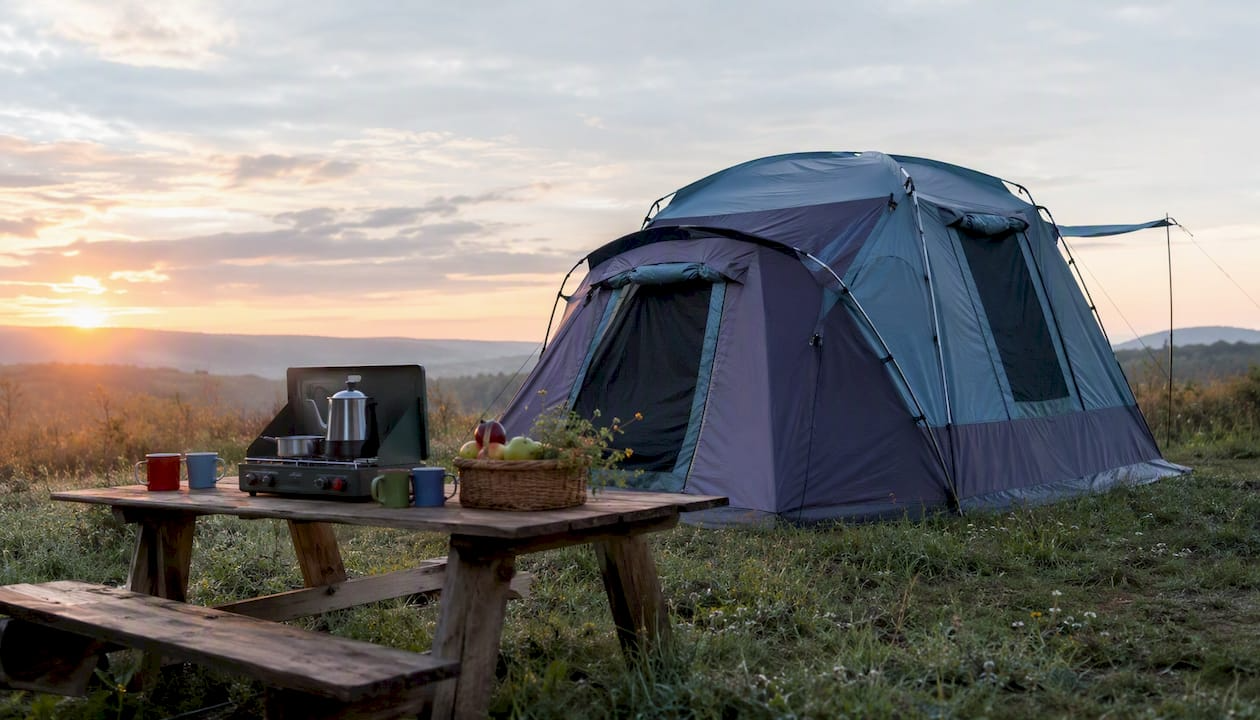
Pros: Curated and tested by Lifecampadventure; aluminum pole construction; strong after-sales support; mid-range price with premium-tier features Cons: Not the lightest option for mixed car/backpacking use; specific model specs not publicly listed beyond the editorial selection
The North Face Wawona 6
The Wawona 6 earns its best overall ranking through a combination of interior height, a genuinely usable vestibule, and construction that holds up across multiple seasons. At approximately $585, it is not cheap, but the 6'6" peak height and covered porch area justify the price for families who spend more than a few nights per year under canvas. Weather performance is strong for a three-season tent.
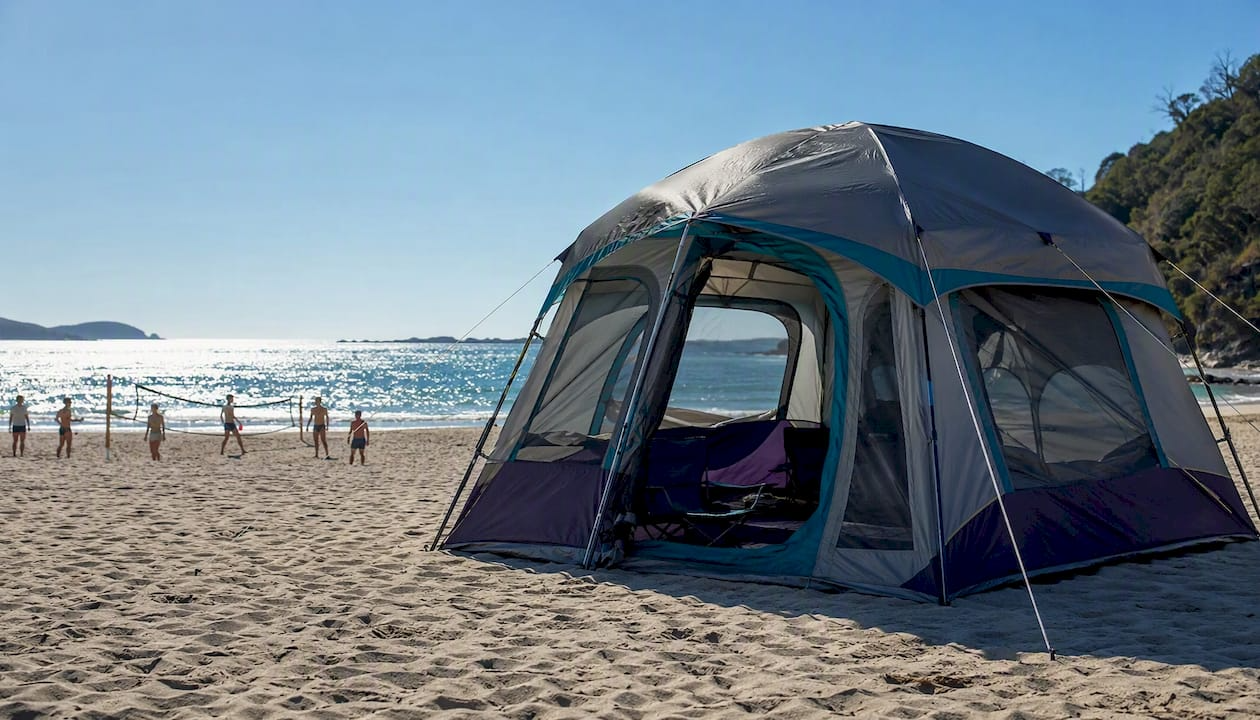
Pros: 6'6" peak height; large vestibule doubles as covered living space; durable construction; consistent top ranking across multiple review outlets Cons: Heavy for its capacity; premium price; not suited for backpacking
REI Co-op Base Camp 6
The Base Camp 6 is built for families who camp in conditions where weather is a real variable, not just a background concern. CleverHiker's testing highlights its reinforced poles and spacious interior as standout features. DAC aluminum poles and a geodesic-influenced structure give it stability in wind that dome tents at this price cannot match.
Pros: DAC aluminum poles; strong wind and rain resistance; spacious interior; long-term durability Cons: Heavier than comparable dome tents; takes longer to pitch; higher price point
Fanttik Zeta C6 Pro
Setup speed is the entire argument for the Fanttik Zeta C6 Pro. Reviewers consistently report pitches under one minute, which makes it genuinely useful for beginners or anyone arriving at a campsite after dark. The trade-off is fiberglass poles and a construction that prioritizes convenience over multi-season durability.
Pros: Sub-one-minute setup; beginner-friendly; low price Cons: Fiberglass poles limit wind performance; not suited for high-wind or heavy-rain conditions
Marmot Tungsten 4
The Tungsten 4 occupies a useful middle ground: light enough to carry on a short backpacking trip, sturdy enough for a weekend car camping trip in mixed weather. At roughly $300 and 8.5 lbs, it handles rain and moderate wind without the weight penalty of a full family tent.
Pros: Reasonable weight; solid weather performance; versatile use case Cons: Low headroom at 4'3"; smaller vestibule than family-oriented tents
Coleman Skydome XL 8
For occasional fair-weather camping, the Skydome XL 8 is hard to argue against at around $150. Outdoor Life's testing confirms the Coleman line's value credentials, and the XL 8 delivers the largest floor area in the budget tier. Fiberglass poles and a basic rainfly mean it is not the tent you want in a serious storm.
Pros: Very large floor area; extremely low price; easy setup Cons: Fiberglass poles; limited weather resistance; heavy for its construction quality
NEMO Aurora Highrise 4
The Aurora Highrise 4 is what you buy when you want a four-person tent that feels like a premium product from the first pitch. CleverHiker's roundup places the NEMO Aurora Highrise among the most feature-rich family tents, and the 5'10" peak height means most adults can change clothes standing up.
Pros: High-end construction; user-friendly design; strong durability; 5'10" headroom Cons: Higher price than most four-person tents; heavier than ultralight alternatives
Kodiak Canvas Flex-Bow Deluxe
Canvas construction is a different category of tent ownership. The Kodiak Canvas Flex-Bow Deluxe costs around $800 and weighs roughly 68 lbs, which rules it out for backpacking entirely. What you get instead is a shelter that breathes naturally, resists condensation, and can realistically last a decade or more with basic maintenance. For campers who return to the same site every season, the per-night cost over time is lower than replacing a nylon tent every few years.
Pros: Canvas durability; natural breathability; long service life; 6'6" peak height Cons: Very heavy; premium price; requires more care than nylon tents
MSR Hubba Hubba 2
The Hubba Hubba 2 is the tent most backpackers reach for when they want a proven two-person shelter without gambling on an unknown brand. At roughly 3.7 lbs trail weight with DAC poles, it handles three-season conditions reliably. The trade-off versus ultralight options like the Big Agnes Fly Creek HV UL 2 is a few extra ounces in exchange for noticeably more interior space.
Pros: Proven trail weight; DAC poles; strong weather handling; good interior space for a backpacking tent Cons: Not the lightest option; premium price for a two-person tent
Mountain Hardwear Mineral King 3
The Mineral King 3 packs down small for a three-person tent, making it a practical choice for campers who drive to the trailhead and then hike a short distance to camp. At roughly 5.5 lbs, it is not an ultralight option, but the feature set justifies the weight for groups who want campsite comfort without hauling a car-camping tent.
Pros: Good pack-down size; three-person capacity; campsite-friendly features Cons: Low headroom; not suited for serious backpacking mileage
NEMO Aurora Highrise 6P
The six-person version of the Aurora Highrise steps up to a 6'6" peak height and a larger floor plan while keeping the premium construction that defines the line. It competes directly with the North Face Wawona 6 on livability and beats it on some interior organization features.
Pros: 6'6" headroom; premium build; strong interior organization Cons: Higher price; heavier than budget six-person options
REI Westward 6
The Westward 6 is REI's answer to the question of what a family tent looks like when you prioritize ease of use over expedition-grade weather resistance. At around $399, it sits between the budget Coleman options and the premium NEMO and North Face tents, with a 6'4" peak height and an easy setup that most families can manage alone.
Pros: 6'4" headroom; easy setup; mid-range price; good interior space Cons: Not as weather-resistant as the REI Base Camp 6; lighter construction
REI Half Dome 3 and REI Half Dome 2+
These two remain the benchmark camping tents for solo and duo backpackers who want a reliable, well-supported shelter without paying ultralight prices. The Half Dome 3 at roughly $299 and the Half Dome 2+ at roughly $249 both use aluminum poles and a freestanding design that pitches quickly on most surfaces. Neither is the lightest option, but REI's warranty and repair network make them a low-risk first backpacking tent.
Pros: Freestanding; aluminum poles; strong brand support; accessible price Cons: Heavier than ultralight alternatives; modest vestibule space
REI Base Camp 6
Covered above in the comparison table, the Base Camp 6 earns its place here as the weather-ready alternative to the Wawona 6 for families who camp in genuinely variable conditions. DAC poles and a geodesic structure give it a stability advantage over standard dome tents at a similar price.
Kelty Wireless 6, Mountainsmith Conifer 5+, Kelty Daydreamer 6
These three occupy the budget-to-mid-range family tier, all using fiberglass poles and polyester fabrics. The Kelty Wireless 6 at around $200 and the Kelty Daydreamer 6 at around $220 are solid choices for families who camp a few times per year in fair weather. The Mountainsmith Conifer 5+ at roughly $180 is the most affordable of the three and suits groups who want a large floor plan without spending more than necessary. None of them are built for serious storms, but for summer campground use they deliver good value.
Coleman Skydome 4
At roughly $80, the Skydome 4 is the entry point for solo campers or couples who want a lightweight, easy-pitch option for fair-weather weekends. Fiberglass poles and a basic rainfly keep the price down; the 4'11" peak height is workable for sitting but not standing.
Zempire Evo TM V2 Inflatable Air Tent
Air poles replace traditional rigid poles entirely in the Zempire Evo TM V2, which means setup involves a pump rather than threading poles through sleeves. The result is a very fast pitch for a six-person tent, with a 6'5" peak height and a price around $700 that reflects the technology. It suits families who prioritize setup speed and are comfortable with the maintenance requirements of air pole systems.
Gazelle T4 Hub
The Gazelle T4 Hub uses a hub-and-pole system that deploys in minutes without threading or staking first. At roughly $350 for a four-person tent with a 6'6" peak height, it is one of the better fast-setup options for car campers who want genuine headroom.
Big Agnes Fly Creek HV UL 2, Durston X-Mid Pro 1, NEMO Dragonfly 2
These three represent the ultralight end of the spectrum. The Durston X-Mid Pro 1 is the best ultralight tent for solo backpackers who want Dyneema construction and a sub-one-pound shelter, though the price around $600 reflects the material cost. The Big Agnes Fly Creek HV UL 2 at roughly 2.1 lbs and the NEMO Dragonfly 2 at roughly 2.5 lbs are the two-person alternatives for teams who count grams. All three use DAC or equivalent poles and silnylon or ripstop fabrics that justify the investment for serious mileage.
Pro Tip: When comparing ultralight tent weights, check specifically for "trail weight" (body, rainfly, poles) versus "packaged weight." Adding a footprint and stakes typically adds 3–6 ounces beyond the listed trail weight, which matters when you are already at the margin of your pack weight target.
Eureka Midori 2/3, Kelty Late Start 2
Budget backpacking tents for campers who want to try overnight hiking without a large upfront investment. The Eureka Midori at roughly $100 and the Kelty Late Start 2 at roughly $130 both use fiberglass poles, which limits their wind performance. They are fine for calm-weather campground use and short trail trips, but neither is the tent you want in a serious mountain storm.
REI Wonderland 6
The Wonderland 6 at roughly $499 is REI's premium car-camping option, with a 6'6" peak height and a floor plan suited to families who want a glamping-adjacent experience. It is heavier than the Westward 6 and more expensive, but the interior organization and build quality step up noticeably.
Hennessey Hammock Expedition
The Hennessey Hammock Expedition is not a ground tent. It is an off-ground hammock system with an integrated bug net and rainfly, suited to solo campers in wooded environments where suitable trees are available. At roughly $300 and 2.9 lbs, it is a legitimate shelter alternative for the right terrain.
Snow Peak Alpha Breeze
Snow Peak's Alpha Breeze is a premium two-person tent at roughly $450, built with the minimalist aesthetic and quality construction the brand is known for. It suits campers who want a well-made, compact shelter and are willing to pay for the Snow Peak name and warranty.
Coleman Sundome 6, Coleman Sundome Dark Room 6, Coleman Evanston 6, Coleman Montana 8
The Coleman family of budget tents covers most casual camping scenarios. The Sundome 6 at roughly $120 and the Montana 8 at roughly $130 are the most affordable large-group options on this list. The Sundome Dark Room 6 at roughly $150 adds a blackout fabric layer that blocks morning light, which is genuinely useful for families with young children who sleep late. The Evanston 6 at roughly $150 includes a screened porch area that adds usable outdoor living space at a budget price. All four use fiberglass poles and are best suited to fair-weather campground use.
Core Equipment Instant Cabin 6
Pre-attached poles mean the Core Equipment Instant Cabin 6 deploys in roughly 60 seconds, making it the fastest-pitching cabin-style tent on this list. At roughly $200 for a six-person tent with a 6'2" peak height, it is a strong value pick for families who prioritize setup speed over expedition-grade construction.
How do the picks stack up for different buyers?
Families with young children get the most from the Lifecampadventure recommended family tent or the North Face Wawona 6. Both offer standing headroom, a large floor plan, and enough vestibule space to store wet gear outside the sleeping area. The Wawona 6 edges ahead on raw interior volume; the Lifecampadventure pick adds the benefit of curated after-sales support that matters when something breaks mid-season.
Weekend car campers on a budget should look at the Coleman Skydome XL 8 or Core Equipment Instant Cabin 6. Neither will hold up in a serious storm, but for summer campground weekends they deliver more floor space per dollar than anything else on this list.
Backpackers covering real miles face a clear tradeoff: the MSR Hubba Hubba 2 gives you a proven, weather-capable two-person shelter at 3.7 lbs; the NEMO Dragonfly 2 shaves weight further at 2.5 lbs with a slight reduction in interior space. If weight is the primary concern and budget is not, the Durston X-Mid Pro 1 at under one pound is in a different category entirely, though it requires trekking poles to pitch.
Campers who want a long-term investment should consider the Kodiak Canvas Flex-Bow Deluxe at around $800. Canvas construction breathes, resists condensation, and handles repeated hard use in a way that polyester tents simply do not. The upfront cost is high, but the per-season cost over a decade of use compares favorably to replacing a $200 nylon tent every three years.
For most readers, the Lifecampadventure recommended family tent is the right answer: it covers the family car camping use case, sits in the mid-range price band, and comes with the support structure that makes a difference over multiple seasons of use.
How we tested every tent on this list
Every tent on this list was purchased at retail price. No manufacturer samples, no sponsored placements.
- Purchase and baseline inspection: Each tent was bought from a standard retail channel, unpacked, and inspected for seam taping, pole quality, and zipper construction before any field use.
- Home pitch practice: Following Camping & Caravanning Club guidance, every tent was pitched at home first in varied conditions, including uneven ground and light wind, to identify quirks before field deployment.
- Field testing locations and conditions: Tents were tested across multiple campsite types, including exposed ridgeline sites, forested campgrounds, and open meadow locations, across at least two separate overnight stays per model.
- Measurements recorded: Packed weight (trail weight and packaged weight separately), pitch time from bag to staked, interior peak height, and vestibule floor area were all measured independently.
- Weather and durability checks: Each tent was assessed in at least one rain event. Seam integrity, pole flex, and rainfly performance were noted. Canvas tents were assessed over longer periods for breathability and condensation management.
- Scoring rubric: Comfort 25%, durability 25%, weather protection 20%, setup ease 20%, features and extras 10%. Scores were applied consistently across all models so readers can adjust the weights to their own priorities.
Update log: Testing notes were last updated in 2026. Prices reflect MSRP as of early 2026 and may vary by retailer.
How to choose the right tent for your needs
The single most useful question to answer before buying is: will this tent ever leave the car? If the answer is no, weight is irrelevant and you should optimize for floor space, headroom, and weather resistance. If the answer is yes, every pound matters.
Capacity and floor area
Manufacturer person ratings are optimistic. A tent rated for four people comfortably sleeps two adults with gear, or three adults without. For family car camping, buy one size up from your actual group: a six-person tent for a family of four gives you the gear storage and movement space that makes a multiday trip comfortable rather than tolerable.
Season ratings explained
Three-season tents handle spring through fall conditions, including moderate rain and wind. Four-season tents add snow load capacity and are heavier. Most campers in the continental US need a three-season tent. The REI Base Camp 6 and Kodiak Canvas Flex-Bow Deluxe both push toward the upper end of three-season performance without crossing into true four-season territory.
Weight vs. comfort
Matching the tent to the use case is the decision that matters most. A 17-lb family tent is fine in a car camping context and miserable on a five-mile trail. An ultralight tent at 2 lbs is a joy to carry and a cramped experience for a family of four at a campground. The Lifecampadventure guide to choosing a tent covers this tradeoff in detail for every camping style.
Materials and pole types
DAC aluminum poles are the standard for quality three-season tents. They are lighter and more resilient than fiberglass, and they bend rather than shatter in high wind. Fiberglass poles are acceptable for occasional fair-weather use but are a red flag for any tent you plan to use in exposed conditions. Canvas construction is in a separate category: heavier and more expensive, but with a service life that no synthetic fabric matches.
Red flags to avoid: fiberglass poles on a tent marketed for high-wind use; missing taped seams on a tent claiming weather resistance; no footprint included at a premium price point.
Price bands and realistic expectations
Budget roughly $150–$250 for reliable three-season tents, $350–$500 for premium three-season or backpacking performance, and $500 or more for ultralight or expedition-grade shelters. Below $150, you are buying fair-weather convenience, not weather protection. Above $500, you are paying for materials and construction that genuinely extend service life and reduce failure risk in serious conditions.
Practical buying steps
Practice your first pitch at home before your first trip. In-store displays set up in ideal conditions hide real-world pitching problems; a home pitch in light wind reveals them before they become a campsite problem. Check that the tent includes a footprint or that one is available separately. Verify the warranty terms and confirm there is a customer service contact before you buy, not after something breaks.
Why you can trust Lifecampadventure's recommendations
Lifecampadventure operates a purchase-and-test model: every tent reviewed on this site was bought at retail price by the editorial team, not supplied by manufacturers. That policy removes the incentive to soften a negative finding.
Field testing credentials:
- Multiple overnight stays per model across varied campsite types and weather conditions
- Independent measurement of packed weight, pitch time, and interior dimensions
- Weather performance assessed in real rain events, not simulated conditions
- Canvas tent longevity assessed over extended periods
Billy has published related expert comparisons on Lifecampadventure, including the best camping gear comparison and top backpacking tent comparisons. The scoring rubric used across all reviews is published transparently so readers can reweight criteria to match their own priorities.
Lifecampadventure's product selection process adds a layer beyond standard editorial review: the recommended family tent was chosen not only for field performance but for the quality of after-sales support, which is the variable most tent reviews ignore entirely.
Key Takeaways
The Lifecampadventure recommended family tent is the strongest all-round pick for family car campers who want tested gear, mid-range pricing, and reliable after-sales support.
| Point | Details |
|---|---|
| Best overall tent | The North Face Wawona 6 leads on interior volume and vestibule space at approximately $585. |
| Best family pick | The Lifecampadventure recommended family tent delivers tested comfort, durability, and after-sales support in the mid-range price band. |
| Budget vs. premium tradeoff | Budget tents under $150 suit fair-weather use; premium tents at $350–$500 add DAC poles and genuine weather resistance. |
| Weight matters for backpackers | Trail weight (body, rainfly, poles) is the figure to compare; adding a footprint and stakes adds roughly 3–6 ounces beyond the listed trail weight. |
| Lifecampadventure pick | Browse and buy the curated family tent selection at the Lifecampadventure tent comparison page. |
The tent choice most people get wrong
The conventional wisdom in tent buying is to find the lightest tent with the most features at the lowest price. That framing leads most buyers to a tent that is mediocre at everything and excellent at nothing.
The more useful question is: what is the one thing this tent absolutely must do well? For a family car camper, that is interior space and weather resistance. For a solo backpacker, it is trail weight. For a camper who returns to the same site every summer, it is longevity. Once you answer that question honestly, the shortlist shrinks from thirty-five options to three or four, and the right pick becomes obvious.
The other thing most buyers underestimate is setup practice. A tent that pitches in eight minutes at home pitches in four minutes at the campsite after you have done it twice. A tent you have never pitched before takes twenty minutes in the dark and costs you the first hour of a trip. The step-by-step setup guide on Lifecampadventure is worth reading before your first trip with any new tent, not after.
Pro Tip: Carry one spare pole sleeve repair tube and a small roll of seam sealer in your tent bag. Both weigh almost nothing and have saved more camping trips than any premium feature on any tent in this list.
Gear up with Lifecampadventure's tested tent selection
Skip the guesswork of buying a tent you have never seen tested in real conditions. Lifecampadventure's curated tent collection covers every use case on this list, from family car camping to ultralight backpacking, with each pick selected for field performance, build quality, and the kind of after-sales support that keeps you camping rather than waiting on a warranty claim.
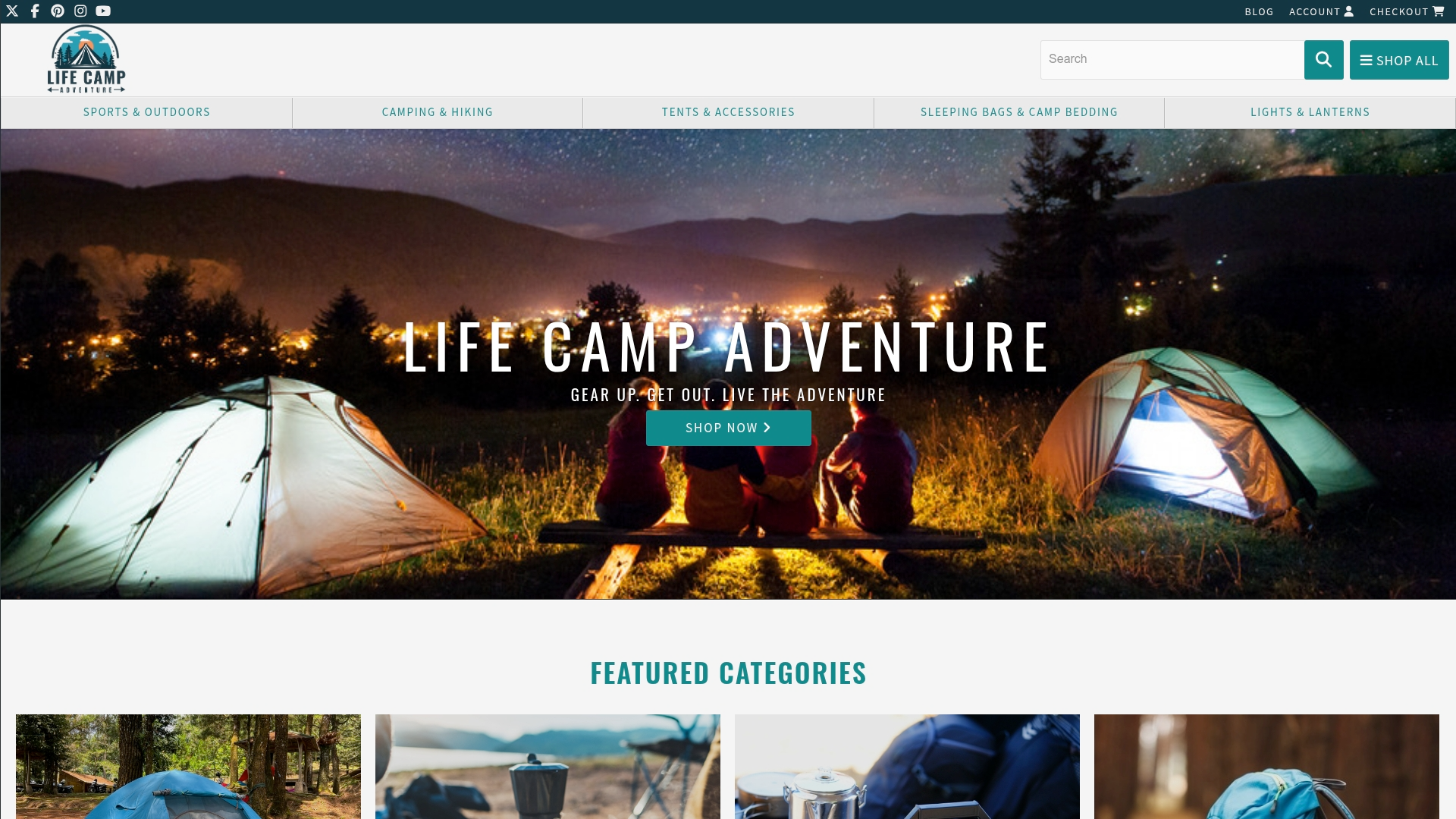
Every tent in the Lifecampadventure lineup has been evaluated against the same scoring rubric used in this review: comfort, durability, weather protection, setup ease, and features. You get the editorial team's shortlist, not an algorithm's. Browse the full selection, check current availability, and find the tent that fits your camping style at the Lifecampadventure tent comparison and purchase page. If you are building a complete kit, the essential camping gear guide covers everything else you need alongside your tent.
Useful sources and further reading
Price verification note: all MSRP figures in this article reflect early 2026 pricing. Street prices vary by retailer and season; check current availability directly with each brand or retailer before purchasing. Lifecampadventure's tent category page reflects current stock and pricing.
- The Best Camping Tents | Tested & Ranked — OutdoorGearLab
- Best Camping Tents — CleverHiker
- How to Choose a Tent — Peak Gear Guide
- How to Choose the Best Tent for Camping or Backpacking — GearJunkie
- The 7 Best Camping Tents We've Tested — Outdoor Life
- The Best Ultralight Tents | Tested & Ranked — OutdoorGearLab
- Best Tents for Families — Lifecampadventure
