TL;DR:
- Layering in outdoor apparel involves a system of clothing items designed to manage moisture, provide insulation, and block weather, not just wearing more clothes. Proper fit, appropriate materials, and on-the-move adjustments are essential for maintaining comfort and safety across changing conditions. Developing active management skills and selecting gear suitable for specific activities ultimately enhance outdoor performance and enjoyment.
Most people think layering just means wearing more clothes. It does not. The role of layering in outdoor apparel is to create a controlled system where each piece does a specific job: pulling sweat away from your skin, trapping warm air close to your body, and blocking wind and rain from the outside. Get it right and you stay comfortable across a full day of changing weather and activity levels. Get it wrong and you overheat on the climb, then freeze on the ridge. This guide breaks down exactly how the system works and how to use it to your advantage.
Key takeaways
| Point | Details |
|---|---|
| Three distinct functions | Each layer handles moisture, insulation, or weather protection. Not three random clothing items. |
| Material beats brand | Merino wool and synthetics outperform cotton in every condition that matters. |
| Fit drives performance | A shell that fits too tight will crush your mid layer and kill its warmth. |
| Adjust as you move | Read your body signals and add or remove layers before you overheat or get chilled. |
| Packability matters | Lightweight, packable layers let you carry more options without weighing down your pack. |
The role of layering in outdoor apparel
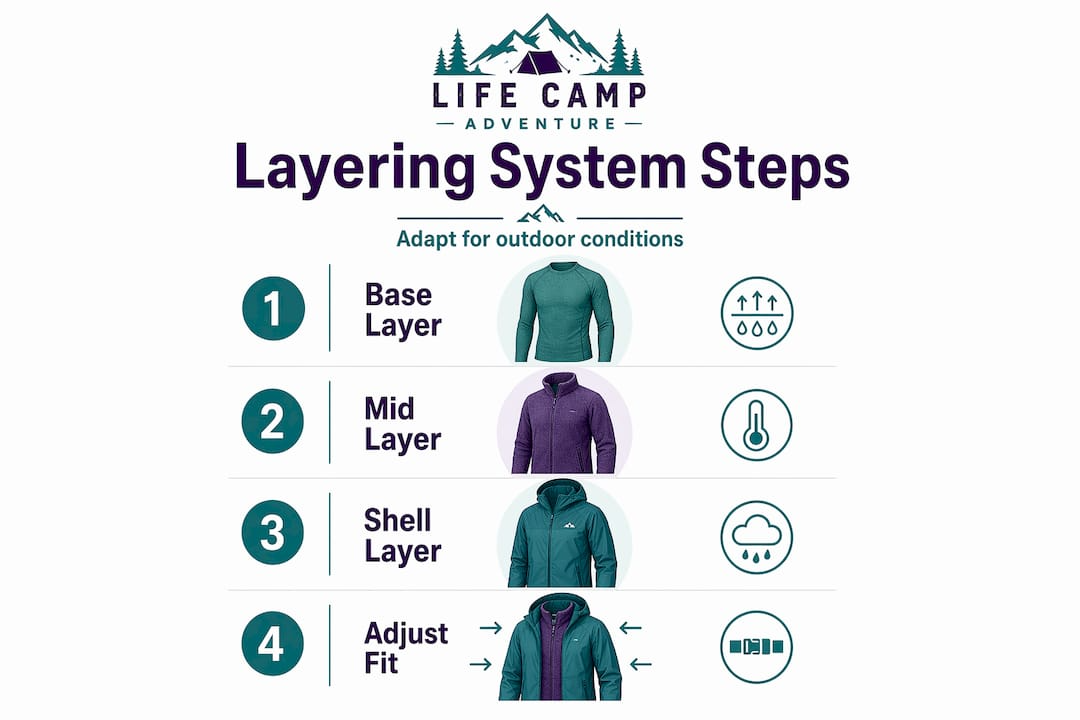
Here is the core idea: layering has three jobs, and those jobs do not depend on wearing exactly three items. You could achieve all three with two pieces, or you might need five on a brutal winter ascent. The number of items is beside the point. The functions are what matter.
Base layer: keeping your skin dry
Your base layer sits against your skin. Its only job is moisture management. Sweat is not just uncomfortable. A wet body loses heat up to 25 times faster than a dry one, which makes this layer the most underappreciated piece of the entire system. When your base layer fails, every layer on top of it fails too.
Mid layer: trapping warm air
The mid layer is your insulation. It works by trapping dead air close to your body and turning your own heat into a personal warming system. Down fills, fleece, and synthetic insulated pieces all accomplish this in different ways, with different tradeoffs around weight, packability, and performance when wet.
Shell layer: your weather barrier
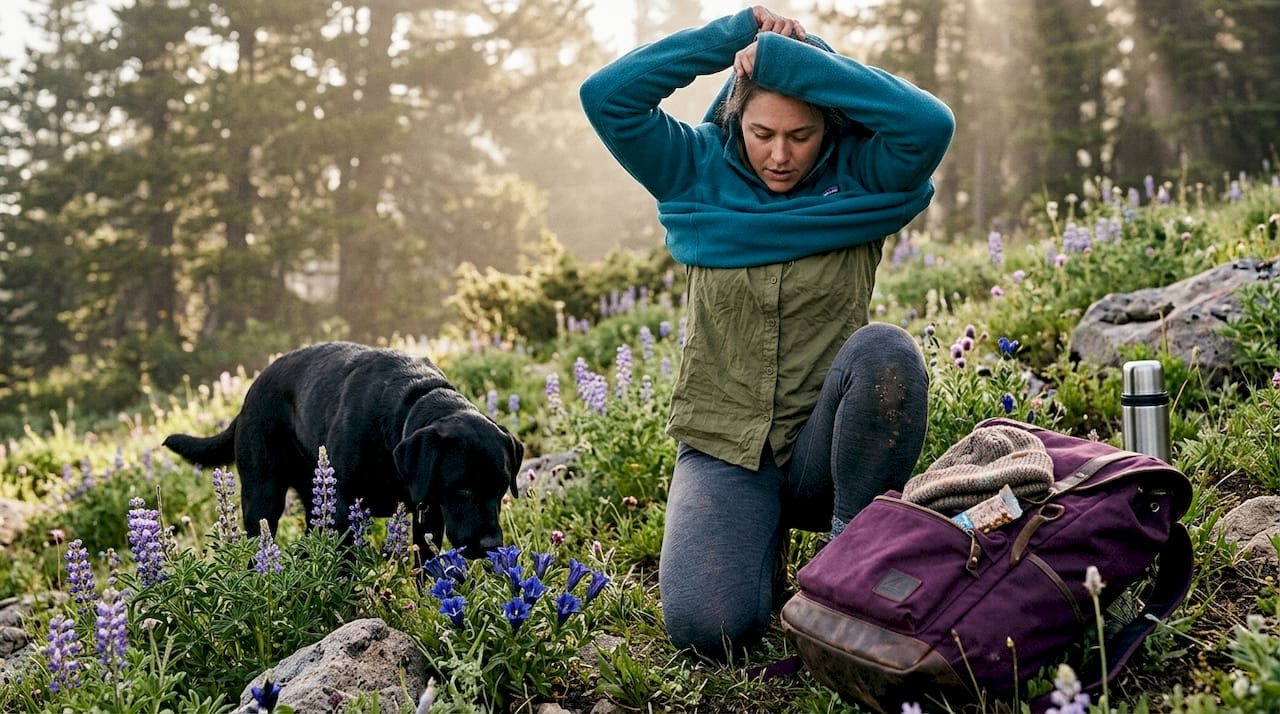
The outer shell blocks wind, rain, and snow. But a shell that does not breathe is almost worse than no shell at all. Non-breathable shells trap moisture from the inside, soaking your insulation and undoing everything your base and mid layers worked to achieve. Breathability is not a luxury feature. It is a requirement.
Pro Tip: Store your shell in the top or outer pocket of your pack, not buried at the bottom. Weather can shift in minutes on the trail, and you need it accessible without stopping to dig.
Choosing the right materials and fit
Getting the layering system right starts with fabric decisions. This is where a lot of outdoor enthusiasts leave performance on the table by defaulting to what is comfortable at home rather than what works in the field.
What to look for in a base layer
Synthetic fabrics and merino wool both wick sweat effectively and dry fast. Merino also resists odor, which matters on multi-day trips. Cotton absorbs moisture and holds it, which means it keeps sweat pressed against your skin. Base layers in cold conditions should prioritize warmth-to-weight ratio, moisture wicking, odor resistance, durability, and a snug but non-restrictive fit. Cotton fails on the first two counts.
What to look for in a mid layer
- Insulation type. Down is warmth-to-weight king when dry. Synthetic fill performs even when wet and costs less.
- Loft. More loft means more dead air trapped. But loft gets compressed by a tight shell, so size matters.
- Packability. A mid layer you leave in the car because it is bulky does nothing for you on the trail.
- Stretch. For high-output activities, a fleece or active insulation piece that moves with you beats a stiff puffer every time.
Shell layer features that actually matter
Look for a waterproof rating of at least 10,000mm for most conditions, a breathability rating (measured in MVTR) high enough for your activity intensity, and shell layers that pack down small enough to clip to your pack or stuff in a hip pocket.
Pro Tip: Fit your entire layering system before you buy. Put on your base and mid layer, then try the shell over both. If you cannot comfortably raise your arms above your head, the shell is too small.
That last point connects to one of the most expensive mistakes in outdoor apparel. A tight shell compresses mid-layer insulation, collapsing the dead air pockets that create warmth. You paid for insulation that no longer insulates. Always size your shell to accommodate the layers underneath it.
Adjusting your layers on the move
Knowing the theory is one thing. Applying it while you are sweating up a switchback with a 40-pound pack is another. Dynamic layering is a skill you develop through practice, and it starts with reading your body before it gets uncomfortable.
The goal is to build what outdoor experts call a microclimate. Your layering system creates warmth by trapping heated air between layers and against your skin. The shell manages what gets in from outside. When you manage both sides of that equation, you stay comfortable regardless of what the weather does.
Here is how to apply this practically on the trail:
- Before a climb: Remove your mid layer while you are still warm and moving fast. You will generate enough body heat. Keeping the mid layer on leads to heavy sweating that soaks your base layer.
- At a rest stop: Put your mid layer back on within 60 seconds of stopping. Your body temperature drops fast when exertion stops.
- When wind picks up: Add the shell before you feel cold. Wind strips heat from your body faster than most people expect.
- When it rains lightly: A shell alone may be enough. Adding insulation underneath traps moisture if the rain does not stop.
- On the descent: Slow pace plus cooling temperatures usually calls for full base, mid, and shell combination.
Layering strategies by condition and activity
Not every adventure calls for the same setup. The right combination shifts depending on temperature, activity output, and how long you will be out. Here is a practical breakdown.
| Condition | Base Layer | Mid Layer | Shell |
|---|---|---|---|
| Warm hike (50°F+, high output) | Lightweight synthetic tee | Optional or skip | Packable wind shell |
| Cool day (40°F to 50°F, moderate) | Midweight merino | Light fleece | Packable rain shell |
| Cold hike (20°F to 40°F, variable) | Heavyweight merino or synthetic | Insulated jacket or fleece | Waterproof hardshell |
| Winter camping (below 20°F) | Heavyweight base, full coverage | Down jacket plus fleece vest | Insulated hardshell |
| Multi-day mountain trip | Lightweight synthetic (odor resistant) | Down mid layer plus backup fleece | 3-layer waterproof shell |
The vest is worth calling out specifically. Many hikers overlook it, but a lightweight down vest worn over a fleece mid layer covers your core without restricting arm movement. It is ideal for variable temperature days when a full insulated jacket would overheat you on the uphills.
For high-output activities like trail running, the entire system shifts toward lighter, faster-drying pieces. A single high-stretch moisture-wicking top may cover both base and mid functions simultaneously. In that context, you can explore outdoor clothing layers built for aerobic output, where warmth-to-weight and stretch are non-negotiable.
My honest take on mastering the system
I have watched a lot of outdoor enthusiasts make the same mistake: they buy good gear and then refuse to use it correctly. They wear the same setup for the entire day because stopping to swap layers feels like a hassle. Then they wonder why they were soaked through by noon or hypothermic by 3pm.
In my experience, the biggest shift happens when you stop thinking about layers as separate clothing items and start thinking about them as a single system you actively manage. The gear does not do the work. You do. Your ability to read your body temperature and respond quickly is the actual skill.
Fit matters more than brand, always. I have seen people in expensive technical gear suffer because the shell was one size too small and crushed the insulation. I have also seen someone in affordable mid-tier gear stay perfectly comfortable because everything fit correctly and they stayed on top of adjustments.
Weight matters too. A layering system you actually bring on every trip beats a heavier, theoretically superior system that stays in the car. When you pack a backpack efficiently, keeping your layers accessible rather than buried is half the battle.
The last thing I will say: develop your feel for the system on day trips before you rely on it in serious conditions. Low stakes practice builds the instincts you need when the stakes get higher.
— Billy
Gear up with Lifecampadventure

At Lifecampadventure, we carry gear built for adventurers who take their time outdoors seriously. Whether you are outfitting a weekend trip or a multi-day backcountry expedition, the right layering setup starts with choosing apparel that performs in real conditions, not just on paper. Browse our essential camping gear picks to find base, mid, and shell options selected for durability, packability, and breathability across a range of conditions. And while you are equipping yourself for the trail, check out our full camping equipment selection for tents, survival essentials, and everything else you need to adventure with confidence.
FAQ
What is the role of layering in outdoor apparel?
Layering creates a system where each clothing piece manages a specific function: moisture control, insulation, or weather protection. The goal is temperature regulation and comfort across changing conditions.
Why does the base layer matter so much?
A wet body loses heat up to 25 times faster than a dry one, so the base layer's job of keeping sweat off your skin directly affects your warmth and safety in the field.
Can I skip the mid layer on warm hikes?
Yes. On high-output activities in mild temperatures, a mid layer can be skipped entirely or carried in your pack for rest stops and cooler sections of the trail.
How does fit affect layering performance?
A shell that is too tight compresses mid-layer insulation and collapses the dead air pockets that generate warmth. Always size your shell to fit comfortably over all layers underneath.
What materials work best for outdoor base layers?
Merino wool and synthetic fabrics both outperform cotton significantly. Merino excels in odor resistance and temperature regulation, while synthetics dry faster and tend to cost less.
