
TL;DR:
- A headlamp is a hands-free light source designed for outdoor and emergency use, providing reliable illumination with long battery life. Its features, such as waterproofing and red-light modes, enhance safety, versatility, and performance in various conditions. Proper use and maintenance, including fitting, mode selection, and battery management, ensure maximum effectiveness and preparedness.
A headlamp is a wearable, hands-free light source designed to illuminate dark environments while keeping both hands free for critical tasks. The role of headlamps extends far beyond simple convenience. Whether you are navigating a night trail, setting up camp after dark, or responding to a power outage, a headlamp is one of the most reliable pieces of gear you can carry. Lifecampadventure builds its outdoor gear philosophy around exactly this kind of dependable, task-ready equipment. From waterproof ratings to red-light modes, the features packed into modern headlamps directly affect your safety and your ability to act when it counts.
What are the main practical benefits of headlamps for outdoor and emergency use?
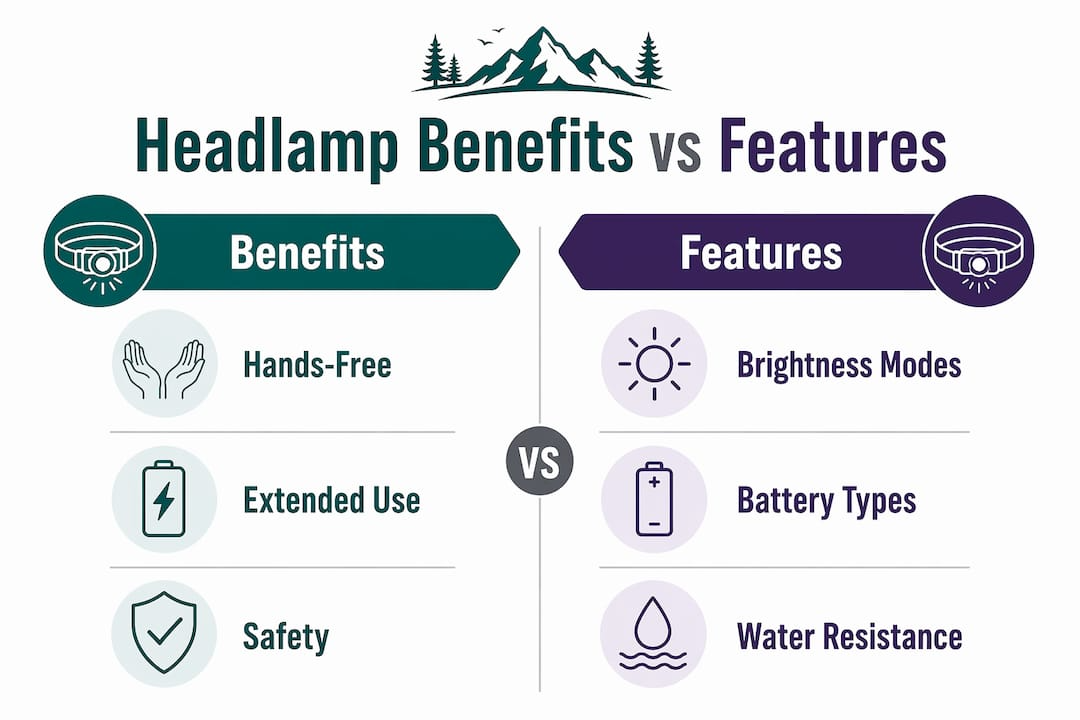
Headlamps deliver one core advantage no handheld flashlight can match: both hands stay free. That freedom matters when you are building a fire, reading a map, administering first aid, or climbing over uneven terrain in the dark. A headlamp points light exactly where your eyes go, which is a natural and efficient way to work.
Battery life is the other major advantage. Dedicated headlamps last 5–10 times longer than phone flashlights. That gap is critical in a survival situation where your phone battery is also your communication lifeline. Burning through your phone's charge for light is a trade-off you should never have to make.
Modern outdoor headlamps also come with features that match real-world conditions:
- Waterproofing: IPX ratings (IPX4 through IPX8) indicate how well a headlamp handles rain, splashing, or submersion. IPX4 handles rain; IPX7 survives a 1-meter submersion for 30 minutes.
- Multiple light modes: High, low, strobe, and red-light modes give you control over brightness and battery consumption.
- Adjustable beam angle: A tilting head lets you aim light at the ground, a task in front of you, or straight ahead without moving your neck.
- Comfortable headbands: Padded, adjustable straps keep the lamp secure during physical activity without causing pressure points.
Modern outdoor headlamps cost $20–$150 depending on brightness, battery type, waterproofing, and special modes. A mid-range model in the $40–$80 range covers most outdoor and emergency needs without overspending.
Pro Tip: Pack a headlamp in your car's emergency kit, not just your camping bag. A power outage, a flat tire at night, or a roadside breakdown all demand hands-free light.
How do headlamp features and technology affect real-world performance?
Brightness is measured in lumens, but lumen count alone does not tell the full story. A high-lumen headlamp with a narrow beam is often less effective for camp tasks than a moderate-lumen model with a wide flood pattern. A flood beam spreads light across a wide area, reducing eye strain and making it easier to cook, read, or sort gear. A focused spot beam is better for trail running or scanning distant terrain.
Red-light mode: the most underused feature
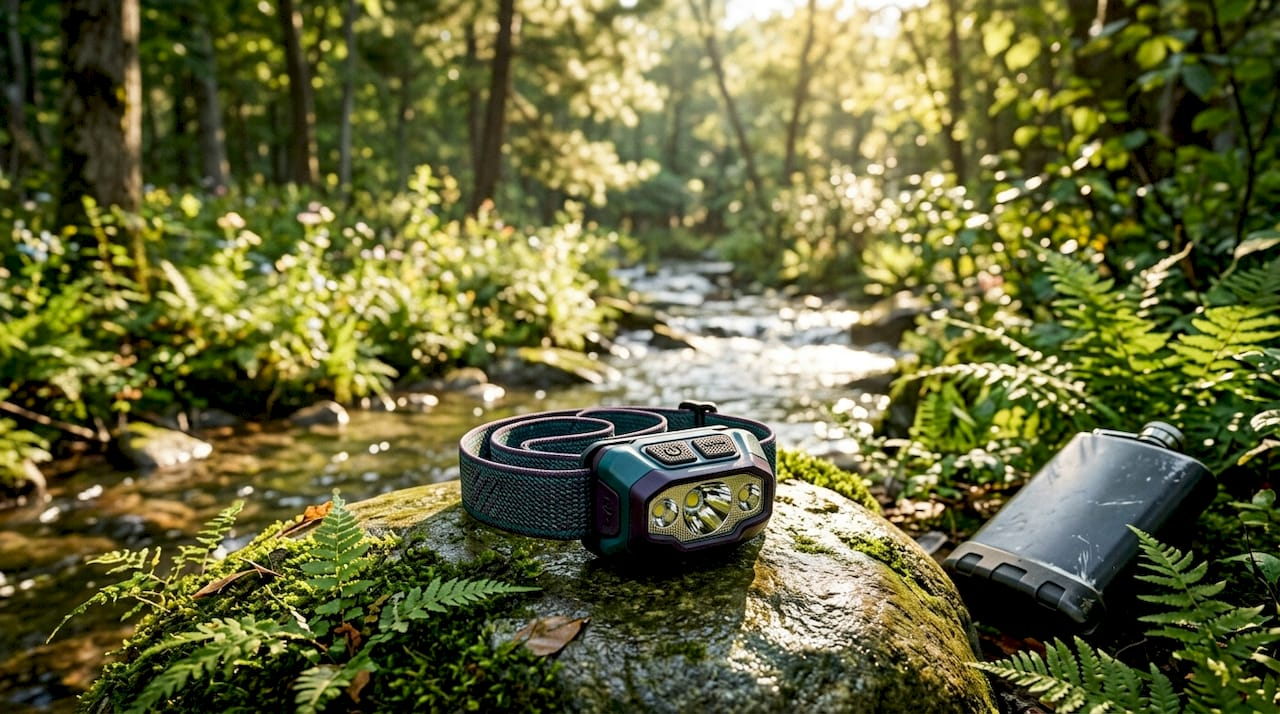
Red-light mode preserves night vision and avoids disturbing others in a group camp setting. Your eyes adapt to darkness through a process called dark adaptation, which white light destroys in seconds. Red light does not trigger that reset. Use red mode inside a tent, around sleeping campers, or any time you need to move quietly without blinding yourself or others.
Lockout mode and battery management
Lockout mode prevents accidental battery drain when a headlamp is stored in a pack. Without it, the power button can activate against gear, leaving you with a dead lamp when you need it most. This feature is non-negotiable for emergency preparedness kits. Check that any headlamp you buy includes a physical lockout switch or a button-hold activation sequence.
Battery type also shapes how you use a headlamp in the field:
| Battery type | Best for | Trade-off |
|---|---|---|
| Rechargeable (USB) | Regular use, base camp | Needs power source to recharge |
| Disposable (AAA/AA) | Remote expeditions | Replaceable anywhere, heavier |
| Hybrid (both options) | Versatile use | Higher cost |
Pro Tip: Carry one set of spare batteries even if your headlamp is rechargeable. A dead battery 10 miles from the trailhead is a real emergency.
Water resistance ratings follow the IPX standard, an international classification system. IPX4 means the lamp resists splashing from any direction. IPX6 handles powerful water jets. IPX7 allows submersion up to 1 meter for 30 minutes. Match the rating to your activity. A casual camper needs IPX4 at minimum. A kayaker or canyoneer should carry IPX7 or higher.
For outdoor cyclists and urban riders, adaptive lighting and sensor-driven beam control are becoming standard features that improve safety in low-light conditions. These technologies, once exclusive to automotive systems, are now appearing in high-end personal headlamps.
What are the key safety tips for using headlamps effectively?
Using a headlamp correctly is as important as owning one. Poor habits reduce its effectiveness and can leave you in a dangerous position.
- Set the fit before dark. Adjust the headband so the lamp sits level on your forehead without sliding. A loose headlamp bounces with every step, making it hard to see clearly.
- Match brightness to the task. High mode drains batteries fast. Use low mode for close-up tasks like cooking or reading. Save high mode for trail navigation and signaling.
- Switch to red light at camp. Red mode protects your night vision and respects other campers. Make it your default setting once you stop moving.
- Check batteries before every trip. A headlamp with 20% battery left is not ready for an overnight. Replace or recharge before you leave, not when you arrive.
- Activate lockout mode for storage. Before placing your headlamp in a pack or emergency kit, engage the lockout function. This single habit prevents the most common headlamp failure: a dead battery at the worst moment.
- Know your critical use cases. A headlamp is the right tool for trail navigation after sunset, first aid in low light, building an emergency shelter, and reading maps or signals. Practice using it for each task before you need it under pressure.
The outdoor survival checklist from Lifecampadventure lists a headlamp as a top-tier essential, alongside fire-starting tools and navigation equipment. That ranking reflects how often lighting determines the outcome of an outdoor emergency.
How do automotive headlamps differ from outdoor headlamps?
Automotive headlamps and outdoor headlamps share a name but serve entirely different purposes. Understanding the distinction helps clarify why portable headlamps are engineered the way they are.
Automotive headlamps are fixed systems built into vehicles to illuminate roads for driver safety. Nearly 50% of all traffic-related fatalities occur in the dark, even though only 25% of driving happens at night. That statistic explains why automotive lighting is treated as a safety-critical system, not just a convenience feature. Regulators and automakers invest heavily in beam pattern, intensity, and coverage to reduce that risk.
Modern automotive headlamps have evolved into intelligent systems integrated with Advanced Driver Assistance Systems (ADAS), sensors, and vehicle communications. They adjust beam direction based on steering input, detect oncoming traffic, and switch between high and low beams automatically. A minimum of 15–20 lux of illumination is required for a driver to detect a dark object on an unlit road, a threshold that shapes how automotive beams are calibrated.Outdoor headlamps prioritize a completely different set of values:
| Feature | Automotive headlamp | Outdoor headlamp |
|---|---|---|
| Power source | Vehicle electrical system | Batteries (rechargeable or disposable) |
| Primary goal | Road illumination for driver | Task lighting for the individual |
| Beam control | Sensor-driven, automated | Manual mode selection |
| Portability | Fixed to vehicle | Wearable, lightweight |
| User control | Limited | Full (modes, angle, brightness) |
The key difference is control. Outdoor headlamps put the user in charge of every variable. That flexibility is what makes them effective across such a wide range of scenarios, from reading in a tent to signaling for rescue.
Key Takeaways
A headlamp is the single most versatile piece of lighting gear an outdoor adventurer or emergency planner can carry, because it combines hands-free operation, long battery life, and adaptable light modes in one compact tool.
| Point | Details |
|---|---|
| Hands-free operation | Headlamps free both hands for navigation, first aid, and camp tasks in the dark. |
| Battery advantage | Dedicated headlamps last 5–10 times longer than phone flashlights in emergencies. |
| Red-light mode matters | Red mode preserves night vision and is the correct setting for group camp use. |
| Lockout mode is non-negotiable | Always engage lockout before storage to prevent battery drain in your pack. |
| Match features to conditions | Choose IPX rating, beam pattern, and battery type based on your specific activity. |
Why I think most people underestimate their headlamp
After years of outdoor trips and emergency prep, the single most common mistake I see is treating a headlamp as a backup item. People pack it at the bottom of the bag, forget to check the battery, and then scramble for it when something goes wrong. That is exactly backward.
A headlamp should be the first thing you reach for when light fades, not the last. The headlamp uses in camping go well beyond walking to the bathroom at night. Setting up a tent in the dark, treating a blister, reading a topo map, and signaling for help all require reliable, directed light with both hands free.
The feature most people ignore is red-light mode. I have watched experienced campers blast white light at full brightness inside a tent at midnight, destroying their night vision and waking everyone nearby. Red mode exists for exactly that situation. Use it.
My advice: buy one quality headlamp, learn every mode it has, and put it somewhere you can grab it in 10 seconds. The essential camping gear list is long, but a headlamp earns its spot at the top every single time.
— Billy
Gear up with Lifecampadventure
Lifecampadventure curates outdoor and survival gear for people who take preparedness seriously. A quality headlamp is one piece of a larger kit that should work together when conditions get difficult.

The best camping gear for 2025 and 2026 includes expert-reviewed headlamps alongside shelter, navigation, and survival tools selected for durability and real-world performance. Lifecampadventure's team tests gear across conditions so you can make a confident choice before your next trip. Browse the full selection and build a kit that is ready for whatever the trail throws at you.
FAQ
What is the primary role of headlamps in outdoor activities?
A headlamp provides hands-free illumination that keeps both hands available for navigation, first aid, and camp tasks in low-light or dark conditions. It is the most practical lighting tool for any outdoor activity after sunset.
How long do headlamp batteries last compared to phone flashlights?
Dedicated headlamps last 5–10 times longer than phone flashlights, making them the reliable choice for extended outdoor use and emergency situations.
Why should I use red-light mode on a headlamp?
Red-light mode preserves your night vision and avoids disturbing others in a group setting. White light destroys dark adaptation in seconds; red light does not trigger that reset.
What IPX rating do I need for outdoor headlamp use?
IPX4 is the minimum for general outdoor use, protecting against rain and splashing. Kayakers, canyoneers, and anyone near water should choose IPX7 or higher for submersion protection.
What is lockout mode and why does it matter?
Lockout mode disables the power button during storage, preventing accidental activation that drains the battery. It is a critical feature for emergency kits where a dead headlamp can have serious consequences.
