TL;DR:
- Fire starters are essential survival tools that ensure quick, reliable ignition in any weather condition. Carrying multiple types like lighters, ferro rods, and matches provides redundancy, while preparing layered tinder increases fire success. Practicing proper technique and packing lightweight, moisture-resistant fire-starting gear enhances safety and confidence in the field.
A fire starter is any tool or material that produces the initial ignition needed to build a fire quickly and reliably in the field. The role of fire starters goes far beyond convenience. In a survival situation, the difference between a fire in two minutes and no fire at all can determine whether you stay warm, hydrated, and safe. Tools like ferrocerium rods, butane lighters, stormproof matches, and commercial fire starter cubes each serve this function in different ways. Understanding which tool fits your conditions, and how to use it correctly, is one of the most practical skills any camper, hiker, or survivalist can develop.
What types of fire starters are available and how do they differ?
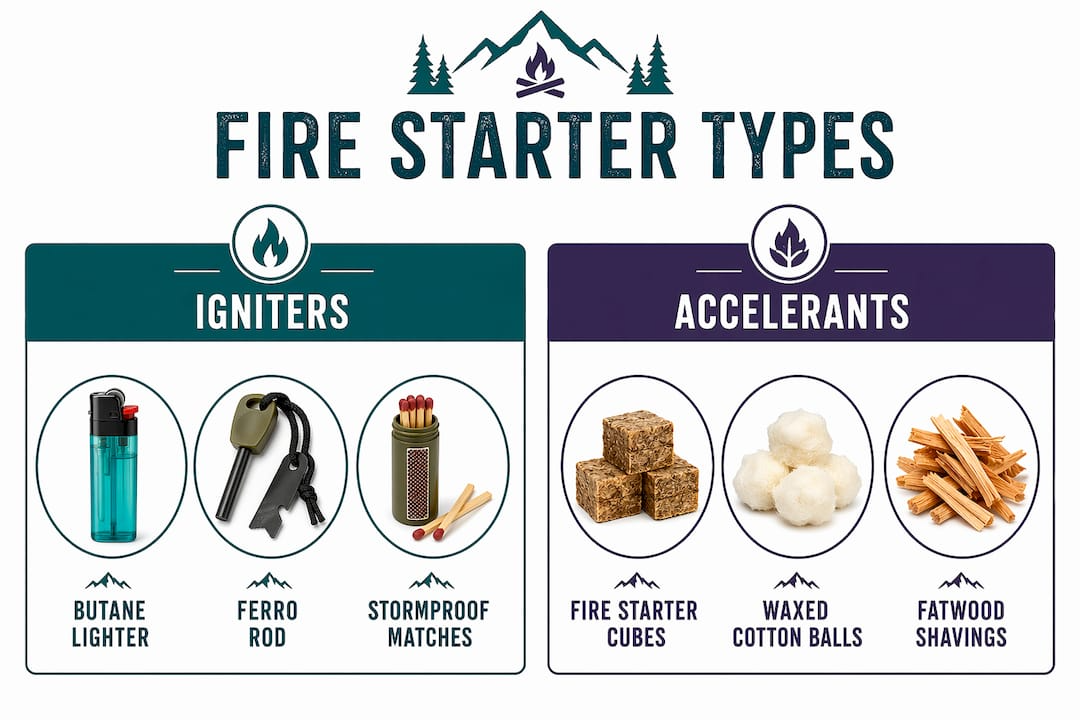
Fire starter types fall into five main categories, each with a distinct performance profile. Knowing the differences helps you pick the right tool before you leave the trailhead.
Butane lighters are the fastest option. Time to flame ranges from 5 seconds to 45 minutes depending on the method and skill level. A butane lighter sits at the fast end of that range, but it loses reliability in freezing temperatures and runs out of fuel.
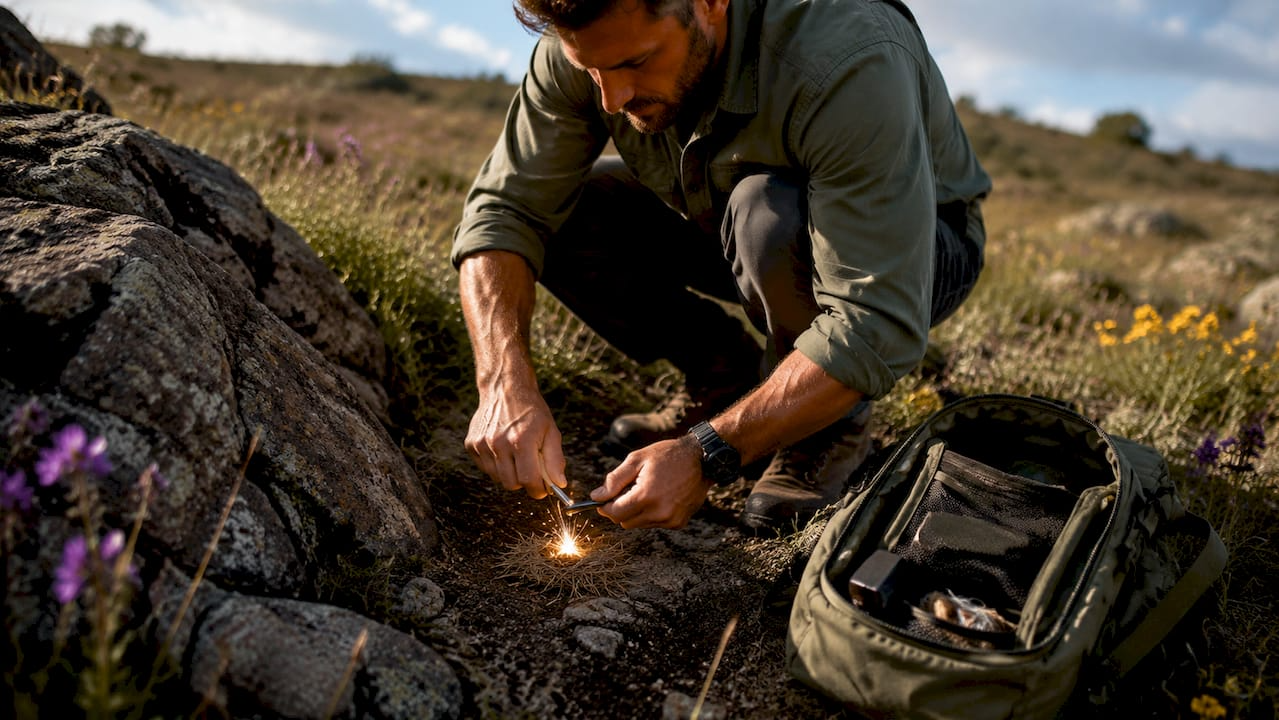
Ferrocerium rods (ferro rods) require more practice but perform well in wet conditions where lighters fail. Striking a ferro rod against a steel scraper produces a shower of sparks that exceed 5,000°F. That heat ignites dry tinder even when the rod itself is damp.
Stormproof matches are windproof and waterproof by design. Brands like UCO produce matches that stay lit in wind and rain, making them a dependable backup when a lighter fails.
Commercial fire starter cubes and waxed cotton balls act as accelerants rather than ignition sources. Fire starter cubes burn for 5–10 minutes and resist moisture, giving your kindling enough time to catch even in damp conditions. Cotton balls soaked in petroleum jelly are a popular DIY version that costs almost nothing.
Friction methods like bow drills sit at the far end of the difficulty scale. Bow drills require reaching 800°F (425°C) through sustained effort. They are valuable for skill building but not dependable in emergencies unless you have practiced them extensively.
| Fire starter | Wind resistance | Burn time | Skill needed | Weight |
|---|---|---|---|---|
| Butane lighter | Low | Fuel dependent | Minimal | Very light |
| Ferro rod | High | Spark only | Moderate | Light |
| Stormproof matches | High | 15–30 seconds | Minimal | Very light |
| Fire starter cubes | High | 5–10 minutes | Minimal | Light |
| Bow drill | N/A | Ember only | High | None (natural) |
Why are fire starters important beyond basic ignition?
Fire provides seven critical survival functions: warmth, water purification by boiling, cooking, signaling rescuers, boosting morale, drying wet clothes, and protecting against wildlife. That list explains why survival experts treat fire as the single most important skill in the field. A fire starter is the tool that makes all seven functions accessible, even when conditions work against you. Modern fire starters remove barriers in wet or windy conditions, letting you build a fire without advanced bushcraft skills. That matters most when you are cold, stressed, and running low on energy. A ferro rod or a pack of stormproof matches weighs almost nothing, yet it gives you access to warmth and clean water within minutes of stopping.The psychological benefit is real and often underestimated. Knowing you can reliably start a fire reduces panic in unexpected situations. Survivalists consistently report that a burning fire shifts their mental state from reactive to deliberate. That shift improves every subsequent decision.
Redundancy is the rule, not the exception. Survival experts advise carrying two to three independent ignition sources because any single tool can fail. A butane lighter runs dry. Matches get soaked. A ferro rod never runs out of strikes, which is why pairing it with a lighter covers both failure modes.
- Warmth: prevents hypothermia in cold or wet weather
- Water purification: boiling kills pathogens when filters are unavailable
- Cooking: makes food safe and increases caloric value
- Signaling: smoke and light attract rescuers from distance
- Morale: a fire reduces stress and restores focus
- Drying clothes: wet clothing accelerates heat loss
- Wildlife protection: fire deters predators at night
Pro Tip: Practice starting a fire with each tool you carry before your trip. Stress and cold reduce fine motor skills. The time to learn your ferro rod is at home, not at 9,000 feet in the rain.
How to use fire starters effectively for fast, reliable fires
Effective fire starting follows a sequence. Skipping steps is the most common reason fires fail. Tinder preparation is often the failure cause, not the ignition spark itself. Get the foundation right before you strike anything.
Prepare your tinder bundle first
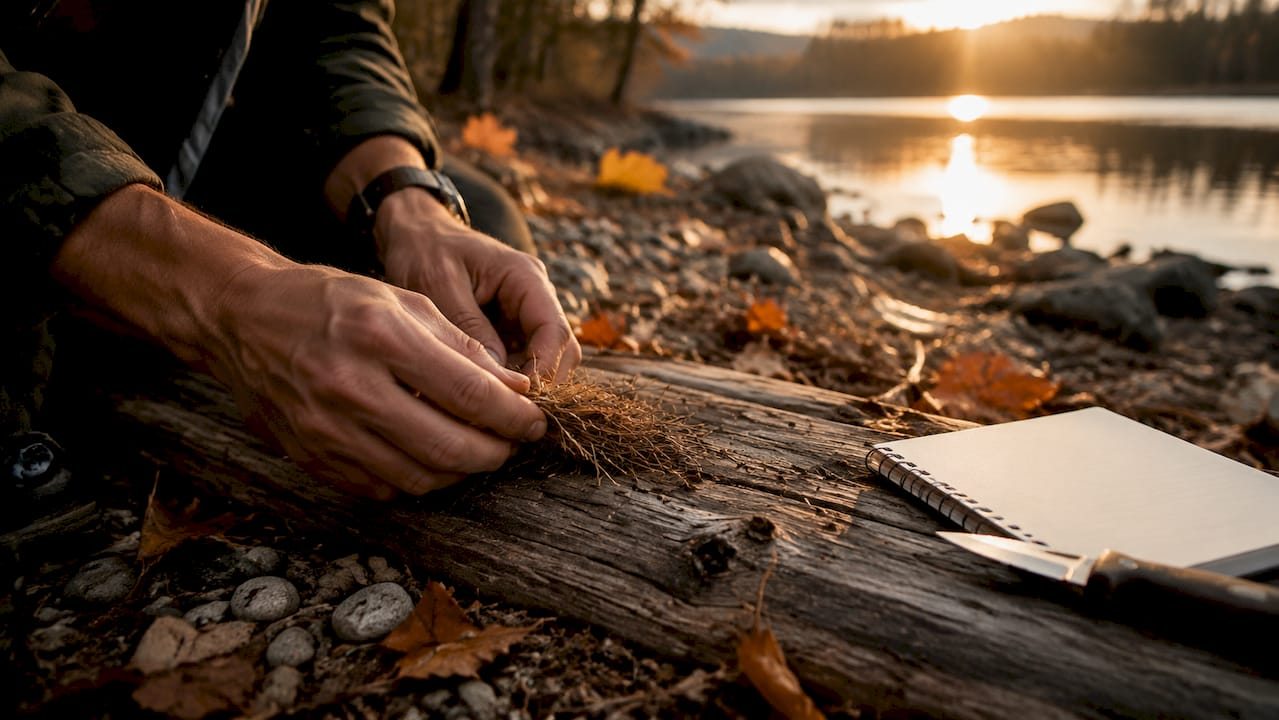
Collect three layers of material before you light anything. The first layer is fine tinder: dry grass, birch bark, cattail fluff, or a commercial fire starter cube. The second layer is small kindling, pencil-thin sticks. The third layer is finger-thick fuel wood. Arrange them within reach before ignition. Scrambling for kindling after your tinder catches is how fires die.
Gathering and processing firewood also preserves body heat through physical activity and reduces psychological stress in survival settings. The act of preparation is part of the survival strategy, not just a chore.Step-by-step ignition by tool type
- Butane lighter: Shield the flame with your body against wind. Hold it under the tinder bundle for 3–5 seconds. Do not rush. Let the flame transfer to the material before releasing.
- Ferro rod: Hold the rod close to the tinder, roughly 1–2 inches away. Strike downward with the steel scraper using a firm, controlled motion. Aim sparks directly at the driest part of your tinder bundle.
- Stormproof matches: Strike away from your body. Cup your hands around the match head immediately after ignition. Place the burning match under the tinder bundle rather than touching the flame to the top.
- Fire starter cube: Place the cube at the base of your kindling stack. Light it with a lighter or match. Build your kindling structure around it, not on top of it, so airflow reaches the flame.
- Bow drill: Prepare a notched fireboard and a dry spindle. Apply downward pressure while spinning. Transfer the ember to a tinder bundle and blow gently from the side, not directly down.
Experts recommend practicing at home and relying on proven tools like lighters and stormproof matches in the field rather than attempting complex methods under stress. That advice is grounded in real outcomes, not theory.
Pro Tip: Carry a small waterproof container with pre-made tinder: petroleum jelly cotton balls, dry cedar shavings, or commercial cubes. When conditions are bad, having ready-made tinder cuts ignition time dramatically.
How to select and carry fire starters for outdoor trips and emergencies
The best fire-starting kit pairs a primary tool with at least one backup. Experienced survivalists recommend at least two ignition sources plus layered tinder kits for reliability. A butane lighter handles 90% of situations. A ferro rod handles the other 10%, including cold weather and wet conditions where the lighter fails.
Tinder materials belong in the kit alongside ignition tools. Fatwood shavings, petroleum jelly cotton balls, and commercial fire starter cubes are all compact and moisture resistant. Store them in a sealed zip-lock bag or a small waterproof case. Wet tinder is as useless as no tinder.
Weight and bulk rarely justify leaving fire starters behind. A ferro rod weighs under two ounces. A pack of UCO stormproof matches adds almost nothing to a pack. The cost of carrying both is negligible. The cost of having neither in an emergency is not.
Check local fire regulations before your trip. Many wilderness areas in the United States have seasonal burn bans. Carrying fire starters does not mean you are always permitted to use them. Know the rules for your specific destination. For a full breakdown of what belongs in your pack, the emergency preparedness guide from Lifecampadventure covers fire starters alongside other critical safety tools.
| Kit component | Recommended option | Purpose |
|---|---|---|
| Primary ignition | Butane lighter | Fast ignition in normal conditions |
| Backup ignition | Ferro rod | Reliable in wet and cold conditions |
| Secondary backup | Stormproof matches | Windproof and waterproof failsafe |
| Tinder accelerant | Fire starter cubes or petroleum jelly cotton balls | Extends burn time in damp conditions |
| Natural tinder | Fatwood shavings | Resin-rich, ignites easily from sparks |
For a broader look at what gear belongs in your survival kit, the outdoor gear guide from Lifecampadventure covers fire starters alongside shelter, navigation, and water tools.
Key takeaways
Fire starters are the most weight-efficient survival tools you can carry, providing access to warmth, clean water, and signaling capacity from a kit that weighs under four ounces.
| Point | Details |
|---|---|
| Carry multiple ignition sources | Pair a butane lighter with a ferro rod and stormproof matches to cover all failure modes. |
| Tinder preparation determines success | Prepare a layered tinder bundle before ignition. Sparks fail without dry, fine material ready to catch. |
| Fire serves seven survival functions | Warmth, water purification, cooking, signaling, morale, drying clothes, and wildlife protection all depend on fire. |
| Practice before the field | Test every tool at home. Cold and stress reduce fine motor skills and make unfamiliar tools unreliable. |
| Weight is not an excuse | A complete fire-starting kit weighs under four ounces. There is no practical reason to leave it behind. |
What I've learned from relying on fire starters in the field
The first time I tried to start a fire in wet conditions with only a butane lighter, I failed. The lighter sparked but the tinder was damp, and I had not brought anything to extend the burn. That experience taught me more about fire starter importance than any gear review ever could.
The biggest mistake I see from newer campers is treating fire starters as a single-tool problem. They buy one good lighter and call it done. When that lighter fails, they have no fallback. A ferro rod costs under $15 and lasts thousands of strikes. There is no reason not to carry one alongside a lighter.
I also think people underestimate how much tinder quality matters. Commercial fire starters and DIY accelerants are often more important than the ignition method itself, especially in damp or windy environments. A great ferro rod paired with wet leaves will fail every time. A basic lighter paired with petroleum jelly cotton balls will succeed almost every time.
The psychological side is real too. The act of gathering wood supports physical warmth and reduces stress. When I am cold and uncertain, the process of building a fire, collecting wood, layering tinder, and striking a spark, gives me something concrete to focus on. That focus matters as much as the flame itself.
— Billy
Gear up with Lifecampadventure for your next adventure
Reliable fire starters belong in every pack, whether you are heading out for a weekend camping trip or building a serious emergency kit. Lifecampadventure carries a curated selection of survival essentials designed for real outdoor conditions.
From ferro rods and stormproof matches to complete survival kits built for backcountry use, Lifecampadventure has the gear that performs when conditions get difficult. Check out the best camping gear comparison to find fire starters and other field-tested tools selected for durability, weight, and real-world reliability. Your next trip deserves gear that works the first time.
FAQ
What is the role of fire starters in survival situations?
Fire starters provide fast, reliable ignition that gives you access to fire's seven survival functions: warmth, water purification, cooking, signaling, morale, drying clothes, and wildlife protection. Without a dependable ignition source, those functions become inaccessible in adverse conditions.
Which fire starter type is the most reliable?
No single type is best for every condition. A butane lighter is fastest in normal weather, while a ferro rod performs best in wet and cold conditions. Carrying both covers the widest range of scenarios.
How many fire starters should I carry?
Survival experts recommend carrying two to three independent ignition sources. A lighter, a ferro rod, and stormproof matches together weigh under four ounces and cover virtually every failure mode.
Do I need commercial tinder or can I use natural materials?
Both work, but commercial fire starter cubes and petroleum jelly cotton balls are more reliable in damp or windy conditions. Natural tinder like dry grass or birch bark works well when conditions are dry. Carrying a small supply of commercial tinder as a backup is the safest approach.
How do I start a campfire safely and correctly?
Prepare a layered tinder bundle before igniting anything, check local fire regulations, and clear a safe area of dry debris. For a full walkthrough, the campfire starting guide from Lifecampadventure covers each step in detail.
