TL;DR:
- Emergency radios operate independently from cellular networks and power grids, providing critical alerts during disasters. They use dedicated broadcasts and features like SAME technology to ensure location-specific warnings activate automatically, even during total power and communication outages. Most models rely on multiple power sources, such as batteries, hand-cranks, and solar panels, to ensure continuous operation when it matters most.
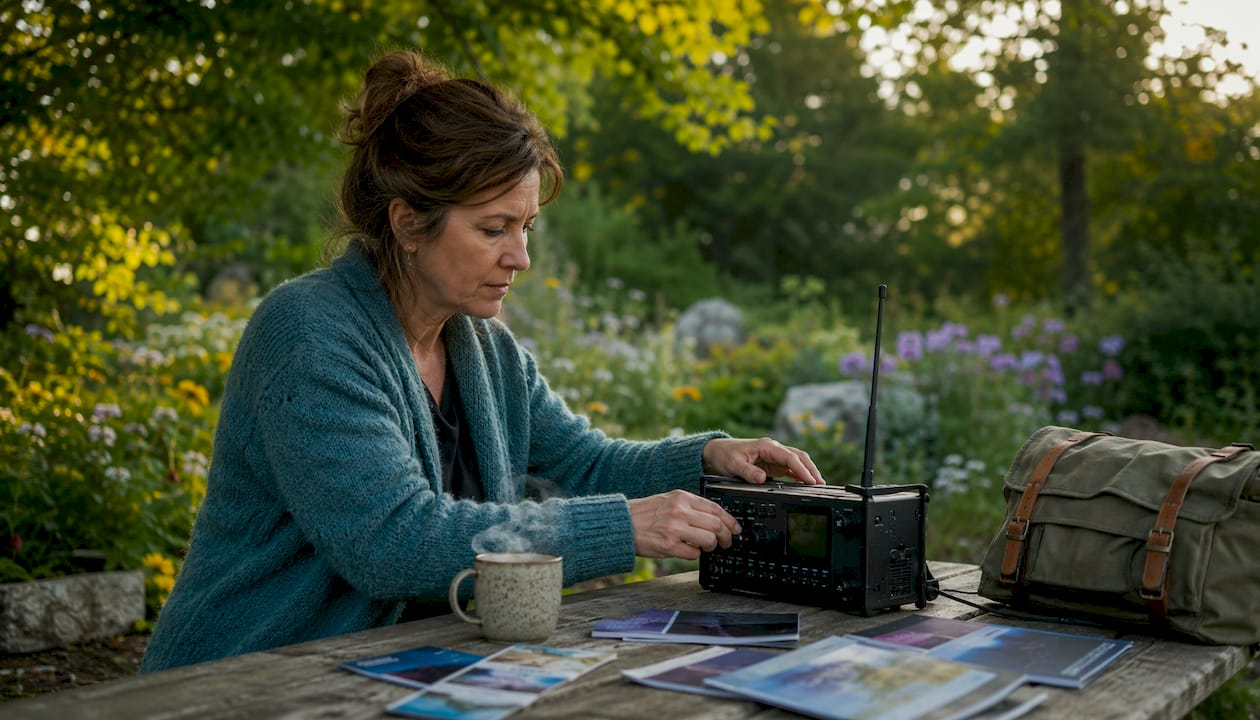
Emergency radios are defined as dedicated communication devices that operate independently from cellular networks, the internet, and the power grid. The role of emergency radios is to deliver official alerts, weather warnings, and safety instructions when every other system goes dark. The NOAA Weather Radio network runs more than 1,000 transmitters across all 50 U.S. states and territories, broadcasting 24 hours a day, 7 days a week. That reach makes it the backbone of federal emergency communication for families and outdoor adventurers alike. When your phone has no signal and the power is out, an emergency radio is the one device still talking.
What is the role of emergency radios in a crisis?
Emergency radios operate on dedicated broadcast frequencies that bypass commercial infrastructure entirely. The NOAA Weather Radio system transmits on seven specific VHF frequencies between 162.400 MHz and 162.550 MHz. Amateur radio, also called ham radio, uses licensed bands that remain functional even when public networks collapse. Both systems give you a direct line to official information when cellular towers are overloaded or destroyed.
How the technology works
Most emergency radios receive signals passively, meaning they pick up broadcasts without needing a two-way connection. This is the key technical advantage. A cell phone requires a functioning tower to send and receive data. An emergency radio only needs a transmitter somewhere in range, and NOAA's 1,000-plus transmitters make that a near-certainty across the continental United States.
Specific Area Message Encoding, known as SAME, is a filtering technology built into most modern emergency radios. SAME lets you program your radio to alert only for your county or region, cutting out irrelevant warnings from distant areas. Radios with SAME technology activate automatically when a severe weather or civil emergency message is broadcast for your location. That automatic activation matters at 3:00 AM when you are asleep.
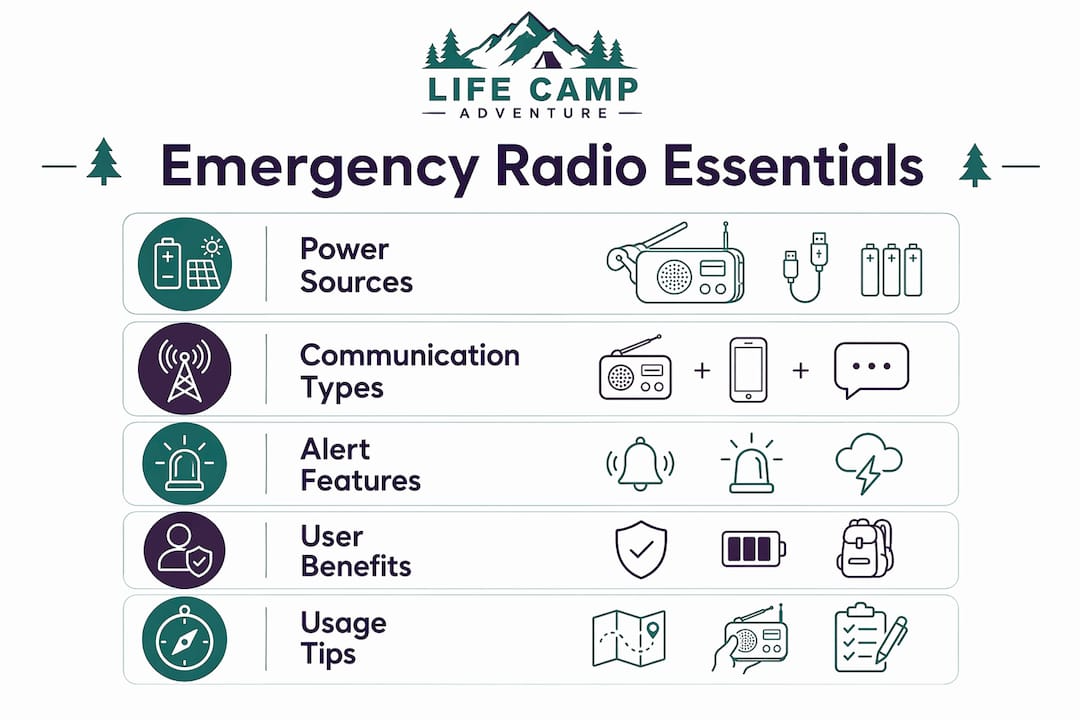
Power independence is the other defining feature. A proper emergency radio should carry multiple power sources: replaceable batteries, a rechargeable pack, a hand-crank generator, and solar charging. No single power source is reliable after a major disaster. Combining all four removes that single point of failure.
Key features to look for in any emergency radio:
- SAME technology for location-specific alerts
- Hand-crank and solar charging for grid-independent power
- Weather band reception covering all NOAA frequencies
- AM/FM reception for broader broadcast coverage
- External antenna port to improve signal in weak-coverage areas
- Alarm and alert tones that activate automatically for severe warnings
Pro Tip: Test your emergency radio's SAME programming every six months. Alert codes and county designations can change, and an incorrectly programmed radio may miss warnings for your area.
What are the main benefits of having an emergency radio?
The single greatest benefit of an emergency radio is reliable access to official information when smartphones fail. Smartphone apps fail during disasters because they depend on cellular networks that become congested or disabled. An emergency radio bypasses that dependency entirely, giving you a dedicated alert path that no amount of network traffic can block.
Real-world events prove this point. During the 2026 Hurricane Helene disaster, cellular and internet systems failed completely, leaving AM/FM broadcast and amateur radio as the only reliable communication for isolated communities. That is not a hypothetical scenario. It is a documented outcome that affected real families.
- Real-time weather warnings. NOAA broadcasts continuous updates on severe weather, including tornado watches, flash flood warnings, and hurricane tracks. You receive this information the moment it is issued.
- Communication during total outages. When power and cell service are both down, emergency radios remain functional on battery or hand-crank power.
- Official evacuation instructions. Emergency managers broadcast shelter locations, road closures, and evacuation routes through NOAA and the Emergency Alert System.
- Redundancy for your communication plan. FEMA's IPAWS system uses Wireless Emergency Alerts, the Emergency Alert System, and NOAA Weather Radio together. Owning an emergency radio means you receive alerts through two of those three pathways simultaneously.
- Peace of mind for outdoor trips. Hikers and campers beyond cell coverage can still receive severe weather alerts if they carry a portable weather radio.
Most communication infrastructure restores within 72 hours after a disaster. Those first 72 hours are the most dangerous. An emergency radio covers exactly that window.
What types of emergency radios are available?
Three main categories of emergency radios serve different needs. Understanding the differences helps you choose the right tool for your situation.
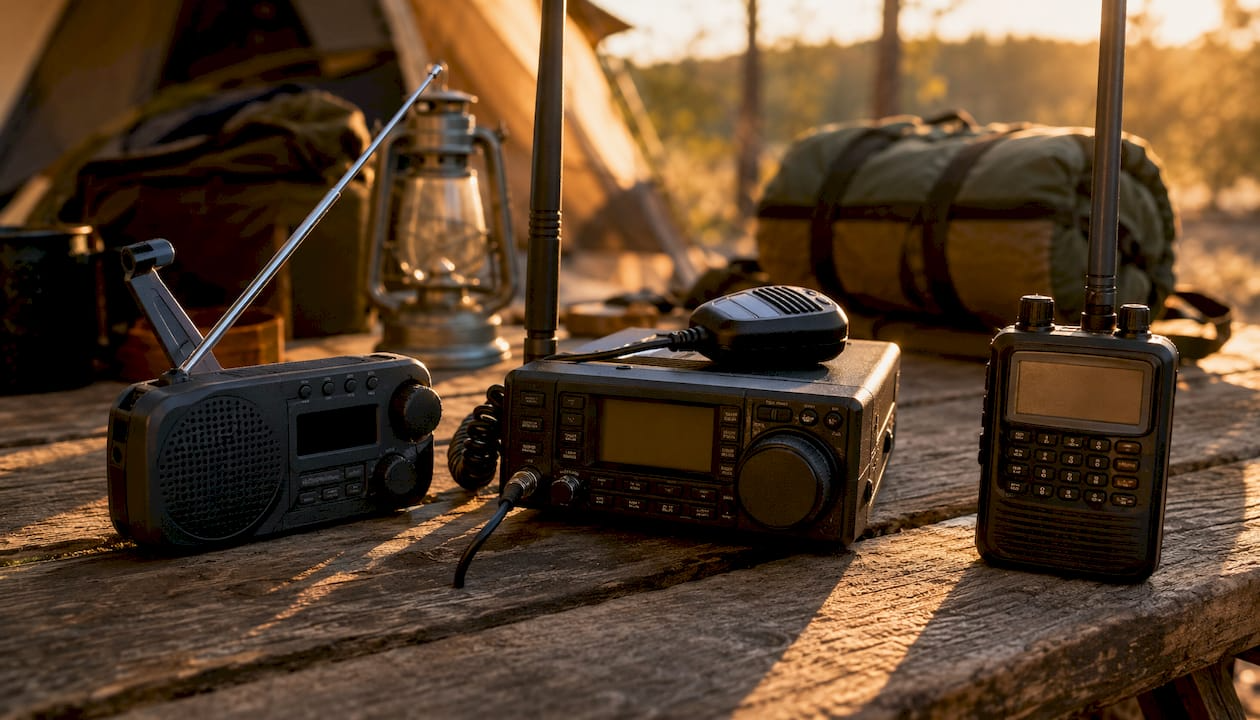
| Type | Primary use | License required | Range | Best for |
|---|---|---|---|---|
| NOAA Weather Radio | Receive official alerts | No | Nationwide | Home and family preparedness |
| Amateur (ham) radio | Two-way communication | Yes (FCC) | Regional to global | Community support and disaster response |
| Public safety scanner | Monitor emergency services | No | Local | Situational awareness |
NOAA Weather Radios are the most practical choice for most families. They receive broadcasts from the federal network, activate automatically with SAME technology, and require no license. A quality unit costs less than most people spend on a single camping meal.
Amateur radio is a more involved commitment. Operators must pass an FCC licensing exam, but the payoff is significant. Amateur radio uses private licensed spectrums that operate independently from public infrastructure. This makes ham radio one of the most resilient communication tools available during catastrophic events. Licensed operators can transmit as well as receive, which is a capability no passive receiver can match.
Public safety scanners let you monitor local police, fire, and EMS frequencies. They provide situational awareness during active emergencies but do not deliver the same standardized alert system as NOAA radios. Scanners work best as a supplement, not a primary emergency communication tool.
For outdoor activities, a portable NOAA weather radio with a hand-crank power option covers most scenarios. For families who want to contribute to community emergency response, pursuing an amateur radio license is worth the effort. Your outdoor survival checklist should include at minimum a portable NOAA weather radio for every trip beyond reliable cell coverage.
How can families integrate emergency radios into their preparedness plans?
Emergency radios work best as part of a layered communication plan, not as a standalone device. Expert emergency management guidelines consistently emphasize redundancy: no single device or system should be your only option. An emergency radio fills the gap that smartphones, landlines, and internet-based alerts cannot cover.
Start with these steps to build a practical plan:
- Place one radio in your home emergency kit and one in your vehicle. A third portable unit for camping or hiking rounds out full coverage.
- Program SAME codes for your county and any counties you travel through regularly.
- Test power sources monthly. Rotate batteries, verify the hand-crank charges the internal battery, and check that solar panels are clean and functional.
- Learn the alert tone codes. NOAA uses distinct tones for watches, warnings, and advisories. Knowing the difference helps you respond correctly.
- Combine your radio with a first aid kit and other emergency essentials. Communication and medical response are the two most critical capabilities in any emergency. Read more about why first aid belongs in every outdoor kit.
- Train every family member to operate the radio. A device only one person knows how to use is a liability.
Pro Tip: Write your SAME county codes on a piece of tape and stick it to the back of your radio. If the radio resets or a family member needs to reprogram it under stress, the code is right there.
Building a layered outdoor emergency plan means combining your emergency radio with a physical map, a whistle, a signal mirror, and a first aid kit. Each tool covers a scenario the others cannot.
What role do amateur radio volunteers play in emergency response?
Amateur radio operators serve as a trained, volunteer communication layer that supports official emergency services without replacing them. Two primary organizations coordinate this work: ARES (Amateur Radio Emergency Service) and RACES (Radio Amateur Civil Emergency Service). Both groups work directly under the direction of emergency management coordinators.
Licensed amateur radio operators follow strict FCC regulations and maintain disciplined radio nets during crises. Their specific contributions include:- Message relay between shelters, hospitals, and command centers when phone lines are down
- Welfare checks for isolated residents who cannot reach emergency services
- Search and rescue coordination in areas where radio is the only viable communication
- Backup communication for hospitals and medical facilities during extended outages
- Net control operations that prioritize message traffic and prevent radio congestion
Amateur radio operators do not replace official emergency services. They extend the reach of those services into areas and situations where commercial infrastructure has failed. During the 2026 Hurricane Helene event, this distinction proved critical. Volunteer operators filled communication gaps that no government agency had the equipment to cover on its own.
Key Takeaways
Emergency radios are the most reliable communication tool available during the critical 72-hour window after a disaster, when cellular and internet infrastructure is most likely to be down.
| Point | Details |
|---|---|
| Independent operation | Emergency radios work without cell towers, internet, or grid power. |
| NOAA network coverage | Over 1,000 transmitters provide 24/7 official alerts across all U.S. states and territories. |
| SAME technology | Program your radio to alert only for your county, reducing noise and improving response. |
| Layered preparedness | Pair your emergency radio with first aid gear, physical maps, and backup power for full coverage. |
| Amateur radio extends reach | Licensed ham radio operators relay messages and coordinate rescue in areas where all other systems fail. |
Why I think most families underestimate emergency radios
Most people treat emergency radios as a niche item for preppers or ham radio hobbyists. That assumption is wrong, and it leaves families exposed during the exact moments when reliable information matters most.
I have seen firsthand what happens when people rely entirely on their smartphones during a severe weather event. The network congests within minutes. Alerts arrive late or not at all. People make decisions based on outdated information because their only communication tool depends on the same infrastructure that the disaster just damaged.
The misconception I hear most often is that emergency radios are complicated. They are not. A basic NOAA weather radio with SAME technology requires about 10 minutes to set up and program. After that, it sits in your kit and activates automatically when a warning is issued for your area. You do not have to do anything.
The second misconception is that a smartphone app covers the same ground. It does not. Apps depend on a network. Emergency radios do not. That is not a minor technical distinction. It is the difference between receiving a tornado warning at 2:00 AM and sleeping through it.
Every family that spends time outdoors or lives in a region prone to severe weather should own at least one emergency radio. The cost is low. The setup is simple. The value during an actual emergency is hard to overstate. Pair it with a solid survival essentials kit and you have covered the two most critical gaps in most family preparedness plans.
— Billy
Gear up for real emergencies with Lifecampadventure
Knowing how emergency radios work is the first step. Having the right gear ready before you need it is the second.

Lifecampadventure carries a full range of survival essentials and camping gear built for real conditions, not ideal ones. From portable power solutions and weather-ready communication tools to first aid kits and outdoor survival gear, every product is selected for durability and practical use. Whether you are preparing your home emergency kit or packing for a backcountry trip, the outdoor survival checklist at Lifecampadventure gives you a clear starting point. Build your kit with gear that works when conditions do not.
FAQ
What is the primary role of emergency radios?
Emergency radios provide reliable access to official alerts and weather warnings when cellular networks and internet connections fail. They operate independently from commercial infrastructure, making them the most dependable communication tool during disasters.
Do I need a license to use an emergency radio?
NOAA Weather Radios and public safety scanners require no license. Amateur (ham) radio requires an FCC license, which involves passing a written exam.
How does SAME technology work on an emergency radio?
SAME (Specific Area Message Encoding) lets you program your radio to receive alerts only for your specific county or region. The radio activates automatically when an official warning is issued for your programmed area.
Are emergency radios useful for outdoor activities?
A portable NOAA weather radio covers hikers, campers, and outdoor adventurers beyond cell coverage. It delivers severe weather alerts in real time, which is critical in areas where a smartphone has no signal.
How long do emergency radios last on battery power?
Battery life varies by model and power draw, but most quality emergency radios run for 12–24 hours on fresh batteries. Hand-crank and solar options extend operation indefinitely, which is why multiple power sources are the standard recommendation for emergency preparedness kits.
