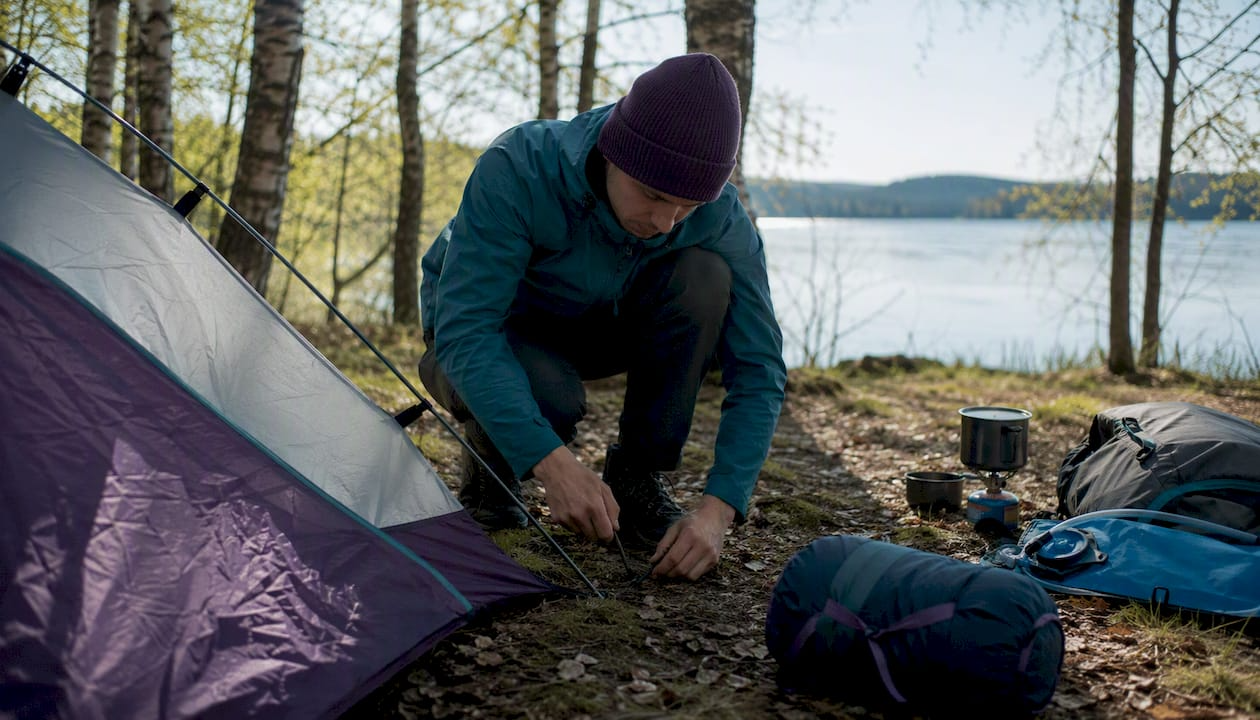
Choose your tent by use case, not just headcount. Solo backpackers do best with a 1P or 2P tent; couples who want real comfort should jump to a 3P; families and car campers should add at least +2 to their party size when reading any capacity label. Gear stored inside a tent reduces usable floor space significantly, often by about one-third to one-half, so the rated number on the tag almost never tells the whole story.
Quick-reference rules:
- 1P: Solo ultralight backpacking only. Tight, but every ounce counts on long miles.
- 2P: Solo with gear, or two minimalist backpackers sleeping close. Fine for couples who don't mind cozy.
- 3P: The sweet spot for couples who want elbow room, or a solo car camper with a dog and gear.
- 4P: Two adults plus a child, or two adults with full car-camping gear.
- 6P+: Families of four or groups; cabin-style tents with standing room belong here.
| Situation | Rated size to buy |
|---|---|
| Solo backpacking | 1P or 2P |
| Couple backpacking | 2P (tight) or 3P (comfortable) |
| Couple car camping | 3P or 4P |
| Family of 4 | 6P |
| Group of 5–6 | 8P |
Key Takeaways
The single most reliable rule in this tent size guide: choose by use case first, then apply the +1 rule for backpacking or the +2 rule for car camping and family trips.
| Point | Details |
|---|---|
| Size by use case | Backpacking: add +1 to party size. Car camping and family trips: add +2. |
| Gear reduces space | Gear inside a tent cuts usable floor space by roughly 30–50%, so rated capacity overstates comfort. |
| Wide pads need more room | Two wide sleeping pads (~25 in each) require a 3P tent minimum, not a 2P. |
| Check HH ratings | Rainfly needs 1,500–2,000 mm; floor needs 2,000–3,000 mm for reliable 3-season protection. |
| Lifecampadventure tents | The Lifecampadventure tent comparison page lists floor dimensions and HH ratings by capacity and use case. |
What does a tent size chart actually tell you?
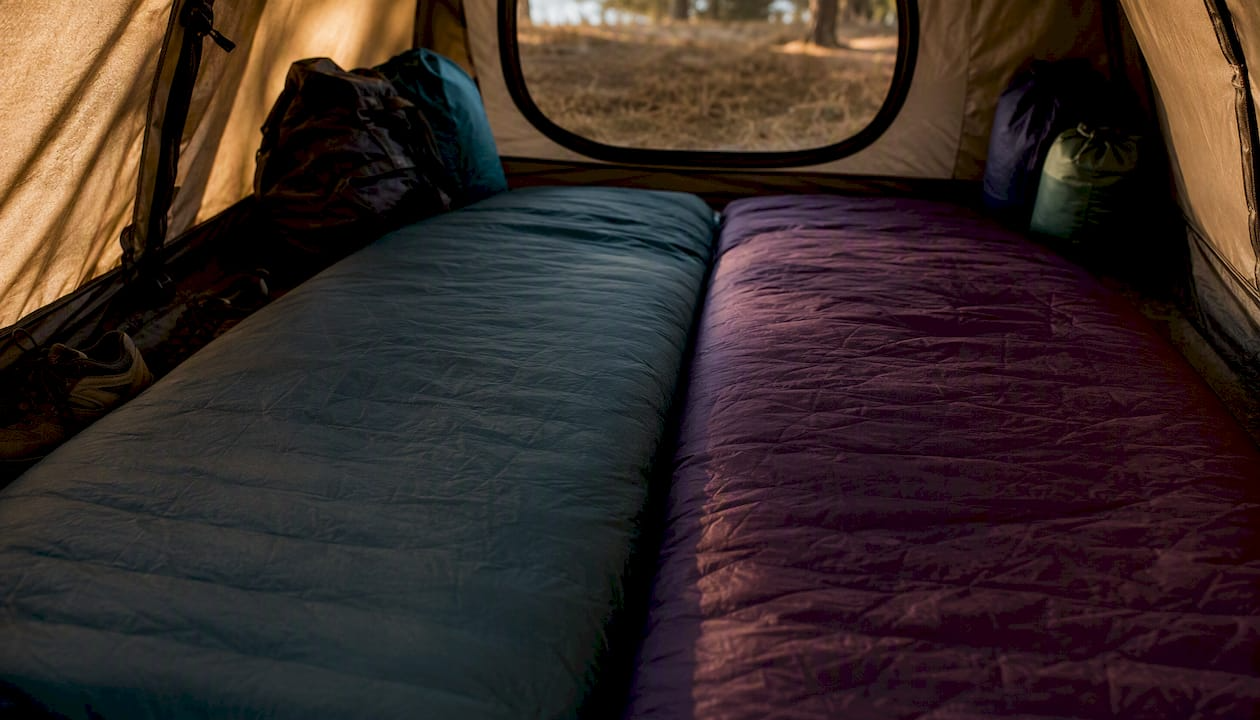
Manufacturer capacity ratings describe how many people can lie shoulder-to-shoulder with no gear — nothing more. The table below maps those labels to real floor dimensions and packed-weight ranges you'll see while shopping.Two wide sleeping pads (roughly 25 inches each) add up to about 50 inches of floor width. Most 2P tents run 54 inches wide at best, leaving almost no buffer once wall slope is factored in. If you and your partner both use wide pads, size up to a 3P.
How tent capacity is actually measured
Manufacturers count sleeping pads, not people with gear, movement space, or the reality of a rainy afternoon stuck inside. A 2P floor fits two standard 20-inch pads edge-to-edge with a few inches to spare. That's it.
Real-world factors that eat into that floor area fast:
- Wall slope: Dome tents lose 6–10 inches of usable width on each side where the wall angles inward.
- Sleeping pad width: A standard pad runs about 20 inches; a wide pad hits 25–30 inches. Two wide pads in a 2P tent means your shoulders are against the wall.
- Gear inside: Boots, a pack, and a rain jacket take up real estate. That 30–50% space reduction is easy to hit on a wet night.
- Weather: When it's raining, you're spending more time inside. A tent that felt fine for sleeping becomes a cramped box for cooking, changing, and waiting.
Pro Tip: Apply the +1 rule for backpacking (buy one size above your party count) and the +2 rule for car camping or family trips. The +1 keeps weight reasonable while adding livability; the +2 gives you the standing room and gear space that makes a multi-night trip comfortable.
How to choose tent size by use case
The right size depends on how you camp, not just how many people are going.
Backpacking
Weight rules everything here. A solo hiker on a strenuous trail should look at a 1P ultralight (under 2 lb) or a 2P for extra gear room. Two backpackers who want to sit up, read, or wait out a storm comfortably should consider a 3P. Check the trade-offs between weight and livability before committing to the lightest option on the shelf.
Car camping
For car camping, size up from the rated capacity to allow room for airbeds, gear, and movement. A couple doing weekend car camping is better served by a 4P than a 2P. Weight doesn't matter when it rides in the trunk.
Family camping
Apply the subtract-two rule: a family of four needs a 6P, not a 4P. Multi-room or cabin-style tents add privacy and standing room that makes a three-night trip feel livable rather than just survivable. See Lifecampadventure's family tent comparison for specific models.
Winter and 4-season camping
Prioritize geometry over floor area. A geodesic or semi-geodesic design sheds snow and handles wind better than a dome. Plan for extra gear inside (insulated layers, bulkier sleeping bags, wet boots), which means a 3P for two people is often the minimum.
Shopping checklist before you buy (see our outdoor fitness equipment checklist for sustainable training):
- Count your party.
- Add +1 for backpacking, +2 for car camping or family trips.
- Measure your sleeping pads. Two wide pads? Add another size up.
- Estimate how much gear will live inside vs. in a vestibule.
- Check the season rating against your typical weather.
- Confirm vestibule square footage for wet-gear storage.
Which specs actually matter when you're shopping?
Floor area, wall angle, vestibule size, and bathtub floor construction affect livability more than headline person ratings. Here's what to check on every spec sheet:- Floor area vs. usable width: A 35 sq ft floor sounds generous until you see the dome walls cutting in. Look for near-vertical walls or a cabin frame.
- Peak height: Manufacturers measure peak height at a single center point. A 6-foot peak in a dome tent gives you standing room for about 18 inches of floor width. Hub-pole or cabin geometry gives you that height across most of the floor.
- Vestibule depth: Aim for 28–40 inches of depth per door. That's enough for two pairs of boots, a pack, and wet rain gear without blocking the entrance.
- Hydrostatic head (HH): A rainfly rated 1,500–2,000 mm handles most 3-season U.S. weather. The floor needs more, 2,000–3,000 mm, because body weight concentrates pressure on wet ground.
- Doors: Two doors for two occupants. A single door means one person climbs over the other at 2 AM.
- Mesh panels: More mesh improves airflow and reduces condensation, but reduces warmth. For ventilation and condensation management, match mesh coverage to your climate.
Packed weight benchmarks for backpacking vs. car camping
| Category | 1P | 2P | 3P |
|---|---|---|---|
| Ultralight backpacking | Under 2 lb | Under 3 lb | under 2 lb |
| Lightweight backpacking | 2–3 lb | 3–4.5 lb | 4.5–6 lb |
| Car camping | 3–6 lb | 5–10 lb | 8–15 lb |
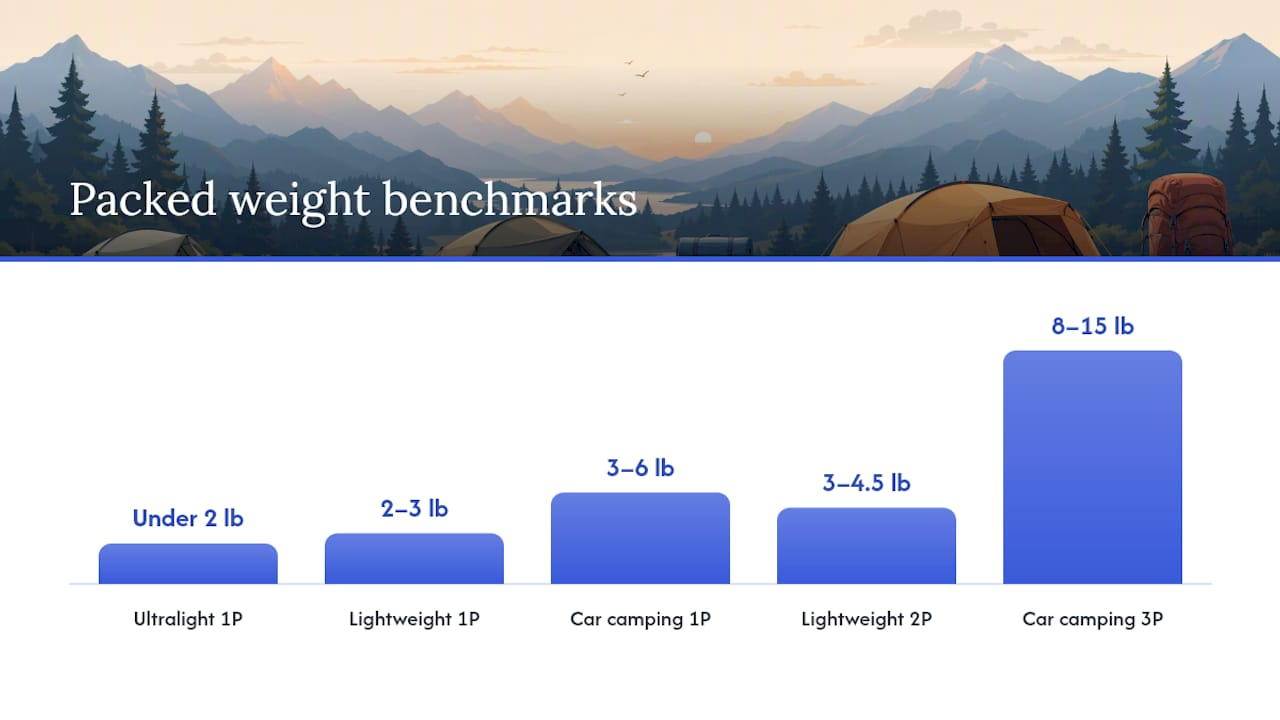
For backpacking, divide the tent weight by the number of occupants. A 3P lightweight tent at 5 lb split between two people is 2.5 lb each, which beats two separate 1P tents at 2 lb each while giving you far more room. Backpackers often choose ultralight 1P or 2P tents for high-mileage trips and bump to a 3P when a base camp or multi-day comfort matters more than shaving ounces. For a deeper look at the weight trade-off, the top backpacking tent comparisons at Lifecampadventure break down real packed sizes by model.
Edge cases that change the sizing math
Tall or broad sleepers. Most tents list a floor length of 86–90 inches. If you're over 6'2", check the listed interior length and add a 6-inch buffer. Some manufacturers offer extended-length variants.
Pets and kids. A medium dog takes up roughly the same floor space as a small sleeping pad. A toddler in a sleeping bag needs about 18–20 inches of width. Factor both into your floor-area math before buying.
Wide sleeping pads and air mattresses. A queen-size air mattress runs 60 inches wide. That requires at minimum a 4P tent, and realistically a 6P if two adults are sleeping on it with any gear nearby.
High wind and snow loads. In exposed alpine or winter conditions, a smaller, lower-profile tent with more tie-down points is structurally safer than a large cabin tent. Interior space is secondary to staying upright in a storm.
How to test tent fit before you buy
You don't need a campsite to know if a tent will work. Do this at home:
- Lay your sleeping pads flat on the floor and mark their combined width with tape.
- Add your packed backpack or a duffel of similar size to simulate gear inside.
- Measure the total footprint and compare it to the tent's listed floor dimensions.
- Check the listed peak height against your own height. If it's within 6 inches of your height, you won't stand comfortably.
- Measure 28–40 inches from the door outward to visualize vestibule depth.
- If you can set the tent up in a store or backyard, pitch it and walk through the setup before committing.
Pro Tip: Bring your actual sleeping pads and a loaded pack to any in-store demo. The difference between a tent that fits on paper and one that fits in practice becomes obvious the moment you lay everything out.
Common mistakes that lead to cramped nights
- Trusting the rated capacity. A 4P tent for four adults is a recipe for misery. Use the +2 rule for car camping.
- Ignoring wall angle. Two tents with identical floor areas can feel completely different if one has steep dome walls and the other has near-vertical cabin walls.
- Underspecified floor HH. A floor rated below 2,000 mm will wet out under body pressure on damp ground. Check the spec sheet, not just the marketing copy.
- Assuming peak height means standing room. A 6-foot peak in a dome tent is usable for about one person standing dead center. Look at interior photos, not just the peak number.
- Single door for two or more people. One door forces midnight gymnastics. Two doors is a baseline for any tent sleeping two adults.
- No vestibule detail. If the spec sheet doesn't list vestibule square footage or depth, assume it's minimal. A tiny vestibule means wet gear comes inside.
- Missing bathtub floor info. A bathtub floor (where the waterproof material wraps 4–8 inches up the wall) keeps ground moisture out. If the listing doesn't mention it, ask before buying.
What most tent-size guides get wrong
Most guides tell you to add one person to your party size and call it done. That's a starting point, not a strategy.
The real variable is how you camp. A solo backpacker on a 3-day ridge route needs a different tent than a solo car camper who reads in bed for two hours every night. The first person needs the lightest 2P they can carry; the second person needs a 3P with near-vertical walls and a real vestibule. Same party size, completely different tent.
The other thing guides consistently underweight: vestibule space. Most campers think about floor area and peak height, then discover on a rainy night that there's nowhere to put wet boots, a soaked rain jacket, or muddy camp shoes. A vestibule with 28–40 inches of depth solves that problem without adding a single square foot to the sleeping area. It's the spec that separates a tent you'll use for years from one you'll replace after your second trip.
Billy's expert tent-choosing guide at Lifecampadventure covers geometry, season ratings, and material choices in more depth for readers who want to go further.
Gear up with the right tent at Lifecampadventure
Knowing your size is half the work. Finding a tent that actually delivers on floor area, wall geometry, and weather protection is where Lifecampadventure comes in. The tent comparison page organizes options by capacity, use case, and packed weight so you can match a real tent to the sizing rules in this guide without wading through a hundred spec sheets.
Whether you're outfitting a solo backpacking trip or a family of five heading to a campground, Lifecampadventure carries tents sized and spec'd for each use case, with clear floor dimensions and HH ratings listed on every product page. Check the car camping packing list to round out your kit once you've locked in your tent size.
Sources
- Backpacking & Camping Tent Size Guide | CleverHiker
- How to Choose Camping Tent Size (Avoid Cramped Nights & Choose the Right Fit)
- Tent anatomy: a clear guide to every part - Wandering Everywhere
- How to choose a camping tent for car camping | Kit Authority
