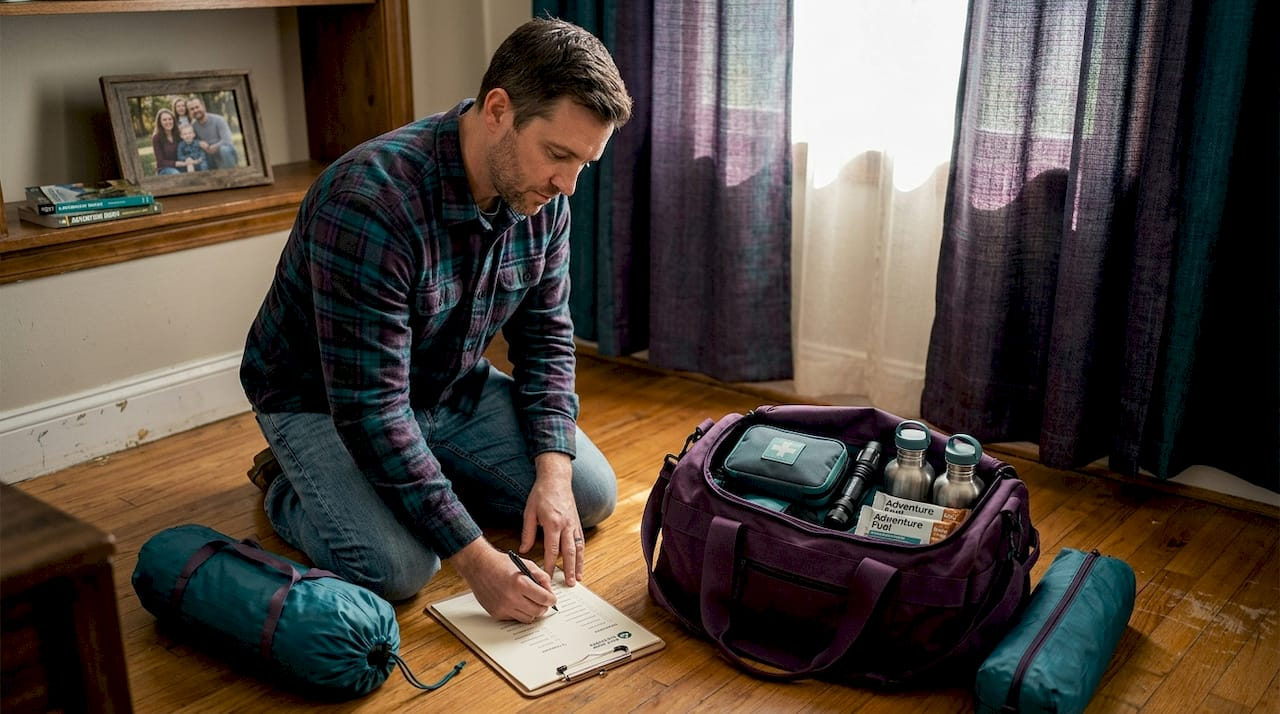
TL;DR:
- A well-built survival kit is a deliberate, scenario-specific collection of essential tools and supplies tailored to your risks and environment. It should prioritize the four fundamentals: water, food, shelter and warmth, and first aid, with additional items based on your situation, organization, and training. Personalizing and regularly maintaining your kit, along with practicing how to use its contents, is crucial for effective emergency preparedness.
Most people picture a survival kit as a dusty backpack stuffed with random gear bought in a panic before a camping trip. The reality is very different. A well-built survival kit is a deliberate, scenario-specific collection of tools and supplies designed around who you are, where you're going, and what risks you're likely to face. Whether you're planning a weekend in the backcountry, preparing your home for natural disasters, or building an emergency kit for your family, understanding what actually makes a kit effective can mean the difference between a manageable situation and a dangerous one. This article will walk you through everything you need to know.
Key Takeaways
| Point | Details |
|---|---|
| Four essentials | Water, food, shelter/warmth, and first aid form the foundation of every survival kit. |
| Adapt kit to use | Survival kits should be matched to your environment and personal needs for maximum effectiveness. |
| Training matters | Familiarity with kit items and basic first aid skills are as vital as the gear itself. |
| Customize and update | Regularly check and personalize your kit to avoid risks and keep it relevant to family changes. |
| Accessible and organized | Store items in containers and groups for quick access in stressful situations. |
What is a survival kit?
The terms "survival kit," "go-bag," and "emergency kit" get used interchangeably, but they're not identical. A survival kit typically refers to gear intended for outdoor or wilderness situations where you need to stay alive until rescue or return. A go-bag is a pre-packed bag you can grab quickly when evacuating your home. An emergency kit is often a broader term covering everything your household needs after a disaster, whether you stay or leave.
What they share is purpose. As stated in Ready.gov kit guidance, "a survival kit is a collection of supplies intended to help a person or household survive and stay functional for a period after an emergency." That's the baseline. The supplies inside, however, depend heavily on context.
The situations where you'll use these kits vary widely:
- Camping and backpacking trips in remote locations
- Natural disasters like earthquakes, hurricanes, or wildfires
- Off-grid or overlanding travel where help is hours away
- Power outages lasting several days in urban or suburban areas
- Vehicle breakdowns on isolated roads
- Family evacuations from flooded or fire-affected zones
Understanding emergency preparedness steps before you pack a single item is what separates a useful kit from a pile of gear you'll never actually use.
Ready.gov defines an emergency kit as supplies that help your household survive and stay functional after an emergency, not just items that look good on a checklist.
The key insight here is that "survival kit" is not a fixed product. It's a category of readiness that shapes itself around your circumstances. A solo hiker's kit looks nothing like a family of five sheltering after a hurricane. Getting clear on your specific scenario is step one.
Core essentials: The four fundamentals every kit should cover
Now that you know what a survival kit is for, let's get specific about its absolutely essential core contents. No matter the scenario, the four fundamentals every kit must address are water, food, shelter and warmth, and first aid. These aren't arbitrary categories. They reflect the four fastest ways a person's condition deteriorates in an emergency.
Here's a practical table showing the core items under each pillar:
| Pillar | Essential items | Why it matters |
|---|---|---|
| Water | Purification tablets, filter, collapsible bottles | Dehydration sets in fast; clean water is priority one |
| Food | Energy bars, freeze-dried meals, calorie-dense snacks | Keeps energy and decision-making sharp |
| Shelter and warmth | Emergency bivy, fire starter, space blanket, rain poncho | Exposure kills faster than hunger |
| First aid | Bandages, antiseptic, splint, blister care, medications | Untreated minor injuries become major problems quickly |
Beyond the table, here's how to address each element practically:
- Water first. Pack at minimum one liter of water per person per day, plus a filtration method. A squeeze filter like a Sawyer Mini covers both drinking and cooking needs without adding significant weight.
- Food for energy, not pleasure. Aim for 1,200 to 2,000 calories per person per day. Focus on calorie density. Nuts, jerky, and freeze-dried meals are reliable. Skip anything that requires lengthy preparation or lots of water to cook.
- Shelter before anything else. Hypothermia can develop even in mild temperatures when you're wet and exposed. An emergency bivy (a reflective sleeping bag shell) weighs almost nothing and can save your life. Fire starting tools like waterproof matches and a ferro rod should both be in your kit.
- First aid that you actually know how to use. This point gets its own section shortly, but start with the basics: adhesive bandages, gauze, medical tape, antiseptic wipes, a tourniquet, and any prescription medications your family needs.
As kit essentials guidance from the National Institute on Aging confirms, these four pillars form the foundation of any reliable emergency kit. Everything else you add is built on top of them.
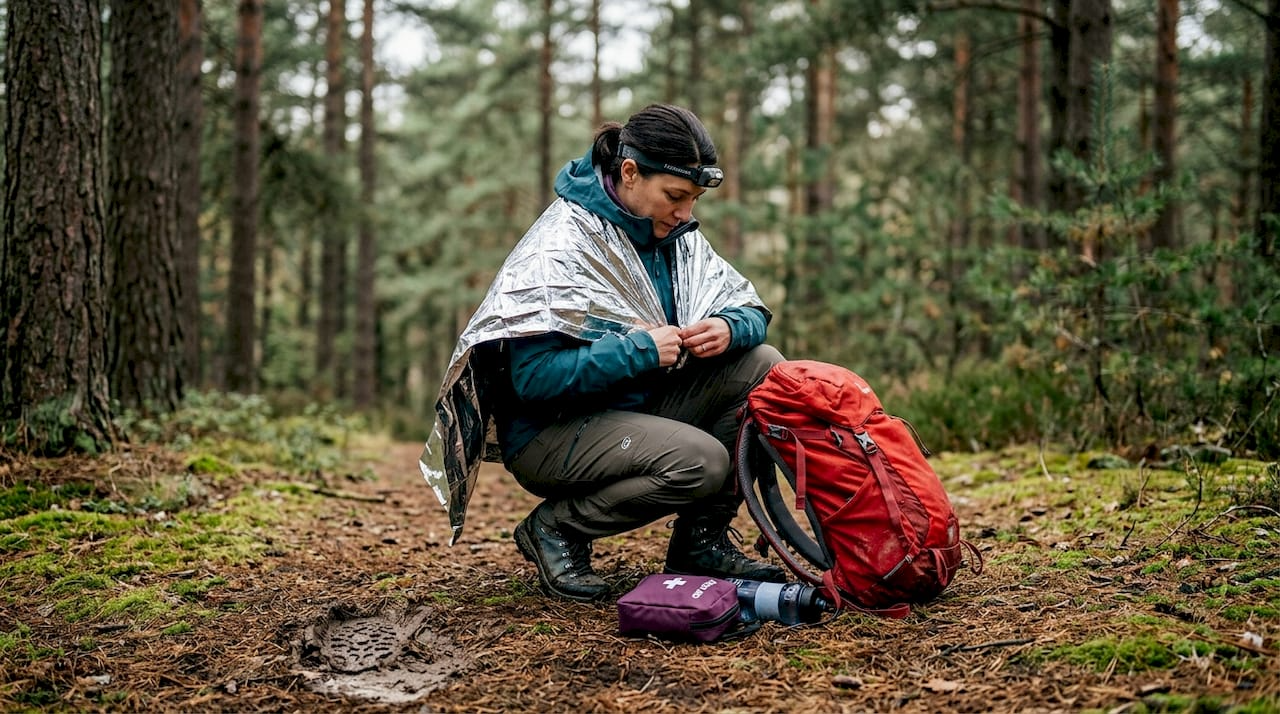
Pro Tip: The most overlooked gap in survival kits is lighting. A headlamp with extra batteries frees your hands during nighttime emergencies. Pack one per person, not one per group.
Building on essential survival steps means understanding not just what to pack, but why each item earns its weight. Every ounce should have a clear job.
Selecting and managing kit contents: Adapting for home, vehicle, and outdoor use
Having learned what essentials you need, it's time to explore how kits differ depending on where and how you'll use them. The same four pillars apply, but the specific items, quantities, and organization change significantly based on your scenario.
As Ready.gov kit guidance notes, there are distinct kit types for different situations, including home, vehicle, camping and backcountry, and child-specific kits. The best contents depend on who you're preparing for and the likelihood of evacuating versus sheltering in place.
Here's a comparison of what sets each kit type apart:
| Kit type | Key focus | Unique contents | Weight consideration |
|---|---|---|---|
| Home emergency kit | Sustain a household for 72+ hours | 72-hour food and water supply, documents, medications | Weight less critical; stored in place |
| Vehicle kit | Handle breakdowns and short evacuations | Jumper cables, reflective triangles, blanket, water | Compact but complete |
| Camping and backcountry kit | Wilderness survival until rescue or return | Navigation tools, bear canister, fire kit, signaling mirror | Every ounce counts |
| Child-specific kit | Address a child's unique needs | Comfort items, child-safe medications, smaller gear | Age and size appropriate |
Key items broken down by scenario:
- Home kit: Three-day water supply (one gallon per person per day), non-perishable food, flashlights, a battery-powered radio, copies of important documents, cash, and a full first aid kit. The Ready.gov checklist also includes sanitation items like hand sanitizer and garbage bags, which are easy to forget.
- Vehicle kit: Jumper cables, a basic tool set, reflective safety triangles, emergency blanket, water, energy bars, a first aid kit, a phone charger, and a warm layer. Many families keep this in a soft-sided bag in the trunk year-round.
- Camping and hiking kit: Navigation tools like a map and compass (not just a phone), fire starting tools, a water filter, high-calorie food, an emergency bivy, a signaling mirror, a whistle, and a multi-tool. Check out our outdoor survival checklist for a more detailed breakdown.
- Kids' kits: Smaller backpacks with age-appropriate items, a stuffed animal or comfort item, child-safe pain relievers, a list of emergency contacts, and any special medications or dietary items your child needs.
Organization matters as much as content. Use clear pouches or color-coded bags inside your kit so you can find a bandage in the dark without dumping everything out. Accessibility is not a luxury; it's a safety feature. If you're unsure where to start with gear selection, our guide to top survival kits breaks down tested options across different budgets and use cases.
One principle that experienced outdoor families learn the hard way: build your kit for the worst version of your trip, not the best. Weather changes. Plans change. Build for what could go wrong, not what you hope for.
Making your kit practical: Customization, training, and avoiding dangerous mistakes
Choosing the right contents is not enough. Making your kit actually useful requires customization and real-world readiness. This is where many people fall short, and it's where real preparedness separates itself from the feeling of preparedness.
Here's a hard truth: packing a tourniquet you've never practiced applying is almost the same as not packing one. In a high-stress emergency, your hands and brain revert to what they've practiced. Outdoor first-aid guidance from NYT Wirecutter frames survival kit contents as tools for treating injuries until help arrives and maintaining shelter, warmth, water, and signaling. That framing assumes you know how to use everything in the bag.
Steps to customize and maintain your kit for real-world use:
- Audit for your specific needs. Does anyone in your family take daily medication? Does anyone have severe allergies? Pack accordingly, including an EpiPen if needed and enough medication for at least seven days.
- Remove items you can't use. A suture kit sounds impressive, but if you haven't been trained to use one, it's dead weight. Swap it for items you're confident with.
- Practice with your gear before you need it. Set up your emergency shelter in your backyard. Try purifying water with your filter. Build a fire with your ferro rod. These aren't just fun activities. They reveal gaps in your skills and gear.
- Label and organize clearly. First aid goes in a clearly marked red pouch. Tools in another. Food and water separately. Everyone in your family should be able to find any item in under 30 seconds.
- Schedule regular kit checks. Food expires. Batteries drain. Medications run out. Set a calendar reminder every six months to inspect and refresh your kit.
The most important survival tool is familiarity. Knowing your kit's contents, knowing how to use them, and knowing where they are under stress is what makes the difference. Gear without knowledge is just extra weight.
Pre-packed survival kits are a reasonable starting point, but experts consistently caution that you often need to customize for your family's medical needs, your familiarity with the items, and your specific environment. Unused or unfamiliar items in an emergency can cause confusion, wasted time, and in some cases real harm.
Make sure your family knows about your first aid kits outdoors and, more importantly, how and when to use what's inside. Pairing your physical kit with solid wilderness first aid skills dramatically improves your odds in any backcountry situation.
Survival kits: Why personalization beats "one-size-fits-all" every time
Here's a perspective that most kit guides won't give you: the survival kit industry thrives on the idea of a universal solution. Buy this bag, check these boxes, and you're ready. That framing is convenient for selling products, but it doesn't reflect how emergencies actually unfold.
We've seen firsthand that real-world readiness comes from knowing your own risks, your own skills, and your own family's needs. A retired couple doing weekend car camping in well-traveled national parks needs something very different from a family of four preparing for wildfire evacuation in a rural area. Neither of those kits looks like a $99 pre-packed kit from a big-box store.
The essential survival steps that actually work in the field are built on self-knowledge first: What are my physical limitations? What medical conditions do I or my family members have? What terrain and climate am I preparing for? What's my most realistic emergency scenario? Once you answer those questions honestly, building the right kit becomes much clearer.
Training is as important as gear. We're not saying everyone needs to complete a formal wilderness first aid certification, though that's genuinely valuable. We're saying you need to have actually used the items in your kit before the moment you desperately need them. The families and outdoor enthusiasts who manage emergencies well are not the ones with the most expensive gear. They're the ones who practiced, reassessed, and updated their kits as their lives changed.
Survival basics also remind us that periodic reassessment is not optional. A kit you built three years ago may no longer reflect your family's size, your kids' ages, your current travel habits, or the medications you now take. Build a habit of reassessing annually, or whenever something significant changes. Personalization is not a one-time task. It's an ongoing practice.Get fully equipped for your next outdoor adventure
Building a survival kit that actually works starts with understanding your specific needs, and then finding the right gear to meet them. At Life Camp Adventure, we've put together resources designed to take you from "I should probably do something about this" to "I'm genuinely ready for whatever comes."
Our outdoor survival checklist gives you a scenario-specific, printable framework for building kits for camping, evacuation, and everyday adventure. Pair it with our survival steps guide to understand the reasoning behind each item so you're not just packing gear, you're building real readiness. Whether you're a first-time camper or a seasoned trail runner, we've got the gear and guides to help you hit your next adventure with confidence.
Frequently asked questions
What should every basic survival kit include?
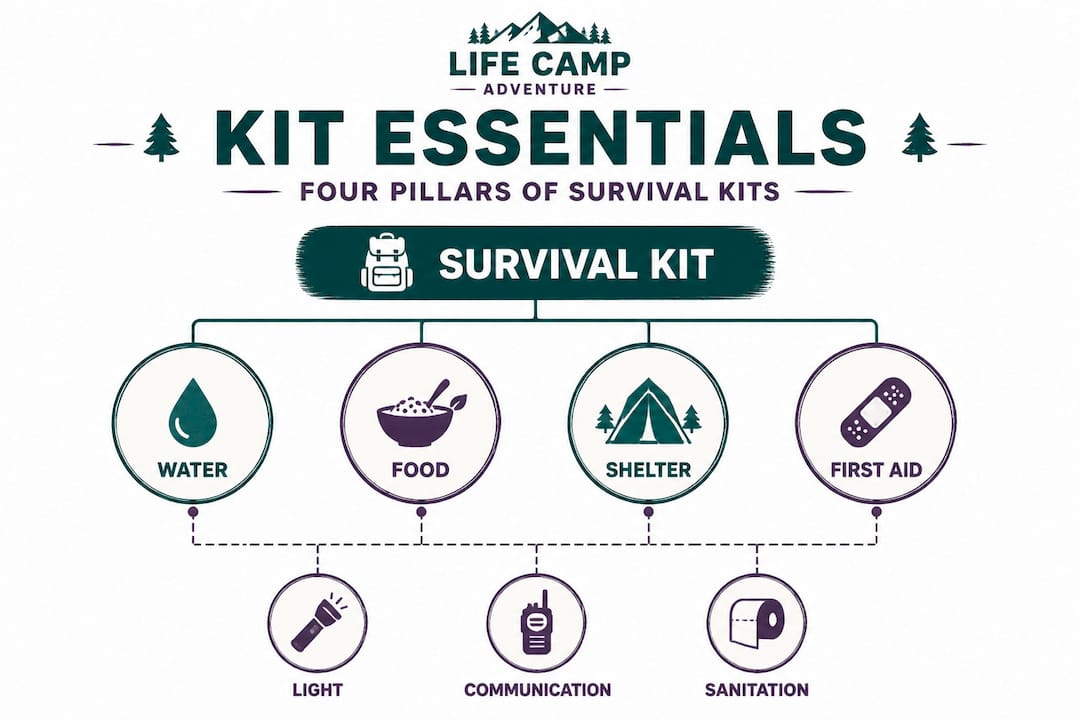
Every basic survival kit should cover water, food, shelter and warmth, and first aid, plus light, communication, and sanitation items. The Ready.gov kit checklist confirms these as the foundational categories for emergency preparedness.
How often should I check or update my survival kit?
Check and refresh your survival kit at least every six months, replacing expired food, depleted batteries, and outdated medications. Ready.gov also emphasizes updating kits whenever your household needs change.
Can I rely on pre-packed kits, or do I need to customize?
Pre-packed kits are a useful starting point, but experts caution that customizing for your medical needs, skill level, and environment is critical since unfamiliar items can create confusion or risk during an actual emergency.
Should children have their own survival kits?
Yes, children benefit from their own kits sized and stocked for their age, including comfort items, child-safe medications, and smaller gear. Ready.gov stresses tailoring kits to every member of your household, including kids.
