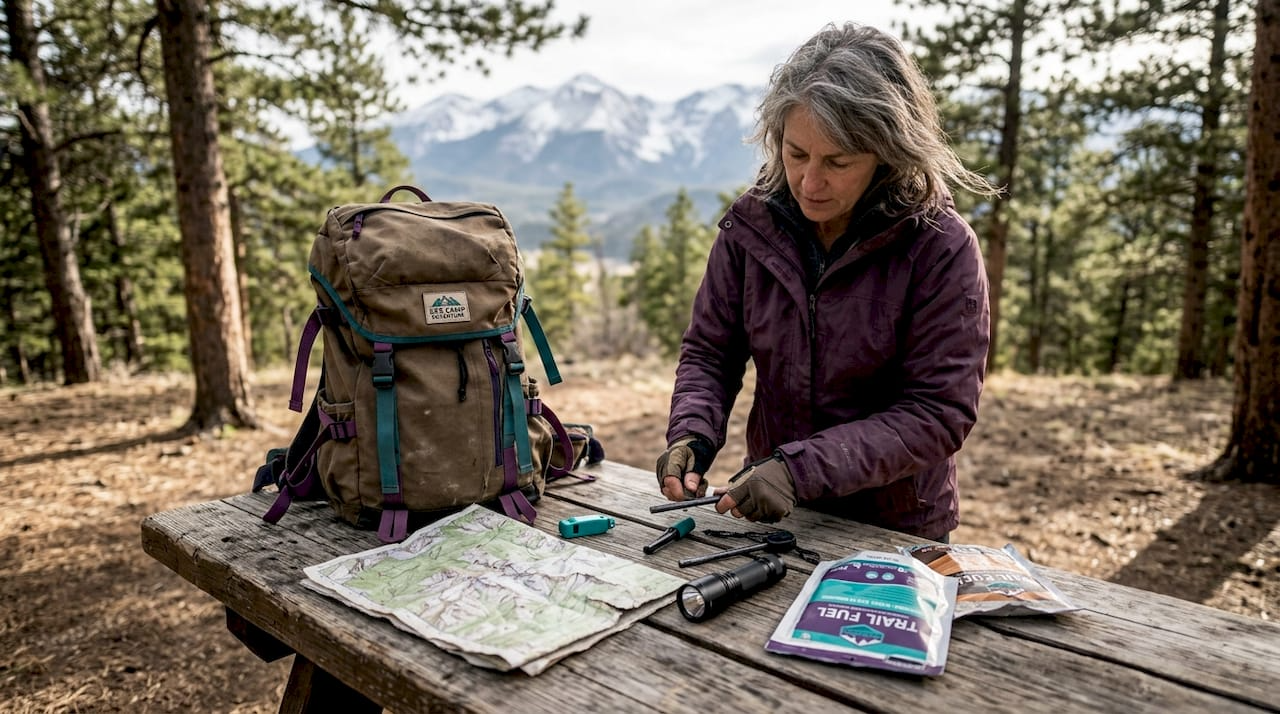
TL;DR:
- Most people's survival kits fail because they understock critical supplies, not because they lack items. Redundancy in tools and practice in using gear are essential for effective wilderness preparedness. Tailor your gear list to your trip length, environment, and risks, ensuring your kit includes sufficient quantities and reliable backups.
Most people don't realize how fast a manageable gear list becomes a paralyzing one. You search "examples of survival essentials," and suddenly you're staring at 47 product categories, conflicting advice, and a backpack that won't zip. The good news: survival preparedness follows a clear framework. According to FEMA preparedness guidance, prioritizing hydration, nutrition, signaling, and medical basics cuts the noise fast. This guide walks you through exactly what belongs in your kit, why it belongs there, and how to choose between options when trade-offs matter.
Key Takeaways
| Point | Details |
|---|---|
| Prioritize core needs | Focus your survival kit on hydration, nutrition, shelter, signaling, and first aid basics to cover essential functions. |
| Redundancy is key | Carry backup lighting and signaling devices to ensure preparedness even if primary tools fail. |
| Pack sufficient consumables | Bring realistic quantities of wound care supplies like gauze and tape to handle injuries effectively. |
| Match gear to trip | Select survival essentials based on trip duration, environment, and personal skill level for optimal efficiency. |
| Practical preparedness wins | Gear is only part of survival; training and practice with your equipment improve your real-world readiness. |
How to evaluate survival essentials: foundation criteria
Before you buy a single piece of gear, you need a filter. Not every item marketed as a "survival essential" earns that label. The best wilderness survival items pass four tests: function, redundancy, weight, and usability under stress.
Function means the item solves a real problem, not a hypothetical one. A compact water filter solves dehydration. A paracord bracelet with a built-in whistle solves two problems at once. If you can't clearly state what problem an item fixes, leave it out.
Redundancy is the one most people skip. Ready.gov recommends redundancy in critical functions like lighting and signaling because a single flashlight with dead batteries leaves you completely in the dark. Carry two light sources. Pack a whistle and a signal mirror. This isn't paranoia. It's what experienced outdoor guides actually do.
Weight and packability matter on every trip, but they matter most when you're moving fast. A 4-pound shelter tarp is fine for base camp. It's a liability on a 15-mile day hike. Get familiar with outdoor survival basics so you can match gear weight to trip type before you pack.
Usability under stress is the filter most gear reviews ignore. Can you operate your fire starter with cold, wet hands? Can you read the instructions on your water purification tablets in low light? If a tool requires calm conditions and fine motor skills to work, it will fail you when you need it most. Build your essential outdoor skills so gear becomes an extension of what you already know.
Use these four criteria to evaluate every item in your must-have survival kit:
- Does it solve a critical, likely problem?
- Does a backup exist for this function?
- Is it light and packable enough for your trip type?
- Can you use it effectively when tired, cold, or stressed?
Now that you understand the criteria for evaluating survival gear, let's explore specific essential items.
Essential hydration and nutrition gear examples
Water comes first. Always. Your body can survive weeks without food, but dehydration impairs judgment within hours. Pack at least one gallon of water per person per day for drinking and sanitation. For a three-day trip with two people, that's six gallons minimum before you add any purification tools.
Smart hydration gear goes beyond water bottles. A quality water filter, like a squeeze-style personal filter, lets you source water from streams without carrying all of it. Water purification tablets are a featherweight backup that weigh almost nothing. Always carry both. This is redundancy applied directly to your most critical survival need.
For food, FEMA recommends non-perishable food for at least three days during evacuations, and that logic applies to any multi-day wilderness trip. Think calorie-dense items: trail mix, energy bars, freeze-dried meals, and peanut butter packets. These cover your energy needs without requiring cooking equipment.
Here are the core hydration and nutrition items to include on your outdoor survival checklist:
- Water storage containers (at least one per person, durable and sealed)
- Personal water filter or pump filter
- Water purification tablets as backup
- At least three days of non-perishable, calorie-dense food
- Manual can opener if any canned items are included
- Collapsible bowl and spork for minimal-weight meal prep
Pro Tip: Freeze-dried meals add almost no weight and deliver real nutrition. Pair each meal packet with a measured amount of water stored separately so you know exactly how much cooking water you're using.
With hydration and nutrition covered, let's move to personal safety and medical essentials.
First aid and personal safety essentials for the wilderness
A wilderness first aid kit is not a drugstore travel kit. It needs to handle real injuries in situations where help is hours or days away. The difference between an effective kit and a frustrating one comes down to quantities and specificity.
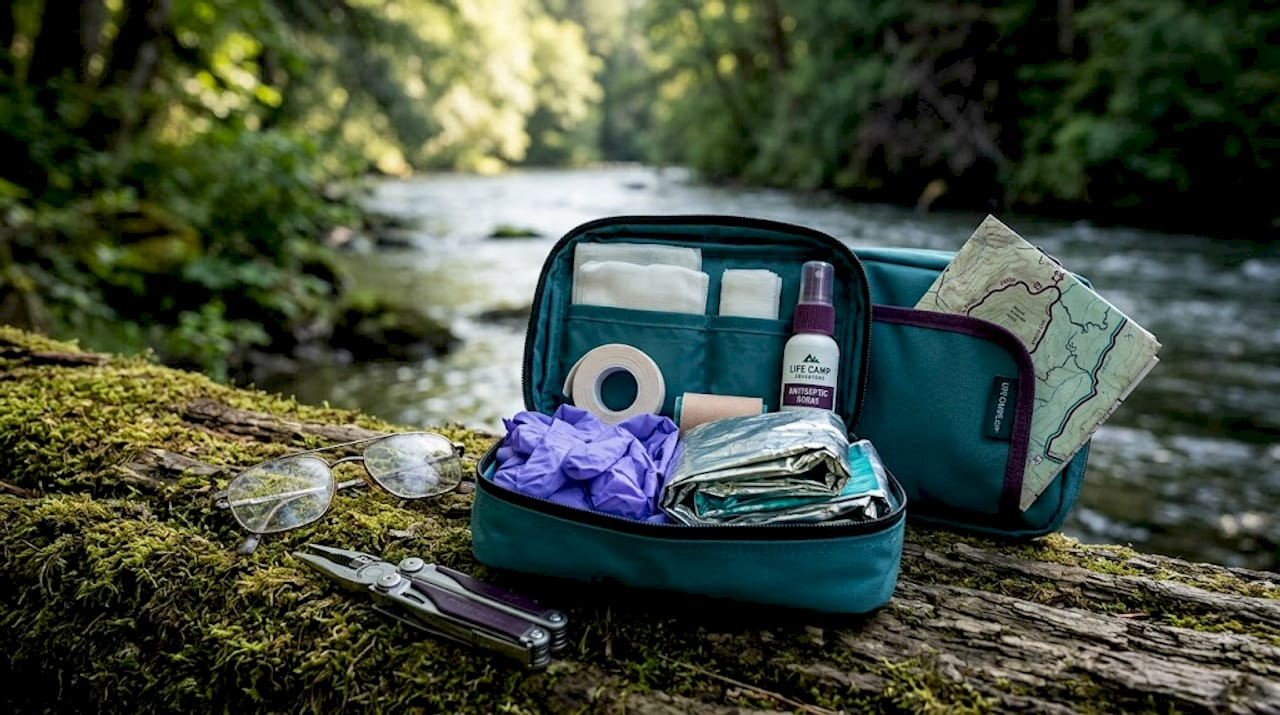
Wound care is the highest-priority category. Carry at least six gauze pads and an emergency blanket weighing around 2 ounces to address both bleeding and hypothermia risk. Most people pack two gauze pads and feel prepared. Two gauze pads disappear fast on a serious laceration. Stock more than you think you'll need.
Emergency blankets are one of the most underrated top survival supplies. They weigh almost nothing, fold to the size of a deck of cards, and prevent hypothermia by reflecting body heat back to the patient. In cold and wet conditions, they can be lifesaving within minutes of use.
Signaling tools belong in your first aid and safety category. A loud whistle is more reliable than a phone in dense forest. Signal mirrors can reach aircraft and rescue teams miles away. Include these in your first aid kits for outdoors:
- At least six sterile gauze pads (4x4 inches)
- Medical tape and elastic bandage wrap
- Nitrile gloves (two pairs minimum)
- Emergency mylar blanket
- Adhesive bandages in multiple sizes
- SAM splint for fractures or sprains
- Anti-inflammatory medication (ibuprofen)
- Antihistamines for allergic reactions
- Aspirin for cardiac emergencies
- Whistle and signal mirror
Pro Tip: Store your first aid kit in a waterproof bag inside your pack, not clipped to the outside. Exterior pouches get wet, snagged, and lost. Review your essential first aid steps before any backcountry trip so you know what each item in your kit actually does.
Next, we'll cover tools and equipment for shelter, fire, and signaling to stay safe and seen.
Tools and equipment: fire starters, shelter, and signaling devices
Fire serves four survival functions: warmth, water purification, cooking, and signaling. Your fire-starting kit needs at least two reliable methods. Waterproof matches, plastic sheeting, duct tape, and whistles all appear on official survival checklists for good reason.
Waterproof matches are the most familiar option, but they run out. A quality butane lighter is faster and more reliable in calm conditions. A ferrocerium rod (ferro rod) sparks in rain and wind, and one rod lasts thousands of strikes. Together, these three cover every weather condition you're likely to face.
Shelter materials protect you from the primary killers in wilderness emergencies: exposure and wind. A heavy-duty plastic tarp or emergency tube tent adds minimal weight and creates protection from rain, wind, and ground cold. Duct tape, included in any serious kit, repairs tears, reinforces seams, and even holds improvised splints in place.
For signaling, a combination of manual and electronic tools gives you the best coverage. A loud whistle works when a phone battery is dead. A signal mirror works when a whistle can't carry far enough. A personal locator beacon (PLB) is the gold standard for remote trips, transmitting your GPS coordinates to rescue services worldwide. See how these tools compare:
| Tool | Weight | Reliability | Best use |
|---|---|---|---|
| Waterproof matches | Very light | High (limited uses) | Primary fire start |
| Ferrocerium rod | Light | Very high (thousands of uses) | Backup fire start |
| Emergency tarp | Medium | High | Rain and wind shelter |
| Plastic sheeting | Light | Medium | Ground insulation |
| Whistle | Very light | Very high | Close-range signaling |
| Signal mirror | Very light | High (daylight only) | Long-range signaling |
| PLB | Medium | Very high | GPS emergency rescue |
Pro Tip: Practice using a ferro rod at home before you rely on it in the field. Striking angle and pressure matter, and learning those details for the first time in wet, cold conditions is a genuine risk. Knowing your tools is part of understanding the benefits of survival kits.
Having explored tools for shelter and signaling, let's compare these essentials to help you choose the best options.
Comparing survival essentials: choosing what fits your outdoor adventure
What are survival essentials for a weekend car camper looks very different from what a backcountry solo hiker needs. The gear that belongs in your kit depends on your trip length, environment, and how far you are from outside help.
FEMA's minimum supply kit requirements define three days as the baseline for emergency preparedness. Use that as your starting floor, not your ceiling. Multi-day wilderness trips in remote areas warrant five to seven days of supplies and heavier-duty tools.
Here's a side-by-side comparison of survival essentials by trip type:
| Essential | Day hike | Weekend camp | Multi-day expedition |
|---|---|---|---|
| Water filter | Personal squeeze | Pump filter | Pump + tablets |
| Food | Energy bars, 1,500 cal | Freeze-dried, 3 days | Freeze-dried, 5+ days |
| Shelter | Emergency blanket | Tarp or tube tent | 4-season tent or tarp |
| Fire starting | Lighter + matches | Lighter + ferro rod | All three methods |
| First aid | Compact kit | Full wilderness kit | Extended kit + SAM splint |
| Signaling | Whistle | Whistle + mirror | Whistle + mirror + PLB |
| Communication | Phone | Phone + backup battery | PLB + satellite communicator |
Use this numbered framework when building or reviewing your kit before any trip:
- Define the trip: length, terrain, and distance from help.
- Identify the primary risks: weather, elevation, water sources, wildlife.
- Build your base kit from the day-hike column, then add layers for longer trips.
- Check every critical function for redundancy.
- Weigh the loaded kit. Cut anything that doesn't earn its place.
- Practice using each item before you need it.
This comparison helps you decide on essential gear based on your specific needs, and you can explore how to choose camping equipment and best camping gear comparisons to go deeper on specific product decisions.
Rethinking survival essentials: prioritizing redundancy and practical preparedness
Here's the thing most gear-focused content won't tell you: the problem with most people's survival kits isn't that they packed too little. It's that they packed the wrong quantities of the right things.
A kit can contain 30 items and still fail on day one because someone packed two gauze pads instead of eight. Underpacking wound care consumables leads to ineffective first aid in exactly the moments it matters. You don't need more gear categories. You need more of the consumables inside the ones you already have.
The same logic applies to signaling and lighting. One headlamp with fresh batteries still leaves you dark when the battery dies at 2 a.m. Redundancy in lighting and signaling isn't about distrust of quality gear. It's about acknowledging that any single device can fail.
The most overlooked survival essential is also the only one that weighs nothing: practice. A ferro rod you've never used is nearly useless in rain. A signal mirror that's still in the packaging helps no one. The gear in your kit is only as good as your ability to deploy it quickly under real conditions. Read why you should pack survival gear and then actually train with what you pack.
Build less. Stock more. Practice always. That's the honest framework behind every well-prepared kit we've ever seen.
Explore top outdoor gear picks for your survival kit
At Life Camp Adventure, we've done the work of separating genuinely useful gear from the stuff that looks good on a shelf and fails in the field. Our selection covers everything from reliable fire starters and multi-tools to lightweight shelter systems, high-quality first aid kits, and hydration solutions built for real backcountry conditions.
Whether you're building your first kit or upgrading an existing one, our essential camping gear guide is the right place to start. Use our survival gear checklist to check off every category before your next trip, and explore our best camping gear comparisons to find gear matched to your trip type and skill level. Every product we recommend is reviewed for durability, weight, and real-world usability because reliable gear isn't optional out there.
Frequently asked questions
How much water should I pack for a wilderness survival kit?
Pack at least one gallon of water per person per day, covering several days, to stay hydrated and maintain sanitation during a survival situation. Supplement stored water with a filter or purification tablets for sourcing water in the field.
What are the most important first aid items to bring outdoors?
Key first aid items include gauze pads, medical tape, gloves, an emergency blanket, and medications like anti-inflammatories and antihistamines. Carry at least six gauze pads and an emergency blanket to address serious wounds and prevent hypothermia.
Why is redundancy important in survival gear?
Redundancy ensures you have backup tools for critical functions like lighting and signaling so one device failure doesn't leave you without options. Redundancy in lighting and signaling is one of the most consistent recommendations from emergency preparedness experts.
What tools are essential for starting a fire in the wild?
Waterproof matches, a butane lighter, and a ferrocerium rod together cover nearly any weather condition you'll face outdoors. Matches in a waterproof container are a foundational tool, but pairing them with a ferro rod ensures you have fire-starting capability even after matches run out.
How do I decide which survival essentials to pack for different trips?
Start by defining your trip length, terrain, and distance from help, then match gear weight and quantity to those conditions. Survival kits should cover at least three days of basic needs as a baseline, scaling up for remote or extended backcountry travel.
