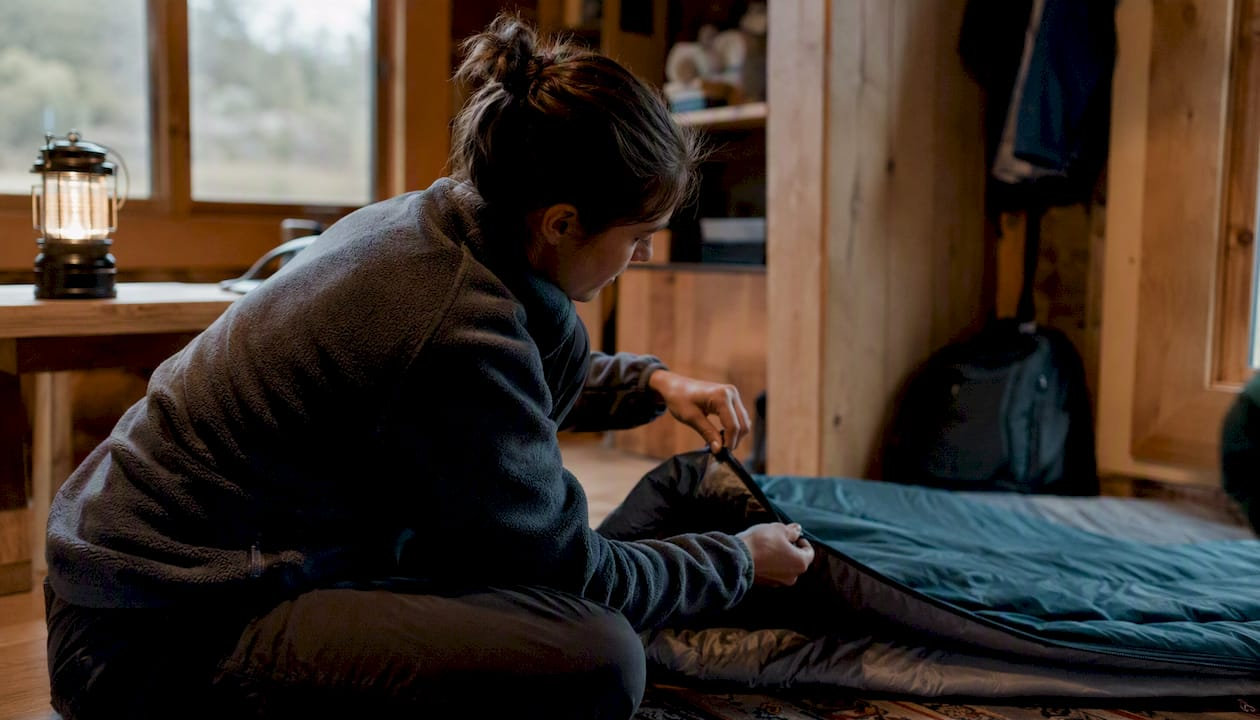
For most campers, the sleeping bag zip side is a low-priority decision. Pick the zipper orientation that matches your tent or bivy entrance, or choose opposite sides when pairing two bags. If none of those scenarios apply, prioritize warmth, weight, and fit first and treat zipper side as a tiebreaker.
Quick rules at a glance:
- Tent or bivy entrance: Match the zipper side to your shelter's door so you can vent or exit without twisting.
- Mating two bags: Buy one left-zip and one right-zip so the rails face each other and zip together cleanly.
- Side sleepers: The zipper on your preferred sleeping side puts the slider in front of you for easy adjustments at 2 AM.
- Handedness: Many right-handed campers often find a left-side zip more comfortable because they reach across their body while lying down.
- Default rule: When zipper side doesn't matter for any of the above, choose the bag with the best temperature rating, insulation, and fit.
Key Takeaways
Zipper side is a tiebreaker, not a primary spec: choose warmth, insulation, and fit first, then match orientation to your shelter or sleeping style.
| Point | Details |
|---|---|
| Zipper side is low priority | For most campers, warmth, fit, and insulation matter far more than left vs right orientation. |
| Match your shelter entrance | Choose a zipper side that aligns with your tent or bivy door for easy exit and venting. |
| Mating bags requires opposites | One left-zip and one right-zip, with matching zipper size and track length, is required for a clean double bag. |
| Side sleepers have a preference | Sleeping on your left side? A left-side zipper keeps the pull in front of you for easy adjustments. |
| Lifecampadventure sleeping bags | Browse the collection for bags with clear zipper specs and temperature ratings to match your setup. |
What does sleeping bag zip side actually mean?
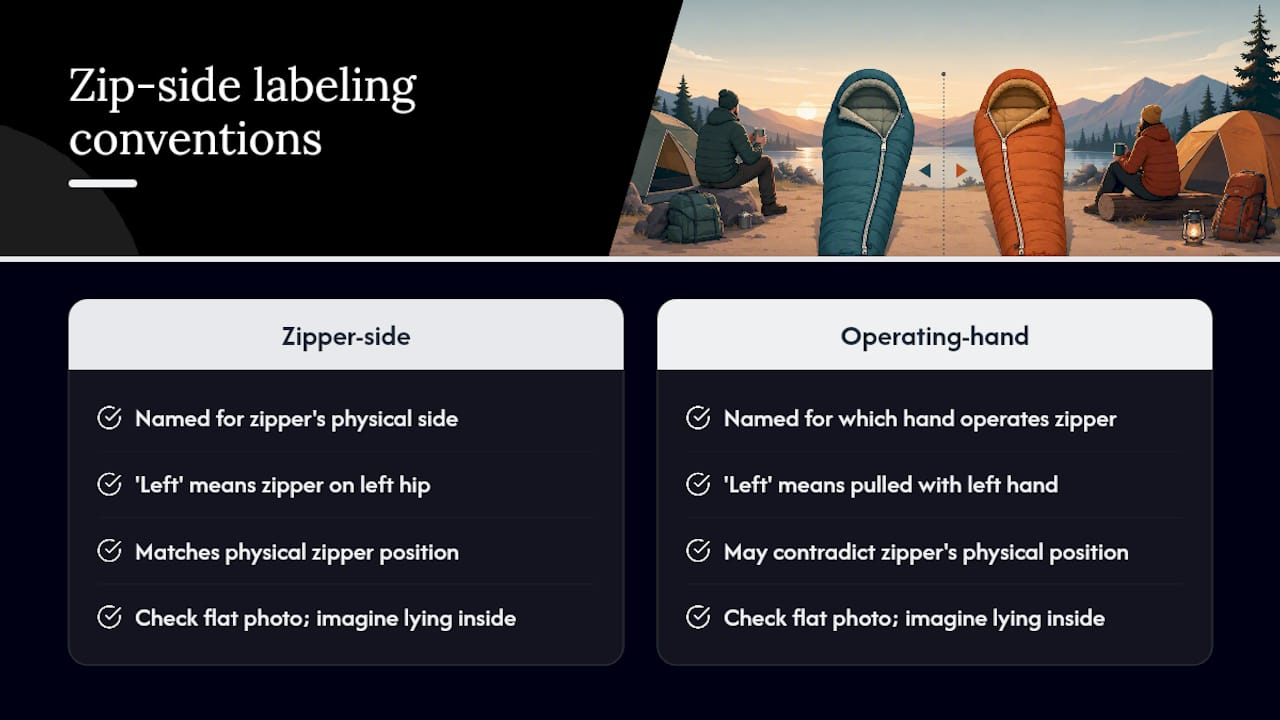
"Left zip" and "right zip" describe where the zipper sits when you are lying inside the bag on your back, looking up. A left-side zip runs along your left hip and shoulder; a right-side zip runs along your right. That sounds simple, but the naming gets slippery fast.
Some manufacturers label bags by the hand you use to operate the zipper from inside. Others label by the side the zipper physically sits on. Those two conventions can point in opposite directions, which is why two product pages describing the same physical bag sometimes use different terms.
The safest way to confirm orientation: Imagine yourself lying flat inside the bag, face up. Whichever hip the zipper pull sits nearest is the zipper side. If you're shopping online, look for a photo of the bag laid flat with the zipper visible, then mentally place yourself inside it. Naming conventions vary enough that this visualization check beats relying on the label alone.
When a product page only lists "left-hand zip," that phrase typically indicates the zipper is on your left side when inside the bag, but confirm with product images. But confirm with the product image before you buy.
When does zipper side actually change your experience?
For casual weekend campers, it rarely does. The scenarios below are the exceptions worth knowing.
Bivy sacks and tents with a side entrance. If your tent door is on the right wall, a right-side zipper lets you open the bag and exit in one fluid motion. A mismatched zipper means you're twisting across your body in the dark. Matching zipper side to your shelter entrance is the most practical reason to care about orientation.
Mating two bags into a double. This is the scenario where zipper side is non-negotiable. You need one left-zip and one right-zip. Without that, the rails face the same direction and won't connect.
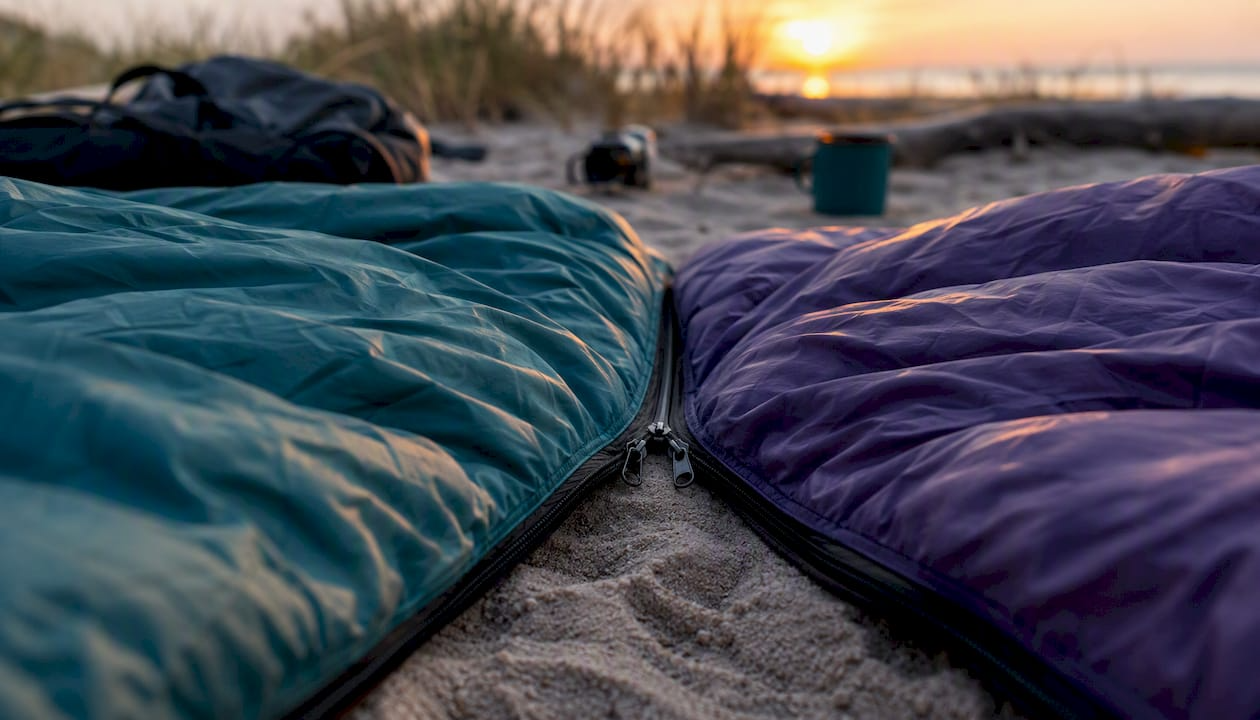
Dedicated side sleepers. If you always sleep on your left side, a left-side zipper sits in front of you. That placement makes venting and slider adjustments much easier without rolling over or reaching behind your back.
Handedness and accessibility. Right-handed campers often find a left-side zip more natural because the dominant hand reaches across the body to grab the pull. Mountain Warehouse's expert advice recommends testing both orientations if possible, since individual reach and shoulder flexibility vary.
Tarp and bivy setups. Some ultralight shelters have a fixed opening direction. Check your shelter's entry before buying the bag.
For everyone else, the zipper side is genuinely interchangeable. A well-insulated bag with a poor zipper orientation still beats a poorly insulated bag with a perfect one.
How to pair two sleeping bags into a double
Mating two bags is straightforward when you have the right combination. Follow these steps:
- Confirm you have one left-zip and one right-zip bag. Lay both flat, face up. The zippers should sit on opposite sides.
- Check zipper compatibility. The zipper coil size must match. A #5 coil won't zip cleanly into a #8 track. Check the spec sheet or ask the retailer.
- Verify track length. Both bags need the same zipper length. A mismatch leaves a gap at the foot or the shoulder.
- Buy from the same manufacturer when possible. Brands that design bags to pair (often called "zip-together" or "compatible" models) engineer the tracks to align. Cross-brand mating sometimes works, but it's a gamble on track height and coil profile.
- Unzip both bags fully. Lay them side by side with the zipper rails facing each other.
- Align the foot boxes. Start the zip from the bottom and work upward to avoid puckering.
- Test the full length. Run the slider end to end before your first night out. A snag mid-track is easier to fix at home than at camp.
Matching zipper brand, size, and track length is what separates a clean double bag from a frustrating gap-filled compromise. When in doubt, contact the manufacturer and ask which models are designed to pair.
Zipper types and features that affect comfort more than side
The type of zipper on a sleeping bag often matters more than which side it's on. Here's how the main options compare:
| Zipper type | Best for | Trade-off |
|---|---|---|
| Single full-length side zip | General camping, easy entry/exit | One-sided venting only |
| Two-way (double-pull) zip | Temperature regulation, foot venting | Slightly heavier slider hardware |
| Double-zipped design (two separate zippers) | Couples or shared bags | More seams, more potential snag points |
| Footbox vent zip | Hot sleepers, shoulder-season camping | Adds a second zipper to maintain |
Beyond the type, three features consistently affect real-world comfort:
Anti-snag sliders grip the fabric baffle and prevent the zipper from catching on the lining at 3 AM. This is a bigger quality signal than zipper side for most buyers.
Draft tubes run behind the zipper track and block cold air from bleeding through the coil. A bag without a draft tube loses heat through the zipper regardless of which side it's on.
Zipper baffles (the internal flap behind the track) add insulation directly behind the zip. On a cold-weather bag, a missing baffle can drop effective warmth by several degrees.
What matters more than zipper side when choosing a bag
Zipper side belongs at the bottom of your decision checklist. Here's the order that actually affects how warm, comfortable, and packable your nights will be:
- Temperature rating first. The EN 13537 standard defines comfort, lower-limit, and extreme ratings. Match the comfort rating to the coldest night you expect, not the lower-limit. A bag rated for 20°F keeps a cold sleeper comfortable; the same bag's lower-limit of 5°F is a survival threshold, not a sleep temperature.
- Insulation type. Down compresses smaller and lasts longer; synthetic insulates when wet. Your climate decides this, not your zipper preference. For a deeper look, the insulation guide at Lifecampadventure breaks down fill power, loft, and moisture performance.
- Fit and shape. A mummy bag that's too narrow wastes warmth through compression; one that's too wide creates cold air pockets. Bag shape and fit affect thermal efficiency more than any zipper feature.
- Weight and packability. For backpackers, every ounce counts—choosing the right gear like a lightweight running vest with bladder can make all the difference in your pack weight and comfort. A 10-ounce difference in bag weight matters far more than zipper side.
- Zipper features and side. Only here, at the end, does orientation become relevant — and only when compatibility or personal preference is in play.
Pro Tip: When two bags are equal on price, warmth, and weight, choose zipper side based on your tent's door position or your dominant hand. That's the only moment zipper side should tip the decision.
How to verify zipper side before you buy
Online:
- Look for "left zip" or "right zip" in the product title or spec line.
- Open the product image gallery and find a flat-lay photo. Place yourself mentally inside the bag, face up, and identify which hip the zipper pull is nearest.
- Check whether the manufacturer lists a compatible mating model. Retailer product pages sometimes include zipper size in the spec sheet — look for coil size (#5 or #8) if mating is your goal.
- If the listing is ambiguous, message customer service with: "Is the zipper on the left or right side when I'm lying inside the bag face up?"
In-store:
- Unzip the bag fully and lay it flat, lining side up.
- Identify which side the slider and pull sit on.
- If the store allows it, lie on top of the bag and reach for the pull to test natural reachability. This quick physical test reveals whether the orientation works for your shoulder flexibility before you commit.
The zipper side question is usually the wrong question
Most gear debates about zipper orientation miss the real issue: campers spend more time worrying about left vs right than about whether their bag is rated for the temperatures they'll actually face. In practice, the zipper side question resolves itself quickly once you know your shelter setup and sleeping style. The campers who genuinely struggle with zipper side are almost always dealing with a mating-bag compatibility problem or a specific bivy entrance mismatch, not a fundamental comfort issue.
The more interesting decision is zipper type, not zipper side. A two-way zipper that lets you vent from the foot box on a warm night is a genuine comfort upgrade. An anti-snag slider that doesn't wake you up at midnight is worth paying for. Those features affect every night you use the bag. Zipper side affects you only in the specific scenarios above.
Gear up with the right sleeping bag at Lifecampadventure
Knowing your zipper orientation is one piece of the puzzle. Finding a bag that pairs well with your shelter, your sleep style, and your climate is the rest of it. Lifecampadventure carries a curated selection of outdoor sleeping bags with clear zipper specs, temperature ratings, and compatibility notes so you're not guessing at checkout.
Whether you need a single bag for solo trips or a matched left-right pair for a double setup, the product pages include the spec details you need to confirm compatibility before you order. Browse the full range and filter by temperature rating, insulation type, and zipper side. If you're unsure which models mate together, the Lifecampadventure support team can confirm compatibility. Head to the sleeping bag collection and find the right fit for your next trip.
