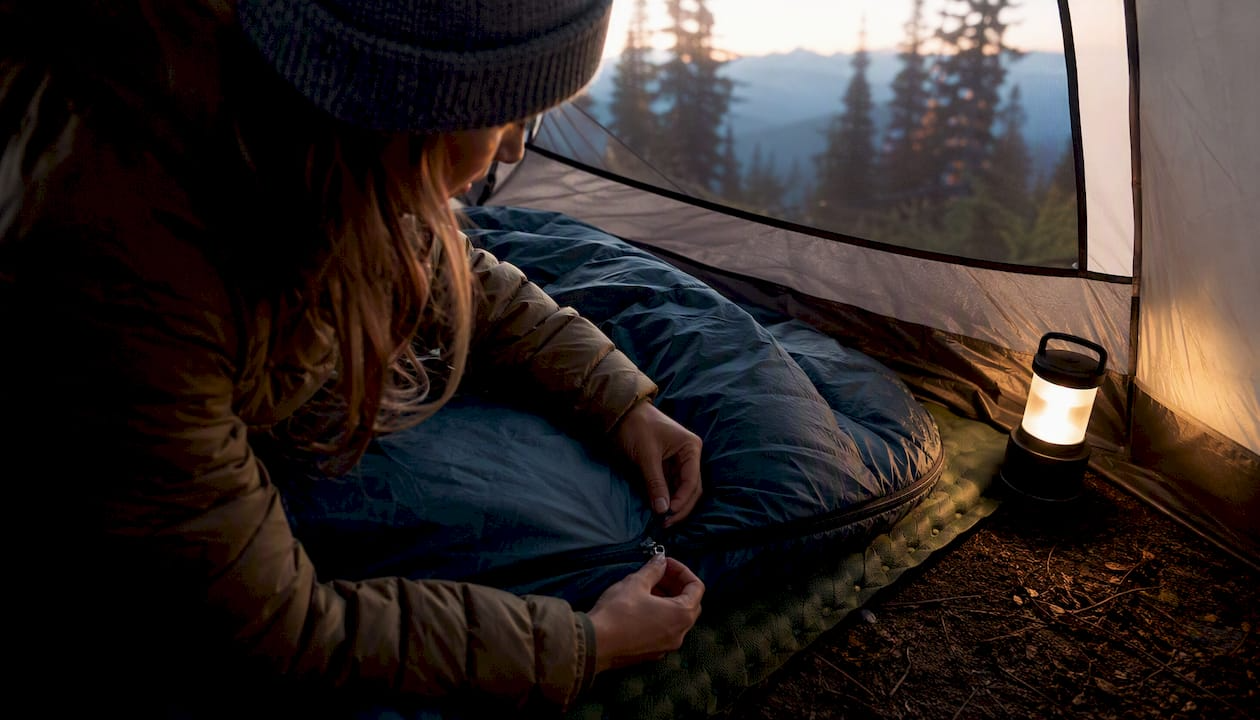
A sleeping bag's temperature rating is a lab-derived warmth metric that tells you the lowest temperature at which a standardized sleeper can survive or stay comfortable. The practical rule: buy a bag rated 10–15°F colder than the coldest night you expect. That margin covers real-world variables the lab cannot replicate.
Here's how common ratings translate to actual use cases:
- 30–50°F bags: Summer camping, warm-weather car camping, and desert nights above freezing
- 20–30°F bags: Three-season backpacking, shoulder-season trips, and most mountain camping from spring through fall
- 0–20°F bags: Winter camping, mountaineering, and any trip where sub-freezing nights are likely
Quick verdict: choose a 20°F bag for most three-season mountain trips. Choose a 0°F bag when temperatures routinely drop below 20°F. The choice between those two ratings depends almost entirely on your trip conditions and the coldest night you'll face.
Key Takeaways
Sleeping bag temperature ratings are lab-derived benchmarks from EN/ISO 23537 testing, and buying a bag rated 10–15°F colder than your coldest expected night is the single most reliable rule for staying warm.
| Point | Details |
|---|---|
| EN/ISO standard matters | EN 13537 / ISO 23537 produces Comfort, Lower-limit, and Extreme numbers; always confirm which metric a brand advertises. |
| Use the right rating for your sleep style | Cold sleepers should target the Comfort rating; warm sleepers can use the Lower-limit, but still apply a 10–15°F safety margin. |
| Pad R-value is part of the system | A low R-value pad undermines even a well-rated bag; use R-4+ for three-season and R-5+ for winter camping. |
| Down vs synthetic trade-off | Down runs 30–40% lighter at the same rating; synthetic retains more warmth when wet and costs less upfront. |
| Lifecampadventure gear matches these ratings | Lifecampadventure carries 20°F and 0°F bags for three-season and winter use, with guidance available for matching gear to your specific trip. |
How are sleeping bag temperature ratings actually tested?
The numbers on a sleeping bag tag come from a controlled lab process, not a field test. The EN 13537 / ISO 23537 standard uses a heated mannequin dressed in standard base layers, placed inside the bag on a specific sleeping pad, to generate three distinct temperature numbers.
Those three numbers are:
- Comfort rating: The temperature at which a standard cold sleeper can sleep comfortably through the night without waking up cold. Per REI's explanation of the EN/ISO methodology, this figure is calibrated to a standard female sleeper, who tends to sleep colder.
- Lower-limit rating: The temperature at which a standard warm sleeper (calibrated to a male) can sleep in a curled position without waking cold. This is the number most brands print on the bag and use in the product name.
- Extreme rating: A survival threshold only. The standard explicitly states this is not a planning number. It represents the temperature at which a standard female sleeper can survive for six hours without hypothermia risk, not sleep comfortably.
One important caveat: bags without EN/ISO certification carry manufacturer-assigned ratings that can vary widely across brands, making direct comparison unreliable. EN/ISO-rated bags give you a consistent benchmark regardless of who made them.
The lab's limits are real. The mannequin wears fixed clothing, lies on a fixed pad, and doesn't sweat, shiver, or move. That's a controlled baseline, not your body on a windy ridge.
What do the numbers mean when you're actually sleeping outside?
Lab conditions and field conditions rarely match. A bag rated to 20°F (lower-limit) will typically keep a warm sleeper comfortable down to about 30°F in real conditions. Cold sleepers should add another 10°F on top of that.
The EN/ISO Comfort rating is the more useful number for most people, particularly women and anyone who tends to sleep cold. The lower-limit is what brands advertise, but it assumes a warm-sleeping male in ideal conditions. If you're not that person, plan accordingly.
Several factors shift how warm a bag actually feels:
- Sleeping pad R-value: Your bag's bottom insulation is compressed under your body weight and loses most of its effectiveness. A sleeping pad carries the load for under-body insulation, so a low R-value pad can make even a well-rated bag feel cold from below. Aim for R-4 or higher for three-season use; R-5+ for winter.
- Clothing: Wearing a dry base layer, wool socks, and a hat inside your bag can add several degrees of effective warmth.
- Metabolism, age, and sex: Women, older adults, and people with lower metabolic rates tend to sleep colder and should lean toward the Comfort rating rather than the lower-limit.
- Humidity and wetness: A damp bag, whether from rain, condensation, or sweat, loses insulating efficiency. Down loses more than synthetic when wet.
- Fit and shape: A mummy bag traps heat more efficiently than a semi-rectangular or rectangular design. Extra dead air space in an oversized bag actually works against you in the cold.
- Altitude and wind: Wind chill and reduced oxygen at altitude both increase heat loss faster than the temperature reading alone suggests.
Pro Tip: If a bag is rated to 20°F (lower-limit), treat 30°F as your realistic comfort floor. Then apply the 10–15°F shopping margin on top of that: buy a 20°F bag for trips where the coldest night is around 35–40°F, not 20°F.
Down vs synthetic: which insulation type actually keeps you warmer?
At the same EN/ISO temperature rating, down and synthetic insulation deliver comparable warmth. The rating is the rating. Where they diverge is weight, bulk, wet-weather behavior, and price.
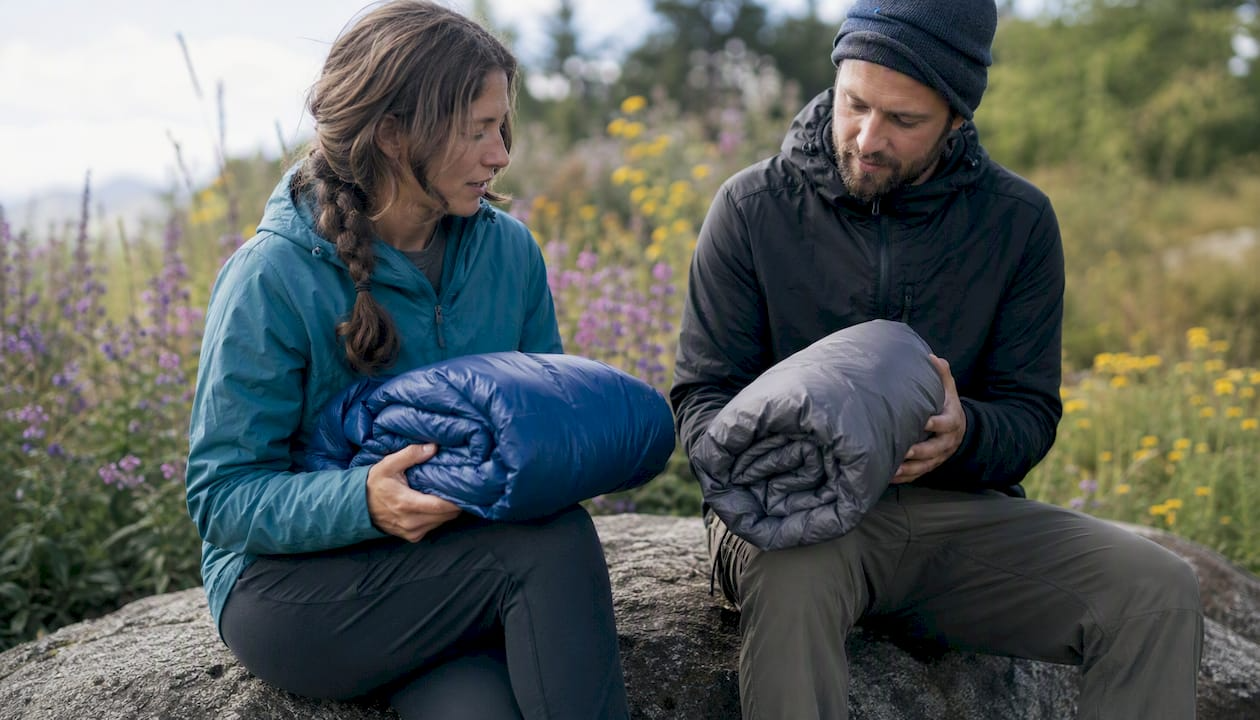
Practical fill power tiers for backpackers:
- 650 FP: Minimum practical threshold for backpacking; heavier and bulkier but more affordable
- 800 FP: The sweet spot for most serious three-season backpackers, balancing performance and cost
- 900+ FP: For weight-obsessed ultralight users where every ounce counts
Down at the same temperature rating runs approximately 30–40% lighter and more compressible than synthetic. That gap is meaningful on a multi-day trip where pack weight accumulates. For a 20°F bag, that difference can translate to nearly a pound.
| Feature | Down | Synthetic |
|---|---|---|
| Warmth-to-weight | Superior | Heavier at same rating |
| Compressibility | Excellent | Bulkier |
| Wet performance | Loses loft when damp | Retains warmth when wet |
| Drying time | Slow | Faster |
| Durability | Long-lasting with care | Degrades faster over time |
| Price | Higher | More affordable |
| Best for | Dry climates, multi-day trips | Wet climates, budget buyers |
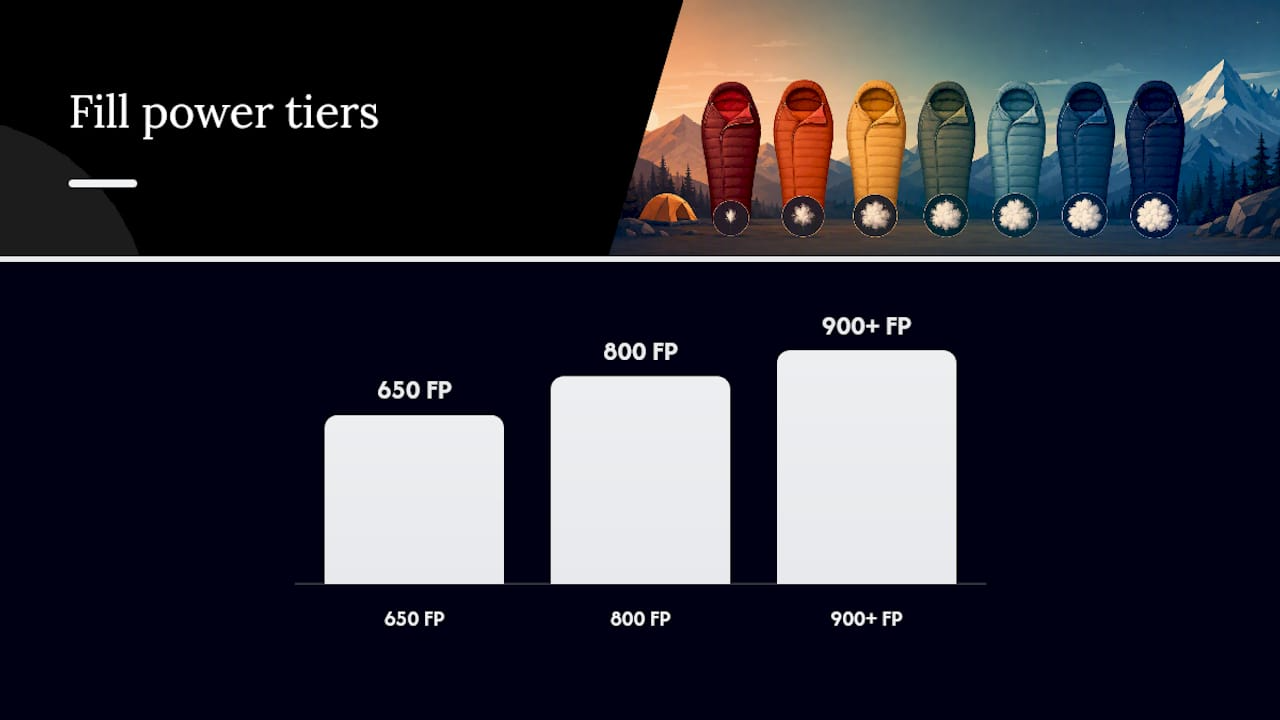
In consistently wet climates, such as the Pacific Northwest or rainy shoulder seasons, synthetic insulation is often the safer choice. It retains meaningful warmth when damp, which down cannot reliably do without a treated shell. For more on this trade-off, the Lifecampadventure guide on synthetic bags in wet conditions breaks down exactly when to prioritize synthetic over down.
How do you choose the right temperature rating for your trip?
Follow this sequence before you buy:
- Identify the coldest expected night temperature for your destination and season. Check historical lows, not averages. Weather apps and campsite forums are useful, but historical data is more reliable for planning.
- Determine your sleep style. Cold sleeper? Use the Comfort rating as your target. Warm sleeper? The lower-limit rating may be sufficient, but still apply a margin.
- Check your sleeping pad's R-value. A pad rated below R-3 will undermine a well-rated bag on cold nights. Factor this into your system, not just the bag.
- Apply the 10–15°F safety margin. Buying a bag rated 10–15°F colder than your coldest expected night gives you a buffer for unexpected cold snaps and lets you vent the bag if conditions run warmer than forecast.
- Pick your fill type based on climate (down for dry, synthetic for wet) and budget.
Here's how that plays out across common scenarios:
- Summer desert camping (nights 45–60°F): A 30–35°F bag gives you the margin without overheating. A 45°F bag works if you run warm and nights stay mild.
- Three-season mountain backpacking (nights 25–40°F): A 20°F bag is the most versatile choice. It covers shoulder-season cold snaps and still vents on warmer nights. Most experienced backpackers land here as their go-to rating.
- Winter car camping (nights 10–25°F): A 0°F bag is appropriate. Car campers can tolerate the extra weight, and the warmth margin matters when you're sleeping in a tent at altitude or in wind.
- Alpine expedition or mountaineering (nights below 0°F): A 0°F bag is the floor, not the ceiling. Consider a two-bag system (a 20°F liner inside a 0°F bag) or a purpose-built expedition bag rated to -20°F or colder.
When deciding between a 0°F and a 20°F bag, the answer is usually straightforward: if your coldest night is reliably above 20°F, the lighter 20°F bag is the better choice. If sub-20°F nights are realistic, the 0°F bag is not optional.
What else should you check beyond the temperature rating?
The rating tells you the thermal floor. It doesn't tell you whether the bag will actually perform at that floor in the field. Several construction and fit details determine that.
- Hood design: A well-fitted, cinchable hood can prevent significant heat loss from your head. Below 20°F, a hood is not optional.
- Draft collar: A draft collar (an insulated baffle that cinches around your neck) keeps warm air inside the bag and cold air out. Critical for sub-freezing use.
- Draft tubes: Insulated tubes running along the zipper prevent cold air from bleeding through the zipper teeth. Double draft tubes (inside and outside the zipper) matter most below 20°F.
- Baffle construction: Sewn-through baffles create cold spots where the inner and outer shells meet. Box-wall or offset baffling eliminates those spots and is standard on quality cold-weather bags.
- Zipper placement and length: A full-length zipper gives you more venting options on warm nights. A shorter zipper saves weight but limits temperature regulation.
- Shell water resistance: A DWR-treated or waterproof-breathable shell slows moisture absorption and protects down loft in damp conditions.
- Fit and length: A bag that's too long leaves dead air space at your feet that your body must heat. Most manufacturers offer regular and long sizes; choose the one that fits your height without excess room at the foot box.
- Roomy bags and cold: A semi-rectangular or wide mummy bag feels more comfortable but can feel colder than its rating suggests, because your body heats a larger air volume.
For a deeper look at how insulation construction affects real-world warmth, the Lifecampadventure resource on sleeping bag insulation covers baffle types and shell materials in detail.
Practical recommendations by use case
Most campers fall into one of three categories, and the right bag is usually obvious once you know your coldest expected night.
For three-season backpacking: A 20°F down bag with 800 FP is the most versatile choice for serious backpackers. It covers the vast majority of spring-through-fall mountain conditions in the U.S., weighs less than most synthetic alternatives, and compresses small enough for a standard pack. Field-tested reviews consistently point to the 20°F rating as the most practical three-season default.
For winter camping: A 0°F bag is the baseline. Synthetic is worth considering if you camp in reliably wet conditions (coastal ranges, the Cascades in winter). Down at 800–900 FP is the better choice for dry cold, such as the Rockies or the Sierra in winter. Pair either with a sleeping pad rated R-5 or higher.
For casual car camping: Weight and packability matter less. A 20°F synthetic bag covers most three-season car camping and is easier to wash and maintain than down. If you camp in summer only, a 30–35°F bag is sufficient and more comfortable in warmer weather.
A bag rated to 20°F (lower-limit) will realistically keep most warm sleepers comfortable to about 30°F. Cold sleepers should treat 30°F as the lower-limit and shop for a bag rated to 20°F or colder for the same conditions. Always buy colder than you think you need, and vent the bag if you're too warm. That's the conservative rule that keeps you comfortable across a wider range of conditions.
One note on brand ratings: some manufacturers publish a number between the EN/ISO Comfort and Lower-limit values as a conservative middle ground. Others label the bag with the lower-limit and call it the "comfort" rating in marketing copy. Always confirm which EN/ISO metric a brand is citing before comparing bags across manufacturers.
For down-specific guidance, the Lifecampadventure article on why down sleeping bags work for backpacking covers fill power tiers, weight trade-offs, and how to read a spec sheet.
The case for planning conservatively with your sleep system
EN/ISO ratings are the best standardized benchmark the industry has. They give you a consistent, comparable number across brands, which matters when you're choosing between a dozen bags online. But they're a starting point, not a guarantee.
Real people vary in ways a mannequin cannot capture. Your pad, your clothing, your hydration level, and the humidity in your tent all shift the effective warmth of any bag. A 20°F bag on a thin foam pad in a wet tent will feel nothing like a 20°F bag on an R-5 pad in a dry shelter. Planning conservatively means treating the lower-limit as a floor, not a target, and building a sleep system (bag + pad + clothing) rather than relying on the bag alone.
Test your kit before a critical trip. Sleep in your backyard or garage on a cold night with your full system. You'll learn more in one night than any spec sheet can tell you. If you have questions about which bag fits your specific trip, the Lifecampadventure team is available to help you match gear to conditions.
Gear that matches the ratings you've just learned
Lifecampadventure carries sleeping bags and camping gear mapped directly to the rating categories covered here: 30–35°F bags for summer and warm-weather use, 20°F bags for three-season backpacking, and 0°F options for winter and cold-weather expeditions.
Whether you're building a three-season kit around a lightweight 20°F down bag or outfitting a winter car camping setup with a heavier synthetic 0°F option, the product range covers both ends of the spectrum. The Lifecampadventure sleeping bag buying guide maps bag types to use cases if you want a structured starting point. Browse the full assortment and, if you're unsure which rating fits your trip, reach out directly for a recommendation tailored to your conditions.
Sources
- Understanding Sleeping Bag Temperature Ratings
- Synthetic vs Down Sleeping Bag (2026) | Peak Gear Guide
- Sleeping bag materials guide, part 2: Insulation
- Best winter sleeping bags (Backpacker)
