TL;DR:
- Sleeping bag insulation traps still air to keep you warm, with the effectiveness depending on material and construction. Down offers a better weight-to-warmth ratio in dry conditions, while synthetic retains more warmth when wet. Proper bag design, insulation care, and pairing with suitable sleeping pads are essential for optimal warmth.
Sleeping bag insulation is defined as the material that traps body-warmed air in microscopic pockets, creating a barrier against cold that keeps you warm through the night. The role of insulation in sleeping bags goes far beyond simply adding bulk. It determines warmth, weight, moisture resistance, and how well your bag performs when conditions turn harsh. Two primary insulation types dominate the market: down and synthetic. Each works through the same core principle, confirmed by the US Department of Energy, that insulation traps still air to slow heat loss. Understanding how each material, construction method, and sleep system component works together is what separates a comfortable night from a miserable one.
What is the role of insulation in sleeping bags?
Insulation keeps you warm by holding a layer of still air between your body and the cold outside. The thicker and more intact that air layer stays, the warmer you sleep. The industry term for this air-trapping capacity is loft, and it is the single most important measure of insulation effectiveness.
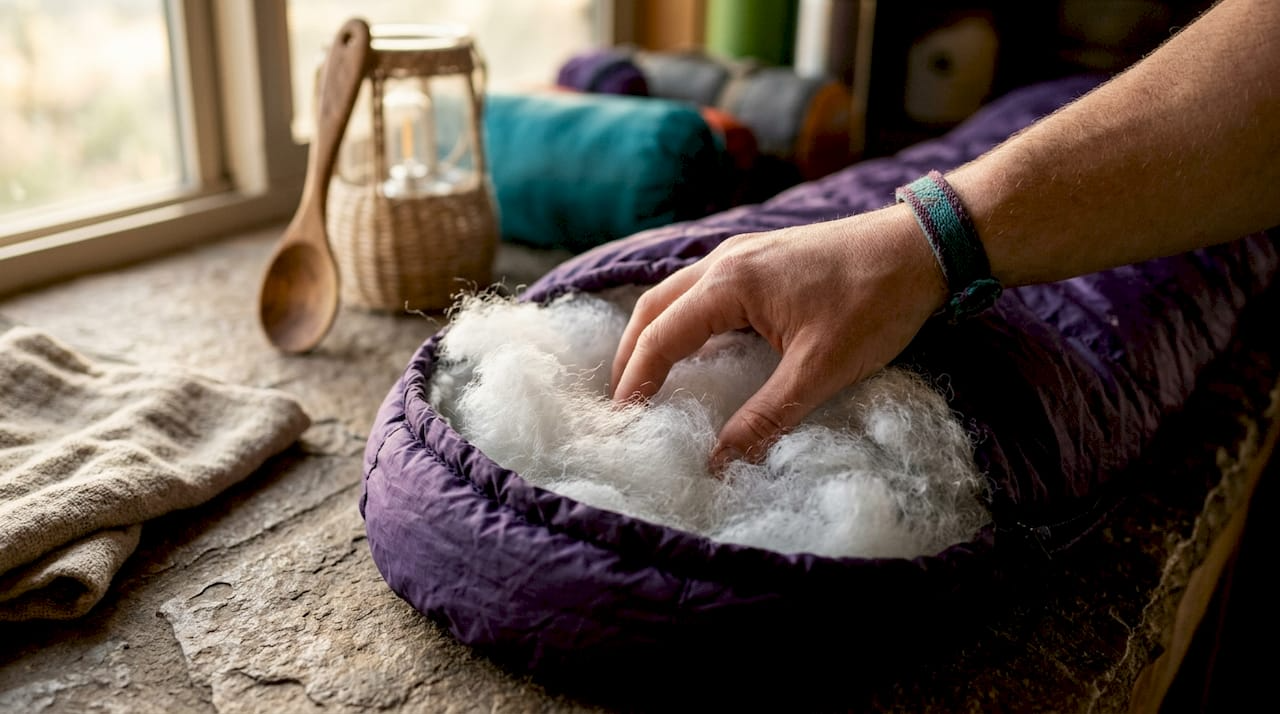
Loft describes how much a given amount of insulation puffs up when uncompressed. More loft means more trapped air, which means more warmth. For down insulation, loft is measured by fill power, a number typically ranging from 550 to 900+. Higher fill power means fewer ounces of down are needed to achieve the same warmth, which is why high-fill-power bags pack so small and weigh so little.
Synthetic insulation uses engineered fibers that mimic down's air-trapping structure. These fibers do not compress as tightly as down, so synthetic bags tend to be bulkier for the same temperature rating. The trade-off is real performance in wet conditions, which down cannot match.
Pro Tip: Check the fill power number on any down bag before you buy. A 650-fill bag is a solid all-rounder. An 800-fill bag is worth the extra cost if you need serious cold-weather performance with minimal weight.
How do insulation materials affect sleeping bag warmth?
The material inside your bag directly controls how insulation affects warmth, how much the bag weighs, and how it behaves when wet.
Down insulation
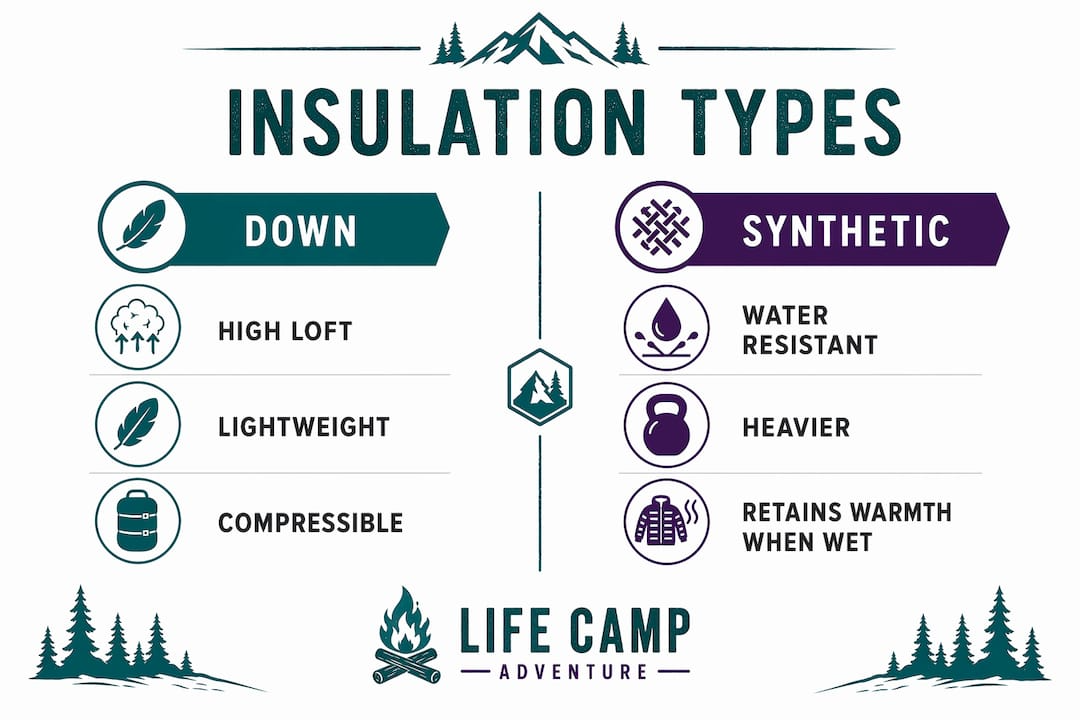
Down is the gold standard for warmth-to-weight ratio. A quality down bag compresses to the size of a water bottle and still delivers serious cold-weather performance. The problem is moisture. Down loses nearly all insulating ability when wet, which makes it a liability in rain-soaked or humid environments. Treated hydrophobic down addresses this partially, but it is not a full solution in sustained wet conditions.
Synthetic insulation
Synthetic bags are heavier and bulkier than down for the same temperature rating. Synthetic bags run 30–40% heavier for a comparable warmth rating. The payoff is moisture resilience. Synthetic insulation retains 80–85% of its warmth when wet, which means it keeps working even after a damp night in a humid tent. That is a meaningful advantage for coastal camping, shoulder-season trips, or any situation where condensation is unavoidable.
Moisture management and thermal performance
Moisture is the enemy of loft. When insulation absorbs water, the fibers clump together and the air pockets collapse. This is why choosing sleeping bag insulation based on your expected environment is more important than chasing the lightest option. A wet down bag in a rainy forest is far less effective than a heavier synthetic bag that holds its loft.
Key differences at a glance:
- Down: lightest, most compressible, best warmth-to-weight ratio, poor wet performance
- Synthetic: heavier and bulkier, retains most warmth when wet, lower cost, easier to wash
- Hydrophobic down: treated to resist moisture, better wet performance than standard down, still not as resilient as synthetic in sustained rain
- Long-term durability: down offers longer life and compressibility over years of use; synthetic fibers break down faster with repeated compression
Pro Tip: If you camp in the Pacific Northwest or anywhere with frequent rain, choose synthetic or hydrophobic down. If you backpack in the Rockies or Sierra Nevada where conditions stay dry and cold, standard high-fill down is the better call.
How does bag construction affect thermal efficiency?
The best insulation material still fails if the bag is built poorly. Construction determines whether insulation stays in place, maintains its loft, and covers the right areas of your body.
Differential cut and insulation distribution
A differential cut means the outer shell is cut larger than the inner liner. This gives the insulation room to loft fully without being compressed by the shell pressing against the liner. Without it, the bag squeezes its own insulation flat, reducing warmth even before you climb inside.
Insulation is not distributed evenly from top to bottom. Typical top-to-bottom ratios run 60:40 or 55:45, with more insulation on top. The reason is simple: the insulation under your body gets compressed by your weight and stops working. A sleeping pad handles ground insulation instead.
Baffle construction styles
Baffles are the internal chambers that hold insulation in place and prevent it from shifting into cold spots. The style of baffle matters significantly for cold-weather performance.
- Box-wall baffles: Create rectangular chambers that allow insulation to loft fully in all directions. Best for serious cold-weather bags.
- V-tube baffles: Angled walls that hold insulation in place while reducing the risk of cold spots at seam lines.
- Sewn-through baffles: Stitching goes straight through both shell layers, creating thin lines with no insulation. Acceptable for summer bags, but a real weakness in cold conditions.
- Trapezoidal baffles: A compromise between box-wall and sewn-through, offering moderate loft with lighter construction.
Draft tubes and collars
Draft collars and tubes are non-optional in bags rated below 20°F. A draft collar wraps around your neck and shoulders to block warm air from escaping the top of the bag. A draft tube runs along the zipper to stop cold air from seeping through the zipper teeth. These features are as critical as the insulation material itself for cold-weather performance.
Pro Tip: Before buying a cold-weather bag, zip it up and check whether the draft tube fully covers the zipper from top to bottom. Gaps in the tube are a direct path for heat loss.
Why does your sleeping pad matter as much as your bag?
Sleeping bag insulation is only half the system. The ground pulls heat from your body far faster than cold air does, because solid surfaces conduct heat more efficiently than air. A sleeping bag with excellent top insulation still fails if you have nothing between you and the ground.The metric for pad insulation is R-value, a measure of resistance to heat flow. Higher R-values mean better insulation from the ground. R-values range from under 1 for summer pads to 8+ for winter pads. Pairing a 15°F down bag with a pad rated R-1 will leave you cold, because the ground is draining heat faster than the bag can replace it.
Practical pairing guidelines:
- Summer camping (above 40°F): R-value of 1–2 is sufficient
- Three-season camping (20–40°F): R-value of 3–4 recommended
- Winter camping (below 20°F): R-value of 5 or higher, with 6+ for serious cold
- Snow camping: Stack two pads or use a pad rated R-7 or above
Insulation compression under body weight makes the pad's role non-negotiable. The bottom of your bag is essentially decorative once you lie on it. The pad does the real work of ground insulation, and skimping on R-value is one of the most common reasons campers wake up cold despite owning a quality bag. For a deeper look at how sleep quality outdoors connects to your full setup, the principles are the same whether you are at home or in the backcountry.
How do you choose insulation based on camping conditions?
Material choice must prioritize environment over budget to maintain consistent warmth in field conditions. The right insulation for a desert backpacker is the wrong insulation for a coastal kayaker.
Practical guidance by condition:
- Dry, cold alpine environments: High-fill down (700+ fill power) delivers the best warmth-to-weight ratio. Weight savings matter most on long approaches.
- Wet, humid, or coastal environments: Synthetic insulation is the safer choice. Its moisture resilience means it keeps working even after a damp night.
- Variable or shoulder-season conditions: Hydrophobic down offers a middle ground, handling light moisture while staying lighter than synthetic.
- Car camping or base camp use: Weight is less critical. Synthetic bags offer better value and easier care without the penalty of extra grams.
- Ultralight backpacking: High-fill down is the only practical option when pack weight is the primary constraint.
Durability also factors into the decision. Down bags, when properly cared for, outlast synthetic bags by years. Synthetic fibers break down with repeated compression, losing loft over time. If you camp frequently and want a bag that holds its performance for a decade, down with proper storage and washing is the better long-term investment. For a detailed breakdown of down vs. synthetic performance in real backpacking conditions, the differences become even clearer on multi-day trips.
Key Takeaways
Sleeping bag insulation works by trapping still air in lofted pockets, and its effectiveness depends equally on material type, bag construction, and the sleeping pad you pair it with.
| Point | Details |
|---|---|
| Loft drives warmth | More loft means more trapped air; fill power measures loft quality in down bags. |
| Material matches environment | Choose down for dry cold, synthetic for wet or humid conditions. |
| Construction determines performance | Box-wall baffles, differential cut, and draft tubes preserve loft and block heat loss. |
| Pad R-value completes the system | Ground conduction drains heat fast; match your pad's R-value to your temperature range. |
| Insulation under body is ineffective | Compressed bottom insulation does not insulate; your sleeping pad does that work instead. |
What most campers get wrong about sleeping bag insulation
Most campers focus entirely on the bag's temperature rating and ignore everything else. That is the wrong approach, and I have seen it cause miserable nights for experienced hikers who should know better.
The biggest overlooked factor is draft control. I have tested bags with excellent fill power that still left me cold because the draft collar was poorly designed or the zipper tube had gaps. Draft control is as critical as insulation material for cold-weather performance, and most buyers never check it in the store.
The second thing people miss is insulation care. Down loses loft when stored compressed for months. If you keep your bag stuffed in its sack between trips, you are slowly destroying its warmth. Store it loosely in a large cotton sack, and wash it with a down-specific cleaner every season or two. A well-maintained down bag holds its loft for 15 or more years. A neglected one loses meaningful warmth within five.
The third mistake is treating the sleeping bag as a standalone product. Your complete sleep system includes the bag, the pad, and how you manage moisture inside your shelter. Get all three right, and even a modestly priced bag performs well above its rating.
— Billy
Gear that matches your insulation needs
Choosing the right insulation is only the first step. The gear you pair it with determines whether that insulation actually delivers on its promise in the field.

Lifecampadventure carries sleeping bags, pads, and shelter systems selected with real camping conditions in mind, not just temperature ratings on a label. Whether you need a lightweight down bag for alpine trips or a synthetic option built for wet-weather reliability, the camping gear comparison at Lifecampadventure gives you side-by-side context to make a confident call. You can also browse the full outdoor sleeping bag reviews to see how insulation performance holds up across different bag categories and price points.
FAQ
What does insulation actually do in a sleeping bag?
Sleeping bag insulation traps a layer of still air around your body, slowing heat loss and maintaining warmth. The thicker and more intact that air layer stays, the warmer you sleep.
Is down or synthetic insulation better for cold weather?
Down delivers a superior warmth-to-weight ratio in dry, cold conditions, making it the preferred choice for alpine and winter camping. Synthetic insulation is better when moisture is a factor, retaining 80–85% of its warmth when wet.
Why do I still feel cold in a high-rated sleeping bag?
Ground conduction is the most common cause. The insulation under your body compresses under your weight and stops working, so a low R-value sleeping pad drains heat faster than the bag can replace it.
What is fill power and why does it matter?
Fill power measures how much space one ounce of down occupies. Higher fill power means more loft per ounce, which translates to a warmer, lighter, and more compressible bag.
How do baffle styles affect sleeping bag warmth?
Baffle construction controls whether insulation stays evenly distributed or migrates into cold spots. Box-wall and V-tube baffles allow full loft and prevent cold lines, while sewn-through baffles create thin uninsulated seams that reduce warmth in cold conditions.
