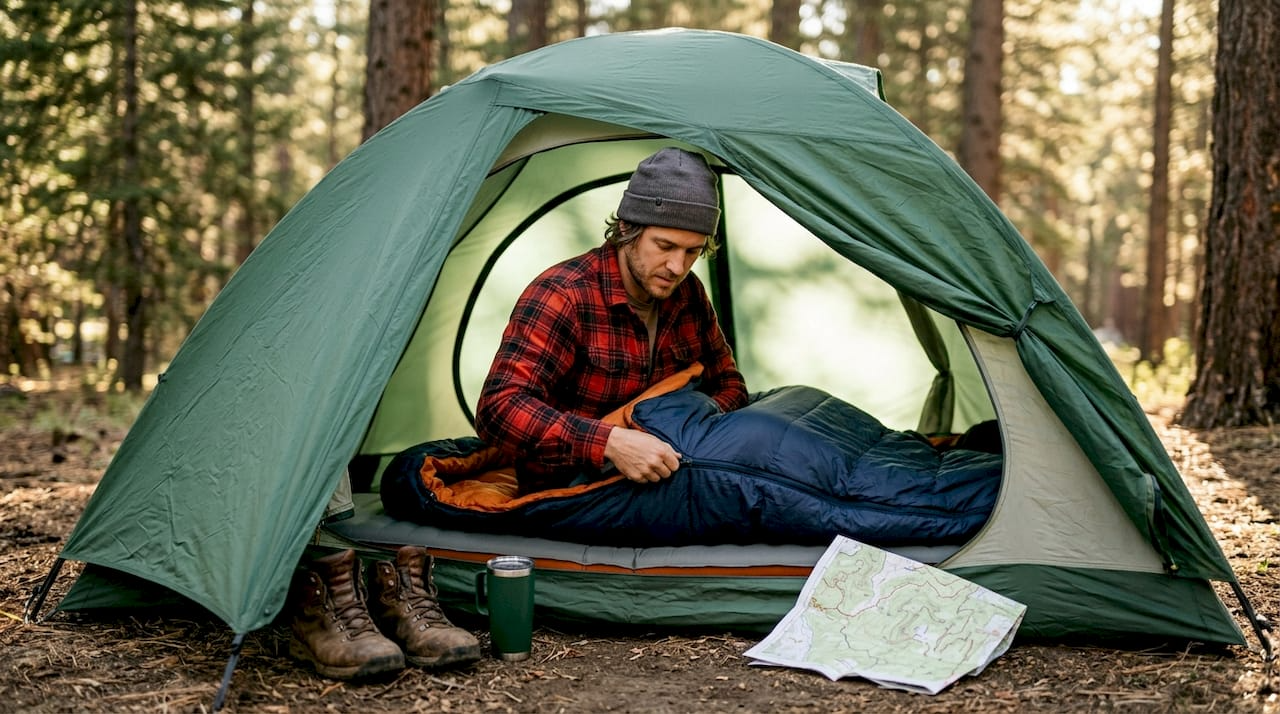
Choosing the wrong sleeping bag can turn an exciting camping trip into a miserable, sleepless ordeal. Many outdoor adventurers underestimate how critical proper sleep gear is for safety and recovery in the wilderness. A quality sleeping bag isn't just about warmth; it's about creating a reliable rest system that works with your pad and shelter to keep you comfortable and energized for the next day's adventures. This guide breaks down how sleeping bags function, what to look for when selecting one, and how to care for your investment so it lasts season after season.
Key takeaways
| Point | Details |
|---|---|
| System integration | Sleeping bags work with pads and shelters to create complete thermal protection |
| Rating awareness | EN temperature ratings standardize selection across different climate conditions |
| Insulation choice | Down offers warmth-to-weight advantages while synthetic performs better when wet |
| Sustainability matters | RDS-certified down and recycled synthetics reduce environmental impact significantly |
| Proper care extends life | Uncompressed storage and regular maintenance preserve loft and performance for years |
How sleeping bags enhance outdoor rest and safety
Your sleeping bag serves as the cornerstone of outdoor rest, but it doesn't work alone. The bag provides critical insulation that traps body heat and creates a microclimate around you, protecting against cold air and ground temperatures that can drop dramatically after sunset. Without this thermal barrier, your body loses heat rapidly through conduction and convection, leading to disrupted sleep and potential hypothermia in severe conditions.
Sleeping bags enable reliable sleep by integrating with pads and shelters, forming what experts call the sleep system triangle. Your sleeping pad prevents heat loss to the ground, which accounts for up to 80% of total heat loss when camping. The shelter blocks wind and moisture, allowing your bag to maintain its insulation properties. This three-part system is essential for sleeping outdoors guide cozy outdoor nights across different seasons and environments.EN temperature ratings provide standardized guidance for selecting bags suited to your expected conditions. These ratings include comfort, lower limit, and extreme temperatures, helping you match gear to climate. Understanding these ratings prevents the common mistake of bringing a summer bag to shoulder season trips or overheating in an expedition-weight bag during mild weather.
Pro Tip: Always choose a bag rated 10-15 degrees lower than the coldest temperature you expect to encounter, accounting for personal cold tolerance and the quality of your sleeping pad.
The relationship between your sleeping bag and other essential camping gear types determines your overall comfort level. A premium bag paired with an inadequate pad still results in cold, restless nights. Consider these critical factors:
- Match your bag's temperature rating to your pad's R-value for optimal thermal efficiency
- Ensure your shelter provides adequate ventilation to manage condensation that can dampen insulation
- Layer your sleep system appropriately, adding liners or wearing base layers in colder conditions
- Position your bag away from tent walls where condensation accumulates
Quality sleep outdoors isn't a luxury; it's a safety requirement that affects decision-making, energy levels, and your ability to respond to challenges on the trail.
Choosing the right sleeping bag: insulation, ratings, and fit
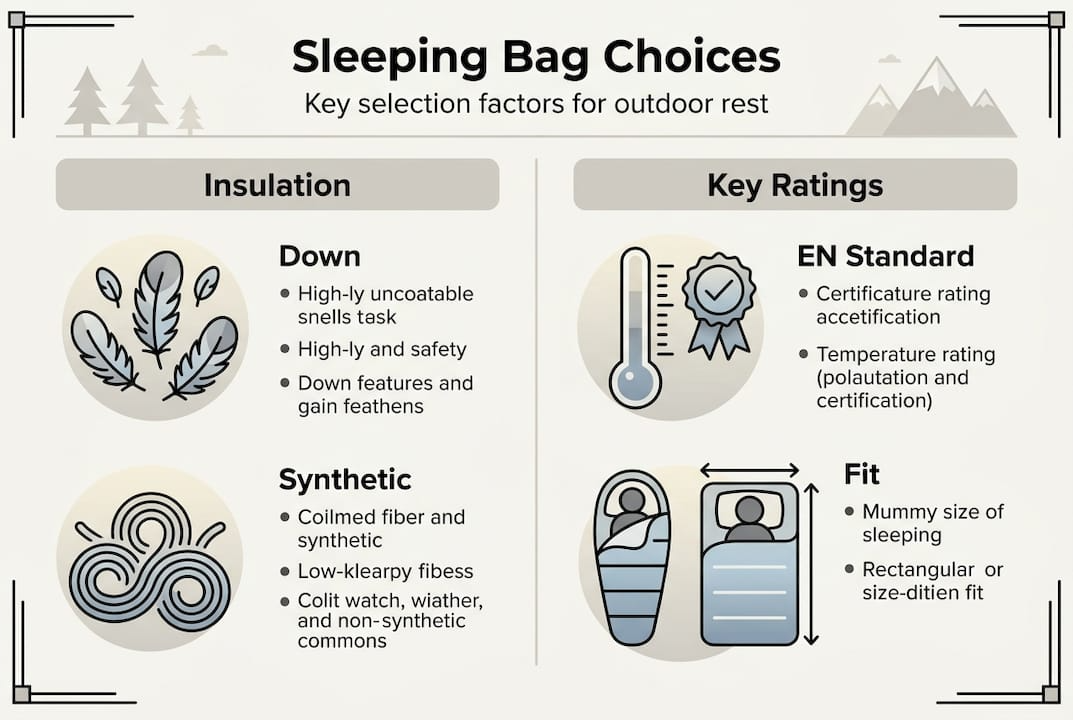
The insulation debate between down and synthetic fills shapes every sleeping bag purchase decision. Down insulation, harvested from duck or goose plumage, delivers exceptional warmth-to-weight ratios and compresses into remarkably small packages. A quality down bag can last decades with proper care, making it ideal for backpackers counting every ounce. However, down loses insulating ability when wet and requires longer drying times, creating risks in humid or rainy environments.
Synthetic insulation uses polyester fibers that maintain warmth even when damp, dry faster, and cost less upfront. These bags work well for paddling trips, humid climates, or budget-conscious campers who prioritize reliability over weight savings. The trade-off comes in bulk and weight; synthetic bags pack larger and weigh more than equivalent down models.
Prioritize EN ratings, insulation type by climate, and proper care for longevity when evaluating options. The EN (European Norm) 13537 standard tests bags under controlled conditions, providing three key temperatures. The comfort rating indicates the temperature at which a standard woman can sleep comfortably. The lower limit shows where a standard man remains comfortable. The extreme rating marks survival temperatures, not comfort zones.
| Climate Type | Recommended Insulation | Temperature Rating | Key Features | | --- | --- | | Summer/Warm | Synthetic or lightweight down | 35°F to 50°F | Minimal fill, excellent ventilation | | Three-season | Quality down or premium synthetic | 15°F to 35°F | Balanced warmth and packability | | Winter/Cold | High-fill-power down | -10°F to 15°F | Maximum loft, draft tubes, hood | | Wet climates | Hydrophobic down or synthetic | Varies by season | Water-resistant treatments |
Bag shape significantly impacts thermal efficiency and comfort. Mummy bags taper from shoulders to feet, minimizing air space your body must heat while maximizing warmth-to-weight ratios. Rectangular bags offer more room to move but sacrifice thermal efficiency. Semi-rectangular designs split the difference, providing moderate room with better heat retention than full rectangular models.
Fit matters more than many campers realize. A bag that's too large creates excess air space that your body struggles to warm, while an overly tight bag compresses insulation and restricts movement. When evaluating best outdoor sleeping bags, consider these sizing factors:
- Measure your height and add 6-8 inches for comfortable fit without compression
- Account for shoulder width, especially if you're a side sleeper who shifts positions
- Check internal girth measurements, not just length specifications
- Consider women-specific models with extra insulation in core and foot areas
Pro Tip: Test bags in-store by lying down and rolling side to side; if the insulation stays in place and you can move comfortably, the fit works.
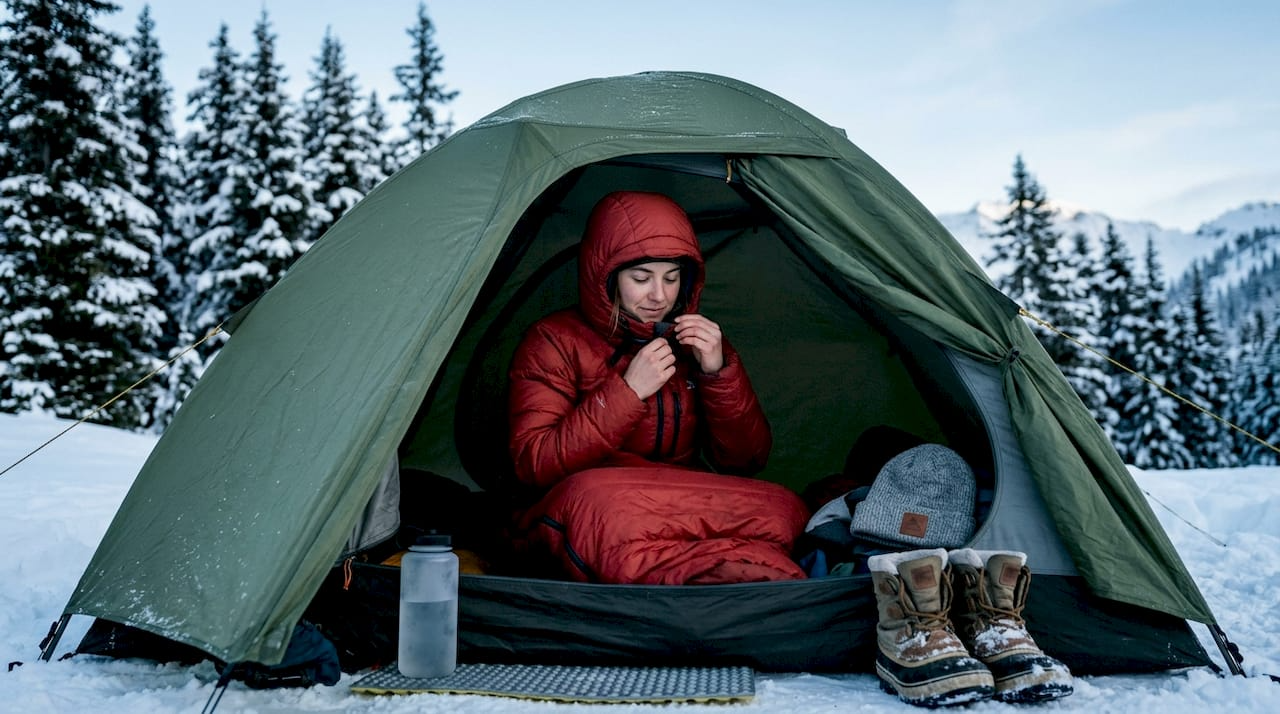
For winter camping tips success, look beyond basic temperature ratings. Features like draft collars, insulated hoods with drawcords, and zipper draft tubes prevent heat loss through vulnerable areas. Quality zippers with anti-snag designs ensure reliable operation in cold conditions when your fingers lack dexterity.
Sustainable sleeping bags: eco-friendly options and care tips
The outdoor industry increasingly recognizes its environmental footprint, and sleeping bag manufacturing presents both challenges and opportunities for sustainability. Sustainability: RDS-certified down ethical; recycled synthetics; durable bags reduce waste through material sourcing and longevity-focused design. Understanding these options helps you make purchases that align with environmental values without sacrificing performance.
Responsible Down Standard (RDS) certification ensures down comes from birds treated humanely, without live-plucking or force-feeding practices. This certification traces down through the supply chain, providing transparency about sourcing. While RDS down costs slightly more, it supports ethical farming practices and often comes from suppliers who maintain higher quality control standards, resulting in better loft and durability.
Recycled synthetic insulation transforms post-consumer plastic bottles and textile waste into functional fill materials. Brands now produce synthetic bags with 50-100% recycled content that performs comparably to virgin polyester fills. These materials divert waste from landfills while reducing petroleum dependence, though they still face end-of-life disposal challenges since most synthetic insulation isn't biodegradable.
Beyond materials, durability represents the most impactful sustainability factor. A sleeping bag used for 15 years has far less environmental impact than three bags replaced every five years. Quality construction, reinforced stress points, and repairable designs extend usable life significantly. When shopping for sustainable camping examples, prioritize brands offering repair services and replacement parts.
Proper care dramatically extends sleeping bag longevity, reducing waste and saving money. Follow this storage and maintenance routine:
- Never store sleeping bags compressed in stuff sacks between trips
- Use large mesh or cotton storage sacks that allow insulation to maintain loft
- Hang bags in cool, dry locations away from direct sunlight
- Air bags thoroughly after each trip before storage
- Spot clean stains immediately to prevent setting
Cleaning requires careful attention to preserve insulation integrity. Wash sleeping bags only when necessary, typically once per season for regular users. Use front-loading washers without agitators, selecting gentle cycles with cold water. Specialized down or synthetic cleaners maintain insulation properties better than standard detergents, which can strip natural oils from down or damage synthetic fibers.
Drying demands patience and proper technique:
- Use low heat settings in large-capacity dryers
- Add clean tennis balls or dryer balls to break up clumps and restore loft
- Check bags every 20-30 minutes, redistributing insulation by hand
- Continue drying until completely moisture-free, which may take 2-3 hours
- Never air-dry down bags, as this can lead to mildew growth
Pro Tip: Store sleeping bags loosely in breathable sacks in climate-controlled spaces; avoid damp basements or hot attics where temperature extremes and moisture damage insulation over time.
The outdoor gear maintenance guide emphasizes prevention over repair. Small tears caught early require simple patches, while neglected damage spreads and compromises entire panels. Carry repair tape on trips and address issues immediately. Many manufacturers offer affordable repair services for zipper replacements, baffle repairs, and shell patching that cost far less than new bags.
Practical tips for using and maintaining sleeping bags on outdoor adventures
Maximizing sleeping bag performance in the field requires understanding how environmental factors affect insulation and implementing smart usage practices. Temperature ratings provide baselines, but real-world conditions involve wind, humidity, ground temperature, and personal factors that influence actual warmth. Adapting your sleep system to these variables ensures consistent comfort across different environments.
Sleeping bag liners add 5-15 degrees of warmth while protecting your bag's interior from body oils and dirt. Silk liners pack smallest and add minimal warmth, perfect for summer trips focused on hygiene. Fleece liners provide substantial insulation for shoulder season camping. Vapor barrier liners trap moisture against your skin, preventing it from entering insulation in extreme cold conditions where drying is impossible.
Managing moisture represents the biggest challenge for maintaining insulation effectiveness. Your body releases up to a pint of moisture nightly through respiration and perspiration. This moisture migrates into your sleeping bag, reducing loft and thermal efficiency over multi-day trips. Combat moisture accumulation through these strategies:
- Air your sleeping bag daily, turning it inside out in morning sun
- Use a vapor barrier liner in extreme cold to contain moisture
- Avoid wearing damp clothes to bed, which transfer moisture to insulation
- Ensure adequate tent ventilation to reduce condensation
- Store bags in waterproof stuff sacks during transport, but never for extended periods
Layering your sleep system adapts to changing conditions without carrying multiple bags. Start with a quality sleeping pad with appropriate R-value for your climate. Add your sleeping bag as the primary insulation layer. In cold conditions, wear clean base layers and a beanie to retain heat. For unexpected cold snaps, layer a lightweight sleeping bag inside your primary bag or use an overbag designed for this purpose.
The most comfortable night's sleep outdoors comes from a properly integrated system where each component enhances the others, not from a single expensive piece of gear.
Compatibility between your sleeping bag and shelter affects performance significantly. Tent designs influence internal temperature and moisture management. Four-season tents trap heat effectively but require careful ventilation management. Three-season tents balance protection with airflow. Understanding your types of outdoor shelters helps you adjust sleep systems accordingly.
Pro Tip: Before bed, warm your sleeping bag by doing light exercises or placing a water bottle filled with hot water inside; starting with a pre-warmed bag dramatically improves comfort and reduces the time your body needs to heat the space.
Field maintenance prevents minor issues from becoming trip-ending problems. Pack these essential items with your must-have backpacking items:
- Repair tape for quick patch jobs on shell fabric tears
- Safety pins to temporarily fix zipper pulls or secure baffles
- Small stuff sack for protecting your bag during daytime storage
- Compression sack only for transport, never overnight storage
Interesting research shows that cold plunge sleep benefits include improved sleep quality, which carries over to outdoor rest. Your body's natural temperature regulation affects how well you sleep in a sleeping bag. Going to bed slightly cool allows your bag to warm gradually with your body heat, creating more comfortable conditions than climbing into a bag while overheated.
Position matters for maximizing warmth and comfort. Place your sleeping pad completely inside your tent footprint, away from walls where condensation forms. Position your bag with the hood end away from the tent door to minimize drafts. In cold conditions, stuff extra clothing into the foot box for additional insulation. Use your backpack as a pillow or footbox insulator, keeping it inside the tent where it won't collect frost or dew.
Explore top gear for your adventures at Life Camp Adventure
Now that you understand how sleeping bags integrate into complete outdoor rest systems, it's time to explore options that match your specific adventure style. Life Camp Adventure curates expert-reviewed camping gear designed for comfort, durability, and reliable performance across diverse conditions. Our selection includes sleeping bags rated for every season, from lightweight summer models to expedition-grade winter options.
Browse our best camping gear 2026 collection to discover top-rated sleeping bags alongside complementary equipment like sleeping pads, camping tents, and shelter systems. Each product listing includes detailed specifications, user reviews, and comparison tools that help you make informed decisions. Whether you're planning weekend trips or extended wilderness expeditions, our guides explain why choose camping equipment that prioritizes both performance and sustainability. Explore our camping tents comparison to complete your sleep system with shelter options that enhance your sleeping bag's effectiveness.
FAQ
What temperature rating should I look for in a sleeping bag?
Choose a bag rated 10-15 degrees lower than the coldest temperature you expect to encounter on your trips. EN comfort ratings indicate temperatures where most people sleep comfortably, while lower limit ratings show where you'll stay warm but not necessarily comfortable. Consider your personal cold tolerance, sleeping pad R-value, and whether you sleep warm or cold when selecting ratings.
How do I properly store my sleeping bag to extend its life?
Store your sleeping bag loosely in a large breathable cotton or mesh sack, never compressed in its stuff sack between trips. Hang it in a cool, dry location away from direct sunlight and moisture. Compression damages insulation fibers over time, reducing loft and thermal efficiency. Proper storage maintains insulation integrity for years, while compressed storage can permanently damage fill materials within months.
Are down sleeping bags better than synthetic for outdoor use?
Down offers superior warmth-to-weight ratios and compresses smaller, making it ideal for backpacking where every ounce matters. Synthetic insulation maintains warmth when wet, dries faster, and costs less upfront, working better for paddling trips or humid environments. Choose based on your typical conditions, budget, and priorities. For ethical sourcing, look for RDS-certified down that ensures humane treatment of birds.
What eco-friendly sleeping bag options are available?
Look for sleeping bags made with RDS-certified down or recycled synthetic insulation derived from post-consumer plastic waste. Many manufacturers now offer bags with 50-100% recycled content that performs comparably to virgin materials. Durability matters most for sustainability, so prioritize quality construction and brands offering repair services. A well-maintained bag lasting 15 years has far less environmental impact than cheaper bags replaced every few years.
