Eco-friendly materials for camping gear are life-cycle-aware materials that reduce resource use, lower toxic emissions, and maintain or improve performance over a long service life. That's the working definition worth keeping in mind every time you read a product tag. Three quick anchors: high-quality recycled nylon or polyester, bio-based polymers where lifecycle assessment (LCA) supports them, and low-impact synthetics made with cleaner energy or closed-loop processes. The role of eco-friendly materials goes well beyond what a fabric is made from.
Before you buy, prioritize these signals:
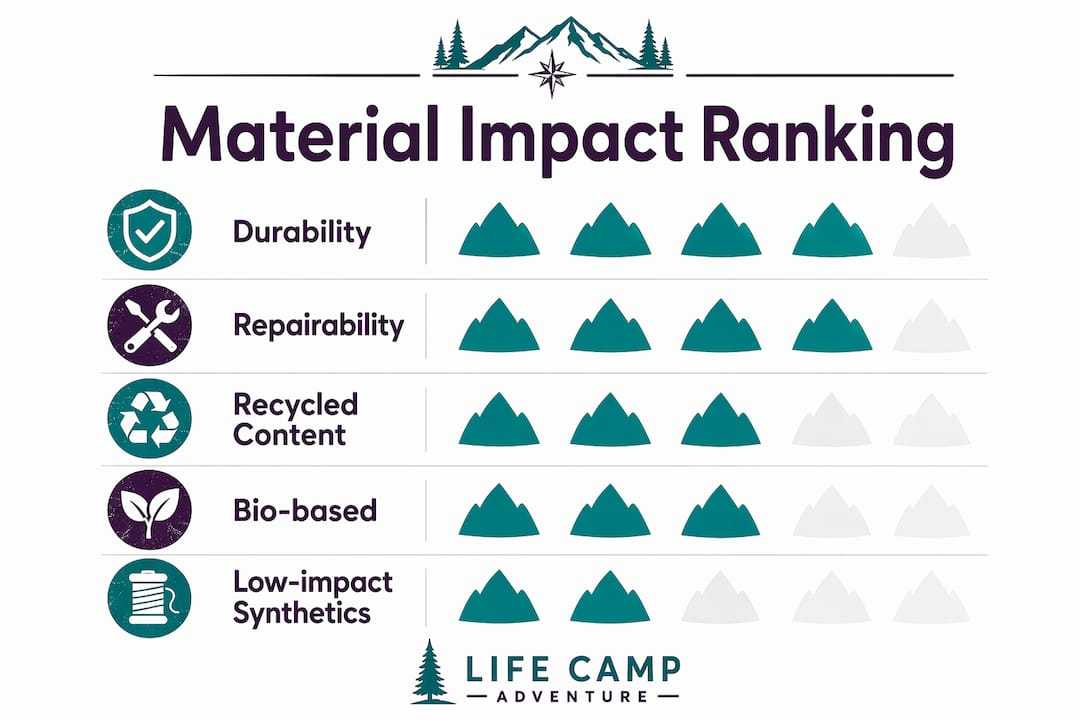
- Repairability — replaceable zippers, seam tape, and modular parts extend life more than any single material swap
- Long service life — a durable product used for a decade almost always outperforms a nominally greener but short-lived alternative
- Full lifecycle evidence — look for LCA data or supply-chain transparency, not just a "recycled" badge
What material categories actually matter in outdoor gear?
Outdoor gear draws from four practical categories. Knowing which is which helps you read product pages without getting misled.
Bio-based materials include polylactic acid (PLA), natural-fiber composites, and emerging biopolymers and biocomposites that reduce fossil feedstocks and, in some cases, processing energy. They're not automatically better — but when LCA supports them, they can cut both carbon and human-health impacts.
High-quality recycled materials cover mechanically or chemically recycled nylon and PET. Recycled content reduces virgin resource demand, but textile recycling still faces real technical and social barriers, so "recycled" alone isn't a complete answer.
Low-impact synthetics are polyester or nylon produced with renewable energy, water-efficient dyeing, or closed-loop chemical recovery. The base polymer may be conventional, but the production footprint is measurably lower.
Durable natural fibers and certified wood show up in camp furniture, cookware handles, and accessories. Certified bamboo, FSC-sourced wood, and organic cotton each have a place when the application suits them.
Certifications to recognize:
- GRS (Global Recycle Standard) — verifies recycled content percentage and chain of custody
- Bluesign — audits chemical use, water, and energy in textile manufacturing
- OEKO-TEX Standard 100 — tests finished products for harmful substances
- GOTS (Global Organic Textile Standard) — covers organic fiber content and processing chemicals
Pro Tip: No single certification covers the full lifecycle. A Bluesign fabric can still have a high-carbon finish treatment. Stack certifications with supply-chain transparency for a clearer picture.
Why material choice changes the environmental impact of your gear
Materials management accounts for a large share of total U.S. greenhouse gas emissions. That figure puts gear choices in context: the fabrics, foams, and metals in your pack are part of a much larger system.This is the substitution trap. A "bio" or "recycled" label doesn't guarantee lower impact unless production, transport, and finishing are audited. Manufacturing treatments like waterproofing and flame retardants can negate the gains from recycled inputs entirely. The better measure is always a full LCA.
On the health side, substituting petroleum-based composites with bio-based biocomposites has shown significantly lower VOC emissions and human-health impact scores in modeled comparisons. For tents and sleeping pads where you're breathing enclosed air, that matters.
| Lifecycle Stage | Key Impact | What to Check |
|---|---|---|
| Raw materials | Resource depletion, land use | Recycled content %, certified sourcing |
| Manufacturing | Energy use, chemical emissions | Bluesign, OEKO-TEX, factory audits |
| Use and maintenance | Durability, reproofing chemicals | Repairability, DWR chemistry |
| End of life | Landfill, recyclability | Take-back program, material mono-stream |
A sustainability-informed selection framework like SIMS-D3 ranks materials by resource depletion, embodied energy, toxicity, and circularity alongside performance — a more honest scorecard than performance alone.
Which materials should you choose for each type of gear?
Gear-specific choices matter because the performance demands vary sharply. Here's how to think through each category.
Tents: Prioritize durable fly fabrics — high-tenacity recycled nylon holds up to UV and abrasion better than lighter bio-based alternatives at current technology levels. Look for replaceable pole sections and seam tape you can re-apply. Some advanced bio-based biocomposites now match petroleum synthetics in weight-to-strength, making them viable for pole frames and structural components when LCA supports the claim. Check our camping tents compared page for options built around replaceable components.
Sleeping bags: High-loft, repairable construction beats any single fill material. Recycled synthetic fill is consistent in wet conditions; responsibly sourced down compresses better and lasts longer when properly maintained. Evaluate by compress-and-loft longevity, not just fill weight.
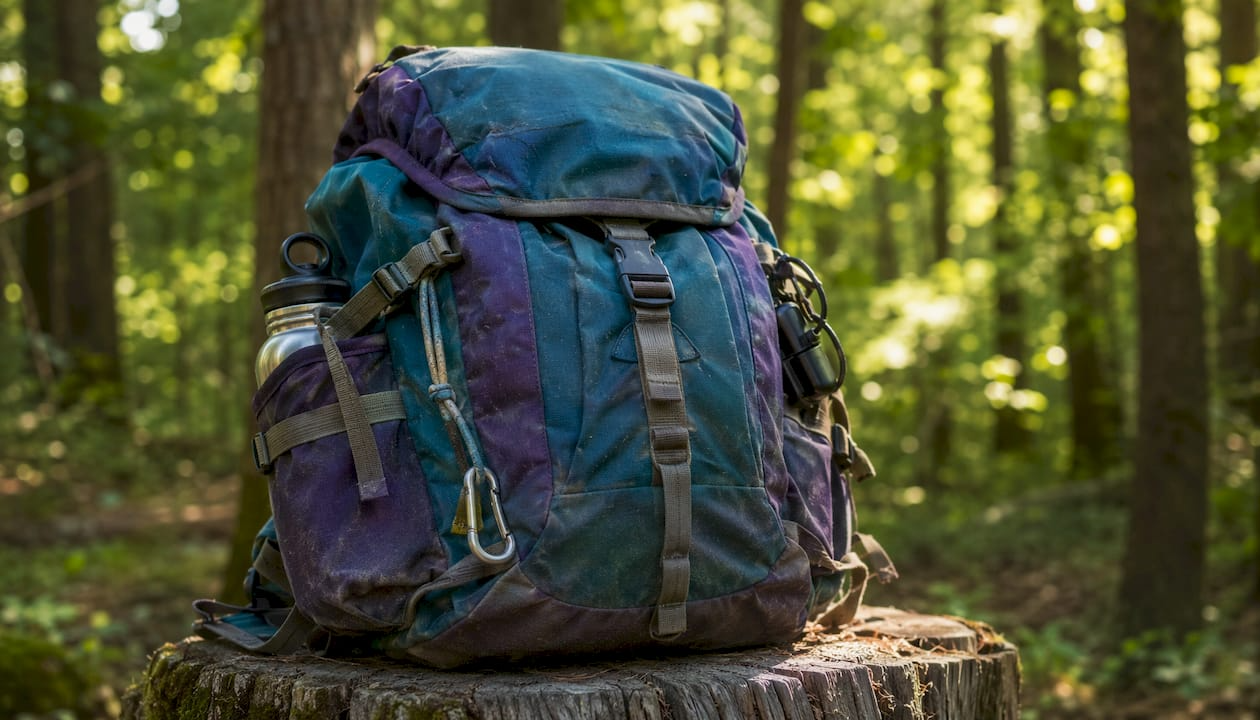
Backpacks: High-tenacity recycled nylons (500D and above) deliver proven abrasion resistance for frames and base panels. Confirm that stress points use bar-tack stitching and that buckles and straps are sold as replacement parts. See the outdoor gear materials guide for a deeper breakdown of fabric trade-offs.
Apparel: Layer by layer — base layers benefit from natural or bio-based blends (merino, Tencel) that manage moisture without synthetic microplastic shedding. Midlayers work well in durable recycled synthetic insulation. Shells need a durable water repellent (DWR) finish; choose brands that have moved to C6 or fluorine-free DWR chemistry, which carries a lower toxicity profile than legacy C8 PFAS treatments.
Cookware and stoves: Long-lived stainless steel and hard-anodized aluminum outperform coated non-stick options that shed microplastics over time. Modular stove designs with replaceable burner heads and O-rings extend product life significantly. Browse camping cookware reviews for options with documented repair parts.
How to evaluate material claims and certifications on gear labels
A short checklist you can run through in-store or on a product page:
- Full lifecycle info or LCA summary — does the brand publish manufacturing energy, finish chemistry, and end-of-life guidance?
- Supply-chain transparency — named mills, factory audits, or third-party verification (not just "responsibly sourced")
- Repairability — are replacement parts listed and sold separately?
- Clear end-of-life guidance — take-back program, recyclability by material stream, or donation pathway
- Stacked certifications — GRS + Bluesign together covers both recycled content and manufacturing chemistry
Red flags: vague terms like "eco" or "green" with no verifiable data; "biodegradable" claims on complex multi-layer composites (most won't biodegrade in a landfill); carbon-offset claims with no third-party verification.
Quick shopper questions answered:
Is recycled nylon always better than virgin nylon? Not automatically. If the recycled nylon requires more energy-intensive processing or a heavier chemical finish, the lifecycle advantage shrinks. Check for Bluesign or GRS alongside the recycled claim.
Does "natural fiber" mean lower impact? Not always. Conventional cotton is water- and pesticide-intensive. Look for GOTS certification or organic sourcing. For apparel sustainability context, RNK Apparel's sustainability commitment shows what meaningful supply-chain disclosure looks like in practice.
Why durability and repairability often matter more than material choice
Higher upfront cost for eco-friendly materials can be offset by improved durability and lower lifetime maintenance. A well-made, repairable product that lasts many years usually delivers greater sustainability gains than a nominally greener but short-lived alternative. That's total cost of ownership in practice.
Practical steps that extend gear life: re-apply seam tape before it peels, reproof shell fabrics with a heat-activated DWR spray after washing, patch small tears with gear-specific fabric tape before they grow, and store insulated items uncompressed to preserve loft. Each of these steps delays replacement and cuts lifecycle impact more than any single material upgrade.
Pro Tip: Before buying, search the brand's website for "repair guide" or "replacement parts." If neither exists, factor in the cost of full replacement when the first component fails.
Check Lifecampadventure's gear maintenance guide for step-by-step care instructions across tent, pack, and apparel categories.
What are your end-of-life options for camping gear?
Planning for end-of-life at the time of purchase is one of the most underused sustainability levers. Practical routes:
- Manufacturer take-back programs — some brands accept worn gear for recycling or refurbishment; check at purchase, not years later
- Specialty textile recyclers — organizations like municipal hazardous-waste programs or fiber-to-fiber recyclers accept synthetic textiles that standard curbside programs reject
- Municipal recycling limits — most multi-layer outdoor fabrics (laminated shells, coated nylons) are not accepted in standard curbside streams; check your local program before assuming
- Reuse and donation — functional gear in any condition has value; outdoor gear libraries and community swap programs extend product life without reprocessing energy
- Resale platforms — keeping receipts and original tags increases resale value and keeps gear in use longer
To increase circularity from day one: buy modular gear with replaceable parts, register products for take-back at purchase, and choose mono-material components where possible (a single-fiber stuff sack recycles more cleanly than a laminated one). For more practical habits, see Lifecampadventure's guide to eco-friendly camping.
Your one-page shopping checklist for eco-conscious campers
Before you buy:
- Does the product page publish LCA data, manufacturing energy use, or finish chemistry?
- Are certifications stacked (e.g., GRS + Bluesign, or GOTS + OEKO-TEX)?
- Are replacement parts listed and available to purchase?
- Is there a take-back or repair program?
- Does the brand name its mills or factories?
Performance trade-offs by condition:
- Wet environments: recycled nylon shells with fluorine-free DWR hold up well; bio-based coatings vary — confirm waterhead ratings
- Cold environments: recycled synthetic fill performs more consistently when wet than down; down lasts longer when kept dry and properly stored
- High-abrasion use: high-tenacity recycled nylon (500D+) and durable tactical-grade fabrics outperform lighter bio-based alternatives at current performance levels
Questions to ask customer support: What DWR chemistry does this product use? Are pole sections or buckles sold separately? What is the recommended end-of-life path for this item?
Use Lifecampadventure's outdoor survival checklist alongside this one for a complete pre-trip gear audit.
How Lifecampadventure applies lifecycle thinking to gear selection
Lifecampadventure evaluates gear with durability, repairability, and material transparency as core criteria — not afterthoughts. Products in the tent, backpack, and cookware categories are selected with replaceable components and documented care guides in mind, because a product you can repair is a product you don't have to replace.
For shoppers balancing cost and sustainability, Lifecampadventure's approach is practical: a slightly higher upfront investment in a repairable, durable product typically costs less over three to five years than cycling through cheaper alternatives. That trade-off shows up most clearly in tents, packs, and cookware — the categories where construction quality directly determines how long the product stays in service.
Key Takeaways
Eco-friendly camping gear is defined by lifecycle performance — durability, repairability, and supply-chain transparency — not by a single material claim or certification badge.
| Point | Details |
|---|---|
| Lifecycle over label | Materials management is associated with an estimated 42% of U.S. GHG emissions; evaluate the full lifecycle, not just the base material. |
| Certifications as filters | Stack GRS, Bluesign, OEKO-TEX, or GOTS to cover recycled content, manufacturing chemistry, and finish safety together. |
| Durability beats swaps | A repairable, long-lived product almost always delivers greater sustainability gains than a nominally greener but short-lived alternative. | | Plan end-of-life early | Check for take-back programs and replacement parts at purchase — not after the gear wears out. | | Lifecampadventure's approach | Lifecampadventure selects tents, packs, and cookware for repairability and documented care, supporting lifecycle-first buying decisions. |
Why experienced campers pay close attention to material choices
The conventional wisdom says "just buy recycled." After enough trips, you realize that's the wrong frame entirely. The gear that earns its place in a pack isn't the gear with the best sustainability marketing — it's the gear that's still performing on trip fifteen.
There's a real pattern worth naming: lighter, cheaper items often look better on a spec sheet but fail at the seams, coatings, or buckles within two seasons. A slightly heavier shell with a proven recycled nylon construction and a replaceable zipper will outlast three of the "ultralight eco" alternatives. Over time, that means less waste, less spending, and less time sourcing replacements before a trip.
Treating sustainability as a habit means buying less and repairing more. It means keeping a small repair kit in your pack, reproofing your shell before it stops beading water, and choosing brands that make replacement parts easy to find. Those habits compound. A camper who repairs and maintains gear consistently generates a fraction of the waste of one who replaces it every few years — regardless of what the original material was.
Lifecampadventure stocks gear built to last longer and waste less
Choosing gear that holds up across seasons is the single most effective sustainability decision you can make as a camper. Lifecampadventure carries tents, backpacks, and cookware selected for construction quality, repairability, and material transparency — so you're not guessing at what's inside the fabric or how long it will hold up.
Start with the categories where lifecycle impact is highest. The best camping gear comparison covers tents, packs, and cookware with durability and construction quality as primary filters. For survival-focused shoppers, the survival essentials gear guide highlights long-lived, repairable options across key categories. Browse both pages, check the listed certifications and repair-part availability, and reach out to the Lifecampadventure team with questions about specific products before you buy.
Sources and further reading
- Sustainable Materials Management Basics — U.S. EPA: primary source for the 42% GHG figure tied to materials management in the U.S.
- Life-cycle considerations for sustainable materials selection — IOPscience: explains how manufacturing treatments can offset recycled-input benefits
- The Role of Green Building Materials in Reducing Environmental and Human Health Impacts — MDPI: LCA and VOC data on bio-based vs. petroleum composites
- Eco Breakthroughs: Sustainable Materials Transforming the Future — MDPI: survey of biopolymers, nanocellulose, and circular design trends
- Sustainability-informed materials selection (SIMS-D3) — MRS Bulletin / Springer: multi-criteria framework covering toxicity, energy, and circularity
- Applied research on high-performance biocomposites — MDPI Applied Sciences: performance data on bio-based composites vs. petroleum synthetics
- Economic resilience and sustainability in materials selection — Springer: durability and total cost of ownership analysis
- Sustainable Materials Selection Framework — U.S. Department of Energy: design-integrated LCA framework with cross-sector case studies
