TL;DR:
- Insulated clothing traps still air to retain body heat and acts as a thermal barrier against the cold. Its effectiveness depends on material loft, dryness, and proper fit, which prevent heat loss through conduction, convection, and radiation.
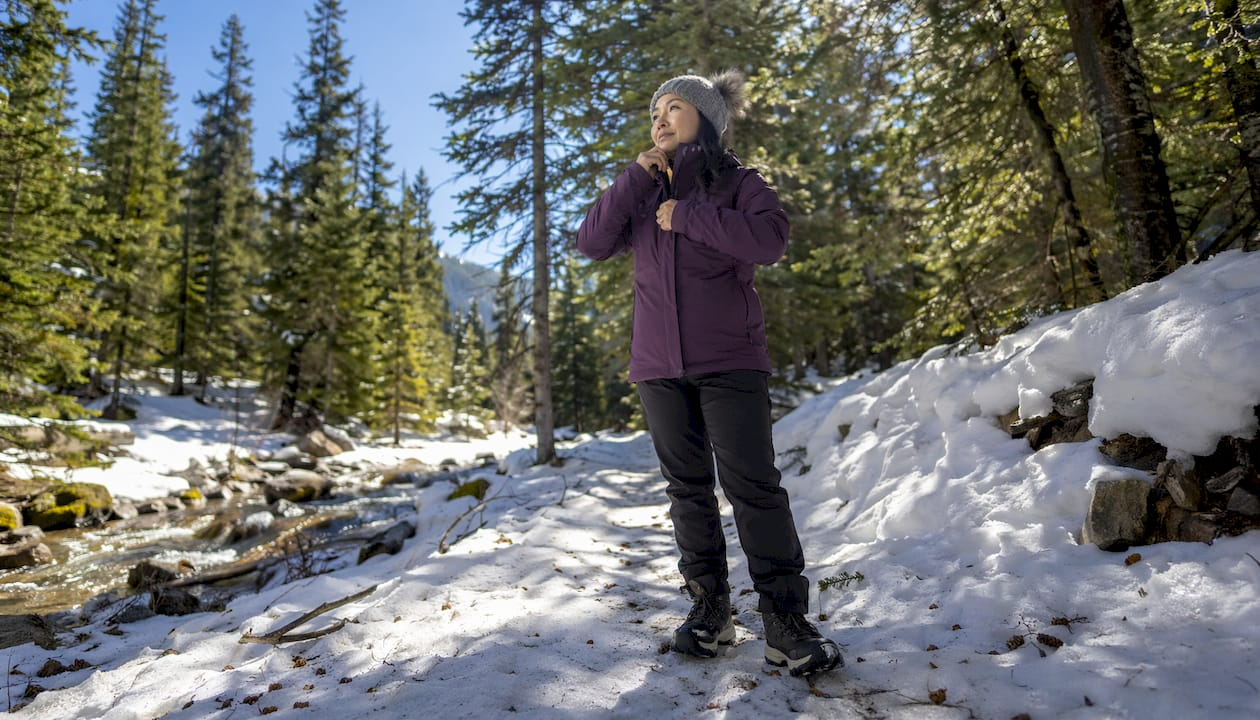
Insulated clothing is defined as apparel designed to trap your body's own heat and slow its escape to the surrounding environment. The role of insulated clothing is not to generate warmth but to act as a thermal barrier, reducing heat loss through conduction, convection, and radiation. Effective thermal barriers can reduce total heat transfer by up to 75% in cold conditions. That figure alone explains why the right insulation layer separates a comfortable trail day from a dangerous one. Whether you are hiking above the tree line, setting up camp in freezing temperatures, or waiting out a storm, understanding the importance of insulated apparel is the first step toward staying safe and comfortable outdoors.
How does insulated clothing actually work to retain warmth?
Insulated clothing works by trapping layers of still air within its fabric structure. That trapped air acts as a buffer between your body and the cold outside. Heat moves in three ways: conduction (direct contact transfer), convection (heat carried away by moving air or water), and radiation (heat radiating outward from your skin). Good insulation slows all three.
The key mechanism is "dead air." When fibers, down clusters, or wool crimps create tiny pockets of motionless air, heat cannot escape quickly. The human body produces 400–600 watts of metabolic heat during moderate to vigorous activity. Insulated clothing's job is to hold that energy close to your skin rather than let it bleed into the cold air around you.
Loft is the term for how much a garment puffs up. Higher loft means more trapped air and better insulation value. Down clusters create exceptional loft because each cluster branches outward in three dimensions. Synthetic fibers mimic this with crimped or spiraled strands. Wool achieves it through its natural crimp structure.
Keeping insulation dry and fully lofted is non-negotiable. Compressed or wet insulation loses its air pockets and fails to slow heat loss. This is why the structure of a garment matters as much as the material inside it.
- Conduction transfers heat directly through solid contact. Thick insulation layers reduce this.
- Convection carries heat away through moving air. Trapped still air blocks convective loss.
- Radiation sends heat outward from your body. Reflective linings in some garments address this.
- Loft determines how much dead air a garment holds. Protect it from moisture and compression.
Pro Tip: Before heading out, shake your insulated jacket to fully restore its loft. A compressed garment fresh from a stuff sack performs well below its rated warmth until the fill expands completely.
What materials are used in insulated clothing and how do they compare?
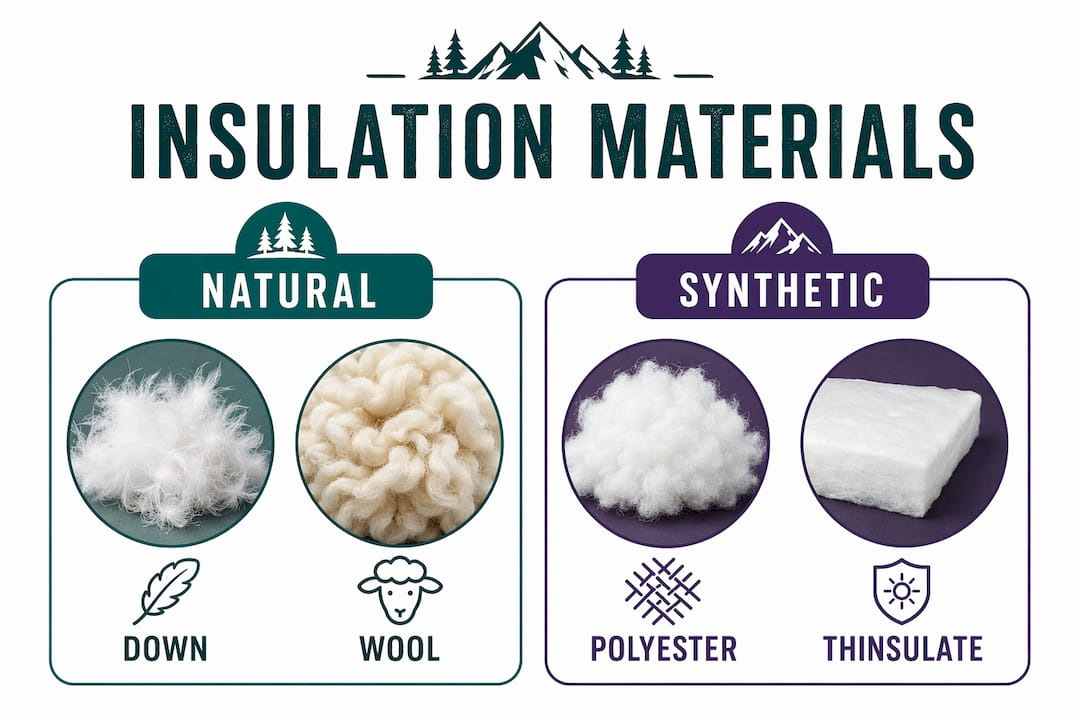
The three primary insulation materials are natural down, synthetic fibers, and wool. Each performs differently depending on conditions, activity type, and budget. Choosing the right one is one of the most practical decisions you make when selecting insulated outerwear.
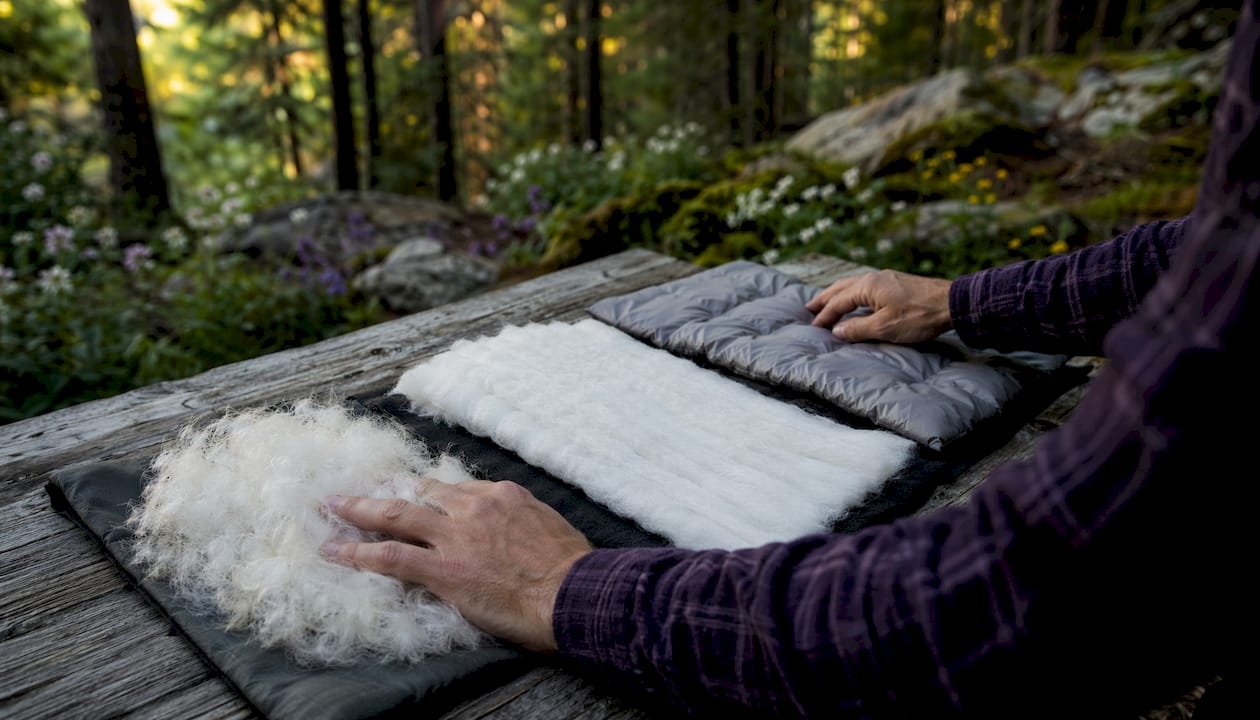
Natural down offers the best warmth-to-weight ratio of any insulation material. It compresses tightly for packing and rebounds to full loft quickly. The trade-off is wet performance. Down loses 80–90% of its warmth when damp, making it a liability in wet or humid conditions unless treated with a durable water-repellent (DWR) finish. Fill power, measured from 400 to 900+, indicates how much space one ounce of down occupies. Higher fill power means lighter weight for the same warmth.
Synthetic insulation is the go-to choice for wet environments. Synthetic insulation retains about 90% of its insulating properties when wet. That resilience makes it the safer pick for Pacific Northwest hiking, kayaking, or any activity where rain is likely. It is also more affordable than high-fill-power down and dries faster. The downside is bulk. Synthetic garments pack larger and weigh more than equivalent down pieces.
Wool, particularly Merino wool, brings a unique advantage. Wool absorbs up to 30% of its weight in moisture while still providing insulation through an exothermic heat release process. That means it actually releases a small amount of heat as it absorbs moisture, which is a property no synthetic fiber replicates. Merino wool also resists odor naturally, making it ideal for multi-day trips.
| Material | Warmth-to-weight | Wet performance | Packability | Best use case |
|---|---|---|---|---|
| Natural down | Excellent | Poor (unless DWR treated) | Excellent | Dry, cold conditions |
| Synthetic fiber | Good | Excellent (~90% retained) | Moderate | Wet or variable weather |
| Merino wool | Good | Good (absorbs and releases heat) | Moderate | Multi-day, mixed conditions |
- Down suits alpine climbing and dry winter camping where weight matters most.
- Synthetic suits rain-heavy environments and activities with high sweat output.
- Wool suits extended trips where odor control and moisture resilience both matter.
A thermal fabric comparison confirms that Merino wool excels in prolonged outdoor exposure, while synthetics suit mixed indoor-outdoor conditions due to their moisture management properties.
How do moisture, wind, and compression affect insulation performance?
Moisture is the single biggest threat to insulation effectiveness. Water conducts heat approximately 25 times faster than air, so when sweat or rain saturates your insulation layer, it replaces the insulating air pockets with a highly conductive medium. The result is rapid heat loss at exactly the moment you need warmth most.
Wind compounds the problem. Wind penetrates insulation layers, disrupting still air pockets and accelerating convective heat loss. A windproof outer shell is not optional in exposed terrain. It is the barrier that keeps your insulation layer functional. Without it, even a high-quality down jacket performs poorly in a stiff breeze.
Compression of insulation loft by backpack straps or tight garments collapses air pockets and reduces warmth significantly. This is a commonly overlooked problem. A heavy pack pressing against your back flattens the insulation in that zone, creating a cold spot. Wearing a vest under a pack instead of a jacket, or choosing a jacket with articulated panels, addresses this directly.
- Wear a moisture-wicking base layer to pull sweat away from your skin before it reaches the insulation layer.
- Use a breathable, windproof shell over your insulation in exposed or wet conditions.
- Choose a jacket with enough room to loft fully without being so loose that wind penetrates at the cuffs or hem.
- Avoid tight pack straps over insulated panels. Adjust your pack fit or use a vest-style insulator under the pack.
Pro Tip: If you are moving hard and sweating, open your jacket's pit zips or front zipper before you stop for a break. Venting while active prevents moisture from building up in the insulation layer.
Understanding layering for outdoor apparel is the practical framework that ties moisture management, wind protection, and insulation together into a system that actually works.
How to choose insulated clothing based on activity and weather
Matching insulation weight to your activity level is the most practical skill in choosing insulated outerwear. The core principle is simple: the harder you work, the less insulation you need while moving.
Identify your activity intensity. High-output activities like trail running, fast hiking, or ski touring generate enough body heat that heavy insulation causes overheating and sweat buildup. Stationary tasks require 150–300g synthetic or 600+ fill-power down, while active tasks benefit from 80–150g insulation to prevent moisture buildup. Match your garment to your expected output, not just the air temperature.
Plan for temperature swings. Mountain weather changes fast. A summit that is calm and cold at 8:00 AM can turn windy and wet by noon. Modular 3-in-1 clothing systems provide superior versatility by letting you add or remove layers as conditions shift. A zip-in liner paired with a shell gives you four configuration options from a two-piece system.
Prioritize breathability for aerobic activities. A highly breathable synthetic insulator works better for a fast-paced day hike than a dense down jacket. Look for garments with active-stretch panels or strategic ventilation zones at the underarms and back.
Consider your trip length and pack weight. For a single-day outing, a synthetic jacket is a practical, durable choice. For a multi-day alpine trip where pack weight matters, a high-fill-power down piece saves grams that add up over miles. Read more about packing layering clothing for practical guidance on building a light, functional kit.
Check fill power and insulation weight on the label. These numbers are not marketing. They tell you exactly how much warmth a garment delivers per unit of weight. A 700-fill-power down jacket at 120g of fill is a different tool than a 400-fill jacket at 200g, even if both are labeled "midlayer."
Balancing insulation, moisture-wicking, and wind protection is more important than owning the warmest garment available. The best insulated piece for outdoor activities is the one that matches your specific conditions, not the one with the highest temperature rating.
Key Takeaways
Insulated clothing retains body heat by trapping still air within its structure, and its effectiveness depends on material choice, moisture management, and proper fit for your activity level.
| Point | Details |
|---|---|
| Insulation traps, not generates, heat | Clothing slows heat escape; your body is the only heat source. |
| Material choice determines wet performance | Synthetic retains ~90% warmth when wet; down loses 80–90% when damp. |
| Moisture and wind destroy insulation | Water conducts heat 25x faster than air; a windproof shell is non-negotiable. |
| Match insulation weight to activity | Active tasks need 80–150g; stationary tasks need 150–300g or 600+ fill-power down. |
| Modular systems outperform single heavy layers | 3-in-1 systems let you adjust insulation as activity and weather change. |
What I have learned from getting insulation wrong in the field
Most outdoor adventurers focus on buying the warmest jacket they can find. That instinct is understandable, but it is the wrong frame. The real skill is knowing when to take insulation off, not just when to put it on.
I have made the mistake of wearing a heavy down jacket on a steep approach because the morning air was cold. By the time I reached the ridge, I was soaked through from the inside. The jacket that was supposed to keep me warm became a liability the moment I stopped moving. Over-insulating and sweat buildup leads to moisture cooling that impairs motor skills and increases accident risk. That is not a theoretical warning. It is a real consequence that catches people off guard.
The shift I made was moving to a modular system. A lightweight synthetic active insulator for moving, a heavier down piece for stops and camp. Two garments that together weigh less than one heavy jacket, and they cover every scenario better. Exploring modular gear for outdoor adventures changed how I think about cold-weather preparation entirely.
The other lesson is to never ignore a CacheWerk Sherpa jacket style of soft, warm midlayer for camp use. When you stop moving and the temperature drops, a plush, warm layer over your base is often more comfortable and practical than a packable down piece. Comfort at camp is not a luxury. It is how you recover and stay sharp for the next day.
— Billy
Gear up with Lifecampadventure for your next cold-weather adventure
Lifecampadventure builds its gear selection around one principle: every adventurer deserves equipment that performs when conditions get serious.

Whether you are preparing for a weekend camping trip or a multi-day backcountry route, the right insulated apparel is part of a complete kit. Lifecampadventure carries a range of essential outdoor gear types suited for varying activity levels and weather conditions. From insulated layers to shelter and survival tools, the full catalog is built for real outdoor use. Browse the selection and find the pieces that match your next adventure.
FAQ
What is the role of insulated clothing in cold weather?
Insulated clothing traps still air close to your body to slow heat loss through conduction, convection, and radiation. It does not generate heat. It preserves the heat your body already produces.
How does moisture affect insulation performance?
Water conducts heat approximately 25 times faster than air, so wet insulation loses most of its effectiveness. Synthetic insulation retains about 90% of its warmth when wet, while down loses 80–90%.
What fill power should I look for in a down jacket?
For active outdoor use in cold, dry conditions, 600+ fill-power down provides a strong warmth-to-weight ratio. Higher fill power (700–900) means lighter weight for the same insulation level.
How do I prevent sweat from ruining my insulation layer?
Wear a moisture-wicking base layer to pull sweat away from your skin before it reaches the insulation. Vent your jacket during high-output activity and switch to a lighter insulator when moving hard.
What is a modular insulation system and why does it matter?
A modular system uses two or more separate layers that you add or remove as activity and weather change. This approach outperforms a single heavy jacket because it lets you regulate body temperature without overheating or under-insulating.
