TL;DR:
- Unpreparedness is a leading cause of avoidable outdoor emergencies and rescues.
- Proper planning, gear, and skills can prevent most wilderness injuries and incidents.
- Developing a mindset of personal responsibility and ongoing practice saves lives outdoors.
Most hikers and campers believe serious wilderness emergencies happen to other people. It's a natural assumption, especially if you've done a few trips without incident. But the reality is that unpreparedness is one of the leading causes of avoidable rescues and serious injuries in the outdoors. Emergency room doctors and survival experts consistently point out that most incidents can be handled or even prevented with the right camping advice from an ER doctor: stocked first aid kits, clear communication plans, and consistent weather awareness. This article walks you through exactly what you need to know and carry before your next adventure.
Key Takeaways
| Point | Details |
|---|---|
| Risks are real | Outdoor activities carry serious risks that can be avoided with preparation. |
| Preparation saves lives | Being ready with skills and equipment makes emergencies more manageable and less severe. |
| Essential gear checklist | A first aid kit, signaling tools, and communication devices are non-negotiables every trip. |
| Practice matters | Regularly reviewing plans and practicing skills is as important as packing the right gear. |
| Mindset over gear | Developing a habit of proactive planning will have the biggest impact on your safety outdoors. |
The real risks of outdoor adventures
Outdoor recreation in the United States is growing fast. More people than ever are hitting trails, setting up camp in remote locations, and exploring wilderness areas with minimal prior experience. That growth in participation has a direct effect on search and rescue demand, and National Park Service visit data make it clear: as more people head into nature, personal responsibility becomes more important, not less, because rescue resources simply cannot scale at the same rate.
Here's the thing about outdoor emergencies: they rarely look dramatic before they happen. A trail that seemed straightforward turns slippery after rain. A blister left untreated becomes an infected wound. A cell signal that seemed strong at the trailhead disappears two miles in. The most common wilderness emergencies break down into four broad categories:
- Falls and musculoskeletal injuries: Twisted ankles, knee injuries, and head trauma from falls on uneven terrain
- Weather-related incidents: Hypothermia (dangerously low body temperature) from sudden temperature drops, heat exhaustion, or lightning exposure
- Animal encounters: Bites, stings, and attacks from insects, snakes, and larger wildlife
- Minor injuries that escalate: Cuts, burns, and blisters that worsen because of poor wound care in the field
"Most outdoor emergencies are not acts of nature. They are the result of people underestimating conditions and overestimating their own readiness."
The encouraging takeaway here is that almost all of these scenarios are manageable with the right knowledge and tools. Learning the right emergency preparedness steps before you leave home can dramatically change how any of these situations unfold. Prevention is not just a possibility; it's the standard for anyone who takes outdoor adventures seriously.
How emergency preparation makes a difference
Knowing the risks is only useful if you act on that knowledge. The gap between a minor inconvenience and a life-threatening situation often comes down to how quickly and effectively you respond in the first few minutes after an incident. That's where real preparation pays off. According to ER doctors and wilderness safety experts, injuries like bleeding, burns, sprains, and animal encounters can all be managed in the field when you have a solid first aid kit and the skills to use it.
Let's look at how preparation versus lack of preparation actually changes outcomes:
| Scenario | Unprepared outcome | Prepared outcome |
|---|---|---|
| Deep cut on the trail | Uncontrolled bleeding, potential infection | Bleeding controlled, wound dressed, hiking continues or safe exit made |
| Sudden temperature drop | Hypothermia risk, no dry layer available | Extra insulation layer deployed, body temperature maintained |
| Twisted ankle two miles out | Immobilized, waiting for rescue with no way to signal | Wrapped with elastic bandage, able to limp out or signal rescuers with whistle |
| Lost trail in poor visibility | Panic, poor decisions, risk of further disorientation | Compass and map used to locate position, signal deployed, communication device activated |
| Bee sting with mild allergic response | No antihistamine, reaction escalates | Antihistamine administered, situation monitored and controlled |
The pattern is consistent. Preparation doesn't mean you avoid every problem. It means you stay in control when one shows up. A stocked and accessible first aid kit matters enormously here. Many people pack one and then bury it at the bottom of a bag. If you can't reach it in under 30 seconds, it's not doing its job. Review these outdoor first aid steps so you're ready to act without hesitation.
Your communication plan matters just as much as your gear. Letting someone know your route, your intended return time, and what to do if you don't check in can mean the difference between a timely rescue and one that happens too late. In areas without cell service, a satellite communicator or personal locator beacon (PLB) becomes critical. Weather monitoring is the third pillar of preparation. Checking forecasts the morning of your trip and again the night before is a habit that prevents a huge proportion of weather-related incidents.
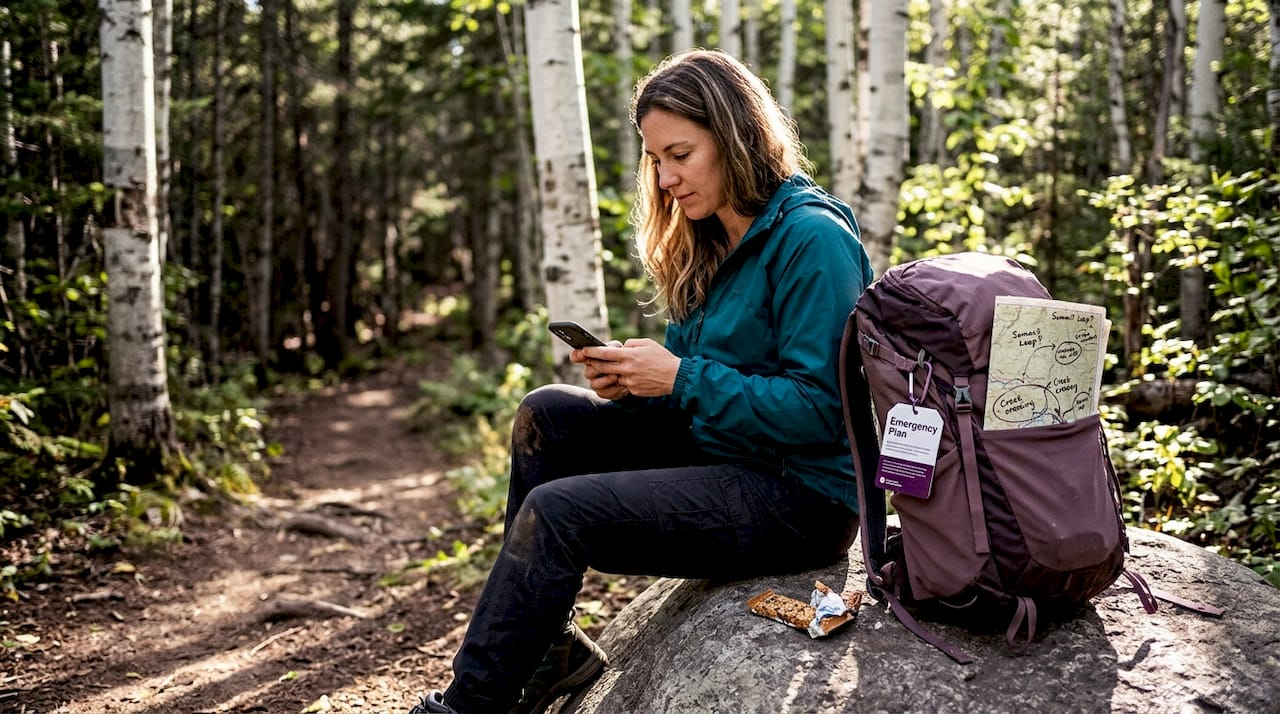
Pro Tip: Don't just buy a first aid kit, open it. Read the instructions on each item, practice applying a bandage, and replace anything that expired. Familiarity with your first aid kit recommendations is what makes it useful when stress is high.
What to pack: Must-have emergency gear
Gear decisions matter. But the truth is you don't need to spend a fortune to be well-prepared. You need the right items, organized and ready to use. Here's a breakdown of what should be in every outdoor adventurer's emergency kit.
First aid essentials:
- Adhesive bandages in multiple sizes for cuts and blisters
- Sterile gauze pads and medical tape for larger wounds
- Antiseptic wipes and antibiotic ointment for wound cleaning
- Elastic bandage (ACE wrap) for sprains and strains
- Tweezers for splinters, thorns, and tick removal
- Pain relievers like ibuprofen or acetaminophen
- Antihistamine tablets for allergic reactions to stings or plants
- Moleskin for blister prevention and treatment
- Nitrile gloves to protect both you and the person you're treating
- A small CPR face shield
These first aid kit essentials are the baseline recommended by wilderness medicine professionals. Each one addresses a specific and realistic scenario you might face in the field. They are compact, lightweight, and collectively cover the majority of injuries that happen on camping and hiking trips.
Emergency signaling and navigation tools:
| Item | Why it matters |
|---|---|
| Whistle (pealess design) | Works when wet, audible up to a mile away, no batteries required |
| Signal mirror | Visible to aircraft up to 10 miles away on a clear day |
| Headlamp with extra batteries | Allows movement and signaling after dark |
| Compass | Functions independently of cell signal or satellite |
| Topographic map of the area | Gives context that GPS apps on a dead phone cannot |
| Personal locator beacon (PLB) | Sends GPS coordinates to rescue services globally via satellite |
A satellite communicator or PLB is increasingly affordable and is genuinely the most important item for anyone heading into remote terrain. Standard cell phones simply don't reach rescue services in most wilderness areas. Explore more wilderness first aid essentials and see how communication tools fit into the bigger picture of backcountry safety.
Additional survival supplies:
- Emergency space blanket: weighs almost nothing, retains up to 90% of body heat
- Fire starter kit: waterproof matches plus a lighter plus a ferrocerium rod (a metal rod that produces sparks when struck)
- Water purification tablets or a compact filter
- Energy-dense snacks: nuts, jerky, energy bars
- A multi-tool with blade, pliers, and scissors
- Duct tape (wrap a small amount around a water bottle to save space)
Pro Tip: Before every single trip, go through your outdoor gear checklist item by item. Test the flashlight. Check the whistle. Look at the expiration dates on medications. Ten minutes of review before you leave can prevent a serious problem in the field.
Practical steps for personal readiness
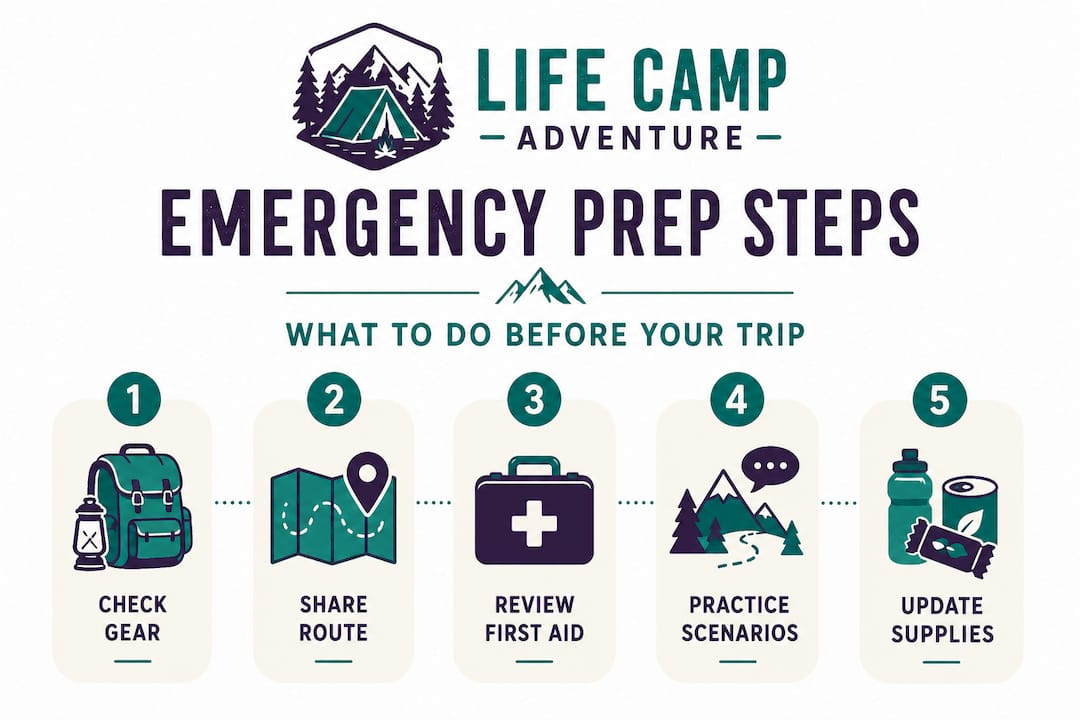
Having the right gear is only part of the equation. What separates adventurers who stay safe from those who end up in trouble is habit. Personal readiness is a practice, not a one-time purchase. Here's a clear set of steps you can follow before and during every outdoor trip.
- Plan your route in detail. Study the trail map, note elevation changes, identify water sources, and mark the nearest trailhead exits. Know where you're going before you leave.
- Share your itinerary with someone at home. Give a trusted contact your planned route, your campsite location, your expected return time, and clear instructions on when to call for help if they don't hear from you.
- Check the forecast from a reliable source. Look at conditions for the entire duration of your trip, not just the day you depart. Mountain weather in particular can shift dramatically within hours.
- Practice your first aid skills before the trip. Bandaging a wound when you're calm and at home is very different from doing it when someone is in pain on a muddy trail. Regular practice matters.
- Learn to use a compass and paper map. GPS apps fail when your battery dies or cell signal is absent. Basic navigation using a physical map and compass is a skill every hiker should have.
- Run a mock emergency scenario. Talk through what you'd do if someone in your group twisted an ankle three miles from the trailhead, or if a storm rolled in unexpectedly. Walk through the steps out loud. This kind of mental rehearsal is what ER doctors recommend for building the calm response that injuries and sudden emergencies demand.
- Review and update your kit regularly. Medications expire. Batteries lose charge. Elastic bandages dry out and lose elasticity. Set a reminder every three months to go through your kit and refresh what needs replacing.
- Know your limits and your group's limits. Honest self-assessment about fitness, experience, and comfort with conditions is one of the most underrated essential survival steps any adventurer can take.
- Carry emergency contacts and medical information in writing. A wet phone is useless. A laminated card with your blood type, allergies, and emergency contacts is not.
- Learn the basic outdoor skills that apply to your terrain. For forest camping, that includes fire building and water sourcing. For alpine environments, it includes reading weather patterns and understanding terrain risks. Practice the basic outdoor skills relevant to where you actually go.
Pro Tip: Walk through a mock emergency scenario with your group before every trip. Assign roles, practice the steps, and talk through what each person should do in different situations. Groups that practice together respond faster and more calmly when real emergencies occur.
The overlooked mindset shift that saves lives
Here's the honest take most safety articles skip: owning good gear doesn't make you safe. Reading a checklist doesn't either. What actually saves lives in outdoor emergencies is a consistent mindset of personal responsibility that was built long before anything went wrong.
We see this pattern clearly when looking at why serious incidents happen. The rising number of rescues tied to growing National Park Service participation isn't because outdoor recreation got more dangerous. It's because more people are entering wilderness spaces with a consumer mindset rather than a preparedness mindset. They bought hiking boots and a trail app, and they assumed that was enough.
The adventurers who handle emergencies well share one common trait: they treat preparation as an ongoing habit, not a pre-trip errand. They practice scenarios when nothing is on the line so they can execute when everything is. They update their skills, not just their gear. They stay honest about what they don't know.
Most serious incidents we see documented involve a chain of small, preventable oversights. Someone didn't check the weather. Someone didn't tell anyone where they were going. Someone assumed the group would be fine because they'd done it before. The gear was packed but the knowledge wasn't there to use it effectively.
This is why outdoor survival matters as a concept, not just a product category. Survival skills are really just good habits practiced in advance. They're the reason why some people walk out of difficult situations and others wait for rescue. The shift from "I have the gear" to "I practice the skills" is the most important upgrade any adventurer can make.
Get peace of mind—prepare with expert-approved gear and guides
You've just worked through the core of what outdoor emergency preparedness actually looks like in practice. The knowledge is here. Now it needs to come with you on your next trip.

At Life Camp Adventure, we've put together resources and gear recommendations built specifically for campers and hikers who take preparation seriously. Whether you want to understand the reasons to pack survival gear before your first backcountry trip, follow a tested outdoor survival guide to build your plan step by step, or work through a complete essential survival checklist to make sure nothing gets left behind, we have the tools to help you move forward with confidence. Your next adventure deserves more than good intentions. It deserves solid preparation.
Frequently asked questions
What is the most important emergency item to bring camping?
A well-stocked first aid kit is essential, covering the kit essentials like bandages, antiseptics, pain relievers, and tweezers that address the most common camping injuries quickly and effectively.
How does emergency preparation reduce risk outdoors?
Preparation helps you prevent accidents through awareness and planning, and respond quickly when something does go wrong, which directly reduces injury severity and often eliminates the need for outside rescue entirely.
Do I need to prepare for emergencies if I hike with a group?
Yes, every individual in a group should carry basic emergency supplies and understand how to use them, because growing rescue demand shows that accidents can isolate members and delay help even in experienced groups.
How often should I update my emergency gear for the outdoors?
Review your gear before every trip and do a full refresh every three months, because expert guidance consistently emphasizes that expired medications and faulty equipment fail exactly when you need them most.
Recommended
- Emergency Preparedness Steps for Safe Outdoor Adventures
- Master essential first aid steps for outdoors safety 2026
- Essential Survival Steps: A Guide for Outdoor Adventurers
- Outdoor survival checklist: Essential gear for every adventure
- Ultracyclist safety checklist: gear, prep, and expert tips – The Beam
