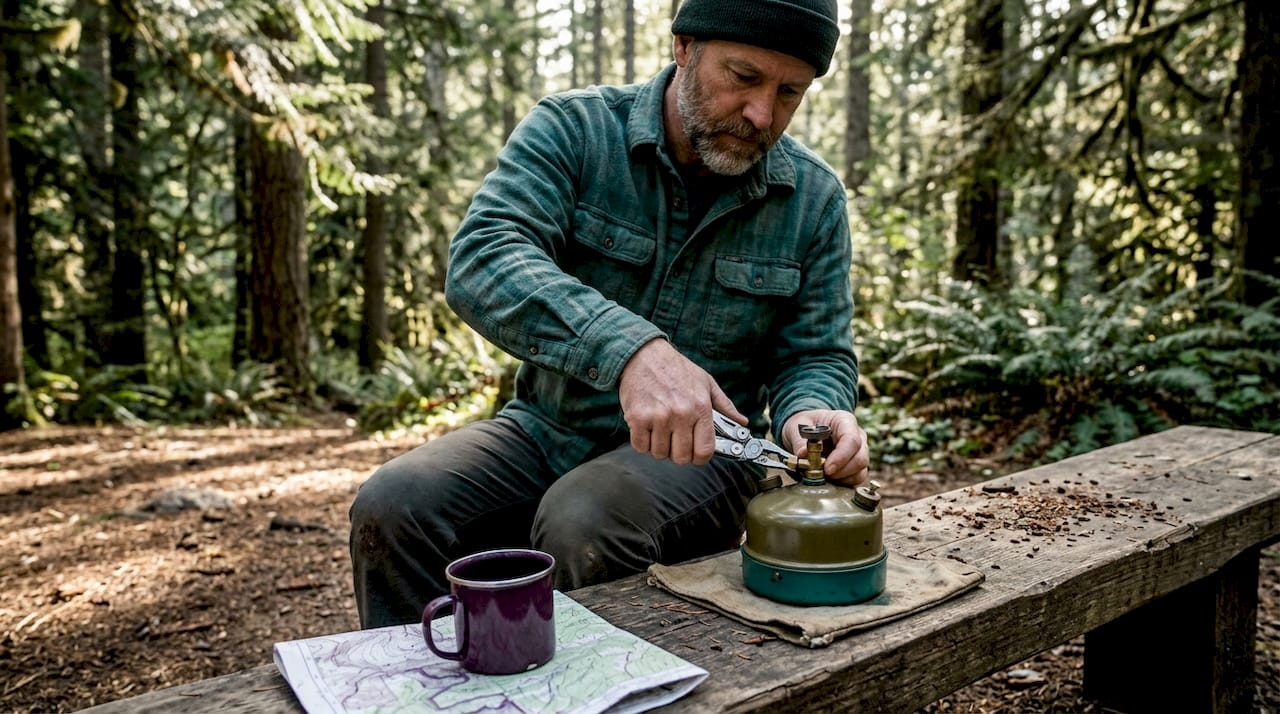
TL;DR:
- Multi-tools vary in design, with plier-based suited for mechanical tasks and knife-based for cutting.
- Key safety features include locking blades, one-hand operation, and quality materials like stainless steel.
- Choose a multi-tool based on your outdoor needs, prioritizing reliability over excessive functions.
Most campers grab a multi-tool off the shelf, toss it in their pack, and assume they've checked that box. But not all multi-tools are built the same, and the wrong choice can leave you struggling to fix a tent pole, unable to prep food cleanly, or worse, dealing with a blade that closes unexpectedly on your fingers. Whether you're a weekend car camper or a serious backcountry hiker, the right multi-tool isn't just a convenience. It's a genuine safety asset. This guide breaks down what multi-tool gear actually is, the core types and features you need to know, and exactly how to pick the right one for your next adventure.
Key Takeaways
| Point | Details |
|---|---|
| Know the tool types | Plier and knife-based multi-tools serve different camping and adventure needs. |
| Prioritize safety features | Locking blades and one-hand operation are crucial for reliable and safe field use. |
| Match features to scenarios | Choose a multi-tool with functions that directly support your adventure activities. |
| Quality over quantity | A sturdy, well-designed tool is more valuable than a crowded, flimsy one in the outdoors. |
What is multi-tool gear?
Multi-tool gear refers to compact, portable devices that pack several tools into a single, carry-anywhere unit. Think pliers, blades, screwdrivers, bottle openers, files, and more, all folding into one palm-sized package. The appeal is obvious for campers and hikers: fewer items to carry, fewer chances to forget something critical at the trailhead.
The concept took off with military and wilderness users who needed adaptable problem-solving tools without the bulk of a full toolkit. Over time, manufacturers refined the designs to serve everyday outdoor needs, from tightening loose gear hardware to trimming cordage or even performing basic first aid.
Today's best options are engineered with serious safety features built in. As Survipedia notes, locking blade and open positions along with one-hand operation are among the most critical usability and safety factors in modern multi-tools. That's a huge leap from the simple folding knives of earlier decades.
You'll find a solid breakdown of the multi-tool for campers use case worth exploring if you want a deeper look before making any purchase decision.
Here's a quick look at what most full-featured multi-tools include:
- Needle-nose or standard pliers
- One or more folding knife blades
- Flathead and Phillips screwdrivers
- Can and bottle openers
- Wood or metal file
- Wire cutters or strippers
- Scissors or saw blade
- Awl or punch tool
"A great multi-tool isn't the one with the most tools. It's the one you can actually use when it counts most, often with one hand, in the dark, under stress."
The two most common configurations you'll encounter are plier-based and knife-based multi-tools. Each serves a distinct purpose, and understanding that difference is the first real step toward making a smart gear decision.
Plier-based vs. knife-based multi-tools: Which fits your adventure?
Walk into any outdoor retailer and you'll quickly see two distinct camps. Plier-based tools are bulkier, heavier, and built for working with hardware, gripping, bending wire, and doing real mechanical work in the field. Knife-based tools, sometimes called pocket tool kits or Swiss Army style knives, are lighter and designed around cutting and utility tasks.
Plier-based designs are better aligned with mechanical field tasks like gripping, bending, crimping, and holding hardware, while knife-based tools suit lighter cutting, food prep, and first-aid needs. That distinction matters more than most people realize when they're standing in a store comparing price tags.
Here's a direct comparison to help you visualize the difference:
| Feature | Plier-based multi-tool | Knife-based multi-tool |
|---|---|---|
| Primary strength | Mechanical and hardware tasks | Cutting and food prep |
| Typical weight | 6 to 10 oz | 2 to 5 oz |
| Best use case | Gear repair, shelter setup | Cooking, first aid, light utility |
| Bulk in pack | Moderate | Minimal |
| Blade prominence | Secondary | Primary |
| Ideal for | Car campers, overlanders | Backpackers, ultralight hikers |
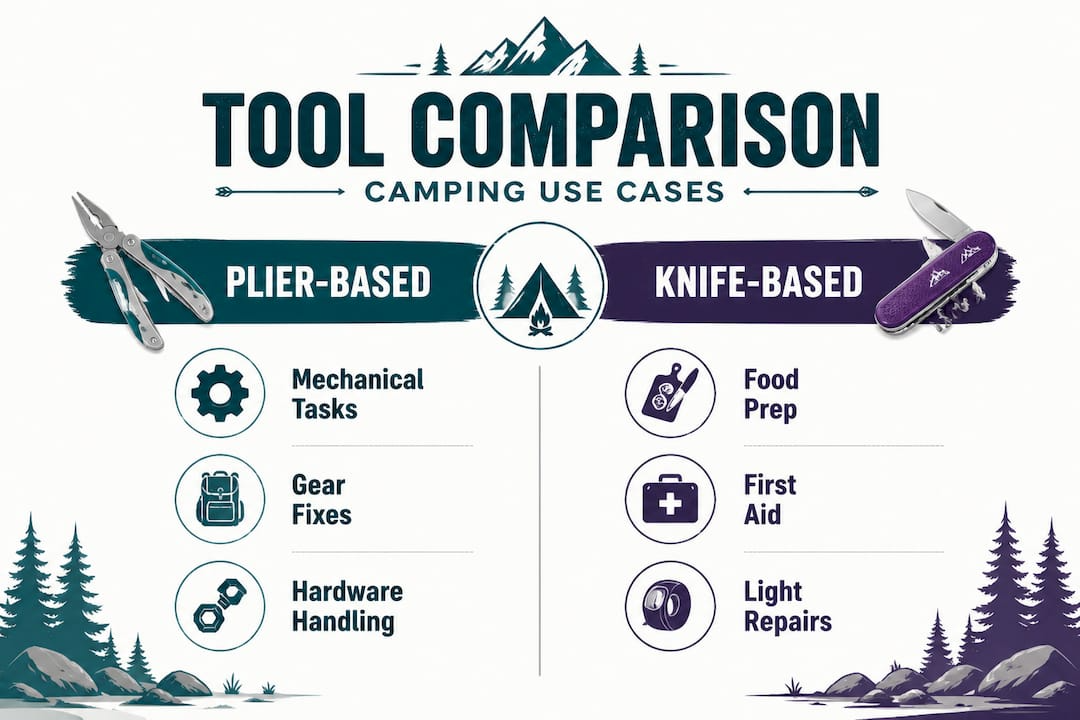
If you're running a base camp with gear that needs regular adjustment, a stove that needs maintenance, or you're managing group equipment, go plier-based. If you're a solo backpacker counting every ounce and your main needs are meal prep and basic cutting tasks, a knife-based multi-tool will serve you better without the extra weight.
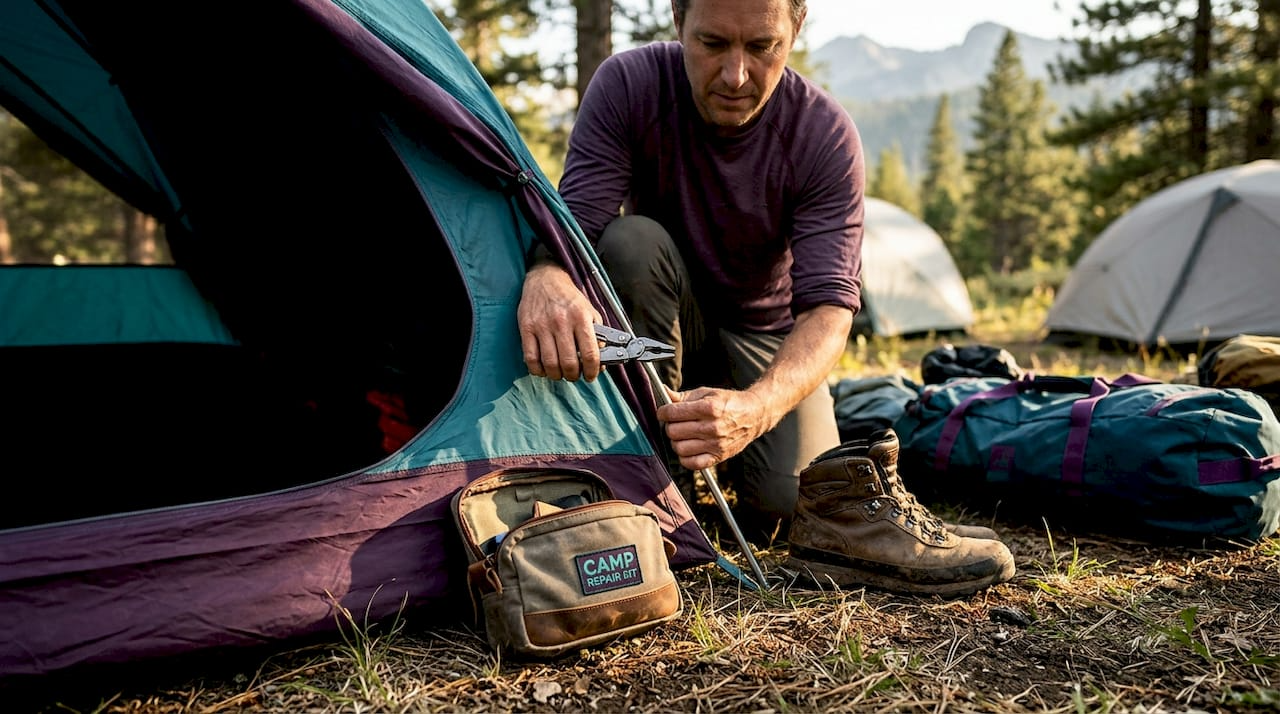
Check out the best multi-tool picks if you want to see specific models tested for real camping scenarios. And if knives are a big part of your kit, the full breakdown on safe camping knives is worth a read, especially if kids are coming on the trip.
Pro Tip: Before you buy, write down three to five scenarios from your last camping or hiking trip where you needed a tool. If most involve hardware or mechanical fixes, go plier-based. If most involve food prep or cutting, knife-based wins.
A few scenarios where each tool type clearly dominates:
- Plier-based: Tightening a loose stove connector, repairing a broken tent pole ferrule, gripping a hot pot handle, bending a tent stake back into shape
- Knife-based: Slicing cheese and bread at a trail lunch stop, cutting moleskin for a blister, trimming loose threads on gear, opening a first-aid bandage wrapper quickly
Key features to look for in multi-tool gear
Now that you know the two main types, let's get into the features that actually separate a trustworthy multi-tool from one that will let you down at the worst possible moment.
Locking mechanisms. This is non-negotiable. Liner locks and frame locks keep blades and tools open under use, preventing accidental closure that can cause serious cuts. As safety engineering data confirms, locking positions are one of the most critical safety features in multi-tool design. Never buy a multi-tool without them.
One-hand operation. When your other hand is holding a tent pole, a rope, or a cooking pot, you need to be able to open and use your multi-tool with one hand. Look for tools with a smooth, accessible one-hand opening system. This isn't a luxury feature. It's a field necessity.
Tool selection relevant to your kit. A multi-tool with 21 functions sounds impressive. But if 14 of those functions duplicate each other or aren't relevant to camping and hiking, you're carrying dead weight. Focus on tools you'll actually use: pliers, a blade, a screwdriver, a can opener, scissors or wire cutters.
Durability and material quality. Stainless steel construction, specifically grades like 420HC or 154CM, holds up to moisture, mud, and heavy use far better than lower-grade alloys. Weight and corrosion resistance both factor into long-term reliability.
Ergonomics. A comfortable grip under gloves matters more than most people consider. Textured handles, contoured grips, and a balanced feel reduce fatigue during extended use and improve control.
Ease of cleaning. After a trip through mud or saltwater, tools that are hard to clean become tools that rust and seize. Open-frame designs or tools with accessible joints are easier to rinse and dry.
Pro Tip: Always carry your multi-tool in a belt sheath rather than buried in your pack. The moment you need it under pressure is never the moment you want to dig through gear to find it.
A quality multi-tool should feel like a natural extension of your hand, not a puzzle you solve every time you reach for it.
Staying on top of basic maintenance keeps your investment performing over years of use. The multi-tool care tips from our maintenance guide cover everything from proper lubrication to blade sharpening schedules.
How to choose the right multi-tool for your adventure
With a clear picture of features, let's walk through the actual selection process. This isn't about finding the most popular brand. It's about matching a tool to your specific outdoor scenarios.
Start by profiling your adventure style. Two common types of outdoor users illustrate the decision well:
| Adventurer profile | Likely scenarios | Recommended tool type | Priority features |
|---|---|---|---|
| Weekend car camper | Stove repair, food prep, tent fixes | Plier-based, 6 to 8 oz | Pliers, screwdrivers, blade |
| Ultralight backpacker | Food prep, first aid, light cutting | Knife-based, 2 to 4 oz | Blade, scissors, file |
| Family camper | Mix of repairs and cooking tasks | Plier-based with scissors | Full tool set, locking blades |
| Overlander/vehicle camper | Mechanical repairs, wire work | Heavy plier-based, 8 to 12 oz | Wire cutters, saw, bit driver |
Once you've identified your profile, work through this checklist before buying:
- Match tools to tasks. List your five most likely field scenarios and confirm the multi-tool covers them.
- Check the weight. Every ounce matters on a multi-day backpacking trip. Plier-based tools excel at repairs but add weight. Know your trade-off.
- Confirm locking features. Never skip this step. A non-locking blade in the field is a liability.
- Test grip in store. If possible, hold the tool with your dominant hand and simulate use. Comfort matters after hour three on the trail.
- Consider packability. Does it come with a sheath? Does it fit in a belt loop without snagging on everything?
For anyone planning a serious trip, the backpacking prep tips cover how a multi-tool fits into your overall kit strategy. And if you're newer to camping, the full overview of essential camping gear will help you see how a multi-tool connects to everything else you're bringing.
A real-world example: imagine two hikers heading out on the same four-day trail. The first packs a plier-based multi-tool at 8 oz because they know the trail crosses a suspension bridge with aging hardware bolts they may need to tighten. The second packs a 3 oz knife-based tool because their focus is minimal weight and daily meal prep from fresh ingredients. Both are right. Both matched their tool to their actual needs.
Why gear reliability matters more than tool count
Here's an opinion we hold strongly at Life Camp Adventure after years of watching campers shop for gear: the multi-tool with 17 functions and a flashy price tag is often the wrong call.
We've heard from countless adventurers who bought the biggest, most feature-packed tool available, only to find that half the tools were stiff, the locking mechanisms were inconsistent, or the blade dulled after two uses. The desire to buy a do-it-all product is completely understandable. But outdoors, a single reliable tool beats three mediocre ones every time.
A failed tool at a critical moment, say, a blade that closes mid-use while cutting rope to secure a shelter in a sudden storm, is not just inconvenient. It's a safety issue. That's why we keep coming back to the same principle: locking mechanisms, durable materials, and field-tested ergonomics matter more than raw tool count.
The philosophy behind smart gear selection is simple. Think about what you'll actually use 90% of the time, then add one or two emergency-use tools as backup. You don't need a 25-function tool if you'll realistically use five of those functions on every trip. You need five excellent functions that won't fail you.
We also push back against the "just get the cheapest one" mentality. A quality multi-tool is not a one-trip purchase. It's a piece of gear you'll carry for years, likely a decade or more if you maintain it well. That changes the cost calculation significantly.
Browse the reliable adventure gear checklist to see how we think about durability across all survival and camping essentials, not just multi-tools.
Explore more outdoor gear solutions
Choosing the right multi-tool is one piece of a larger puzzle that makes your outdoor adventures safer and more enjoyable. At Life Camp Adventure, we're committed to helping you build a kit you can actually trust, not just a collection of gear that looks good in photos.
Our guides cover everything from outdoor survival steps to top camping gear comparison breakdowns that put the best products side by side so you can make informed decisions. We test, review, and curate gear with real outdoor use in mind. Whether you're gearing up for your first overnight hike or your fiftieth backcountry trip, our resources are built to help you go further with confidence.
Frequently asked questions
What is the difference between a multi-tool and a Swiss Army knife?
A multi-tool is built around pliers as the central component with other tools folding out from the handles, while a Swiss Army knife centers on a blade and typically lacks pliers. As Survipedia confirms, plier-based tools are better suited for mechanical field tasks, while knife-based tools handle lighter cutting and first-aid needs.
Do I need a multi-tool with locking blades for safety?
Yes, absolutely. Locking blade positions are a critical safety feature that prevents accidental closure during use, which is one of the most common causes of multi-tool injuries in the field.
Which multi-tool is best for backpacking?
For most backpackers, a lightweight knife-based multi-tool handles food prep and first aid efficiently. If your route involves gear repairs or hardware tasks, opt for a compact plier-based model that balances function with packable weight.
What maintenance is needed to keep a multi-tool reliable?
Clean your multi-tool after every trip by rinsing off dirt, drying it thoroughly, and applying a light machine oil or dedicated knife lubricant to all pivot points. Inspect blades for nicks and tighten any loose joints before your next outing.
Are multi-tools allowed in carry-on luggage during travel?
No. Most multi-tools contain blades or sharp tools that the TSA classifies as prohibited in carry-on bags. Always pack your multi-tool in checked luggage when flying to avoid confiscation at security.
