TL;DR:
- Modular backpacks feature a base pack and attachable components, allowing customization for various activities. They use interfaces like MOLLE webbing, buckles, zippers, or magnets to connect modules, making reconfiguration simple and adaptable. These packs offer cost savings, enhanced organization, and activity-specific setups, ideal for travelers and outdoor enthusiasts seeking versatile gear.
Most backpacks give you one fixed compartment and ask you to figure out the rest. If you've ever wished your pack could shrink for a day hike, expand for a week in the backcountry, or split apart at an airport, you already understand why modular backpacks exist. Known in the gear industry as modular carry systems, these packs let you attach, remove, and reconfigure components based on exactly what your day demands. This guide covers what is modular backpacks, how the attachment systems work, which styles suit different adventures, and why more outdoor travelers are choosing them over single-purpose bags.
Key Takeaways
| Point | Details |
|---|---|
| Modular = configurable carry | A modular backpack uses a base unit plus attachable components you add or remove per trip. |
| Multiple attachment interfaces | MOLLE/PALS webbing, quick-release buckles, zippers, and magnets are the four main connection systems. |
| Multiple pack types exist | Travel, tactical, and hybrid modular packs each serve distinct use cases and activity levels. |
| Real financial savings | One quality modular system costs 40 to 60 percent less than buying several specialized bags. |
| Practical configuration matters | Knowing how to reconfigure mid-trip separates people who love modular packs from people who return them. |
What is modular backpacks and how the system works
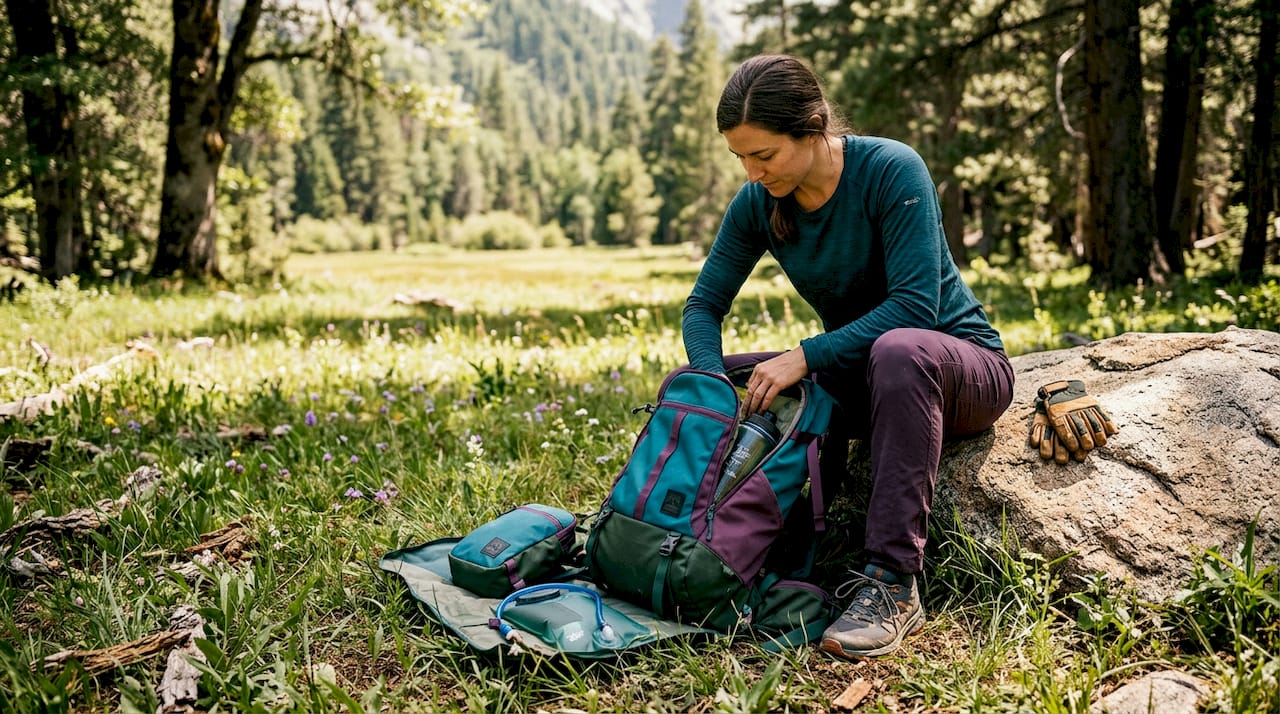
A modular backpack is a carrying system built around a base pack and a set of attachable components. Think of it the way Nomads Nation describes it: LEGO for your backpack. You start with a core bag, then add pouches, organizers, or secondary packs depending on the day's activity, whether that's gym gear, camera equipment, or three days of trail food.
The base unit handles structure, back support, and shoulder suspension. The modular components handle everything else. This separation is what makes the system powerful.
The four main attachment interfaces
Understanding how modules physically connect to the base pack clears up a lot of confusion. Here are the four systems you'll encounter:
- MOLLE/PALS webbing: MOLLE (Modular Lightweight Load-carrying Equipment) is the attachment concept. PALS is the actual grid of heavy nylon webbing sewn onto the pack. Pouches attach by weaving their straps through the grid rows, locking the connection in place even under movement. This system is borrowed from military gear and is the most secure interface available.
- Quick-release buckles: Plastic or aluminum buckles that clip onto anchor points on the base pack. Faster to attach and detach than MOLLE weaving, though typically less stable under heavy loads.
- Zipper-based connections: Common in travel-oriented modular systems. Two bags literally zip together along a shared edge. Modevo's three-bag travel system, for example, connects via zippers that allow the whole system to separate mid-trip into fully independent bags.
- Magnetic connections: The newest interface type. Magnets allow near-instant attachment for lightweight modules like phone pouches or small organizers, though they aren't suited for heavier loads.
Pro Tip: When choosing between attachment systems, match the interface to your use case. MOLLE is best for rugged outdoor and tactical use. Zippers work well for travel packs where you want clean separation. Quick-release buckles are ideal for urban carry where speed matters.
The practical impact of these systems is significant. You can configure your pack differently on the same trip. Leave the camera module at camp for a summit push. Unzip the daypack from your main bag at the airport and carry it separately through security.
Types of modular backpacks
Not all modular packs are built for the same person. Three main categories define the market, and each one reflects a different philosophy about how to carry gear.
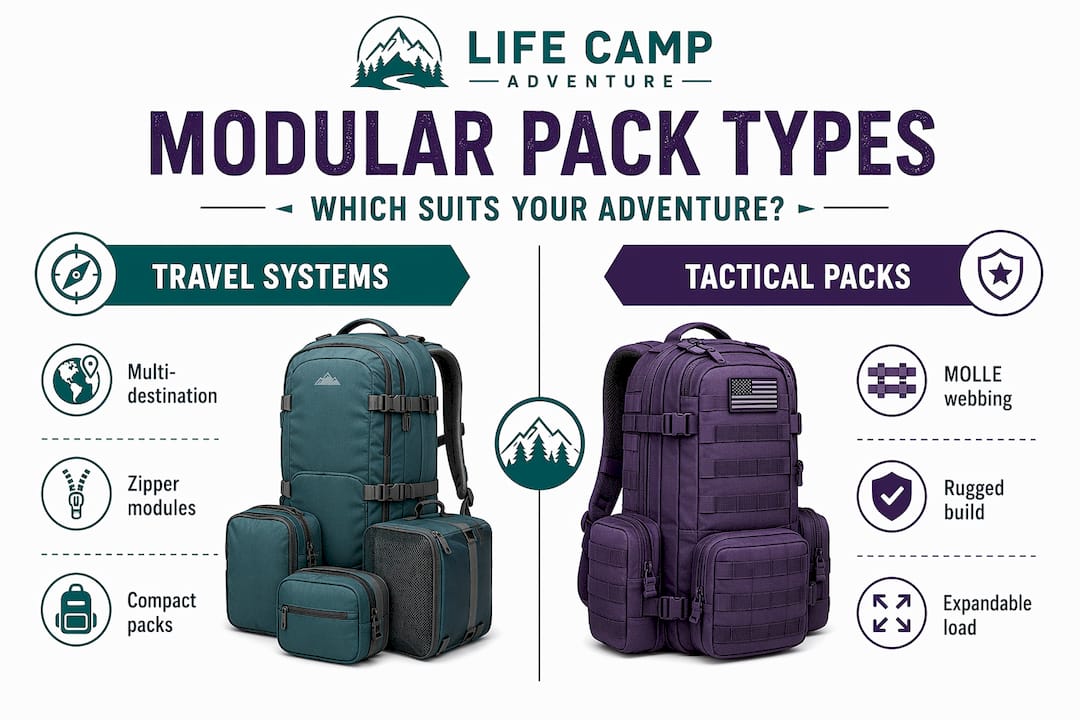
Travel modular systems
These packs prioritize versatility across different transportation modes and trip lengths. The defining feature is that the individual components work as standalone bags. Modevo's system, for instance, combines a Core Pack, a Link bag, and a Go Daypack into a three-bag system reaching 73L expanded. Each piece was engineered as a functional solo bag first, with connection points added second. That design priority prevents the ergonomic compromises that plague cheaper modular travel packs.
Tactical modular backpacks
Tactical packs lean heavily on MOLLE/PALS webbing and are built for durability above all else. They typically feature a more rigid frame, heavy-duty zippers, and attachment points across the front panel and shoulder straps. Originally developed for military and law enforcement use, these packs have found a strong following among overlanders, search-and-rescue volunteers, and serious backpackers who want field-serviceable organization.
Hybrid modular packs
Hybrid packs blend everyday carry functionality with outdoor capability. They usually have a clean, minimal exterior with hidden MOLLE loops or magnetic attachment points. You can use them in a city without looking like you're heading to a military exercise, then add modules when you hit the trail. This flexibility makes them popular for adventure travel that mixes urban and wilderness days.
| Type | Best for | Primary attachment | Typical capacity |
|---|---|---|---|
| Travel modular | Multi-destination trips | Zipper-based connections | 40 to 75L combined |
| Tactical modular | Hiking, overlanding, field use | MOLLE/PALS webbing | 20 to 50L base |
| Hybrid modular | Urban to trail transitions | Magnetic or buckle-based | 20 to 35L base |
Benefits of modular backpacks for outdoor use
The clearest benefit is adaptability. A modular system lets you adapt your configuration to current needs instead of carrying unused volume or leaving essential gear behind because your pack can't fit it.
Here's where modular backpacks genuinely outperform fixed-design packs for outdoor and travel use:
- Flexible capacity: Add a hip belt pouch for snacks on a long day hike, then remove it for the flight home. Your pack size changes with your needs, not the other way around.
- Better organization: Dedicated modules mean gear has a home. A detachable first-aid pouch stays in the same place every trip. You stop digging through a main compartment to find anything.
- Activity-specific setups: Modular backpacks offer activity-specific organization, freedom of movement, and weather resistance that fixed packs can't match without carrying dead weight.
- Cost efficiency: Investing in one well-built modular system rather than separate bags for hiking, travel, and daily carry translates to real savings. Quality modular systems cost 40 to 60 percent less than assembling the equivalent in single-purpose gear.
- Durability over time: Because you can replace individual modules instead of the whole pack, modular systems last longer and cost less to maintain.
Pro Tip: If you're switching to a modular setup from a traditional pack, start with the base unit and one or two modules. Buy additional components only after you've identified gaps in a real trip. Most people over-purchase modules they never use.
The benefits of modular backpacks become most obvious on trips longer than three days, where needs genuinely shift from day to day.
How to use modular backpacks in practice
Knowing the system is one thing. Using it well on an actual trip is another. Here's how experienced modular pack users configure and adapt their setups across different scenarios.
- Plan your modules before you pack your gear. Decide which modules you're bringing based on the trip type, not habit. A three-day camping trip needs a hydration sleeve and a first-aid module. A weekend city break needs neither.
- Load the base pack first, heaviest items closest to your back. This keeps your center of gravity tight and prevents the base pack from pulling awkwardly once you add external modules.
- Attach modules by weight distribution. Heavier attached modules go lower on the pack and close to the spine. Lighter accessories like a phone pouch or key clip go on shoulder straps or the top lid.
- Test the full loaded configuration before a long trip. Walk around the block wearing the fully assembled system. Adjustment straps on modular packs often need fine-tuning after you add side or front-mounted modules. Use resources like packing tips for backpackers to refine your load setup.
- Reconfigure at natural transition points, not mid-trail. If you're separating a daypack from a main travel pack, do it at the trailhead or your accommodation, not while moving. MOLLE attachments take a minute to thread correctly and deserve full attention.
- Use modular cubes inside the base pack for internal organization. External modules handle activity-specific gear. Packing cubes inside the base compartment handle clothing and sleep system organization. Combining both gives you a completely organized carry system with no confusion about where anything is.
For multi-day hikes, the ability to carry smarter and lighter by leaving camp-only modules at your base and taking a lean daypack for summits is one of the most practical advantages this system offers.
My honest take on modular packs after years in the field
I've tested a lot of gear over the years, and I'll be direct: I was skeptical of modular packs for a long time. The concept sounded like marketing for people who couldn't decide what size pack they wanted.
What changed my mind was a 10-day trip that moved from city transit to a multi-day trail. My single-purpose 45L hiking pack was miserable to drag through airports. The moment I switched to a modular travel system, the airport-to-trailhead transition became genuinely easy. The daypack unzipped, went through security, and rejoined the main pack at the gate.
What I've learned from testing multiple systems is that the best modular packs are the ones that work well as standalone bags before the modular features enter the picture. The packs that treat modularity as a primary function instead of an add-on always sacrifice something in suspension or internal structure. The standalone-first design philosophy is the clearest signal of a well-engineered system.
The misconception I hear most often is that modular packs are only for gear-obsessed ultralight hikers or tactical enthusiasts. They're not. They're for anyone who's ever wished their one bag could do slightly more than it does. That's most travelers and outdoor enthusiasts.
My advice: don't buy into a modular system because the configuration options excite you. Buy one because you have a specific problem a fixed pack can't solve. That clarity will point you to the right system faster than any buying guide.
— Billy
Gear up with Lifecampadventure
At Lifecampadventure, we've done the hard work of sorting quality outdoor gear so you don't have to spend hours comparing specs. Whether you're outfitting your first modular carry system or adding to an existing trail setup, finding gear that holds up across real conditions matters. Our camping gear comparisons cover backpacks, shelter, and trail essentials reviewed for durability, comfort, and practical use. If you're building out a complete adventure kit, the outdoor gear guide at Lifecampadventure pairs modular pack recommendations with tents, sleep systems, and survival tools that actually complement each other. Browse the full selection and put together a kit you'll trust on any terrain.
FAQ
What is a modular backpack?
A modular backpack is a carrying system built around a base pack and a set of attachable and detachable components, such as pouches, organizers, and secondary bags, that let you customize your carry configuration for different activities or trip lengths.
How do modular backpacks work?
Modular backpacks use attachment interfaces including MOLLE/PALS webbing, quick-release buckles, zippers, or magnets to connect components to the base pack. You add or remove modules depending on your current needs, adjusting capacity and organization without switching bags.
What are the main types of modular backpacks?
The three main types are travel modular systems, which use zipper-based connections for multi-bag configurations; tactical modular packs, which rely on MOLLE/PALS webbing for rugged outdoor and field use; and hybrid modular packs, which blend urban and trail functionality with cleaner, lower-profile attachment points.
Are modular backpacks worth the cost?
Yes, especially when you account for what you stop buying. A quality modular system costs 40 to 60 percent less than purchasing separate specialized bags for hiking, travel, and daily carry, and individual modules can be replaced without replacing the whole pack.
What should I look for in the best modular backpacks for travel?
Look for systems where each component functions as a standalone bag before the connection points are used. Strong suspension on the base pack, durable zipper or buckle connections, and compatibility between modules are the features that separate genuinely useful travel systems from packs that look good in photos but frustrate you on day two.
