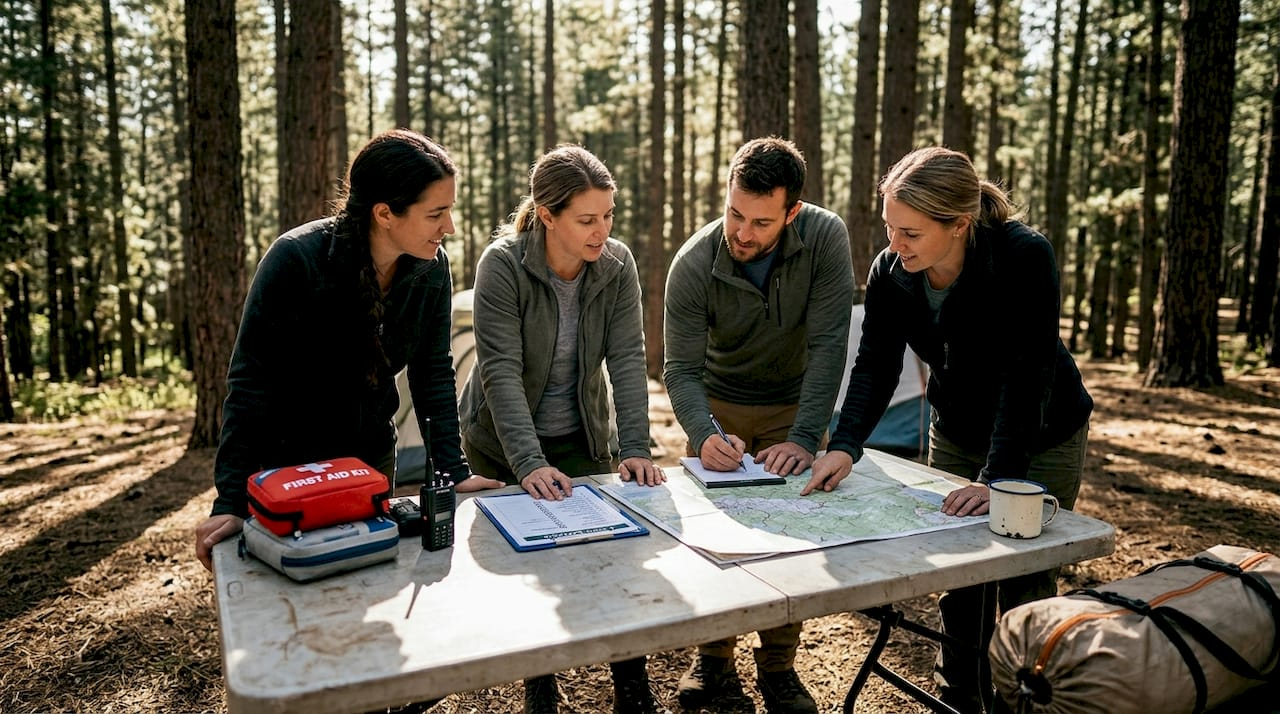
Camping offers families and outdoor enthusiasts incredible opportunities to connect with nature, but recent incidents have underscored the critical importance of following updated safety procedures. In 2025, new regulations emerged following tragic events, reshaping how camps operate and what preparation campers need. This guide walks you through the latest legal requirements, essential gear, site selection strategies, and emergency protocols that ensure your outdoor adventures remain both enjoyable and secure. Whether you're planning a weekend family trip or managing group expeditions, understanding these procedures protects everyone involved.
Key Takeaways
| Point | Details |
|---|---|
| Emergency planning mandates | Texas 2025 laws require comprehensive emergency preparedness plans real time weather monitoring and mandatory training for campers and staff within 48 hours of arrival. |
| Accreditation reduces injuries | Research shows accredited camps experience about forty percent fewer serious injuries than non accredited facilities. |
| Safety gear essentials | Emergency plans require operable weather radios capable of receiving NOAA alerts and first aid kits with tourniquets EpiPens burn treatment supplies and a complete medication list. |
| Bear resistant storage | Bear resistant food storage has become mandatory in many jurisdictions. |
Understanding updated camp safety laws and accreditation
The camping landscape shifted dramatically in 2025 when Texas enacted major camp safety laws following the devastating Camp Mystic flood that claimed young lives. House Bill 1 and Senate Bill 1 now mandate comprehensive emergency preparedness plans, real-time weather monitoring systems, and mandatory training for both campers and staff within 48 hours of arrival. These regulations represent the most significant overhaul of youth camp safety standards in decades, establishing multidisciplinary safety teams that must include medical professionals, environmental specialists, and emergency coordinators.
Beyond state-level requirements, national accreditation bodies have raised their standards substantially. The American Camp Association's 2025 updates include approximately 300 criteria covering emergency preparedness, staff qualifications, activity supervision ratios, and facility maintenance protocols. The National Camp Accreditation Program similarly tightened requirements around risk assessment documentation and incident reporting timelines. Research consistently shows accredited camps experience 40 percent fewer serious injuries compared to non-accredited facilities, making accreditation status a critical factor when selecting where to camp.
Implementing these enhanced standards does create financial challenges for smaller operations. Equipment upgrades, additional staff training programs, and ongoing compliance audits can cost facilities $15,000 to $50,000 annually. However, safety advocates argue these investments prevent tragedies that carry immeasurable human costs. For families researching camping safety tips for 2025, verifying a camp's accreditation status and reviewing their emergency protocols should be non-negotiable steps in the planning process.
Key legal requirements you need to know:
- Emergency plans must detail evacuation routes, muster zones, and communication protocols
- Weather monitoring systems with audible alerts are mandatory at all organized camps
- Staff-to-camper ratios increased to 1:8 for high-risk activities like water sports
- Annual safety audits by certified inspectors with public reporting of findings
- Incident documentation within 24 hours and parent notification protocols
"The 2025 Texas camp safety legislation saves lives by requiring proactive planning rather than reactive responses. Every camp must now demonstrate systematic preparedness before opening each season."
Essential safety gear and environmental precautions
Proper equipment forms the foundation of any safe camping experience. Emergency plans require operable weather radios capable of receiving NOAA alerts, ensuring you receive tornado warnings, flash flood watches, and severe thunderstorm notifications even in remote locations without cell service. Your first aid kit should exceed basic supplies, including tourniquets for severe bleeding, EpiPens for allergic reactions, burn treatment supplies, and a comprehensive medication list for all group members. Fire safety tools like extinguishers rated for multiple fire types, fireproof blankets, and proper fire-starting equipment prevent small incidents from becoming catastrophes.
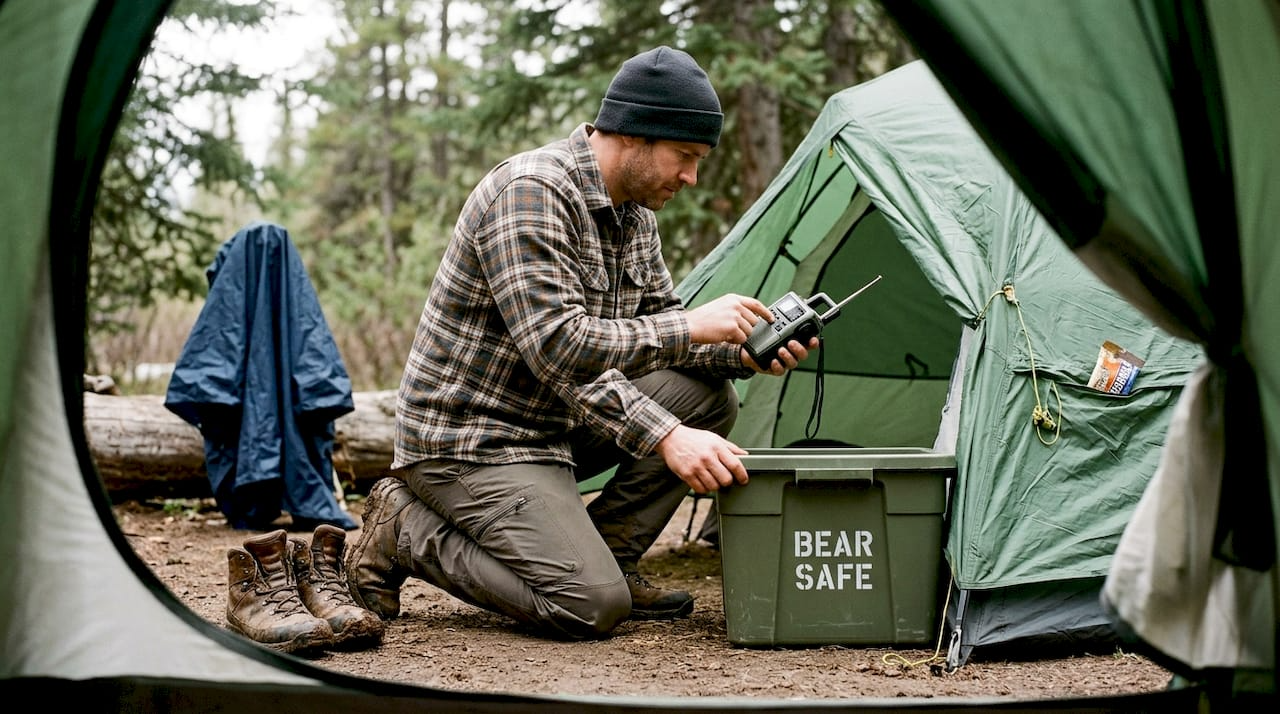
Bear-resistant food storage has become mandatory in many jurisdictions following increased human-wildlife conflicts. Bear safety protocols now require storing food 100 yards from tents, using approved bear canisters rated to withstand 200 pounds of force, and some high-risk areas prohibit tent camping entirely during peak bear activity seasons. Colorado, Montana, and parts of the Pacific Northwest enforce these restrictions most strictly, with fines reaching $500 for violations that endanger both campers and wildlife.
Environmental precautions extend beyond wildlife management. New floodplain restrictions prohibit camping within 500 feet of waterways in flood-prone regions, a direct response to recent tragedies. Maintaining spotless campsites prevents attracting scavengers and reduces disease transmission risks. Fire zone clearances must extend 15 feet in all directions from cooking areas, with all flammable materials removed and water sources immediately accessible.
| Bear Safety Method | Effectiveness | Cost | Ease of Use |
|---|---|---|---|
| Bear Canisters | 98% effective | $80-$300 | Moderate, requires proper sealing |
| Bear Bags/Hang | 75% effective | $20-$50 | Difficult, technique-dependent |
| Bear Spray | 92% effective when deployed | $40-$60 | Easy, requires quick access |
| Electric Fencing | 99% effective | $200-$500 | Complex setup, weight considerations |
Explore our top outdoor adventure tools to find gear that meets current safety standards. Investing in quality equipment pays dividends when conditions deteriorate unexpectedly.
Pro Tip: Always carry bear spray in an accessible holster, not buried in your pack. Practice deploying the safety mechanism at home so you can react instinctively during an encounter. The average bear charge covers 50 feet in under three seconds, leaving no time for fumbling.
Best practices for family and group camping safety
Selecting the right campsite determines your baseline safety level before you even unpack. Family camping best practices emphasize level ground free from overhead hazards like dead branches, adequate drainage to prevent water pooling during storms, and proximity to emergency services balanced against desired wilderness experience. Inspect the area for ant hills, wasp nests, poison ivy, and animal burrows that could cause injuries or allergic reactions.
Camp layout requires strategic planning:
- Position cooking areas 50 feet downwind from sleeping tents to prevent food odors from attracting wildlife to vulnerable areas
- Establish a 15-foot fire safety perimeter cleared of all vegetation, with extinguishing tools and water immediately accessible
- Designate bathroom areas 200 feet from water sources and sleeping zones to maintain hygiene
- Create clearly marked pathways between key areas using reflective markers or rope lights for nighttime navigation
- Position first aid supplies and emergency communication equipment in a central, elevated location protected from weather
Supervision protocols become critical when children participate in camping activities. Water activities demand arm's reach supervision for non-swimmers and continuous visual contact for competent swimmers, with designated water watchers rotating every 15 minutes to prevent attention fatigue. Hiking groups should maintain buddy systems with regular headcounts, especially at trail junctions. Tool use during camp setup requires one-on-one adult supervision until children demonstrate consistent safe handling.
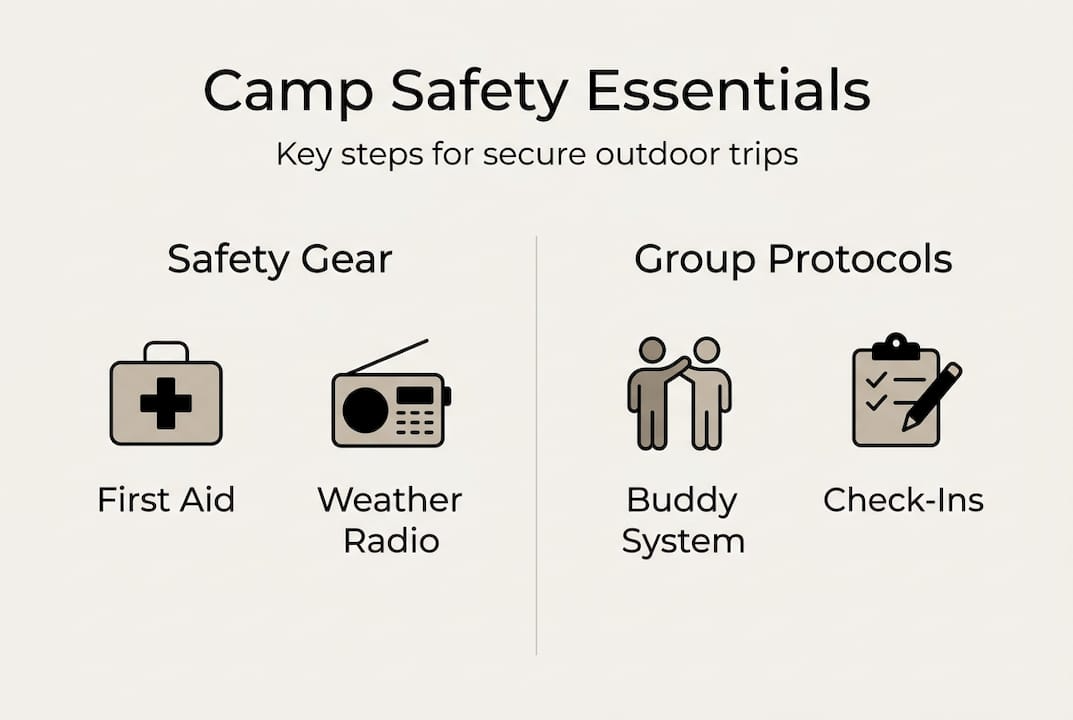
Emergency communication plans must account for limited connectivity in remote areas. Establish check-in schedules with someone outside your camping party, providing them with your itinerary, expected return time, and instructions for when to alert authorities if you miss contact windows. Satellite communicators like Garmin inReach devices enable two-way messaging anywhere on Earth, providing critical backup when cell towers are unavailable. Review family camping safety and wildlife tips for additional strategies that reduce encounter risks.
Pro Tip: Teach children clear physical boundaries before arriving at camp. Use natural landmarks like specific trees or rock formations to define safe zones, and practice your family's emergency whistle signal (three short blasts) so kids know how to call for help. Implementing Leave No Trace principles simultaneously protects the environment and reinforces safety awareness.
Responding to emergencies and verifying camp safety
When emergencies strike, systematic response procedures prevent chaos and ensure everyone's safety. Emergency plans must specify muster zones, designated assembly points where all campers gather for headcounts during evacuations. Choose muster zones on high ground away from flood risks, clear of falling tree hazards, and easily identifiable even in poor visibility conditions. Paint markers, flags, or permanent signage help disoriented individuals locate these critical gathering points.
Executing emergency protocols follows this sequence:
- Sound the alarm using air horns, whistles, or electronic alert systems audible throughout the entire camping area
- Initiate immediate threat response (evacuate for fires, seek shelter for severe weather, implement lockdown for wildlife threats)
- Direct all individuals to predetermined muster zones using designated evacuation routes with backup paths identified
- Conduct systematic headcounts using pre-prepared rosters, accounting for every camper and staff member
- Notify parents and emergency services with situation updates, injuries, and assistance requirements
- Activate the emergency coordinator role to manage ongoing response and coordinate with first responders
| Communication Method | Range | Reliability | Best Use Case |
|---|---|---|---|
| Two-Way Radios | 2-5 miles | High in clear terrain | Coordinating staff during emergencies |
| Cell Phone Alerts | Variable coverage | Moderate in remote areas | Parent notifications when signal available |
| Air Horns/Whistles | 1 mile | Very high | Initial emergency alerts |
| Satellite Messengers | Global | Very high | Remote location emergencies |
| Emergency Beacons | Global | Extremely high | Life-threatening situations requiring rescue |
Camper accounting systems must track individuals by name, tent assignment, and any medical conditions requiring special attention during evacuations. Digital apps streamline this process, but maintain paper backups since electronics fail during emergencies. Designate multiple staff members as accountability checkers to ensure redundancy if the primary person becomes incapacitated.
Parent notification protocols balance timely communication against creating unnecessary panic. Establish severity thresholds determining when to contact families: immediate notification for injuries requiring medical transport, within two hours for significant incidents like evacuations, and end-of-day updates for minor situations already resolved. Prepare template messages covering common scenarios to enable rapid, accurate communication when stress levels peak.
"Regular emergency drills save lives and reduce panic during real events. Practicing evacuations, headcounts, and communication protocols transforms abstract plans into muscle memory that activates automatically when seconds matter."
Verifying your camp's safety readiness requires conducting drills quarterly, rotating through different emergency scenarios like fires, severe weather, medical emergencies, and wildlife encounters. Time each drill, noting how long full accountability takes and identifying bottlenecks in your procedures. Review essential first aid steps for outdoor safety to ensure your team maintains current medical response skills. Understanding why outdoor safety matters reinforces the importance of these seemingly tedious preparation activities.
Enhance your camp safety with reliable gear
Implementing comprehensive safety procedures requires equipment you can trust when conditions deteriorate. Life Camp Adventure curates camping gear specifically designed for durability, ease of use, and emergency readiness. Our selection includes weather-resistant tents engineered to withstand sudden storms, comprehensive first aid kits meeting updated regulatory standards, and reliable communication devices that function in remote locations where cell service fails.
Explore our camping tent comparisons to find shelters matching your group size and expected conditions. Review our guide to essential camping gear types that every outdoor enthusiast should pack. For medical preparedness, our essential first aid steps guide pairs perfectly with properly stocked emergency kits. Quality gear transforms safety procedures from theoretical plans into practical protection.
Frequently asked questions
What are the key camp safety procedures to follow in 2025?
Prioritize compliance with updated legal requirements including emergency preparedness plans, real-time weather monitoring, and mandatory training within 48 hours of arrival. Essential procedures include proper site selection avoiding floodplains, maintaining separate cooking and sleeping areas, implementing bear-resistant food storage, and establishing clear emergency communication protocols with designated muster zones.
How can families prevent wildlife encounters while camping?
Store all food, toiletries, and scented items in bear-resistant containers positioned 100 yards from sleeping areas, never inside tents. Keep campsites meticulously clean without food scraps or garbage that attracts animals. Make noise while hiking to avoid surprising wildlife, and teach children to recognize animal signs like tracks or scat that indicate recent activity requiring extra caution.
What should camping emergency plans include according to 2025 regulations?
Comprehensive plans must specify muster zones for evacuations, detailed procedures addressing floods, fires, severe weather, and medical emergencies with step-by-step response protocols. Include real-time communication systems like weather radios and satellite messengers, parent notification procedures with severity thresholds, and a designated emergency coordinator responsible for drill execution and actual incident management.
Are there special rules for camping in floodplains and bear country?
Floodplain camping is now prohibited within 500 feet of waterways in flood-prone regions following 2025 regulatory updates after recent tragedies. Bear country requirements mandate using approved bear canisters for food storage, maintaining 100-yard separation between food and sleeping areas, and some high-risk zones restrict tent camping entirely during peak bear activity seasons with fines up to $500 for violations.
How often should camps conduct emergency drills?
Conduct comprehensive emergency drills quarterly, rotating through different scenarios including fire evacuations, severe weather shelter protocols, medical emergencies, and wildlife encounters. Time each drill to identify bottlenecks in your procedures, and ensure all participants including children understand their roles. Regular practice transforms abstract plans into automatic responses that function effectively when stress levels peak during actual emergencies.
