Guide to Cold Weather Camping for Ultimate Comfort
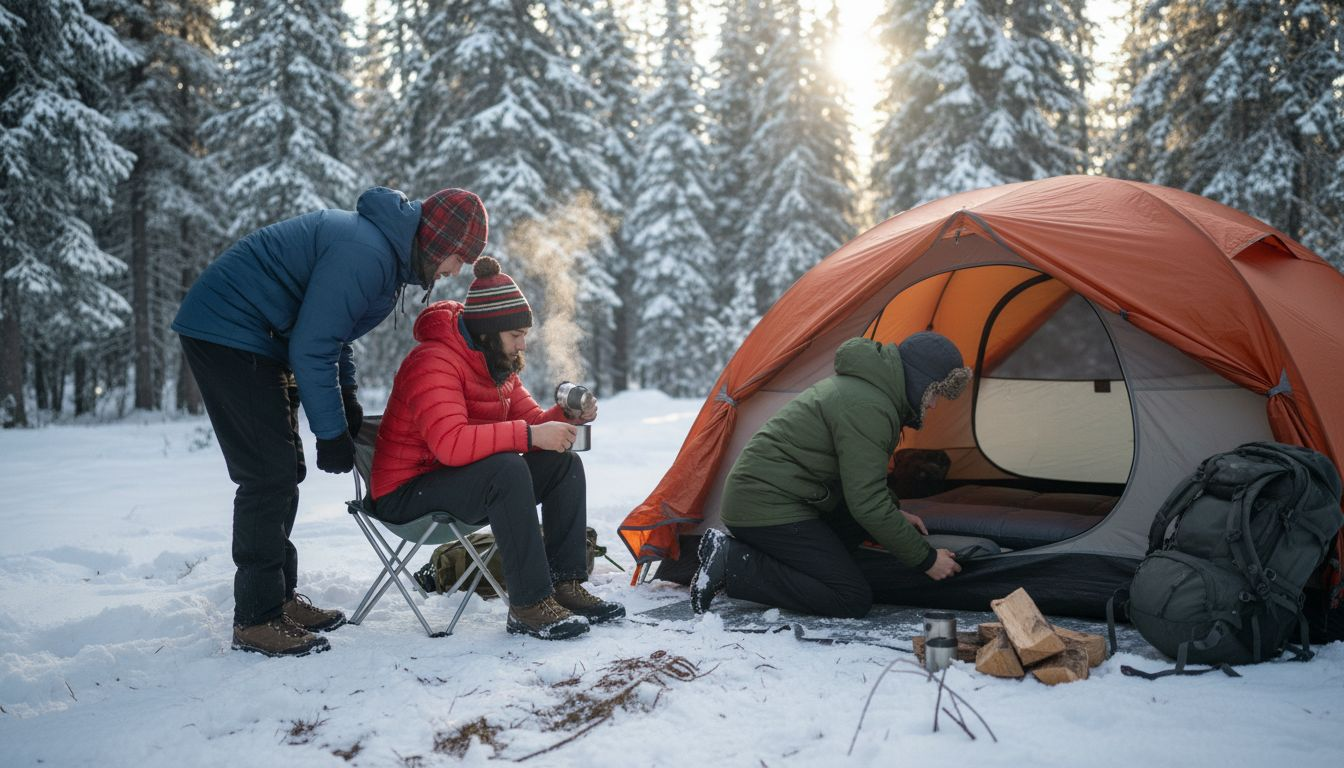
Most American winter campers underestimate just how quickly freezing temperatures and sudden storms can turn a backcountry trip into a survival challenge. Your adventure depends on balancing thrill with thoughtful safety precautions in harsh conditions. This guide arms you with advanced strategies and the latest gear recommendations so you can confidently plan, layer, and monitor for warmth and wellness while exploring remote winter terrain. Up to 60 percent of cold weather injuries occur due to poor planning or faulty equipment.
Quick Summary
| Main Insight | Explanation |
|---|---|
| 1. Assess Weather Conditions | Check official forecasts for precipitation, temperature, wind speed, and storm warnings before camping. |
| 2. Choose Strategic Campsite | Select elevated locations with natural windbreaks to avoid hazards like flooding and avalanches. |
| 3. Pack Specialized Gear | Ensure you have an insulated tent, winter sleeping bag, and essential survival gear for extreme conditions. |
| 4. Layer Clothing Effectively | Use moisture-wicking base layers, insulating mid layers, and waterproof outer layers to regulate temperature. |
| 5. Monitor Health Regularly | Conduct routine health checks for signs of hypothermia or frostbite and have an emergency response plan. |
Step 1: Assess Weather and Choose Safe Locations
Successful cold weather camping starts with smart planning and thorough weather assessment. Your safety depends on understanding potential winter storm risks and selecting strategic camping locations that minimize environmental hazards.
Start by consulting official winter storm safety resources and reviewing detailed weather forecasts specific to your planned camping region. Pay close attention to predicted precipitation levels, temperature ranges, wind speeds, and potential storm warnings. Winter storms can create dangerous conditions like blizzards, freezing rain, and sudden temperature drops that transform landscapes into treacherous environments.
When choosing a camping location, prioritize areas with natural wind barriers such as dense forest stands or rocky outcroppings that can provide protection from harsh winter winds. Avoid low lying areas prone to cold air settling and potential flooding during rapid temperature changes. Look for slightly elevated terrain with good drainage and minimal avalanche risk. Always check local ranger station recommendations and current trail conditions before finalizing your site selection.
Here is a summary of weather factors to assess for safe winter camping:
| Factor | Why It Matters | Recommended Action |
|---|---|---|
| Precipitation | Affects safety, visibility | Check for snow or freezing rain |
| Temperature Range | Determines gear needs | Review day and night extremes |
| Wind Speed | Impacts shelter and site choice | Seek natural wind barriers |
| Storm Warnings | Indicates potential hazardous events | Avoid areas with active alerts |
| Avalanche Risk | Critical for mountainous terrain | Consult ranger advisories |
Pro Tip: Download multiple weather tracking apps and cross reference their predictions to ensure the most accurate and comprehensive winter weather assessment for your specific camping destination.
Step 2: Gather Reliable Cold-Weather Camping Gear
Preparing for a winter camping adventure requires carefully selecting specialized equipment that will keep you warm, safe, and comfortable in challenging environments. Your gear choices can mean the difference between an epic outdoor experience and a potentially dangerous situation.
Start by focusing on essential cold weather camping items that provide critical protection. When selecting camping gear for winter conditions, prioritize specialized winter backcountry equipment designed to withstand extreme temperatures. Your core gear list should include an insulated four season tent, a winter rated sleeping bag with appropriate temperature ratings (typically rated for 0 degrees Fahrenheit or lower), high quality thermal sleeping pad with significant R value insulation, and layers of moisture wicking base clothing followed by insulating mid layers and waterproof outer shells.
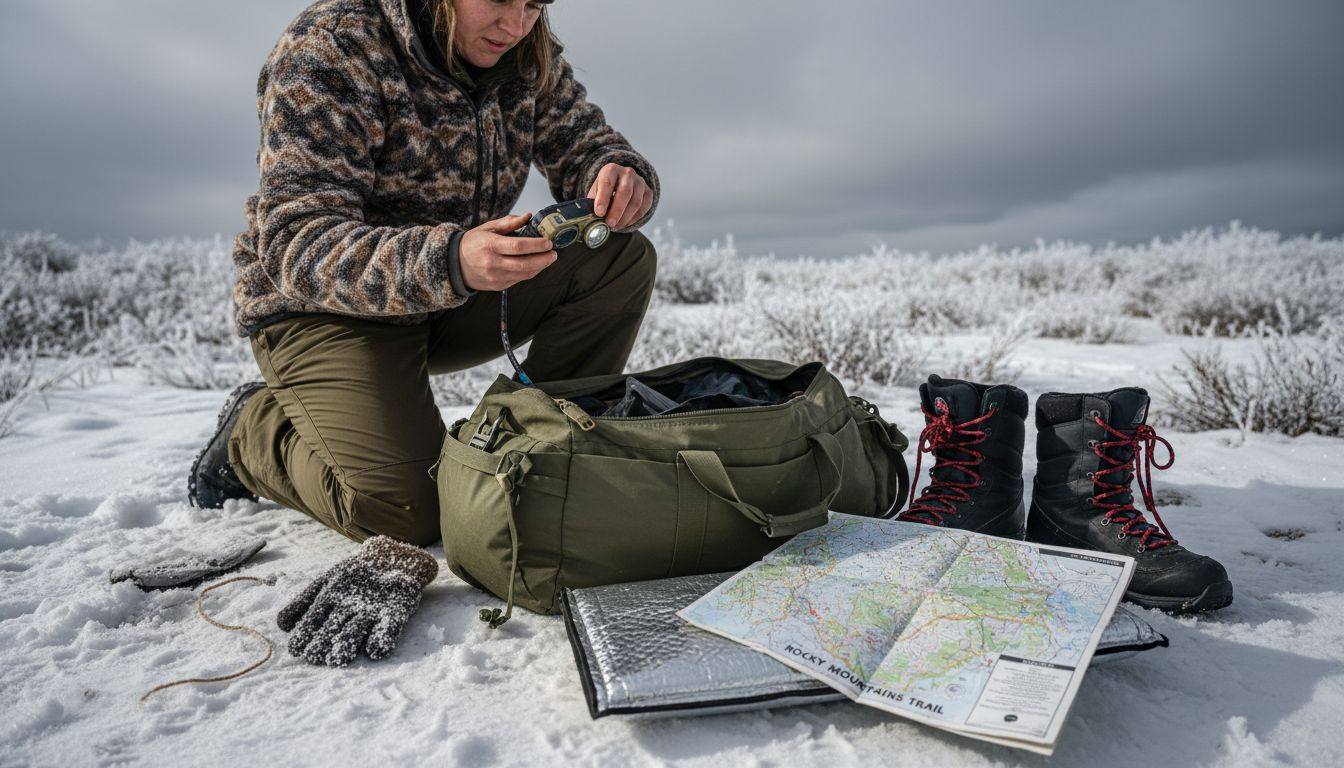
Beyond clothing and shelter, pack critical survival gear such as emergency blankets, waterproof matches, portable heating sources, extra fuel, high calorie food supplies, and advanced navigation tools that function in cold environments. Consider bringing additional equipment like portable snow shovels, ice picks, and emergency communication devices to enhance your safety and preparedness in remote winter terrain.
Pro Tip: Test all your cold weather gear at home before your trip and practice setting up your tent and equipment in simulated winter conditions to identify any potential challenges or equipment limitations.
Step 3: Pack and Layer Clothing for Maximum Warmth
Successful winter camping depends on mastering the art of strategic clothing layering that protects you from extreme cold while maintaining comfortable body temperature. Understanding how to effectively layer your clothing can mean the difference between an enjoyable outdoor experience and a potentially dangerous situation.
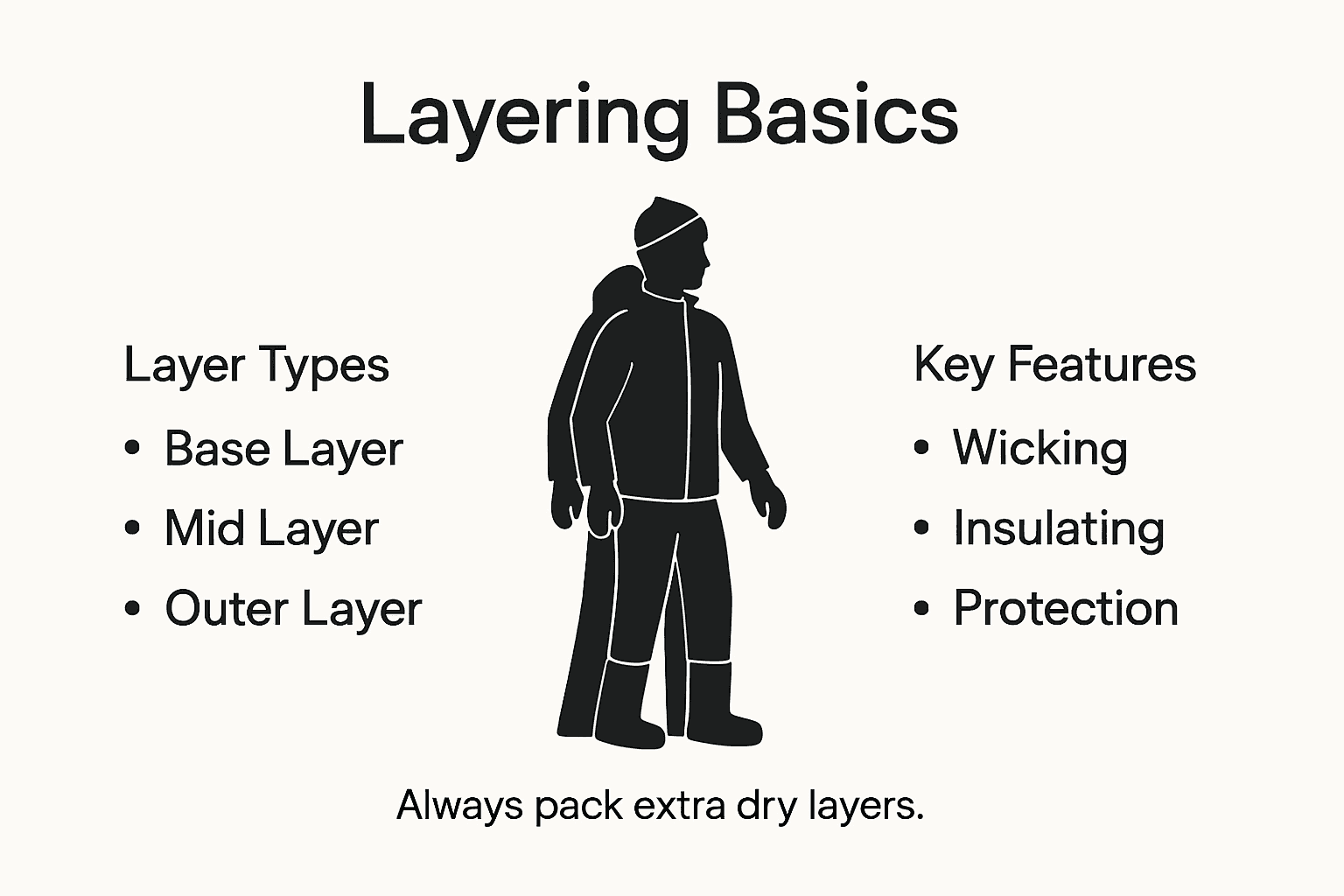
Begin by implementing strategic cold weather clothing techniques that prioritize moisture management and thermal protection. Your layering system should consist of three critical components: base layer, insulating layer, and outer protective layer. The base layer should be made of moisture wicking materials like merino wool or synthetic fabrics that pull sweat away from your skin and help regulate body temperature. Your middle insulating layer should trap warm air and provide substantial thermal protection think fleece jackets or wool sweaters. The outer layer must be windproof and waterproof to shield you from harsh winter elements.
Pay special attention to protecting vulnerable body parts like hands, head, and feet. Pack multiple pairs of thermal socks, insulated waterproof gloves, a high quality winter hat that covers your ears, and consider bringing neck gaiters or face masks for additional protection against wind and cold. Remember that exposed skin increases your risk of frostbite and hypothermia, so comprehensive coverage is crucial for winter camping survival.
Pro Tip: Always pack an extra complete set of dry clothing in a waterproof stuff sack to ensure you have a warm backup in case your primary layers become wet during your camping trip.
Step 4: Set Up Camp for Shelter and Heat Retention
Successful winter camping hinges on strategic campsite selection and intelligent shelter setup that protects you from harsh environmental conditions. Your campsite will be your lifeline in cold wilderness environments, requiring careful planning and precise execution.
When establishing your winter campsite, focus on winter backcountry camping site selection strategies that prioritize safety and warmth. Choose a location with natural windbreaks like dense tree lines or rocky outcroppings that can shield your tent from direct wind exposure. Avoid low lying areas where cold air settles and steer clear of avalanche prone slopes or areas with potential snow accumulation. When pitching your tent, position it perpendicular to prevailing winds and use specialized winter tent stakes that provide maximum ground grip in snow and ice conditions.
Prepare your sleeping area with meticulous attention to insulation and heat retention. Use multiple insulating layers beneath your sleeping bag including closed cell foam pads and inflatable thermal sleeping mats. Create a compact sleeping configuration that minimizes air circulation and maximizes body heat preservation. If possible, dig a slight depression in the snow to create additional wind protection and thermal stability around your sleeping area.
Pro Tip: Carry a small collapsible shovel to create snow windbreaks and smooth out your campsite surface, which can significantly improve your shelter's overall thermal efficiency and comfort.
Step 5: Monitor Health and Safety Throughout Trip
Cold weather camping requires constant vigilance and proactive health monitoring to prevent potentially life threatening conditions. Your ability to recognize early warning signs and respond quickly can make the difference between a successful adventure and a dangerous emergency.
Learn to systematically identify and respond to winter health risks throughout your camping experience. Regularly check yourself and your camping companions for early signs of hypothermia and frostbite such as uncontrolled shivering, skin discoloration, numbness in extremities, and cognitive changes like confusion or impaired judgment. Establish a routine health check schedule every few hours where you assess body temperature, hydration levels, and overall physical condition. Pay special attention to fingers, toes, nose, ears and other exposed areas that are most vulnerable to cold injury.
Develop a comprehensive emergency response plan before your trip that includes specific protocols for warming techniques, emergency communication methods, and evacuation procedures. Pack an extensive first aid kit with specialized winter injury treatments including chemical heat packs, emergency blankets, and thermal warming devices. Always travel with a fully charged communication device and know the exact location of the nearest medical facility or rescue services. Create a communication plan with someone back home who knows your exact travel itinerary and expected check in times.
Below is an overview of common winter camping injuries and how to address each:
| Condition | Early Signs | Prevention Tips | Response Actions |
|---|---|---|---|
| Hypothermia | Shivering, confusion | Dress in layers, avoid wetness | Warm slowly, hydrate |
| Frostbite | Numbness, skin discoloration | Insulate extremities, minimize exposure | Rewarm gently, protect area |
| Dehydration | Dry mouth, headache | Drink warm fluids regularly | Provide water, rest |
| Altitude Sickness | Headache, fatigue | Ascend gradually, acclimatize | Descend, seek medical help |
Pro Tip: Carry a small waterproof thermometer and emergency hypothermia assessment chart to objectively track your body temperature and recognize potential risks before they become critical.
Gear Up for Ultimate Comfort in Cold Weather Camping
The challenge of staying warm, safe, and comfortable in freezing temperatures requires not just knowledge but the right gear. This guide highlights the critical importance of specialized winter equipment, strategic layering, and well-chosen shelter setups to avoid hypothermia, frostbite, and other cold weather dangers. If you want to conquer those harsh environments while feeling protected and confident, your gear must be as prepared as you are.
Explore our selection of durable and reliable camping essentials designed specifically to meet these cold weather challenges. From insulated tents and high rated sleeping bags to moisture wicking layers and robust survival tools, Life Camp Adventure equips you for every step of your winter journey. Experience how premium gear can transform your outdoor comfort and safety.
Don’t wait until the cold surprises you. Start your adventure right now by visiting Life Camp Adventure for trusted equipment purpose-built for cold weather camping. Gear up today and embrace the outdoors with confidence and comfort by checking out our winter-ready collections at Life Camp Adventure and get expert advice and gear that makes a difference. Your ultimate cold weather camping experience awaits.
Frequently Asked Questions
What are the key weather factors to assess for safe winter camping?
To ensure safety during winter camping, evaluate factors such as precipitation, temperature range, wind speed, storm warnings, and avalanche risk. Check local weather forecasts and prepare accordingly to avoid hazardous conditions.
How should I layer my clothing for maximum warmth while camping in cold weather?
Layering involves wearing a moisture-wicking base layer, an insulating mid-layer, and a windproof outer layer. Ensure that you also protect your extremities with thermal socks, insulated gloves, and a warm hat to maintain body heat.
What are the essential pieces of cold-weather camping gear I need?
Key gear includes an insulated four-season tent, a winter-rated sleeping bag, and a high-quality thermal sleeping pad. Gather additional items such as emergency blankets, portable heat sources, and navigation tools designed for winter conditions to enhance safety.
How can I set up my campsite to maximize heat retention?
Choose a site with natural windbreaks and ensure your tent orientation faces away from prevailing winds. Use multiple layers of insulation under your sleeping bag and consider creating a depression in the snow for added protection against cold.
What are the signs of hypothermia and frostbite to watch for while camping?
Early signs of hypothermia include uncontrolled shivering and confusion, while frostbite may show up as numbness or skin discoloration. Regularly check yourself and your companions for these symptoms, and develop a prompt response plan to address any issues.
How can I effectively monitor health and safety during my winter camping trip?
Establish a routine health check every few hours to assess body temperature and overall physical condition. Carry a small waterproof thermometer to track temperatures accurately and be prepared to implement warming techniques if anyone shows signs of cold-related injuries.
