TL;DR:
- Survival tools are essential items organized into the 5 Cs: cutting tools, combustion devices, cover, cordage, and containers to meet basic needs in emergencies. A full-tang fixed-blade knife is the most important cutting tool, while redundancy in fire-starting methods ensures reliability in any condition. Proper selection and skillful use of gear, along with simple signaling devices, significantly enhance chances of rescue and safety.
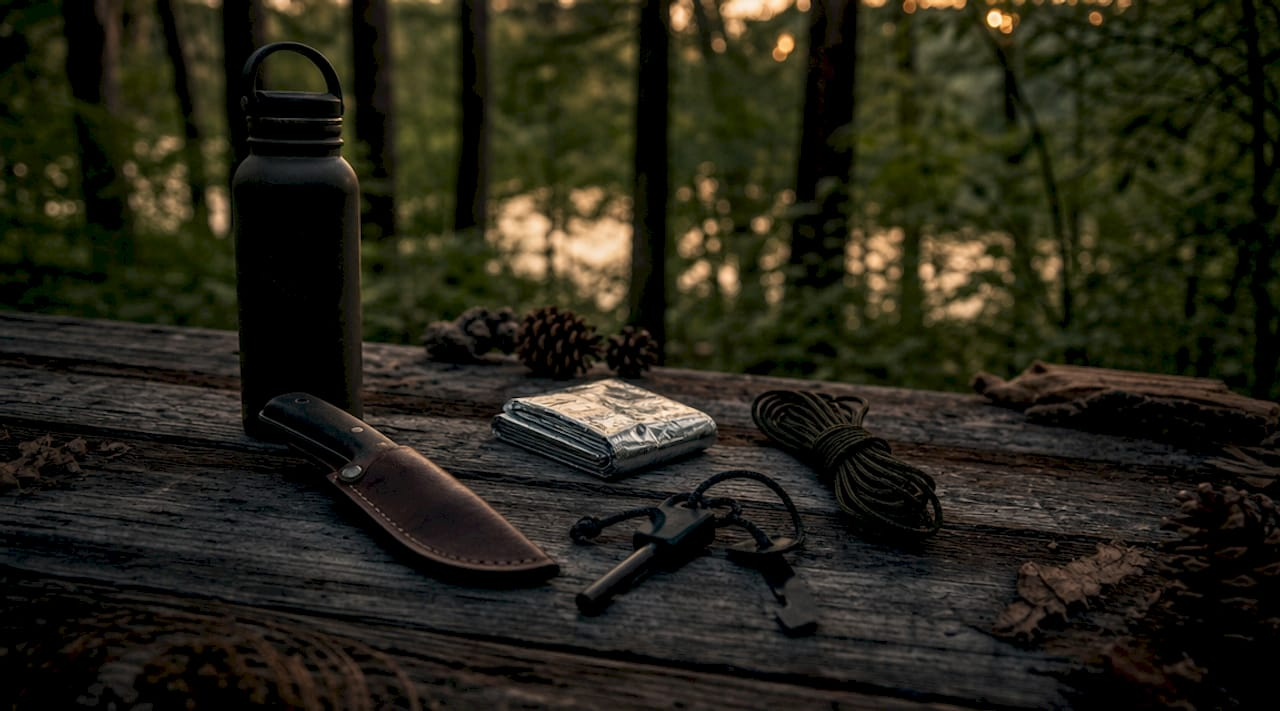
Survival tools are tangible items that enable you to secure shelter, water, fire, and safety in any emergency or outdoor situation. The most reliable way to organize them is the 5 Cs of survivability: cutting tools, combustion devices, cover, cordage, and containers. This framework covers every fundamental need you face when conditions turn against you. Whether you're building a 72-hour emergency kit, packing for a backcountry trip, or setting up an off-grid homestead, the examples of survival tools in each category determine whether you stay safe or struggle. This guide breaks down the best survival gear by category, with real comparisons and field-tested recommendations.
1. Examples of survival tools: the cutting category
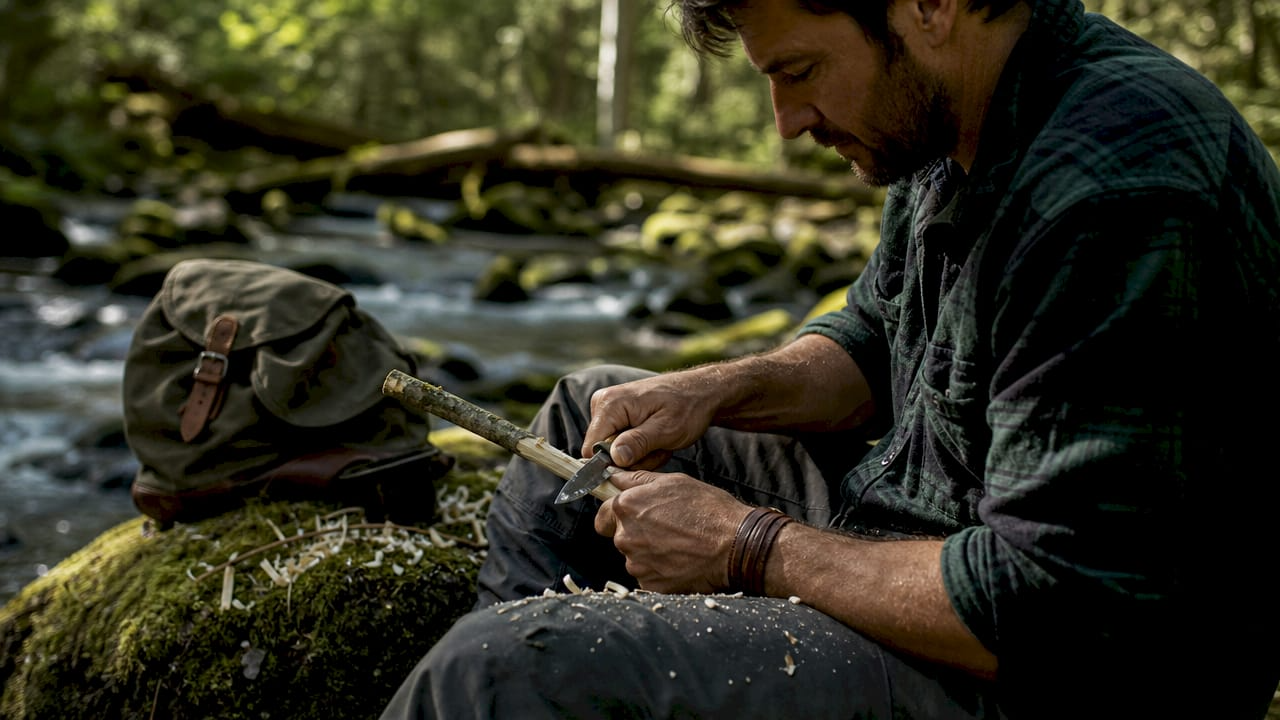
A fixed-blade knife is the single most important cutting tool in any survival kit. It handles shelter building, firewood processing, and food prep better than any multi-tool under high-stress conditions. That performance gap matters when your hands are cold and your options are limited.
Multi-tools like the Leatherman Wave+ or Victorinox SwissTool Spirit X earn their place in a kit as compact backups. They cover tasks like wire cutting, screwdriving, and small blade work. But their folding blades lack the leverage and durability of a dedicated fixed blade for heavy cutting jobs.
Other cutting tools worth carrying include:
- Fixed-blade knives: Mora Companion, ESEE-4, Benchmade Bushcrafter. Full-tang construction and high-carbon or stainless steel are non-negotiable for field durability.
- Folding saws: Silky Gomboy or Bahco Laplander for processing firewood and shelter poles faster than a knife alone.
- Machetes: Condor Tool and Knife or Cold Steel for dense vegetation and trail clearing.
- Multi-tools: Leatherman Wave+ or Gerber Center-Drive for compact utility without replacing a primary blade.
Pro Tip: When selecting a fixed-blade knife, choose full-tang construction with a blade steel rated for outdoor use, such as 1095 carbon steel or S35VN stainless. A partial-tang blade can snap under lateral pressure at the worst possible moment.
2. Combustion tools for reliable fire starting
Fire is shelter, water purification, signaling, and morale combined into one skill. Ferro rods are the top choice for survival kits because they work wet, cold, and after years of storage without degradation. A quality ferro rod like the Light My Fire Swedish FireSteel produces sparks at roughly 5,400°F, igniting tinder even in driving rain.
Redundancy in fire starting is the professional standard. Carry a ferro rod as your primary, waterproof matches as your backup, and a windproof lighter like the Zippo or BIC as a tertiary option. Each method has failure conditions the others cover.Common combustion tools and their strengths:
- Ferro rods: Light My Fire Swedish FireSteel, Bayite 4-inch ferro rod. Durable, weatherproof, and last for thousands of strikes.
- Waterproof matches: UCO Stormproof Matches burn for 15 seconds in wind and rain. Reliable but finite.
- Windproof lighters: Zippo with extra fluid, BIC Classic. Fast ignition but fuel-dependent.
- Fire pistons: Niche tool that uses compressed air to ignite tinder. Effective but requires dry char cloth.
- Magnifying glass: Works only in direct sunlight. Useful as a last resort with zero consumables.
Pro Tip: Test every fire starter you own in wet conditions before you need it in the field. A ferro rod that works perfectly in your living room may produce weak sparks with a worn striker. Verify performance in realistic conditions before any trip.
3. How to choose cover tools and emergency shelter examples
Cover tools protect your core body temperature, which is the first priority in any survival situation. Emergency Mylar blankets weigh less than 2 oz and reflect 90% of body heat back to you. At under $2 per unit, they deliver more life-saving value per ounce than almost any other item in your kit.
Beyond Mylar blankets, your shelter options scale up in weight, cost, and protection. Bivy sacks like the SOL Escape Bivvy add a physical barrier against wind and moisture while retaining heat. Tarps such as the DD Hammocks 3x3 or Aqua Quest Guide Tarp offer flexible rigging options for lean-tos, A-frames, or rain flies. Freestanding tents like the MSR Hubba Hubba NX provide the most protection but add significant weight to a bug-out bag. You can explore tent comparison options to match shelter weight to your specific scenario.
| Shelter tool | Weight | Heat retention | Best use |
|---|---|---|---|
| Emergency Mylar blanket | Under 2 oz | 90% body heat | Short-term emergency, kit backup |
| SOL Escape Bivvy | 8.5 oz | High (windproof shell) | Solo overnight, bug-out bag |
| DD Hammocks 3x3 tarp | 14 oz | Moderate (wind dependent) | Basecamp, multi-night shelter |
| MSR Hubba Hubba NX tent | 2 lbs 10 oz | High (full enclosure) | Extended backcountry camping |
Pro Tip: Clothing counts as cover. Wool base layers like Smartwool or Icebreaker retain warmth when wet, unlike cotton. Pack a wool hat and gloves even in summer kits because hypothermia can occur at temperatures above 50°F in wet and windy conditions.
4. Examples of cordage and their survival uses
Paracord is the most versatile cordage in any survival kit. Type III 550 paracord, named for its 550-pound tensile strength, contains seven inner strands that you can strip out for fishing line, sutures, or snare wire. A 100-foot spool of TITAN WarriorCord or Atwood Rope MFG paracord covers most shelter, gear repair, and trap-building needs.
However, carrying more cordage than you can competently use is a waste of weight. Knowing how to tie a taut-line hitch for adjustable tent lines, a bowline for fixed loops, and a clove hitch for lashing poles makes 50 feet of paracord more useful than 200 feet in untrained hands. Skill multiplies the value of every foot you carry.
Other cordage types worth knowing:
- Bank line: Tarred nylon twine used by bushcrafters for traps, lashings, and fishing rigs. Lighter than paracord and less slippery when knotting.
- Nylon utility rope: Thicker diameter for hauling loads, hanging bear bags, or building more substantial shelters.
- Jute twine: Excellent natural tinder when dry, doubling as both cordage and fire-starting material.
Pro Tip: Carry cordage on a spool rather than pre-cut lengths. Spools let you cut exactly what you need, reducing waste and keeping your kit organized. A 100-foot spool of paracord weighs about 7 oz and fits in a jacket pocket.
5. What container types work best for water and food storage?
Containers are the survival category most people underestimate. A minimum of 1 gallon of water per person per day is the standard for a 72-hour kit, covering hydration and basic sanitation. That means a family of four needs at least 12 gallons stored and ready. The container you choose determines whether that water stays clean and accessible.
Nalgene 32 oz wide-mouth bottles are the benchmark for personal water containers. They are BPA-free, impact-resistant, and compatible with most water filter systems like the Sawyer Squeeze or LifeStraw. For larger storage, WaterBrick 3.5-gallon containers stack efficiently and seal tightly for long-term home storage. Stainless steel canteens like the Klean Kanteen allow you to boil water directly over a fire, adding a purification method that plastic bottles cannot match.
| Container | Capacity | Material | Best use |
|---|---|---|---|
| Nalgene wide-mouth | 32 oz | BPA-free Tritan | Daily carry, filter-compatible |
| Klean Kanteen | 27 oz | Stainless steel | Boiling, long-term durability |
| WaterBrick | 3.5 gallons | HDPE plastic | Home emergency storage |
| Sawyer Squeeze + pouch | 32 oz | Flexible plastic | Ultralight backcountry filtration |
Purification redundancy matters as much as the container itself. Carry a Sawyer Squeeze filter as your primary, Aquatabs purification tablets as a backup, and a steel canteen for boiling as a third option. Redundant water purification protects you when one method fails due to clogging, chemical limitations, or fuel shortage.
Key takeaways
The most effective survival kit organizes gear around the 5 Cs: cutting tools, combustion devices, cover, cordage, and containers, with redundancy built into each category.
| Point | Details |
|---|---|
| Cutting tools anchor the kit | A full-tang fixed-blade knife like the ESEE-4 or Mora Companion outperforms multi-tools for critical tasks. |
| Redundancy prevents failure | Carry a ferro rod, waterproof matches, and a lighter so one failed method never leaves you without fire. |
| Cover starts with Mylar | Emergency Mylar blankets reflect 90% of body heat and weigh under 2 oz, making them the highest-value item per ounce. |
| Skill multiplies cordage value | Knowing knots like the bowline and taut-line hitch makes 50 feet of paracord more useful than 200 feet in untrained hands. |
| Containers require purification backup | Pair a Nalgene or Klean Kanteen with a Sawyer Squeeze filter and Aquatabs tablets for reliable safe water in any condition. |
What most survival guides get wrong about gear selection
I've watched people spend serious money on gadget-heavy kits and then struggle to start a fire in light drizzle. The gear wasn't the problem. The problem was that they had never actually used it under pressure.
The tools I trust most are the ones I've tested in conditions that were uncomfortable. My Mora Companion has processed more firewood than knives costing five times as much. My Light My Fire ferro rod has started fires in rain that would have defeated a lighter. Neither piece of gear is impressive on a gear table. Both have proven themselves where it counts.
Signal tools are the category I see overlooked most consistently. A Fox 40 pealess whistle weighs nothing and costs under $10. Three sharp blasts are the internationally recognized SOS signal. A signal mirror like the Coghlan's Rescue Mirror can be seen for miles in daylight. These tools do nothing until you need rescue, and then they do everything.
The 2026 trend toward tech-heavy survival kits, with solar chargers, GPS beacons, and satellite communicators, reflects real improvements in emergency communication. A 20,000 mAh power bank can recharge a phone five to six times, and a phone is now your primary emergency communication tool. But technology fails. Batteries die. Screens crack. The simple tools, a sharp blade, a ferro rod, a whistle, a length of paracord, have no failure modes that skill cannot compensate for.
Quality over quantity is the principle that separates functional kits from expensive collections. Five tools you know how to use in the dark beat twenty tools you've only read about.— Billy
Build your kit with Lifecampadventure
Lifecampadventure carries the cutting tools, fire starters, emergency shelters, cordage, and water containers covered in this guide. Every product in the store is selected for field performance, not shelf appeal. Whether you're building your first 72-hour emergency kit or upgrading an existing setup, the survival gear guide at Lifecampadventure walks you through the best options by category with honest comparisons. You'll also find a full outdoor survival checklist to audit what you already have and identify the gaps before your next trip or emergency.
FAQ
What are survival tools?
Survival tools are physical items that help you meet basic needs, including shelter, water, fire, and signaling, when normal resources are unavailable. The 5 Cs framework organizes them into cutting tools, combustion devices, cover, cordage, and containers.
What is the most important survival tool?
A fixed-blade knife with full-tang construction is widely considered the most important single survival tool. It handles shelter building, food prep, and fire preparation better than any other item in a kit.
How much water should a survival kit contain?
The standard recommendation is 1 gallon of water per person per day for a minimum of three days. A family of four needs at least 12 gallons stored in durable, BPA-free containers like Nalgene bottles or WaterBrick storage units.
What is the best fire starter for a survival kit?
A ferro rod is the most reliable fire starter because it works in wet conditions and does not degrade over time. Pair it with waterproof matches and a windproof lighter for full redundancy across different conditions.
How do I signal for rescue with basic survival tools?
Three consecutive sharp blasts on a pealess whistle like the Fox 40 are the internationally recognized SOS signal. A signal mirror can also attract attention from aircraft or distant rescuers in clear daylight conditions.
