TL;DR:
- Properly building, lighting, and extinguishing a campfire ensures safety and reduces wildfire risk.
- Essential materials include tinder, kindling, fuelwood, and appropriate tools like a shovel and matches.
- Overconfidence and neglecting safety steps are common risks, emphasizing consistent caution and discipline.
A campfire can make or break a camping trip. Get it right, and you have warmth, great food, and memories that last a lifetime. Get it wrong, and you risk a ruined night or something far worse. 90% of wildfires in the U.S. are caused by humans, and many start from improperly managed campfires. The good news? A few key skills and the right preparation put you firmly in control. This guide walks you through everything you need: the right materials, how to build and light your fire, common mistakes to avoid, and how to put it out safely when the night is done.
Key Takeaways
| Point | Details |
|---|---|
| Gather the right materials | Using proper tinder, kindling, and fuelwood makes campfire building safer and easier. |
| Follow step-by-step process | Layer your fire correctly and pick the best structure for your needs. |
| Avoid common mistakes | Don’t overload with wood or burn trash, and always check airflow. |
| Extinguish thoroughly | Completely douse and check your campfire to prevent wildfires. |
What you need: Tools and materials for a safe campfire
Now that you know why a safe campfire matters, let's start with what you'll need to do it right. Having the correct materials before you strike a single match makes the whole process smoother and safer.
Campfires require three types of fuel: tinder, kindling, and fuelwood. Each plays a specific role, and skipping one makes the others less effective.
- Tinder is your fire starter. Think dry leaves, grass, pine needles, or bark shavings. It catches a spark quickly but burns fast, so you need enough to get the kindling going.
- Kindling bridges the gap between tinder and logs. Use dry twigs between 1/8 and 1/2 inch thick. Thicker than that and they won't catch easily. Thinner and they burn out too fast.
- Fuelwood is your main fuel: split logs or thick branches that sustain the fire for hours. Always use dead, downed wood you find on the ground. Never cut branches from living trees. It damages the ecosystem and produces wet, smoky wood that barely burns.
Beyond fuel, you need a few basic tools:
| Tool | Purpose |
|---|---|
| Shovel or trowel | Digging a pit and smothering embers |
| Water source (bucket or bottle) | Dousing the fire at the end |
| Fire ring or designated pit | Containing the fire safely |
| Lighter or waterproof matches | Reliable ignition |
| Work gloves | Handling hot materials safely |
For beginners, a pre-made fire ring at a designated campsite is the safest option. It keeps the fire contained and signals that fires are permitted in that spot. Always check with the campsite or local ranger station before you build, since fire bans change with weather and season.
For more practical campfire safety tips that work for the whole family, it helps to review the basics before your trip.
Pro Tip: Always buy firewood locally, within 50 miles of your campsite. Moving wood long distances spreads invasive insects and diseases that destroy forests. Many states have laws against it.
Step-by-step: Building your first campfire
With your materials ready, you're set to build and light your campfire safely and effectively. Follow these steps in order and you'll have a strong, controlled fire every time.
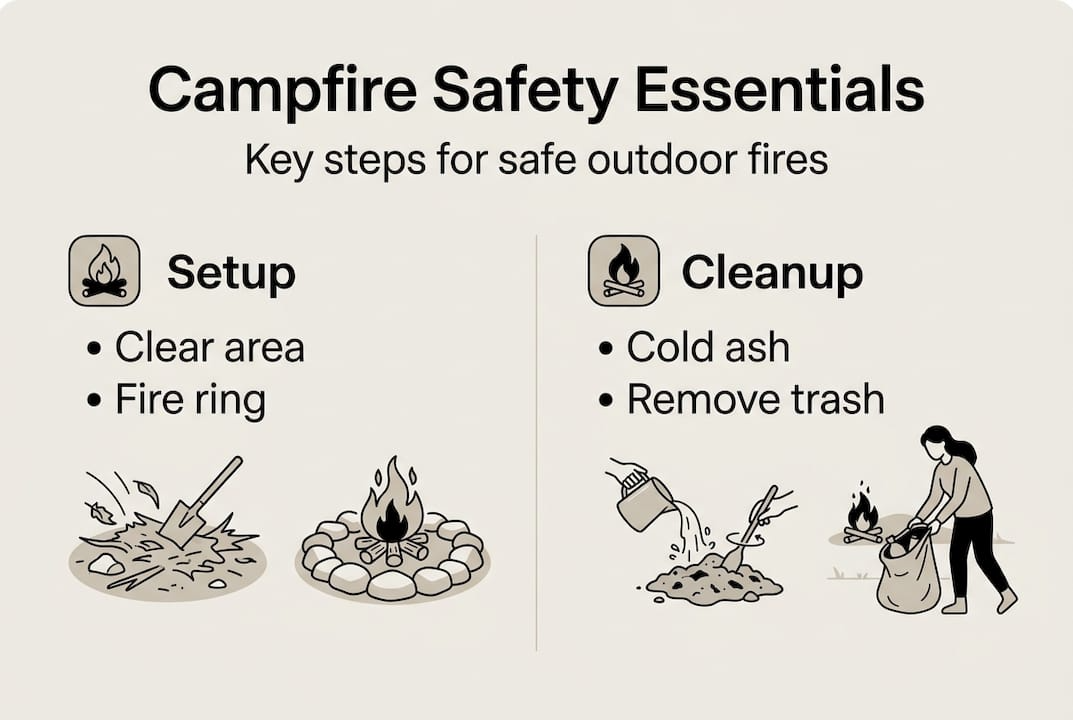
1. Pick the right spot. Use a designated fire ring or pit whenever possible. If none exists, clear a 10-foot circle of dry leaves, grass, and debris. Keep the site away from overhanging branches, tents, and gear.
2. Prepare your pit. If you're digging your own, go about 6 inches deep and ring it with rocks to contain the fire. Never use wet or porous rocks, since they can crack or explode when heated.
3. Choose your fire structure. Different builds work better in different situations:
| Structure | Best for | How it works |
|---|---|---|
| Teepee | Quick heat, starting fires | Tinder in center, kindling leaned around it in a cone |
| Log cabin | Long burns, cooking | Logs stacked in a square with tinder inside |
| Lean-to | Windy conditions | Kindling leaned against a large log to block wind |
4. Lay your tinder. Place a loose handful in the center of your fire ring. Don't pack it tight. Air needs to move through it.
5. Add kindling. Build your chosen structure around and above the tinder. Proper layering of tinder, kindling, and fuelwood is what separates a fire that roars to life from one that fizzles out.
6. Light it. Hold your lighter or match at the base of the tinder. Light from the windward side so the flame is pushed into the fuel, not away from it.
7. Add fuelwood gradually. Once the kindling catches, add one or two pieces of fuelwood at a time. Don't pile on logs all at once. That smothers the fire.
For ideas on what to do once your fire is going strong, check out our guide on campfire cooking basics to get the most out of your flames.
Pro Tip: Gather and organize all your tinder, kindling, and fuelwood into separate piles before you light anything. Scrambling for more wood mid-fire is how people get burned.
Common mistakes and troubleshooting tips
Even with clear steps, mistakes happen. Here's how to avoid and fix the most common campfire issues before they become real problems.
The most frequent beginner mistakes include:
- Using wet or green wood. Wet wood produces thick smoke and barely burns. Always feel your wood before using it. Dry wood snaps cleanly; wet wood bends.
- Overloading kindling too soon. Piling on too much at once blocks airflow and smothers the flame before it can grow.
- Building in an unsafe location. Fires built on dry grass, near roots, or under low branches can spread fast. Always use a cleared, designated spot.
- Leaving the fire unattended. Even a small, calm fire can spread in minutes if the wind picks up.
Warning: Never burn trash, cardboard, or treated wood in a campfire. Burning trash releases toxic fumes that are harmful to breathe, and it's prohibited at most campgrounds. Stick to natural, untreated wood only.
If your fire is smoky and weak, the fix is usually simple. Break your kindling into smaller pieces and rearrange them to create more space for air to flow through. A fire needs oxygen as much as fuel. Blowing gently at the base can help, but don't overdo it.
If the fire won't catch at all, your tinder is likely damp or too compacted. Pull it apart, add fresh dry material, and try again from scratch. Patience beats frustration every time.
Understanding campfire safety importance goes beyond just building a fire. It's also worth reviewing camp safety procedures so you're prepared for anything unexpected.
Pro Tip: If your fire keeps dying, the problem is almost always airflow. Lift the bottom layer slightly with a stick to let oxygen in, and the fire will respond quickly.
Campfire safety: Extinguishing and site cleanup
A safe campfire experience isn't over until the last cold ash. Here's how to finish responsibly.
This step matters more than most people realize. 90% of U.S. wildfires are caused by humans, and improperly extinguished campfires are a leading cause. A fire that looks dead can have hidden embers that reignite hours later.
Follow these steps every single time:
- Stop adding wood. Let the fire burn down to coals at least 30 minutes before you plan to leave or sleep.
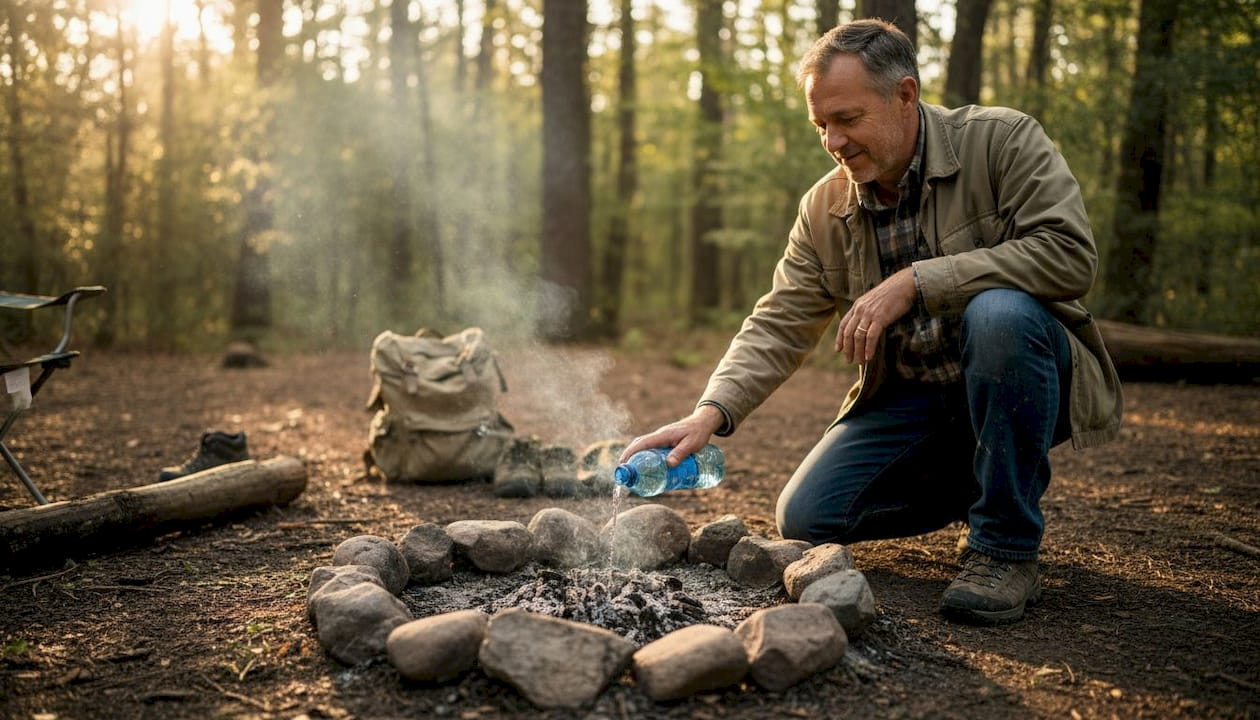
- Douse with water. Pour water slowly over the entire fire, including the edges and any rocks around the ring. Use more than you think you need.
- Stir the ashes. Use a stick or shovel to mix the wet ash and expose any hidden embers underneath. Pour more water over the stirred ash.
- Repeat. Keep dousing and stirring until the hissing stops completely.
- Test with the back of your hand. Hold your hand a few inches above the ash. If you feel any warmth at all, it's not out. Keep going.
- Scatter cold ash. Once fully cold, scatter the ash away from the campsite and restore the area as close to its natural state as possible.
For site cleanup, pack out everything you brought in. That means leftover wood, food scraps, and any trash. Don't bury it. Animals dig it up. Leave the site cleaner than you found it, which is the core idea behind Leave No Trace principles.
For more guidance on keeping your campsite safe, revisit our campfire safety tips for a full checklist you can use before and after every fire.
The overlooked truth about campfires: Confidence and caution go hand-in-hand
Stepping back, here's something all campers, new and seasoned, should keep in mind about fire in the wild.
There's a pattern we see with experienced campers that rarely gets talked about. The more fires someone has built, the more likely they are to skip steps. They've done it a hundred times. They know what they're doing. And that's exactly when things go wrong.
Overconfidence is the most common cause of campfire accidents. Not ignorance. Not bad luck. Familiarity. When you've built a hundred fires without incident, it's easy to stop treating each one with the same care as the first.
The truth is, every fire is different. Wind shifts. Dry spells change how fast wood burns. A site that looked clear in daylight can hide roots that carry embers underground. Respecting those variables isn't a sign of inexperience. It's a sign of real skill.
The best campers we know treat essential outdoor skills like campfire building as a practice, not a checklist. They go through the steps every time, not because they don't know them, but because they do. Your adventure depends on that kind of discipline. Don't skip the basics just because they feel basic.
Gear up for safer adventures
To make your next camping trip safer and simpler, here's where to start.
At Life Camp Adventure, we believe the right gear makes every skill easier to practice. Whether you're a first-time camper or someone who's been at it for years, having reliable tools changes the experience.
Browse our guide to essential camping gear to build a kit that covers every situation. If shelter is your next priority, our camping tents compared breakdown helps you find the right fit for your style and budget. And if you want to explore everything we carry, visit Life Camp Adventure to find adventure-ready products built for real conditions. Your next trip deserves the right foundation.
Frequently asked questions
What types of wood should I avoid for campfires?
Avoid green or freshly cut wood, and never use treated lumber or wood with nails or paint. Stick to dry, dead, downed natural wood for a clean and safe burn.
How can I tell if my campfire is completely out?
Hold the back of your hand a few inches above the ash. If you feel any warmth, the fire is not out. A properly extinguished fire leaves ash that is completely cold to the test.
Is it safe to cook food directly over my campfire?
Yes, as long as the fire is stable and burning clean, dry wood. Never cook over trash or treated wood, since both release harmful fumes that can contaminate your food.
What should I do if my fire keeps smoking and won't stay lit?
Switch to drier tinder and kindling, keep the pile small and loose, and improve airflow at the base. Proper fuel layering and oxygen flow are the two things that fix most struggling fires.
