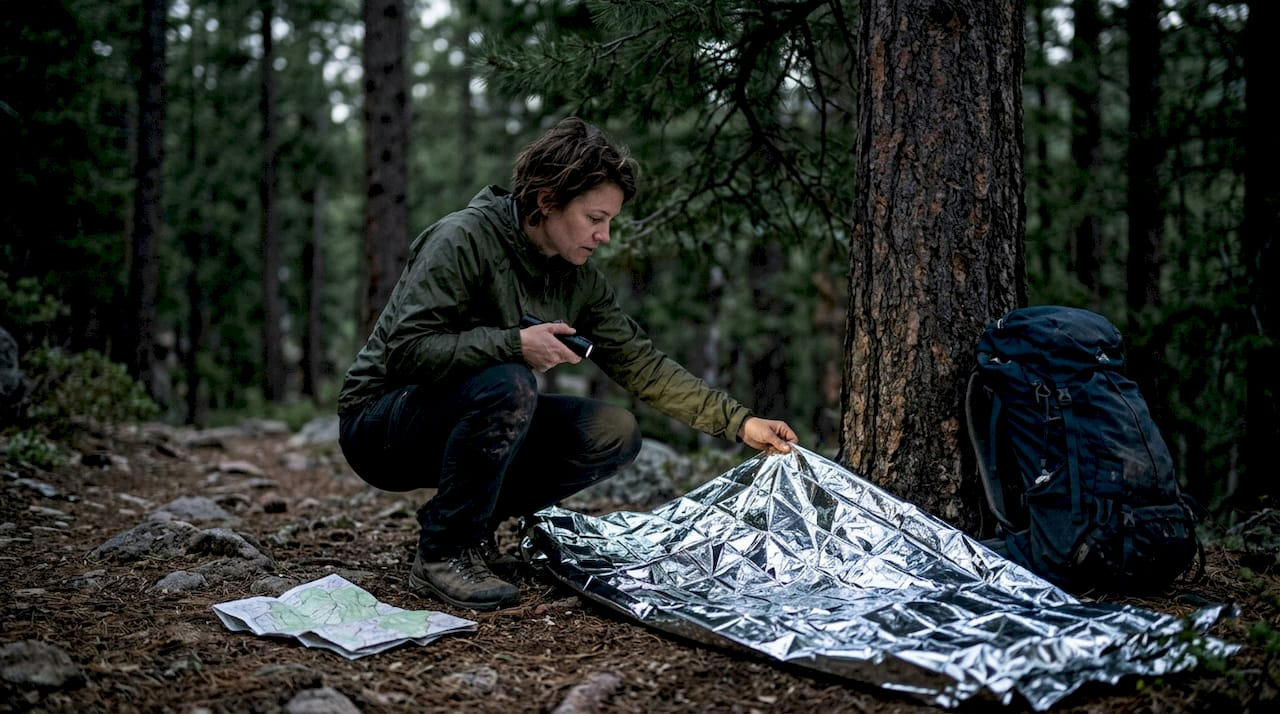
An emergency bivy is not just a fancy sleeping bag. It's a purpose-built survival tool that can mean the difference between walking out of the wilderness and not walking out at all. Most outdoor enthusiasts have seen one stuffed in a first aid kit or dangling from a gear rack, but few truly understand what it does or how to use it right. The SOL Emergency Bivvy reflects up to 90% of your body heat, weighs almost nothing, and packs smaller than your fist. This guide breaks down everything you need to know.
Key Takeaways
| Point | Details |
|---|---|
| Critical emergency shelter | Emergency bivies offer vital heat and weather protection for unexpected outdoor situations. |
| Not for comfort | These shelters excel in survival but can be uncomfortable and noisy for regular camping. |
| Proper use prevents risk | Effective use can prevent hypothermia, but condensation must be managed to avoid wetness. |
| Lightweight gear essential | Emergency bivies fit in any adventure kit due to their ultralight design and packability. |
| Pair with other layers | Always combine with sleeping pads, layers, and smart site selection for best results. |
What is an emergency bivy?
Now that we've set the stage, let's break down what an emergency bivy truly is and why it's unlike your typical sleeping solution.
An emergency bivy (short for bivouac) is a compact, heat-retentive sack designed specifically for unplanned overnight situations or sudden weather emergencies. It is not a comfort item. It is a survival tool built to do one job extremely well: keep your core temperature stable when everything else goes wrong.
The materials make all the difference. Most emergency bivies are constructed from mylar or polyethylene, both of which are heat-reflective films originally developed by NASA. These heat-reflective materials reflect up to 90% of your body heat back toward you, and they pack down to smaller than a soda can. That's not marketing language. That's physics working in your favor.
Here's a quick look at how an emergency bivy compares to a standard sleeping bag:
| Feature | Emergency bivy | Regular sleeping bag |
|---|---|---|
| Weight | 3.8 to 4.7 oz | 1 to 4 lbs |
| Packed size | 3.5 x 2.5 inches | 8 to 14 inches |
| Heat retention | Up to 90% reflected | Varies by fill |
| Waterproof | Yes | Rarely |
| Windproof | Yes | No |
| Cost | $10 to $30 | $50 to $400+ |
| Intended use | Emergency only | Planned camping |
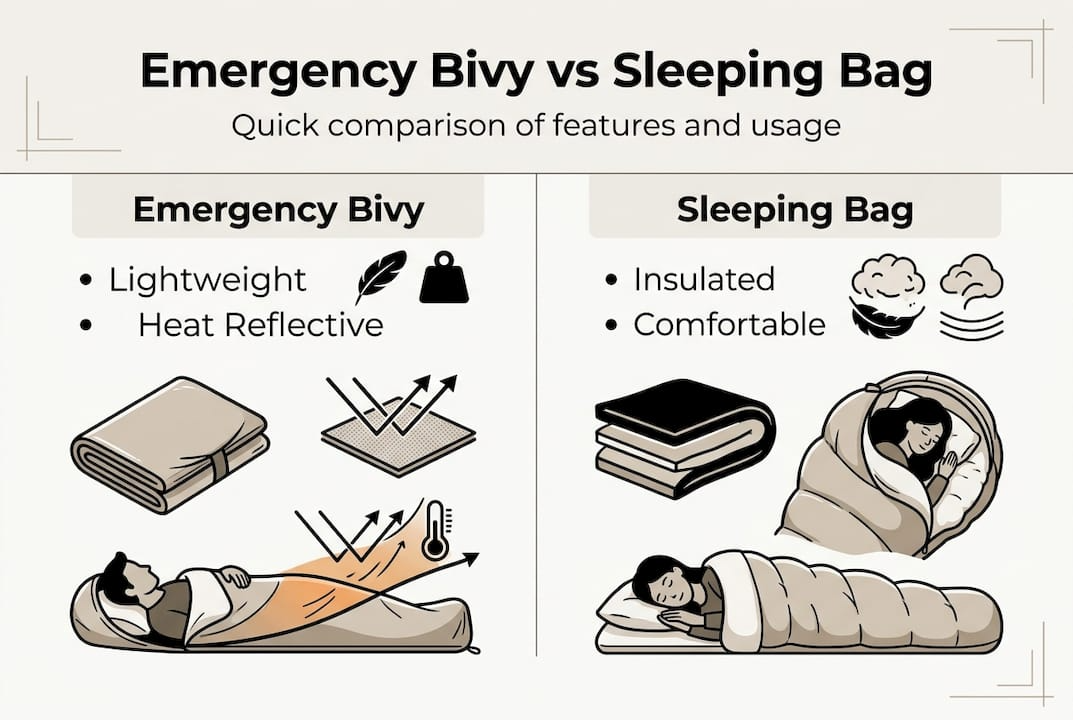
The numbers tell a clear story. You are not choosing an emergency bivy for a comfortable night under the stars. You are choosing it because it fits in your jacket pocket and could save your life.
Key features to look for in a quality emergency bivy:
- Waterproof and windproof shell to block external elements
- Heat-reflective interior made from mylar or polyethylene
- Lightweight design under 5 ounces
- Full-body coverage with an open or closable end
- Bright exterior color for search and rescue visibility
You can learn more about how emergency bivies fit into the broader world of types of camping shelters before you make your next gear decision.
Pro Tip: Always pair your emergency bivy with a sleeping pad or even a folded layer of clothing beneath you. The ground pulls heat away from your body faster than cold air does, and no bivy can fix that without insulation underneath.
Emergency bivy vs. blankets, sacks, and shelters
Knowing what an emergency bivy is, let's see how it stacks up against other shelter options you might already own or be considering.
This is where a lot of people get confused. The outdoor gear market is full of similar-sounding products, and the differences between them matter a lot when your safety is on the line.
| Shelter type | Durability | Reusable | Breathable | Weight | Best use |
|---|---|---|---|---|---|
| Emergency bivy | Low to medium | Sometimes | No | Under 5 oz | True emergencies |
| Space blanket | Low | Once | No | 1 to 2 oz | Signal + quick warmth |
| Full bivy sack | High | Yes | Partial | 1 to 2 lbs | Planned sleeping |
| Bivy tent | High | Yes | Yes | 2 to 4 lbs | Multi-night use |
| Tarp | High | Yes | Yes | Varies | Flexible shelter |
The most common mix-up is between an emergency bivy and a space blanket. A space blanket is a flat sheet. It wraps around you but leaves gaps for wind and rain to enter. An emergency bivy is a sack, meaning you climb inside it. Full-body coverage is a completely different level of protection.
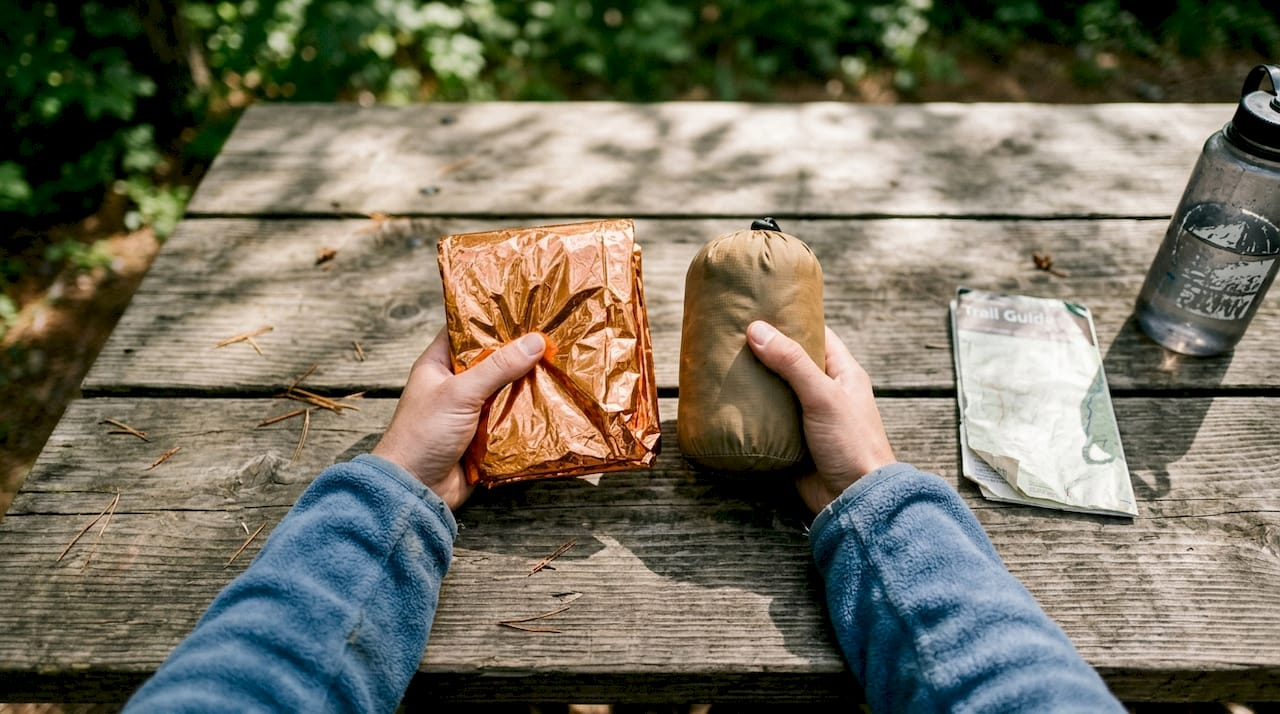
As emergency bivies are basic heat-reflective bags, not durable shelters, full bivy sacks are more robust and suitable for planned sleeping. That distinction is critical. If you are planning a solo overnight trip, a full bivy sack is the smarter choice. If you are packing a day bag for a trail run, an emergency bivy is the right call.
Three scenarios and the best shelter for each:
- Unexpected storm on a day hike: Emergency bivy wins. It's already in your pack and deploys in seconds.
- Planned solo backpacking trip: Full bivy sack or bivy tent is better for comfort and durability over multiple nights.
- Car emergency kit: Emergency bivy is ideal. It takes up almost no space and handles roadside situations well.
"Condensation is the hidden enemy inside any non-breathable shelter. If you're sweating inside an emergency bivy and the moisture has nowhere to go, you can end up wetter than when you started. Ventilation awareness is not optional."
For a broader look at your options, check out types of outdoor shelters and the basics of bivvy camping to build a fuller picture of what works for your style of adventure.
When and how to use an emergency bivy
With the differences clear, the next step is knowing when an emergency bivy is a true lifesaver and exactly how to use it properly.
An emergency bivy belongs in more places than most people think. Here are the situations where it earns its spot:
- Day hikes: Weather turns fast in the mountains. A bivy in your pack is cheap insurance.
- Car emergency kit: Breakdowns happen at night in cold weather. A bivy fits in your glove box.
- Bug-out bag: If you ever need to leave home fast, warmth and shelter are priorities.
- Wilderness backpacking: Gear failure, injury, or getting lost can force an unplanned night out.
- Adventure travel: International trips with unpredictable conditions benefit from a pocket-sized shelter.
Using your emergency bivy correctly is just as important as having one. Follow these steps:
- Choose your site. Get off wet ground if possible. Find wind shelter behind a rock, tree, or slope.
- Lay down insulation first. Use a sleeping pad, dry leaves, or your pack under your body.
- Climb inside feet first. Keep the open end near your face for airflow.
- Layer up before you get in. All your insulating layers go on before you seal the bivy.
- Monitor for condensation. If you feel damp, crack the opening slightly to let moisture escape.
Research shows that
of test scenarios when used correctly. But improper use, especially condensation build-up, creates a wet hypothermia risk that can be more dangerous than the cold itself.Pro Tip: Never use an emergency bivy inside a tightly sealed tent without ventilation. The combination of your breath and body moisture with zero airflow creates a wet environment that defeats the purpose entirely.
For more foundational knowledge, explore survival basics for beginners and outdoor first aid essentials to pair your gear knowledge with real skills.
Emergency bivy: Practical tips for gear lists and safe adventures
Once you know the right and wrong ways to use your bivy, you need to decide how it fits your overall adventure strategy. Here's how to pack smart and stay safe.
The emergency bivy is one of the most versatile pieces of safety gear you can carry, but it works best as part of a system. It is not a standalone solution. Think of it as the last layer in a shelter strategy, not the whole strategy.
As a rule, pair your bivy with insulating layers and solid shelter placement skills for it to perform at its best. That means knowing how to read terrain, block wind, and layer clothing before you ever need to deploy the bivy itself.
Here's how packing looks across different trip types:
- Car kit: One emergency bivy per person, plus a wool blanket and hand warmers. Store in a dry bag in the trunk.
- Day hike pack: One bivy, a lightweight rain layer, and a small first aid kit. Total weight under 12 ounces.
- Backpacking trip: Emergency bivy as a backup to your main sleep system. Keeps you covered if your sleeping bag gets soaked.
- Travel carry-on: One bivy tucked into a toiletry bag. Useful for cold overnight buses, trains, or unexpected delays in cold climates.
When you bring new campers into the outdoors, brief them on emergency shelter protocols before you hit the trail. Show them how to open and deploy the bivy before they need to do it in the dark or under stress. Practice matters.
For a complete packing breakdown, check out adventure travel gear lists and the full hiking essentials guide to build a kit that covers every situation.
The uncomfortable truth about emergency bivy gear
Beyond the practical packing strategies, it's time for an honest word on what emergency bivies can and can't do.
We see emergency bivies marketed as miracle tools. Toss one in your bag and you're safe. That's not the full story, and we think you deserve the real version.
In practice, emergency bivies are noisy, cramped, and not remotely comfortable. That crinkling sound every time you move is not a design flaw. It is just the material doing its job. But it can make a stressful night even harder to get through.
The bigger issue is condensation. Because the material doesn't breathe, your body moisture has nowhere to go. Some reviews go as far as warning that emergency bivies could cause wet hypothermia if condensation builds up from misuse. That's a real risk, not an edge case.
"I've used an emergency bivy in a real pinch, and the inside was soaked within two hours. It kept me alive, but it wasn't pretty. Ground insulation and ventilation are non-negotiable."
For anyone serious about backpacking comfort and safety, treat the emergency bivy as a true last-resort tool. Layer it with a sleeping pad, wear your insulating garments inside it, and never assume it replaces a proper shelter system.
Pro Tip: Every emergency shelter requires layering, ground insulation, and a clear understanding of your weather limits. The bivy is your safety net, not your plan A.
Find the best emergency gear for your next adventure
For those serious about upgrading outdoor safety kits, including emergency bivies, discover trustworthy gear reviews and tips below.
At Life Camp Adventure, we believe that confidence in the outdoors starts with knowing your gear inside and out. An emergency bivy is a small investment with a potentially enormous payoff, but only if you choose the right one and know how to use it.

Our camping gear comparison guides cut through the noise so you can make informed decisions without second-guessing yourself on the trail. And if you're still building your safety mindset, our guide on why pack survival gear is the perfect place to start. Gear up with the knowledge and equipment to handle whatever the outdoors throws your way.
Frequently asked questions
Can you reuse an emergency bivy?
Most emergency bivies are technically reusable if undamaged, but they are not as durable as full bivy sacks and may lose effectiveness after the first use. Always inspect for tears or worn spots before trusting it again.
Is an emergency bivy better than a space blanket?
Yes. An emergency bivy offers full-body windproof and waterproof coverage that a space blanket simply cannot match, since a blanket leaves gaps for wind and rain to enter.
What material is best for emergency bivies?
The best emergency bivies use mylar or polyethylene for their heat-reflective properties, durability under stress, and ability to block wind and moisture.
Are emergency bivies breathable?
No. Emergency bivies are not breathable by design because any ventilation would reduce heat retention. This makes condensation management a critical skill when using one.
How much do emergency bivies weigh?
Most emergency bivies weigh between 3.8 and 4.7 ounces, making them one of the lightest safety items you can add to any pack without noticing the extra weight.
