TL;DR:
- Proper preparation tailored to hike specifics is crucial to avoid forgotten gear and safety risks.
- The 10 essentials serve as a reliable safety framework, adaptable with multi-functional items.
- Mental readiness and scenario planning are vital for handling emergencies, beyond simply packing gear.
You're five miles from the trailhead when you realize you forgot your water filter. Or your map. Or your first aid kit. That sinking feeling is something every hiker knows, and it's entirely avoidable. A solid day hike preparation checklist is the difference between a confident, enjoyable experience and a stressful scramble. In this guide, we cover how to assess your specific needs, walk through a complete packing checklist, compare popular gear options side by side, and share final safety steps so you hit every trail fully prepared.
Key Takeaways
| Point | Details |
|---|---|
| Start with a plan | Careful hike planning is the foundation for safety and enjoyment every time. |
| Pack the true essentials | A well-prepared checklist prevents forgotten gear and common hiking pitfalls. |
| Choose gear wisely | Comparing gear options helps you find what works best for each specific hike. |
| Don’t skip safety checks | Final pre-hike checks significantly reduce risk while on the trail. |
How to assess your day hike essentials
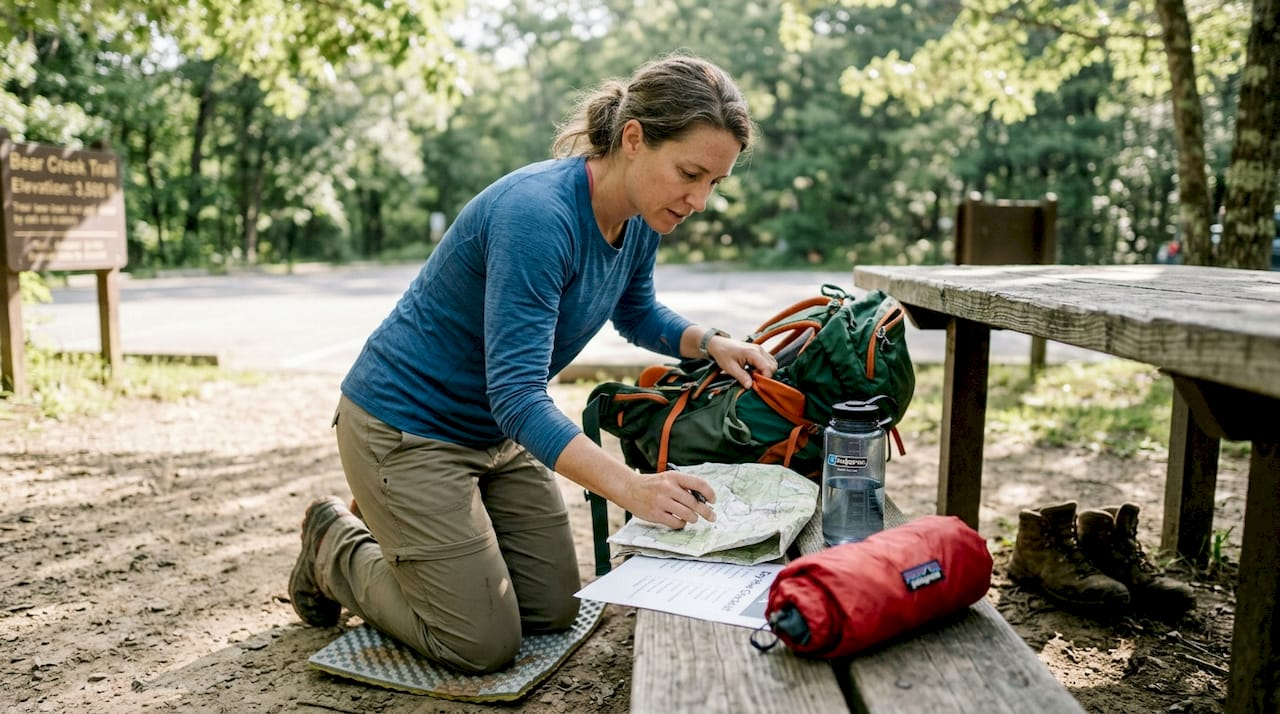
Not every hike is the same, and your checklist shouldn't be either. Before you grab a bag and start stuffing it, take ten minutes to honestly evaluate what your specific outing actually demands. Careful assessment of hiking conditions is recommended before every trip, and skipping this step is where most packing mistakes begin.
Start with four key variables:
- Hike length and elevation gain: A two-mile flat loop needs far less gear than an eight-mile ridge trail with 2,000 feet of climbing.
- Weather forecast: Check conditions the morning of your hike, not just the night before. Mountain weather shifts fast.
- Terrain type: Rocky scrambles demand ankle support and trekking poles. Muddy trails call for waterproof boots and gaiters.
- Group size and experience: Solo hikers need to be more self-sufficient. Groups can share gear like a first aid kit or emergency shelter.
Once you have those answers, use them to filter every item on your list through one question: is this necessary for this hike, or am I just packing out of habit? Multi-functional items are your best friend here. A bandana, for example, works as a sun cover, sweat rag, water pre-filter, and emergency bandage. A lightweight rain shell doubles as a wind barrier.
For solo hikers, the step-by-step hiking prep process is especially important because there's no one to cover for a forgotten item. If you're hiking with a group, divide shared gear strategically so no single person carries everything heavy.
Also check local regulations before you go. Some trails require bear canisters, fire permits, or wilderness passes. The REI hiking checklist is a solid external reference for region-specific requirements you might not think to include.
Pro Tip: Save a digital checklist on your phone and a printed backup in your pack. Running through it the night before prevents last-minute rushing and forgotten items.
The ultimate day hike packing checklist
With your assessment complete, here's the complete, expert-backed list of the crucial items every hiker should bring. Adequate water and navigation tools are non-negotiable for safety, and the rest of the list builds from there.
The ten essentials framework from the National Park Service is the gold standard starting point. Here's how it expands into a practical day hike list:
- Navigation: Trail map (downloaded offline), compass, or GPS device
- Sun protection: Sunscreen SPF 30 or higher, sunglasses, sun hat
- Insulation: Extra base layer, lightweight fleece, rain shell
- Illumination: Headlamp with fresh batteries (even for day hikes)
- First aid kit: Blister care, bandages, antiseptic wipes, pain reliever, any personal medications
- Fire starter: Lighter and waterproof matches in a zip-lock bag
- Repair tools and knife: Multi-tool, duct tape, trekking pole tips
- Nutrition: At least one extra day's worth of food beyond what you plan to eat
- Hydration: Minimum two liters of water, plus a filter or purification tablets
- Emergency shelter: Lightweight space blanket or bivy sack
- Communication: Fully charged phone, whistle, and optionally a personal locator beacon
- Hygiene and waste: Trowel, biodegradable soap, hand sanitizer, waste bags
For hiking essentials that serve double duty, a bandana is one of the smartest items in your pack. It weighs almost nothing and covers at least five functions. Similarly, check out essential camping gear guides for items that cross over well between camping and day hiking.
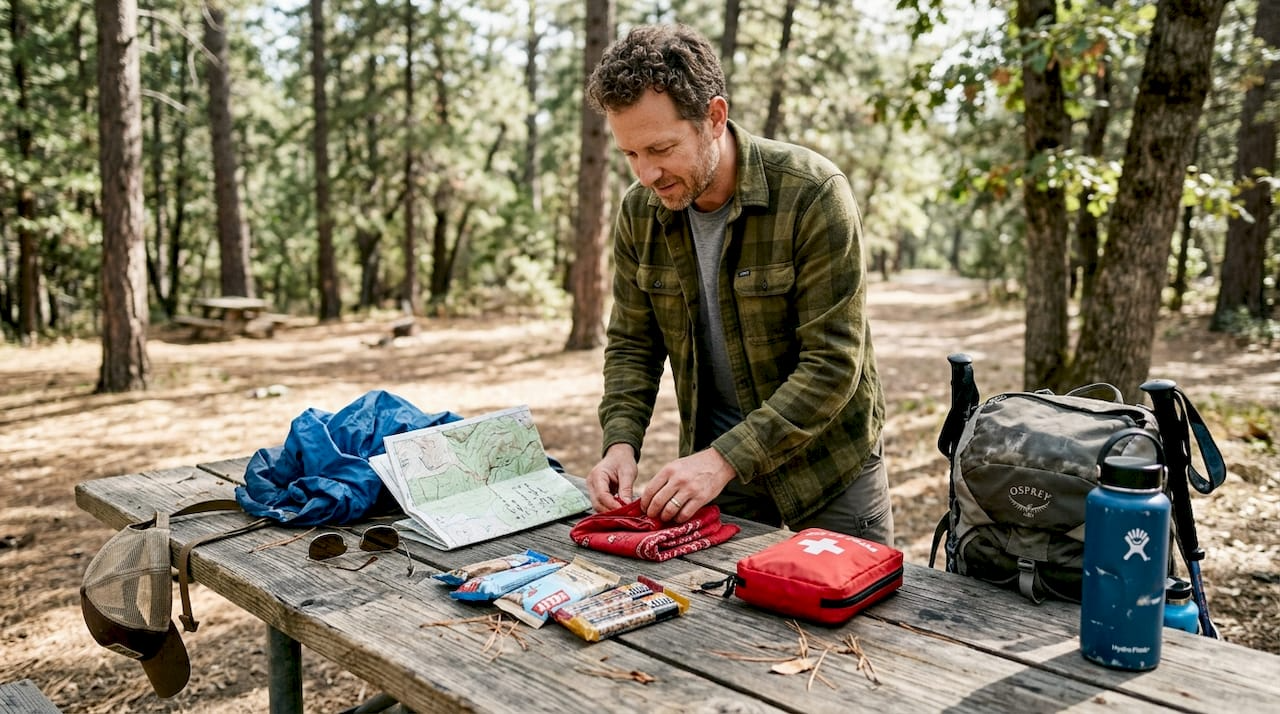
For food, energy-dense snacks matter more than volume. Nuts, jerky, and bars pack more calories per ounce than sandwiches. If you want to go deeper on food planning, the meal prep for backpacking guide covers calorie math and snack strategies that apply to day hikes too.
Pro Tip: Pack lighter by choosing compact or dual-purpose gear. A headlamp weighs less than a flashlight and keeps your hands free on rocky terrain.
Comparing gear options for common checklist items
Once you know what to pack, it's time to consider which versions or brands are the best fit for you. Selecting the right gear often depends on hike type and personal preference, and the wrong choice can add unnecessary weight or leave you underprepared.
Here's how common gear options stack up:
| Gear category | Option A | Option B | Best for |
|---|---|---|---|
| Hydration | Water bottle (1L hard-sided) | Hydration reservoir (2L bladder) | Bottles for short hikes; reservoirs for long days |
| Navigation | Paper map + compass | GPS device or phone app | Paper for backup; GPS for complex routes |
| Trail food | Energy/snack bars | Trail mix and jerky | Bars for convenience; mix for sustained energy |
| Shelter | Space blanket | Ultralight bivy sack | Blanket for emergencies; bivy for overnight risk |
| Footwear | Trail runners | Hiking boots | Runners for light terrain; boots for rocky or wet trails |
A few situational notes to help you decide:
- Hydration: Reservoirs let you drink hands-free, which is great on long climbs. But they're harder to clean and you can't easily see how much water remains. Bottles are simple and visible.
- Navigation: Phone GPS apps drain battery fast. Always carry a downloaded offline map AND a paper backup. Never rely on cell signal alone.
- Food: Trail mix gives you sustained energy from fats and protein, but bars are faster to eat on the move. Bring both if your hike is over four hours.
For a broader look at gear categories and what to prioritize, the backpacking comfort items guide breaks down what's worth spending on versus what you can skip. If you're still choosing a daypack, best daypacks from Switchback Travel is a reliable external resource with tested recommendations.
The right gear isn't always the most expensive. It's the gear that fits your hike, your body, and your experience level.
Final safety checks and last-minute tips
After selecting your gear, pause for these crucial safety steps before you lock the door and set off. A pre-hike safety check can prevent the majority of common hiking incidents, and it takes less than five minutes.
"Most emergencies can be avoided with a simple pre-hike check."
Run through this final checklist before you leave:
- Tell someone your exact route, trailhead location, and expected return time
- Recheck the weather forecast one more time, especially for afternoon thunderstorms
- Confirm your phone is fully charged and your offline map is downloaded
- Verify your water supply and add purification tablets as a backup
- Make sure your headlamp batteries are fresh, even for a morning hike
- Review your first aid kit for expired items or missing supplies
Leave No Trace principles matter on every hike, not just in wilderness areas. Pack out all waste, stay on marked trails, and avoid disturbing wildlife. The Leave No Trace principles site outlines all seven guidelines in plain language.
Your outdoor survival checklist is also worth reviewing before technical or remote hikes. It covers emergency signaling, shelter building basics, and water sourcing that goes beyond standard day hike prep.
One often-skipped step: study your route on the map before you go, not just during the hike. Know where the trail splits, where water sources are, and where the highest risk sections sit. That mental map is one of your best safety tools.
What most hikers overlook about day hike preparation
Here's something worth saying plainly: most hikers spend 90% of their prep time on gear and almost none of it on mental readiness. We check every box on the packing list and then walk out the door without a backup plan if things go sideways.
Experienced hikers still get caught out, not because they forgot a piece of gear, but because they didn't think through scenarios. What do you do if the trail is closed at the trailhead? What if someone in your group rolls an ankle at mile four? What if the weather turns two hours in?
Adaptability is a skill, and it's trainable. Run through a quick "what if" mental exercise before every hike. It takes three minutes and builds the kind of calm decision-making that prevents panic in real situations. The essential backpacking tips guide touches on this mindset shift in ways that apply directly to day hikes too.
Pro Tip: Practice a quick exit or evacuation scenario at least once a season. Walk your group through what to do if someone is injured and can't walk. Knowing the plan ahead of time makes execution far less stressful.
Gear matters. But the hiker who can adapt, stay calm, and make good decisions with imperfect information will always outperform the one with the most expensive pack.
Ready to upgrade your next hike? Gear up with us
You've got the checklist, the gear comparisons, and the safety steps. Now it's time to make sure your actual gear is up to the task. At Life Camp Adventure, we've built our product guides and resources specifically for hikers who want to move with confidence, not guesswork.
Explore our compare camping tents guide if your overnight kit needs a refresh, or browse the explorer gear essentials breakdown for gear that pulls double duty on day hikes and multi-day trips. For a ready-to-use resource you can take on any trail, our all-purpose survival checklist covers every scenario from a short loop to a full backcountry day. Gear up right and enjoy every mile.
Frequently asked questions
What are the absolute essentials to pack for a day hike?
You should always pack navigation, water, food, layers, first aid, emergency shelter, and sun protection for any day hike. These non-negotiable safety items cover the most common risks you'll face on the trail.
How much water should I bring for a day hike?
A common guideline is to carry about a half liter of water per hour of moderate activity in moderate temperatures, adjusting for climate and exertion. Proper hydration is critical for outdoor activities, so always err on the side of carrying more.
How can I prepare for changing weather on a day hike?
Always check forecasts and pack extra layers, a rain shell, and a space blanket to be ready for sudden weather changes. Layering appropriately is essential for unpredictable weather, especially at elevation.
Is it necessary to bring a first aid kit even on short hikes?
Yes, a compact first aid kit should be part of every hiker's checklist, no matter how short the trip. First aid is a safety essential even for short hikes because accidents don't check the mileage first.
