TL;DR:
- Bushcraft is a broad system of knowledge for thriving naturally outdoors, beyond just survival skills.
- It focuses on shelter, fire, water, food, and navigation to enhance safety and enjoyment.
- Flexibility and combining traditional with modern tools make effective bushcraft practices accessible for all.
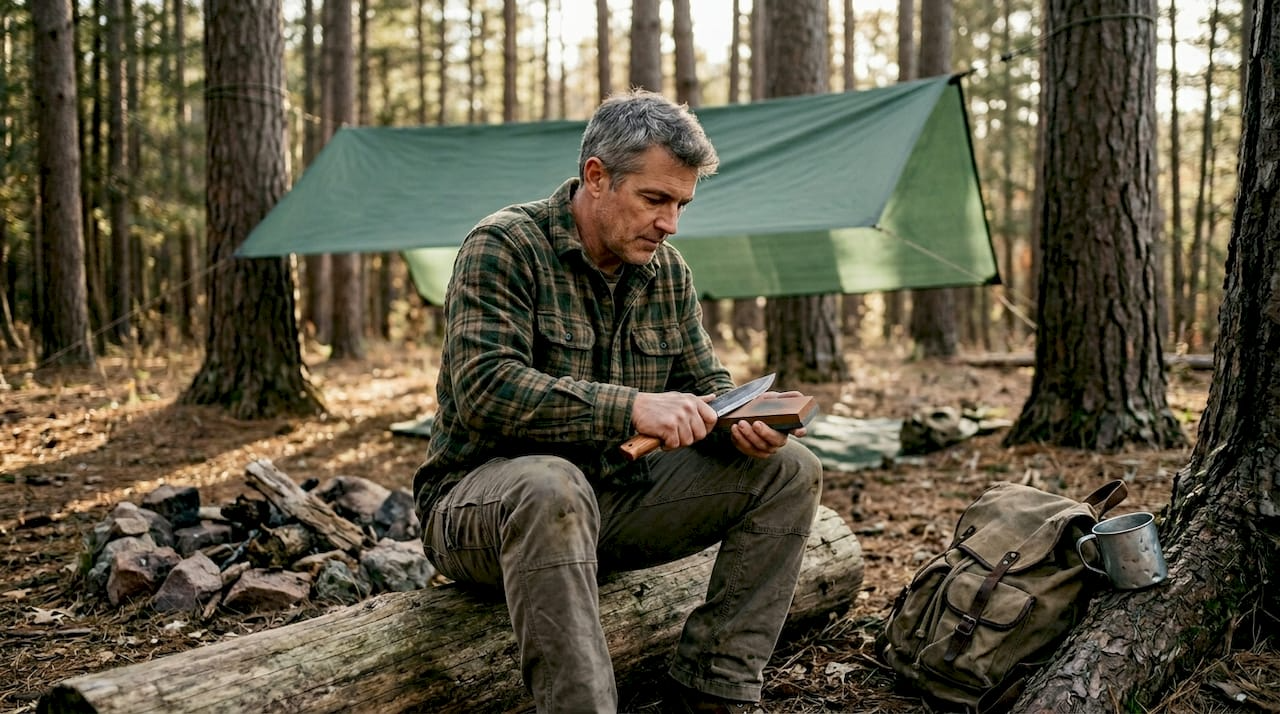
Most people hear the word bushcraft and picture someone alone in the forest, carving a spoon or starting a fire with two sticks. That image is part of it, but it barely scratches the surface. Bushcraft is far broader than a single skill or a specific type of knife, and it is not the same as survivalism. As wilderness skills broadly defined show, bushcraft covers everything from shelter and foraging to navigation and tool use, applicable to hunting trips, weekend camping, or serious backcountry travel. This article clears up the confusion, breaks down the real skills involved, and shows you exactly how bushcraft can make your time outdoors safer, smarter, and a lot more enjoyable.
Key Takeaways
| Point | Details |
|---|---|
| Bushcraft is more than survival | It involves a wide range of wilderness skills for both enjoyment and self-reliance, not just emergency responses. |
| Core skills make outdoor life smoother | Learning bushcraft basics like fire-making, shelter, and tool use builds confidence and safety in any wild setting. |
| Adaptability wins | The best bushcrafters are flexible, blending traditional know-how with modern tools for real-world practicality. |
| Anyone can start bushcraft | Beginner-friendly techniques make bushcraft accessible and fun for all outdoor enthusiasts. |
Defining bushcraft: Beyond survival skills
Bushcraft is the practice of using natural resources and wilderness techniques to live comfortably and confidently outdoors. It is not a single skill. It is a whole system of knowledge built around working with nature rather than fighting it.
The word itself has roots in Australian and South African outdoor culture, where settlers and explorers developed practical skills for living in wild environments. Today, the term covers a wide range of abilities that help people thrive in natural settings, whether for a weekend or an extended stay.
Here is what bushcraft actually includes:
- Shelter building using natural materials like branches, leaves, and bark
- Fire making through various methods including friction fire, flint and steel, and modern tools
- Water sourcing and purification from streams, rain, and natural collection points
- Foraging for edible plants, fungi, and other wild foods
- Tool use and maintenance, including knives, saws, and axes
- Navigation using a map, compass, stars, and natural landmarks
- Rope and cordage work, including knot tying and lashing
As many wilderness skill definitions point out, some people try to narrow bushcraft down to a specific tool or method. But that misses the point entirely.
Bushcraft is not about following a rigid set of rules. It is about building a relationship with the natural world through practical, hands-on knowledge.
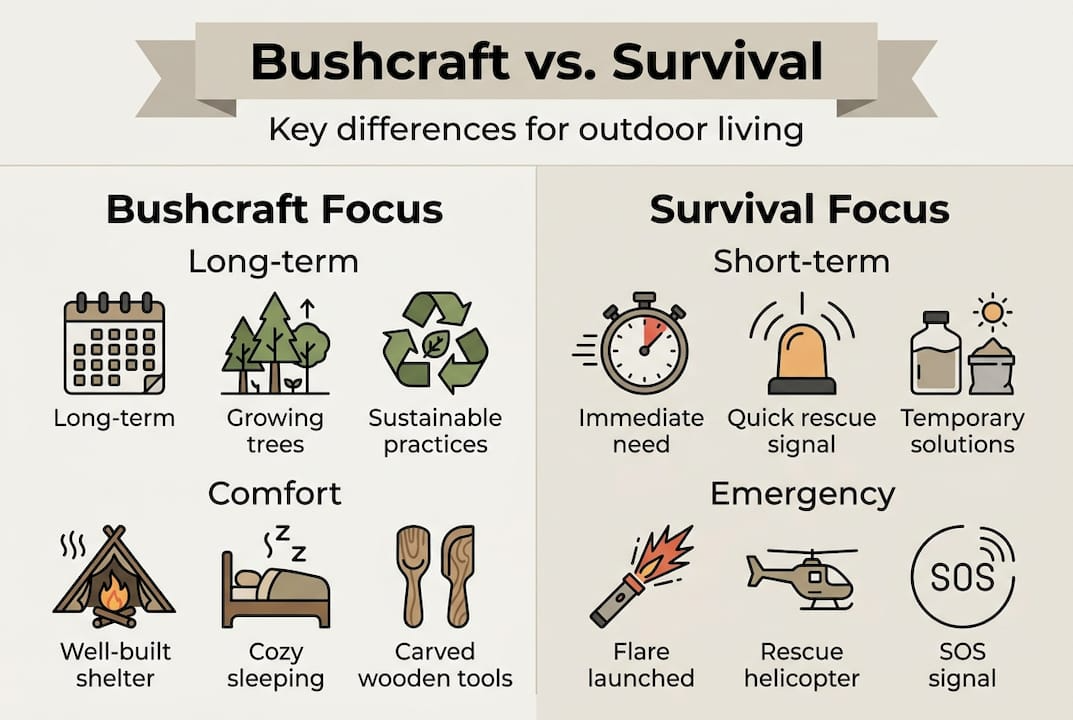
Understanding the difference between bushcraft and survival helps clarify why this broad definition matters. Survival is reactive. Bushcraft is proactive. It is the difference between scrambling to stay alive and settling in comfortably for the night with a warm fire and a solid shelter.
Core bushcraft skills: The essential toolkit
With a solid understanding of bushcraft's scope, let's explore the practical skills and tools that bring it to life.
Bushcraft is built on five core pillars: shelter, fire, water, food, and navigation. Each one connects to the others. A good fire helps you purify water. Knowing your surroundings helps you find food. A solid shelter keeps you warm enough to think clearly and make good decisions.
Here is how the core skills break down in practice:
- Shelter building — Learn to read the environment. A lean-to made from branches and leaves can hold in body heat surprisingly well. Practice this at home before you need it in the field.
- Fire craft — Start with a reliable lighter or ferro rod, then work toward friction methods. Understanding tinder, kindling, and fuel progression is essential.
- Water collection and purification — Know how to find water sources, filter sediment, and boil or chemically treat water before drinking.
- Foraging and food preparation — Start with a few easy-to-identify plants in your region. Never eat anything you cannot positively identify.
- Navigation — Practice using a compass and topographic map before relying on GPS. Dead reckoning and natural navigation are valuable backups.
| Skill | Key tool | Beginner focus |
|---|---|---|
| Shelter | Tarp, paracord | Simple lean-to setup |
| Fire | Ferro rod, tinder | Reliable ignition method |
| Water | Filter, metal cup | Boiling and basic filtration |
| Food | Knife, foraging guide | Plant identification |
| Navigation | Compass, map | Reading terrain features |
As broad bushcraft skills show, these techniques apply just as well to a casual day hike as they do to a multi-week wilderness expedition. You do not need to be a hardcore adventurer to benefit from them.
Knowing outdoor first aid basics pairs naturally with bushcraft, since both are about being prepared and self-reliant. And if you are thinking about tools, learning about using a multitool in the wild can help you understand how one compact piece of gear supports multiple bushcraft skills at once.
Pro Tip: Practice your fire-making skills at home in a safe, controlled setting before your next trip. Muscle memory matters when conditions get tough.
Bushcraft versus survival: Key differences explained
After breaking down the skills, it is important to see how bushcraft and survival compare and why these distinctions matter for outdoor enthusiasts.
Bushcraft and survival are related, but they are not the same thing. Confusing them leads to the wrong gear, the wrong mindset, and the wrong expectations.
Survival is about short-term emergency response. You are cold, lost, or injured, and your goal is to get safe as quickly as possible. Every decision is urgent. Survival training focuses on the minimum actions needed to stay alive until rescue arrives.
Bushcraft is about long-term comfort and self-sufficiency. You are choosing to live in the wild, using the environment as your resource base. The mindset is calm, methodical, and patient.
| Factor | Survival | Bushcraft |
|---|---|---|
| Time frame | Short-term emergency | Long-term living |
| Mindset | Reactive, urgent | Proactive, deliberate |
| Tools | Whatever is available | Chosen, maintained kit |
| Goal | Get rescued or reach safety | Live well in the wild |
| Skill focus | Core emergency responses | Broad wilderness living |
That said, the two overlap significantly. Both use shelter, fire, and water skills. Both require clear thinking under pressure. The difference is context and intention.
Some key points worth noting:
- Bushcraft practitioners often have better survival outcomes because their skills are deeply practiced, not just memorized
- Survival training can make you a better bushcrafter by sharpening your decision-making under stress
- Neither approach requires expensive gear or years of experience to start
As practical bushcraft definitions make clear, bushcraft is not about arrogant claims of thriving in any condition. It is a practical, adaptable skillset. Understanding survival basics vs. bushcraft helps you decide which skills to prioritize for your specific outdoor goals. And if you want to be prepared for emergencies, checking out recommended survival kits is a smart starting point.
Applying bushcraft: Practical benefits for outdoor enthusiasts
Having clarified the differences, let's see why bushcraft is worth learning and how it directly benefits outdoor adventures.
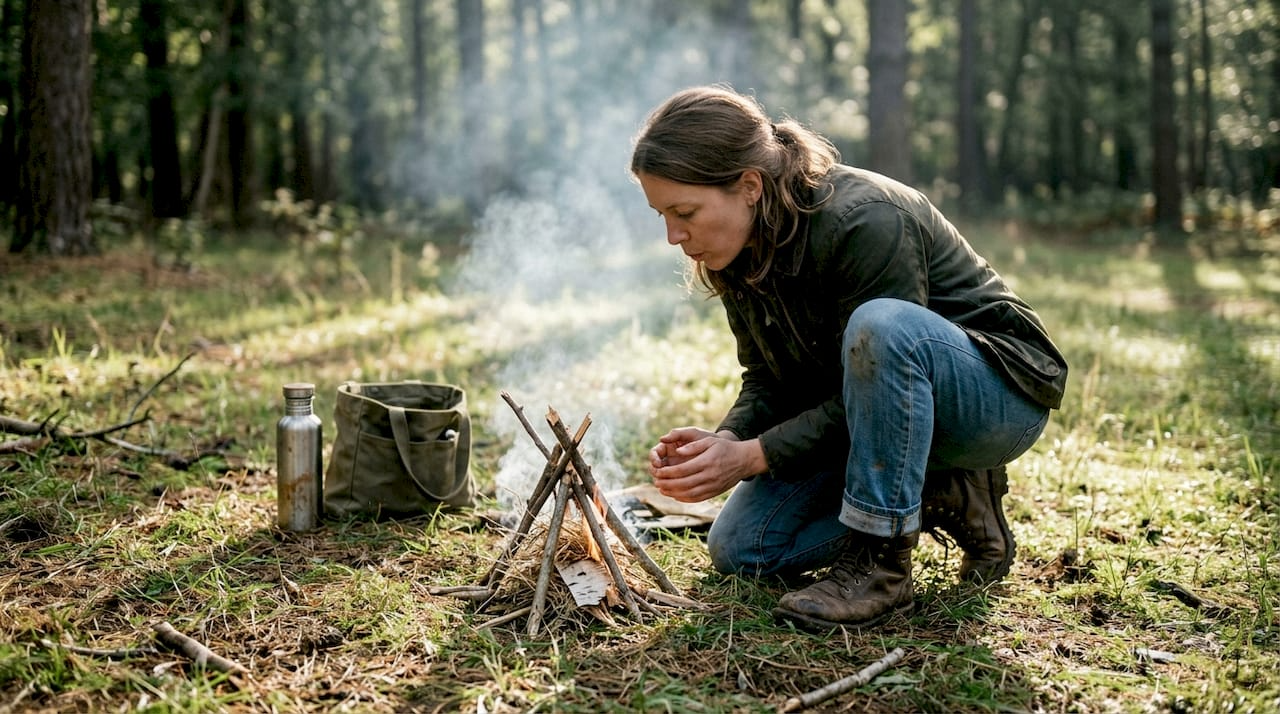
Bushcraft is not just for people planning to live off the land for months. Even basic bushcraft knowledge changes the way you experience the outdoors. It builds confidence, sharpens awareness, and makes you a safer, more capable person in any natural environment.
Here is how bushcraft skills translate into real benefits:
- Increased confidence — Knowing you can build a shelter or start a fire removes anxiety from outdoor situations
- Better safety — You can respond calmly and effectively when things go wrong
- Deeper enjoyment — Understanding the environment around you makes every trip richer and more engaging
- Resourcefulness — You learn to solve problems with what is available, not just what you packed
- Conservation mindset — Bushcraft teaches you to take only what you need and leave minimal impact
For novices, starting with just two or three bushcraft basics, like fire-making, shelter setup, and water purification, can transform a stressful camping trip into a confident one. You do not need to master everything at once.
As bushcraft's wide applicability shows, these skills work for everything from casual nature walks to serious hunting expeditions. The entry point is wherever you are right now.
Pro Tip: On your next camping trip, try building a simple debris shelter or starting your campfire without a lighter. Low-stakes practice builds real skills faster than any book.
Learning wilderness first aid skills alongside bushcraft gives you a complete outdoor safety toolkit. And if you want to extend your time outdoors comfortably, developing backcountry cooking skills is a natural next step that combines food knowledge with fire and gear skills.
Why the best approach to bushcraft is flexible, not dogmatic
Here is something we have noticed over years of outdoor experience: the people who get the most out of bushcraft are not the ones with the strictest rules. They are the ones who stay curious and adaptable.
There is a real debate in the bushcraft community about purity. Some insist on only traditional tools, no modern fire starters, no synthetic materials, nothing that was not available 200 years ago. That mindset has its place as a personal challenge. But as a philosophy for practical outdoor living, it falls short.
As rigid versus broad bushcraft definitions illustrate, the 4-inch-knife-only crowd and the anything-goes crowd are both missing something. The real value of bushcraft is that it gives you options. A ferro rod does not make you less skilled. Knowing how to use a tarp and a wool blanket together is not cheating.
The best bushcrafters we know mix traditional techniques with modern tools based on what the situation calls for. They are not attached to an identity. They are attached to results: staying warm, staying fed, staying safe, and enjoying the experience.
When you approach choosing camping gear with this mindset, you stop asking "is this traditional enough?" and start asking "does this help me do the job well?"
That shift makes all the difference.
Explore more: Essential gear and guides for your bushcraft journey
Ready to take your bushcraft skills further? Whether you are just starting out or looking to sharpen what you already know, having the right resources makes a real difference.
At Life Camp Adventure, we have put together detailed guides and carefully reviewed gear recommendations to support every stage of your outdoor journey. From camping tents compared to help you choose the right shelter, to a complete breakdown of outdoor survival basics that pairs perfectly with bushcraft skills, we have got you covered. Browse our full range of essential camping gear to find the tools that match your skill level and adventure goals. Better knowledge plus the right gear equals better experiences outdoors.
Frequently asked questions
What exactly is bushcraft?
Bushcraft is the practice of wilderness skills for living, thriving, and enjoying nature, including shelter, fire, water, food, and tool use. As all wilderness skills covered show, it is not limited to one tool or method.
How is bushcraft different from survival?
Bushcraft focuses on long-term comfort and skills for living in the wild, while survival is about short-term emergency responses. As practical skill distinctions confirm, both share techniques but differ in mindset and purpose.
Do I need special tools to practice bushcraft?
No, bushcraft can be practiced with basic gear like a sturdy knife, some cordage, and a way to make fire, though specialized tools can enhance your skills. Contrasting tool views highlight that both minimalist and broader approaches have merit.
Is bushcraft only for experts?
Bushcraft is accessible to anyone and offers basics that can help novices improve their outdoor experience and safety. As bushcraft's broad applicability shows, it applies to everything from casual nature trips to advanced expeditions.
