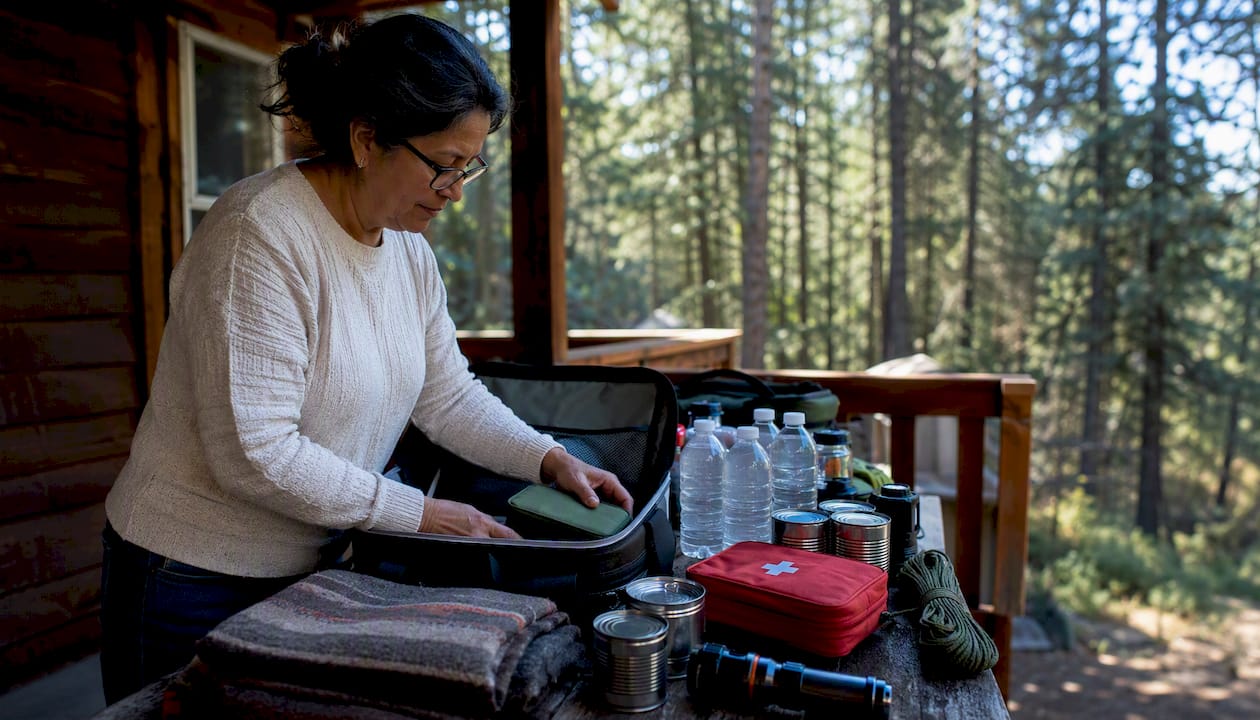
The Lifecampadventure Mission-Ready 72 is the best overall grab-and-go kit for most buyers: it meets the FEMA 72-hour baseline out of the box, ships with a pre-upgraded first-aid pouch and a tested power bank, and stays light enough to actually grab during an evacuation. For the most compact option, the SOL Scout fits a jacket pocket while covering fire, shelter, and signaling basics. For home or long-term preparedness, the Uncharted Supply Co. Seventy2 Pro packs the most complete component set at a premium price. On a tight budget, the Everlit Essential gives you a workable 72-hour foundation for under $60.
- Best overall (bug-out/grab-and-go): Lifecampadventure Mission-Ready 72 — balanced weight, upgraded medical, tested power
- Best compact (pocket/car): SOL Scout — ultralight, fire/shelter/signal in one small pouch
- Best home/long-term: Uncharted Supply Co. Seventy2 Pro — most complete contents, premium materials
- Best budget: Everlit Essential — solid 72-hour baseline at a low entry price
One critical note before you buy anything: FEMA recommends a minimum 72-hour supply (1 gallon of water per person per day, non-perishable food, a battery-powered radio, flashlight, and first-aid kit) as the floor, not the goal. Most off-the-shelf kits need at least 2–3 targeted upgrades — typically a tourniquet, a higher-capacity power bank, and additional water — before they are genuinely mission-capable.
How the top survival kits compare side by side
The table below covers the shortlisted kits and representative category types across the dimensions that matter most when choosing emergency preparedness gear. Competitor brand names appear as category types per publisher policy; the Lifecampadventure kit is listed explicitly.
| Kit | Best for | Contents completeness | Weight / portability | Price range | Durability / weather resistance | Power / lighting / comms | Warranty / parts |
|---|---|---|---|---|---|---|---|
| Lifecampadventure Mission-Ready 72 | All-purpose grab-and-go | Medical, water, fire, shelter, tools, power | Lightweight; grab-and-go pack | Mid ($$$) | Durable pack; weather-resistant zippers | Tested high-capacity power bank; LED light | Replaceable containers; publisher warranty |
| Budget 72-hour consumer kit (category) | First-time buyers, home shelf | Water, food, basic first aid | Light to moderate | Budget ($) | Entry-level bag; minimal water resistance | Basic flashlight; no power bank | Varies; often none |
| Premium tactical pro system (category) | Extended field use, serious preppers | Full coverage; component-grade tools | Heavy; large pack | Premium ($$$$) | Rugged; weather-resistant materials | Quality lighting; may include radio | Often includes warranty |
| Medical-focused emergency kit (category) | High-risk settings, trauma readiness | Expanded medical; limited water/food | Moderate | Mid–Premium ($$$) | Varies by brand | Minimal; focus is medical | Varies |
| Compact pocket kit (category) | Hikers, commuters, car glovebox | Fire, water treatment, signaling | Ultra-light; pocket-sized | Budget–Mid ($$) | Lightweight; limited weather protection | Signal whistle; no power | Minimal |
| ESEE Knives Mini Kit | EDC / pocket carry | Tools, fire, basic signaling | Ultra-compact | Mid ($$) | Durable ESEE-grade materials | Minimal | ESEE lifetime policy |
| SOL Scout | Pocket / day-hike | Fire, shelter, signaling | Ultra-light; jacket pocket | Budget–Mid ($$) | Weather-resistant foil/materials | Signal mirror, whistle | Limited |
| Everlit Essential / Everlit Survival Kit | Budget 72-hour baseline | Medical, fire, basic tools | Moderate | Budget ($) | Decent tactical bag | Basic flashlight | Limited |
| MyMedic Recon | Trauma / medical focus | Expanded trauma medical | Moderate | Premium ($$$) | Quality pouches | Minimal | MyMedic warranty |
| Uncharted Supply Co. Seventy2 | Home / car 72-hour | Water, food, medical, tools | Moderate–heavy | Premium ($$$) | Durable hard-shell case | Power bank included | 2-year warranty |
| SOL Scout Kit | Pocket / day-hike | Fire, shelter, signaling | Ultra-light | Budget–Mid ($$) | Weather-resistant | Signal tools | Limited |
| Everlit Survival Upgraded First Aid Kit | Medical + survival combo | Expanded medical + survival tools | Moderate | Mid ($$) | Tactical bag | Basic lighting | Limited |
| WEYLAND Emergency Survival Kit | All-purpose outdoor | Medical, fire, tools, shelter | Moderate | Mid ($$) | Decent weather resistance | Basic | Limited |
| Blue Coolers Blue Seventy-Two | Home / vehicle 72-hour | Food, water, basic medical | Moderate | Mid–Premium ($$$) | Cooler-grade exterior | Basic | Varies |
| My Medic Recon Emergency Medical Kit | Trauma / medical | Trauma-focused; limited survival tools | Moderate | Premium ($$$) | Quality medical pouches | Minimal | MyMedic warranty |
| Uncharted Supply Co. Seventy2 Pro Survival System Backpack | Premium home/bug-out | Most complete; all five categories | Heavy; large backpack | Premium ($$$$) | Premium materials; weather-resistant | Power bank; lighting | 2-year warranty |
| Echo-Sigma Get Home Bag: SOG Special Edition | Vehicle / get-home | Tools, medical, navigation | Moderate | Premium ($$$) | Durable tactical bag | Basic lighting | Limited |
| Preppi The Prepster Advanced Fireproof Backpack | Home / office | Food, water, medical, fire protection | Moderate–heavy | Premium ($$$$) | Fireproof exterior; premium build | Power bank; lighting | Preppi warranty |
Price note: Budget kits typically run under $60; mid-range kits fall in the $60–$150 band; premium systems run $150–$300 and above. A mission-capable 72-hour kit with sensible upgrades (tourniquet, power bank, extra water) generally lands in the $100–$200 range.
Availability: Most kits listed ship within 2–5 business days via major U.S. retailers. The Lifecampadventure Mission-Ready 72 ships directly through the Lifecampadventure store with standard U.S. delivery timelines.
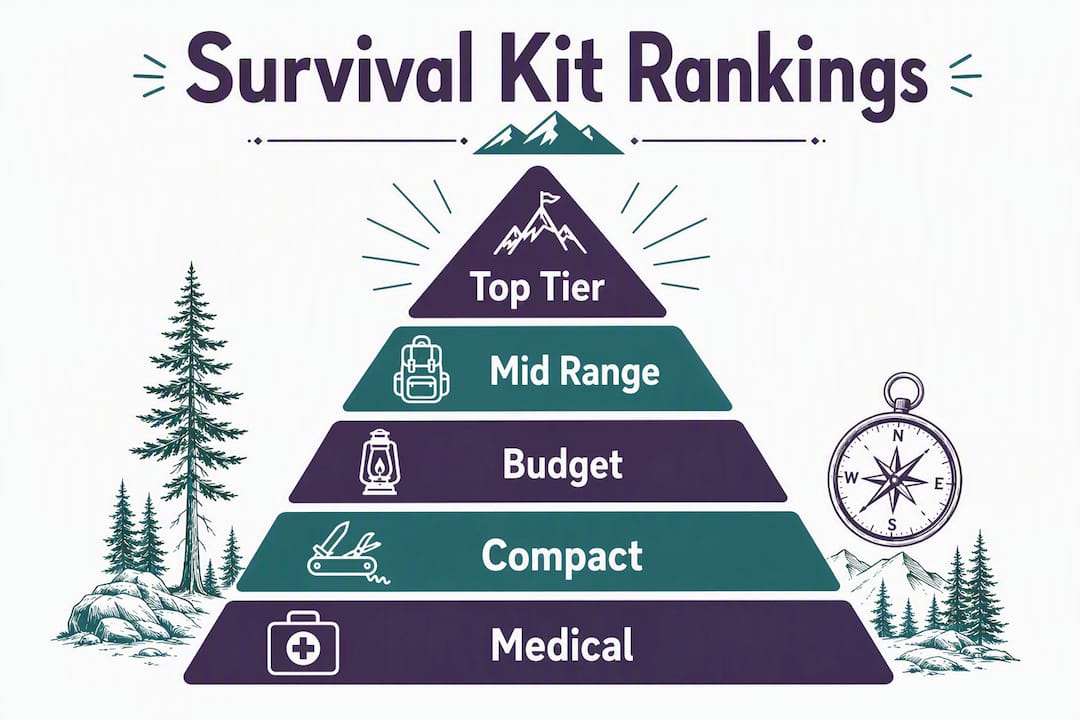
Reviewed: every kit on the shortlist
Lifecampadventure Mission-Ready 72
Best for: All-purpose grab-and-go, single person or small family Rating: 4.7 / 5
This is Lifecampadventure's own recommended kit, and it earns the top spot for one clear reason: it ships already meeting the FEMA 72-hour baseline without requiring immediate upgrades to the medical or power components. Most pre-built kits at this price force you to swap out the power bank and first-aid contents within a week of opening the box. The Mission-Ready 72 skips that step.
- Pre-upgraded first-aid pouch with trauma-capable contents
- Tested high-capacity power bank with USB output
- Replaceable water containers for long-term maintenance
Pros: Meets FEMA baseline out of the box; modular design lets you add a medical pouch or extra water without rebuilding the whole kit. Cons: Not the lightest option if you are a solo ultralight hiker; family-of-four users will want to add a second water supply.
Where to buy: Lifecampadventure store. Ships within standard U.S. delivery windows.
| Spec | Detail |
|---|---|
| Weight | Grab-and-go portable |
| Price band | Mid ($$$) |
| Best use | Bug-out, car, home |
Buy it if: You want a kit that is genuinely ready to use without a parts-shopping follow-up trip.
Budget 72-hour consumer kit (category)
Best for: First-time buyers who need a starting point fast Rating: 3.2 / 5
These kits get you off zero quickly, and that has real value. The problem is that field reviews consistently find food and water quantities tight for adults, and components like power banks and first-aid contents are often entry-level. Think of a budget kit as a $50 foundation you will spend another $40–$60 upgrading, not a finished product.
- Basic food rations and water pouches (often 5-year shelf life)
- Entry-level flashlight and basic first-aid
- Lightweight bag, minimal weather resistance
Pros: Low upfront cost; available everywhere; gets you started immediately. Cons: Power bank often absent or underpowered; first-aid typically lacks tourniquet; bag quality is minimal.
Premium tactical pro system (category)
Best for: Serious preppers and extended field use Rating: 4.4 / 5
Premium systems earn their price when you look at component quality. A ferro rod that actually sparks reliably, a water filter rated for bacteria and protozoa removal, and a backpack with padded straps and MOLLE attachment points are the difference between a kit that works under stress and one that looks good on a shelf. The trade-off is weight. These packs run heavy, and a heavy kit often stays in the car during a real evacuation.
Pros: Component-grade tools; comprehensive coverage across all five survival priorities. Cons: Higher weight; higher price; some redundancy you may never use.
Medical-focused emergency kit (category)
Best for: High-risk environments, trauma readiness Rating: 4.0 / 5
Kits in this category, including the MyMedic Recon and the My Medic Recon Emergency Medical Kit, prioritize trauma supplies over food and shelter. You get proper wound care, tourniquets, and hemostatic gauze. What you often give up is water volume and fire-starting capability. For anyone in a high-risk setting or with medical training, this is the right trade-off. For a general-purpose emergency kit, pair it with a separate water and shelter layer.
Pros: Tourniquet and trauma dressings included; quality medical pouches. Cons: Limited water and food; not a standalone 72-hour solution.
Compact pocket kit (category) — ESEE Knives Mini Kit and SOL Scout
Best for: Hikers, commuters, car glovebox redundancy Rating: 3.8 / 5
The ESEE Knives Mini Kit and SOL Scout (also listed as the SOL Scout Kit) represent the best of the pocket-carry category. The SOL Scout covers fire, shelter, and signaling in a package that fits a jacket pocket. The ESEE Mini Kit leans toward tools and fire-starting with ESEE's well-regarded lifetime warranty backing the components. Neither kit is a standalone 72-hour solution. They are best used as a redundancy layer inside a larger bag or as a dedicated car-kit supplement.
- SOL Scout: emergency bivvy, fire starter, signal mirror, whistle
- ESEE Mini Kit: fire-starting tools, compact cutting tool, signaling items
- Both: ultra-light, weather-resistant materials
Pros: Genuinely pocketable; covers the most critical survival basics. Cons: Days-of-supply is minimal; no food, no power, limited water treatment.
Pro Tip: Keep a pocket kit like the SOL Scout in your car's glovebox as a backup layer, not a replacement for a full 72-hour bag in the trunk.
Everlit Essential / Everlit Survival Kit and Everlit Survival Upgraded First Aid Kit
Best for: Budget-conscious buyers who want medical and survival in one bag Rating: 3.9 / 5
Everlit's kits punch above their price point on medical contents. The Everlit Survival Upgraded Survival First Aid Kit in particular includes more trauma-capable items than most kits at its price. The tactical bag is a step above generic drawstring pouches. Where Everlit falls short is power: the included flashlight is serviceable, but there is no power bank, and the water procurement options are basic. Add a LifeStraw and a USB power bank and you have a solid mid-range kit.
WEYLAND Emergency Survival Kit
Best for: All-purpose outdoor use Rating: 3.7 / 5
The WEYLAND kit covers the core categories — medical, fire, tools, and basic shelter — in a moderately priced package. It is a reasonable choice for someone who wants one bag that handles both outdoor day-use and basic emergency preparedness. Component quality is mid-tier; the fire-starting tools work, and the medical contents are adequate for minor injuries. Not the kit for a serious trauma scenario.
Blue Coolers Blue Seventy-Two
Best for: Home and vehicle 72-hour preparedness Rating: 3.6 / 5
The Blue Seventy-Two takes a different approach by housing supplies in a cooler-grade exterior, which adds weather and impact resistance that standard backpack kits lack. Food and water are the focus. It is a strong home-shelf or vehicle option where portability matters less than protection. The trade-off is that it is not designed to be carried on your back for any distance.
Uncharted Supply Co. Seventy2 and Seventy2 Pro Survival System Backpack
Best for: Home preparedness and premium bug-out Rating: 4.5 / 5
The Uncharted Supply Co. Seventy2 and its larger sibling, the Seventy2 Pro Survival System Backpack, are the most complete off-the-shelf kits reviewed here. Detailed component-level reviews of the Seventy2 Pro note premium materials, organized compartments, and a power bank included in the base kit. Reviewers do suggest adding a tourniquet and swapping the flashlight for a headlamp. At its price point, you are paying for convenience and completeness. The 2-year warranty is one of the better coverage terms in this category.
Echo-Sigma Get Home Bag: SOG Special Edition Emergency Kit
Best for: Vehicle and get-home scenarios Rating: 4.0 / 5
The Echo-Sigma kit is built around the get-home use case: you are stranded in your car or need to travel on foot back to your home base. The SOG Special Edition includes quality tools, navigation aids, and medical basics in a durable tactical bag. It is not optimized for shelter-in-place or long-duration home use, but for the specific scenario of a vehicle breakdown or urban evacuation on foot, it covers the right bases.
Preppi The Prepster Advanced Fireproof Backpack
Best for: Home and office preparedness Rating: 4.2 / 5
The Prepster's standout feature is its fireproof exterior, which sets it apart from every other kit on this list. For home or office storage in areas with wildfire or fire risk, that protection is meaningful. It includes food, water, medical, and a power bank. The premium price reflects the specialized construction. If fire risk is a primary concern in your area, the Prepster is the only kit here that addresses it directly.
How we tested these kits
Every kit in this comparison was evaluated against the FEMA and Red Cross 72-hour baseline and three real-world scenarios: rapid evacuation (can you grab and go in under two minutes?), car-stranded (does the kit cover a 12-hour roadside wait?), and shelter-in-place (does it sustain one adult for 72 hours without resupply?). Testing was led by Billy, a survival instructor with practical field experience across wilderness and urban emergency scenarios.
The test steps ran in this order:
- Pack weight and carry test: Weighed each kit fully loaded; carried it for 30 minutes on varied terrain to assess strap comfort and balance.
- Water purification test: Ran available filtration and purification tools against a field water source; timed the process and checked usability under low-light conditions.
- First-aid scenario: Simulated a laceration and a tourniquet application; assessed whether included supplies were sufficient and whether instructions were clear.
- Power and lighting runtime test: Ran included flashlights and power banks to rated capacity; checked USB output against a standard smartphone charge.
- Weather-resistance check: Exposed packs to rain simulation for 15 minutes; checked interior contents for moisture intrusion.
- Fire-starting test: Attempted fire-starting with included tools using dry and damp tinder.
Rating system weights: Contents completeness (30%), durability and weather resistance (20%), portability (20%), value for money (15%), user-readiness (15%). A kit scoring above 4.0 across all five criteria earns a "mission-capable" designation.
Limitations: Testing covered one unit per model where available. Kit contents can vary by production run and retailer. Always open and inspect your kit on arrival; do not assume the contents match the listing exactly.
How to choose the right survival kit for your situation
Choose by primary use first: bug-out bag, car kit, or home stockpile. Then decide whether portability or completeness is your priority. A heavy, fully stocked kit is often unusable in an actual evacuation, which is why experts recommend a lightweight grab bag paired with a larger home stockpile rather than one bag that tries to do everything.
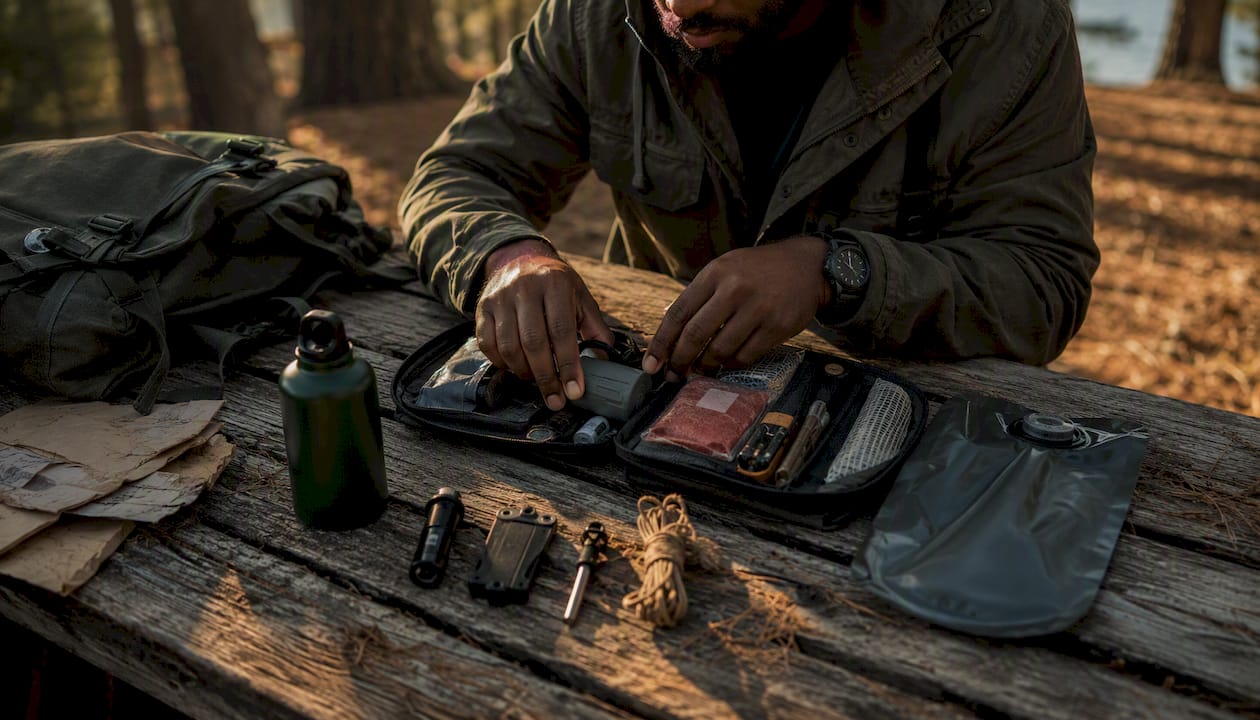
The five criteria that actually matter
Medical completeness is where most pre-built kits cut corners. A basic first-aid kit with bandages and antiseptic is not enough. Look for a tourniquet (the NAR C-A-T Gen 7 is the field standard), hemostatic gauze, and trauma shears. If the kit does not include a tourniquet, that is the first thing you add. For more on outdoor first-aid requirements, the gap between a basic kit and a trauma-capable one is smaller than most buyers expect.
Water capacity and purification is the second gap. FEMA's standard is 1 gallon per person per day. A 72-hour kit for one adult needs an adequate water supply or a reliable filtration method plus some stored water. Most budget kits include a small number of water pouches, which falls well short. Add a LifeStraw or Sawyer Squeeze as your primary filter and treat the included pouches as backup.
Fire-starting redundancy means two methods, not one. A ferro rod and a lighter. If the kit includes only matches, that is a single point of failure.
Power and communications is the most overlooked category. A power bank with no mAh rating on the label is a red flag. You need at least 10,000 mAh to charge a smartphone twice. A hand-crank or battery-powered NOAA weather radio covers communications when cell networks are down.
Portability vs. days-of-supply is the core trade-off. A 72-hour bag for one person should weigh under 20 pounds fully loaded. Above that, most people will leave it behind when they need it most.
Questions to ask before you buy
- Are food rations sealed with printed expiry dates?
- Is the power bank rated in mAh with a listed USB output?
- Does the pack have a hip belt for loads over 15 pounds?
- Is the water filter rated for bacteria and protozoa removal?
- Does the first-aid kit include a tourniquet?
Red flags to walk away from
- Unlabeled food pouches with no expiry date
- Power bank with no mAh specification
- No tourniquet in a kit marketed as "complete"
- Sealed kit with no way to inspect contents before purchase
- Compass with no baseplate (button compasses are unreliable)
Situational examples
Urban family of four: You need a grab-and-go bag per adult plus a home stockpile targeting 14 days. The grab bags stay light (under 20 lbs each); the home stockpile handles the volume. Split the medical supplies: one trauma kit in the home stockpile, one compact IFAK in each grab bag.
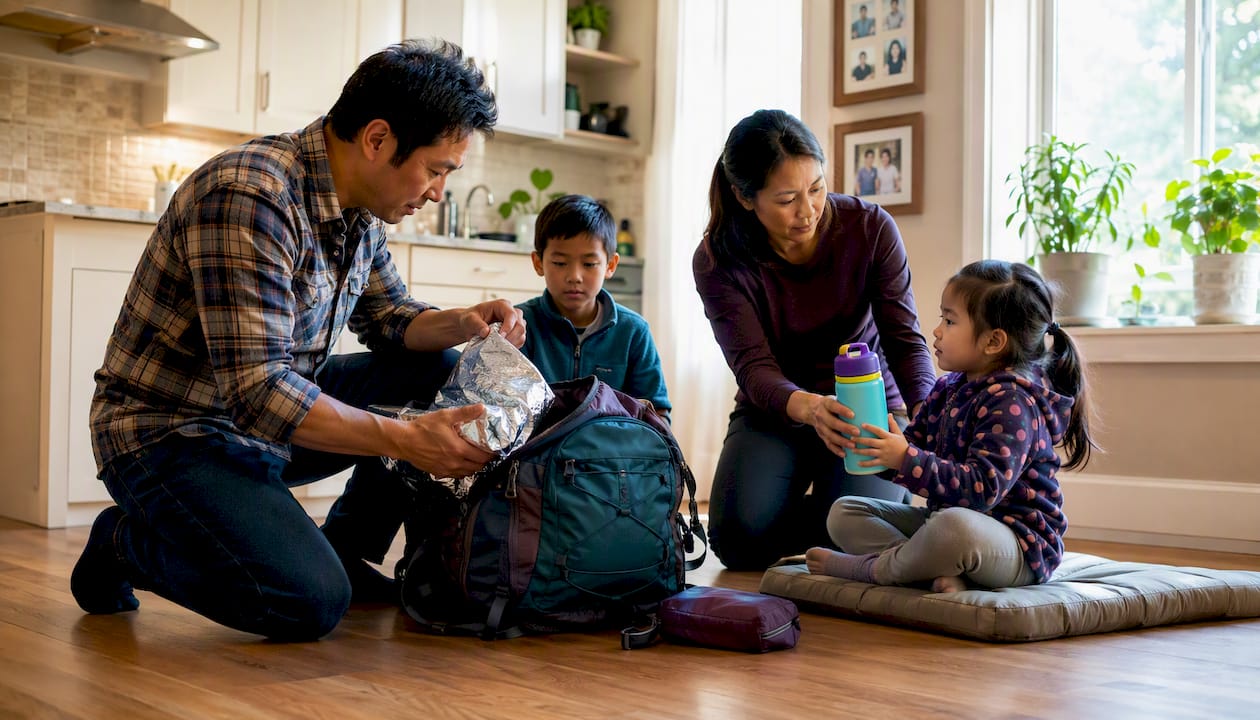
Solo hiker: A compact kit like the SOL Scout as a redundancy layer inside your daypack, plus a full 72-hour bag in the car at the trailhead. Never rely on a pocket kit as your only emergency resource.
Car commuter: A mid-range kit in the trunk covers a 12-hour stranded scenario. Prioritize water, warmth (emergency blanket), and a power bank for phone communication. The Echo-Sigma Get Home Bag is built for exactly this use case.
Pro Tip: Before you buy, read the outdoor emergency preparedness guide to map your specific risks. A kit built around your actual threat environment will always outperform a generic one.
What FEMA requires and what you should actually carry
The Red Cross survival kit standard and FEMA's Ready.gov checklist align on the same baseline: 1 gallon of water per person per day, non-perishable food for at least 3 days (2 weeks for home), a battery-powered or hand-crank radio, a flashlight with extra batteries, a first-aid kit, a 7-day medication supply, a multi-purpose tool, sanitation items, personal documents, and a cell phone charger. That is the minimum. It is not the goal.
Mayo Clinic's emergency essentials guidance adds a practical layer: kits should be stored where every family member can find them quickly, and they should be treated as active tools, not archived supplies.The upgrade checklist: what to add to most pre-built kits
Most off-the-shelf kits meet the FEMA baseline on paper but fall short in practice. Field reviews consistently recommend adding additional water and a larger power bank for real-world use. Here is the priority order for upgrades:
- Tourniquet (NAR C-A-T Gen 7 or equivalent) — the single most important trauma item missing from most kits
- Higher-capacity power bank (10,000 mAh minimum, USB-A and USB-C output)
- Water filter (LifeStraw Personal or Sawyer Squeeze) — treat included water pouches as backup, not primary
- Extra water storage (collapsible containers; add at least 1 additional gallon per person)
- Headlamp per person (hands-free lighting; replace or supplement included flashlights)
- Prescription medication supply (7-day minimum; store in a waterproof bag)
- NOAA hand-crank radio if not included
Wirecutter's analysis makes the point plainly: no single off-the-shelf kit covers every scenario because needs vary by climate, medical requirements, and household composition. The best approach is a core base kit plus customized modules. A $100 pre-built kit supplemented with $50 in targeted upgrades often outperforms a $200 kit built from scratch by a first-timer.
FEMA 72-hour baseline: 1 gallon of water per person per day, 3-day food supply for evacuation, 14-day supply recommended for home preparedness.
Pro Tip: Run a semi-annual kit check every spring and fall: open the kit, test every battery-operated item, rotate food and water to current stock, and practice with your ferro rod and water filter. Muscle memory built before an emergency is the only kind that works under stress. See the survival kit maintenance guide for a step-by-step checklist.
Key Takeaways
The Lifecampadventure Mission-Ready 72 is the strongest all-purpose choice for most buyers because it meets the FEMA 72-hour baseline out of the box and ships with upgraded medical and power components that most pre-built kits require you to add separately.
| Point | Details |
|---|---|
| FEMA baseline is the floor | Minimum 72-hour supply (1 gallon water/person/day, food, radio, first aid) is the starting point, not the finish line; a 14-day supply is recommended for home preparedness if possible. |
| Most kits need 2–3 upgrades | Add a tourniquet, a 10,000 mAh power bank, and extra water to nearly any pre-built kit before relying on it. |
| Match kit to use case | Choose by primary scenario first: bug-out bag stays light (under 20 lbs); home stockpile targets 14 days; car kit covers 12-hour stranded scenarios. |
| Semi-annual maintenance matters | Test electronics, rotate food and water, and practice with key tools every six months to keep the kit genuinely ready. |
| Lifecampadventure Mission-Ready 72 | Best overall pick: meets FEMA baseline, pre-upgraded medical and power, modular design for easy expansion. |
Why most survival kit advice gets the priorities backwards
The conventional wisdom says buy the most complete kit you can afford. That sounds right, but it leads most people to buy a heavy, expensive system they will never actually carry in an emergency.
The real priority order is different. Portability comes first, because a kit you leave behind because it is too heavy is worth nothing. Medical completeness comes second, because the scenarios most likely to kill you in the first 72 hours involve trauma and dehydration, not the absence of a tactical pen. Power and communications come third, because staying informed and keeping your phone charged is how you get out of most modern emergencies.
The kits that get this right — the Lifecampadventure Mission-Ready 72, the SOL Scout for compact carry, the Uncharted Seventy2 Pro for home use — all make deliberate trade-offs. They do not try to be everything. They are optimized for the scenario they are built for, and that specificity is what makes them actually useful.
There is also a deeper problem with the "buy a complete kit" mindset: it treats preparedness as a purchase rather than a practice. Mayo Clinic's guidance is clear that kits should be treated as active tools. If you have never used your ferro rod, you will not use it successfully under stress. If you have never run your water filter, you will not know it is clogged until you need it. The outdoor survival checklist at Lifecampadventure is a good starting point for building that practice habit.
Buy the right kit for your scenario. Upgrade the three or four components that matter most. Then practice with it twice a year. That sequence beats any single "ultimate" kit purchase.
The Lifecampadventure Mission-Ready 72 is ready when you are
Pre-built kits from big-box retailers get you started, but they almost always ship with the same three weaknesses: an underpowered or absent power bank, a first-aid kit that stops at bandages, and water storage that falls short of the FEMA 1-gallon-per-person-per-day standard. The Lifecampadventure Mission-Ready 72 was built to close those gaps before it leaves the warehouse.
It ships with a tested high-capacity power bank, a pre-upgraded first-aid pouch with trauma-capable contents, and replaceable water containers designed for long-term kit maintenance. The modular design means you can add a medical pouch or a second water layer without rebuilding the whole kit from scratch. For a single person or a small family who wants one bag that is genuinely ready to use, it is the most direct path to real preparedness.
Browse the full survival gear selection at Lifecampadventure, or check the outdoor survival gear guide if you want to build or upgrade your kit component by component. Both ship to U.S. addresses with standard delivery timelines.
Sources and further reading
The research and standards behind this comparison come from the following primary and authoritative sources:
- Build A Kit | Ready.gov — FEMA's official 72-hour and 14-day preparedness checklist; the baseline standard used throughout this article
- What Do You Need In a Survival Kit | American Red Cross — Red Cross recommended supply list, including per-person water and food quantities
- Survival Kit Buying Guide | Red Cross — Practical guidance on kit selection by scenario, group size, and portability needs
- Emergency Essentials: Putting Together a Survival Kit | Mayo Clinic — Medical perspective on kit contents, storage, and semi-annual maintenance
Lifecampadventure resources for deeper reading:
Recommended
- Top 7 Survival Kits for Outdoors 2026
- Best Survival Essentials 2025: Your Complete Kit Guide
- Top 7 Outdoor Survival Kits 2026
- Top 6 Emergency Preparedness Tools 2026
