TL;DR:
- The essential survival gear for 2025 focuses on water, food, shelter, fire, and tools to ensure safety in emergencies. Proper preparation includes storing water, choosing calorie-dense foods, and selecting reliable shelter and tools for effective survival. Customizing kits with personal items and skills improves preparedness and response capabilities in critical situations.
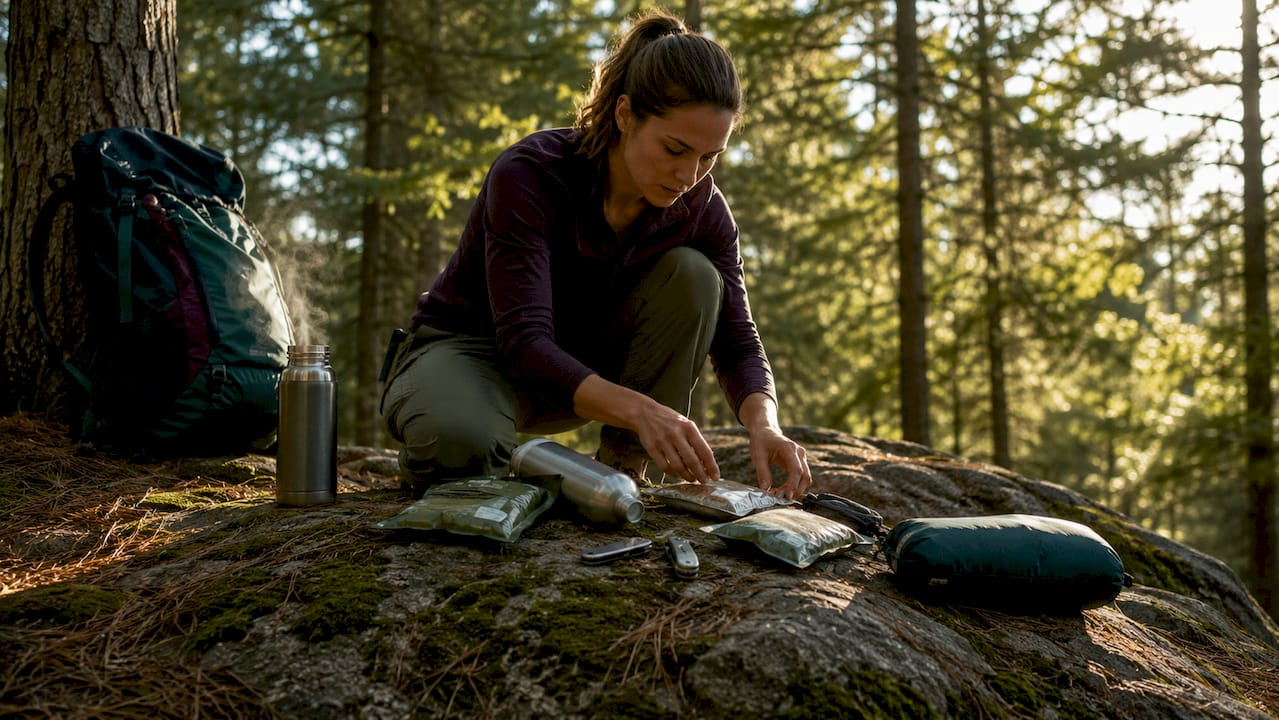
The best survival essentials for 2025 are gear and supplies that reliably cover five core needs: hydration, nutrition, shelter, fire, and multi-functional tools. Whether you're planning a backcountry trip or building a home emergency kit, the right survival pack essentials can mean the difference between a manageable crisis and a life-threatening one. This guide cuts through the noise and gives you a ranked, expert-backed list of must-have survival items, with specific product recommendations and the reasoning behind each pick.
1. What are the best survival essentials 2025 for water storage?
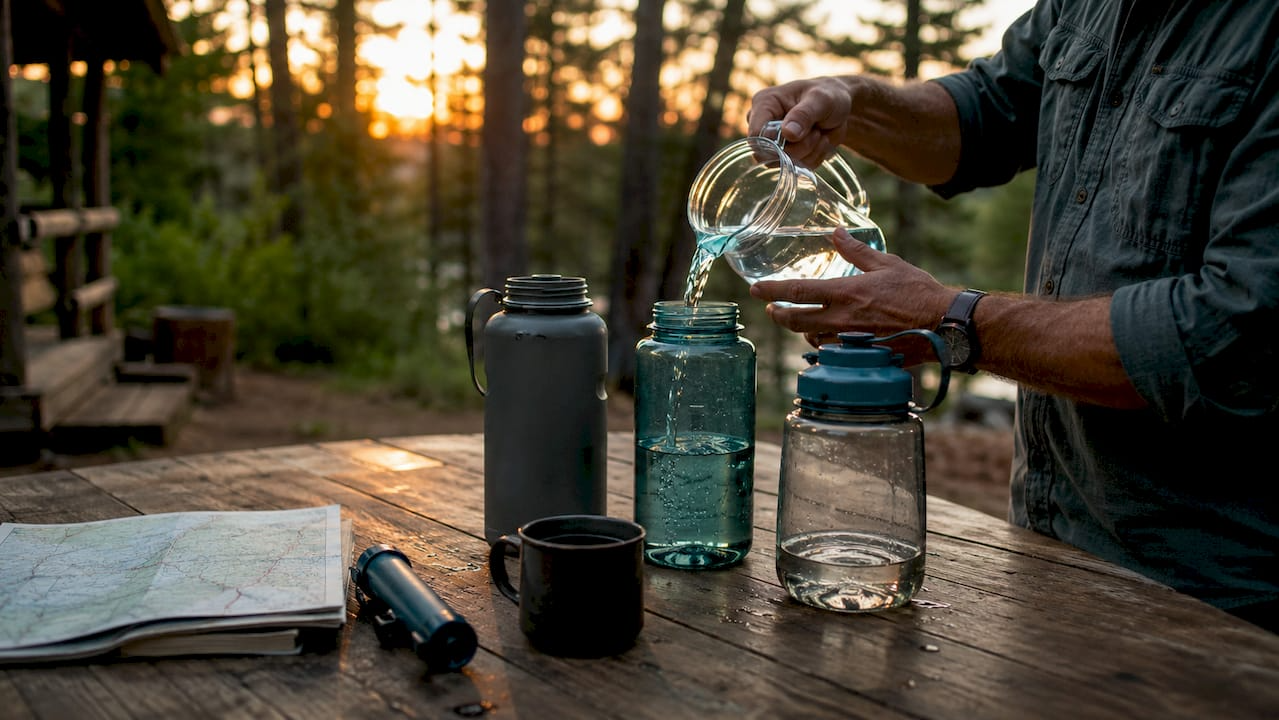
Water is the first item on every serious 2025 survival checklist. The American Academy of Family Physicians sets the baseline at one gallon per person per day for a minimum of three to seven days. That number means a family of four needs at least 12 gallons stored before an emergency hits.
The Nalgene 32oz Wide Mouth Bottle is the top water storage recommendation for survival kits because of its BPA-free construction and near-indestructible build. It handles freezing temperatures, drops, and repeated sterilization without cracking or leaching chemicals.
- Water storage: Nalgene 32oz Wide Mouth Bottle (BPA-free, durable)
- Filtration: Sawyer Squeeze or LifeStraw Personal Water Filter
- Purification backup: Aquatabs water purification tablets (lightweight, 5-year shelf life)
- Collapsible container: Platypus 2L Soft Bottle for overflow capacity
Pro Tip: Carry two or three smaller containers instead of one large jug. Smaller containers are easier to fill from streams, share between group members, and distribute weight across your pack.
2. Which food supplies should you include in a survival kit?
Food is your second priority once water is secured. Experts recommend targeting 2,000+ calories per person per day from non-perishable, calorie-dense sources. That calorie floor keeps your body functional under physical and psychological stress.
Freeze-dried meal pouches are the gold standard for survival food. They carry 25-year shelf lives and require only boiling water to prepare. Brands like Mountain House and Backpacker's Pantry offer single-serving pouches that weigh under four ounces each.
- Freeze-dried meals: Mountain House or Backpacker's Pantry pouches
- Energy bars: Clif Bars, Kind Bars, or Datrex 3,600-calorie emergency ration bars
- Compact nutrition: Peanut butter packets, trail mix, and hard candy
- Cooking tool: Jetboil Flash or MSR PocketRocket 2 stove with fuel canisters
Pro Tip: Pack at least one comfort food item per person, such as instant coffee, chocolate, or a favorite snack. Morale is a real survival factor, and familiar flavors reduce stress during prolonged emergencies.
3. How to choose effective shelter gear for survival situations
Shelter is not optional. Maintaining core body temperature takes priority immediately after an emergency because hypothermia can set in within hours in cold or wet conditions. A shelter system that fails under rain or wind puts your life at risk faster than hunger or thirst.
The SOL Escape Bivvy is a clear upgrade over older Mylar emergency blankets. It is waterproof, breathable, and heat-reflective while packing down to the size of a water bottle. For more robust setups, a silnylon tarp with paracord and titanium stakes gives you a configurable overhead shelter that handles wind, rain, and snow.
Ground insulation matters as much as overhead cover. The Therm-a-Rest RidgeRest foam sleeping pad prevents heat loss to the ground and outperforms inflatable pads on rugged terrain because it cannot puncture.
| Shelter option | Weight | Weather resistance | Setup time | Best for |
|---|---|---|---|---|
| SOL Escape Bivvy | 8.5 oz | High (waterproof) | Under 1 min | Solo emergency use |
| Silnylon tarp | 12–20 oz | Medium-High | 5–10 min | Group or multi-night use |
| Therm-a-Rest RidgeRest | 14 oz | N/A (ground pad) | Instant | All terrain insulation |
| Emergency Mylar blanket | 1.5 oz | Low | Under 1 min | Backup or signaling |
Pro Tip: Always set up your shelter before dark and before you feel cold. Waiting until you're shivering means your fine motor skills are already compromised, making tent stakes and knots much harder to manage.
4. Top survival tools: knives, fire starters, and multi-tools
A fixed-blade knife is the single most versatile tool in any survival kit. Full-tang knives with Swedish steel offer the best edge retention and durability for survival tasks like batoning wood, preparing food, and building shelter. A full-tang blade means the steel runs the full length of the handle, preventing the most common failure point under heavy use.
The Leatherman Signal multi-tool earns its place in top survival gear 2025 lists because it combines 19 functions including a ferro rod, emergency whistle, and wire cutters in one compact unit. You get fire-starting, signaling, and cutting capability without carrying three separate items.
For fire starting, the UST BlastMatch ferro rod delivers thousands of reliable strikes and works when wet. That reliability matters because a lighter fails in cold temperatures and a match fails in wind or rain.
Must-have features for any survival tool:
- Fixed-blade knife: Full-tang construction, 4–5 inch blade, non-slip grip
- Multi-tool: Pliers, knife blade, saw, ferro rod, and whistle
- Fire starting: Ferro rod plus waterproof matches as backup
- Supplemental gear: Sharpening stone, compact folding shovel, emergency hand-crank radio
Pro Tip: Test and maintain your tools before every trip. A ferro rod that sits unused for a year may have a corroded striker. A knife that hasn't been sharpened will fail when you need it most. Fifteen minutes of maintenance prevents hours of frustration in the field.
5. Navigation and signaling gear you cannot skip
A GPS device or detailed topographic map paired with a baseplate compass is non-negotiable for any backcountry situation. Digital devices fail when batteries die. A Suunto A-10 or Silva Ranger compass requires no power and gives you reliable directional data in any weather. Pair it with a USGS 7.5-minute topo map of your area and you have a system that works when your phone does not.
Signaling gear is equally critical and often overlooked. A Fox 40 pealess whistle carries sound over a mile and works in wet conditions where your voice fails after a few shouts. A signal mirror like the Coghlan's Star Flash can reflect sunlight to aircraft or rescuers from several miles away. These two items weigh under two ounces combined and can save your life.
For longer emergencies, a Garmin inReach Mini 2 satellite communicator lets you send SOS signals and two-way messages from anywhere on Earth with no cell coverage required. The subscription cost is worth it for anyone venturing into remote terrain.
6. First aid and medical supplies for your emergency kit
A well-stocked first aid kit is the item most people underpack. The American Red Cross recommends including adhesive bandages in multiple sizes, sterile gauze pads, medical tape, antiseptic wipes, nitrile gloves, a CPR face shield, and a digital thermometer as baseline supplies. Those items handle the most common field injuries.
Beyond the basics, add a tourniquet such as the CAT (Combat Application Tourniquet) and a hemostatic agent like QuikClot gauze for serious bleeding. Blister treatment with Moleskin and a SAM splint for fracture stabilization round out a kit capable of handling real wilderness emergencies. The Adventure Medical Kits Ultralight and Watertight series offers a pre-built option that covers most scenarios in a waterproof pouch.
Pro Tip: Take a Wilderness First Aid (WFA) course through NOLS or the Wilderness Medical Society. Gear without skills is incomplete preparedness. A two-day WFA course teaches you to use every item in your kit effectively.
7. How to customize a pre-built survival kit for your needs
No off-the-shelf kit fully accounts for your personal situation. Pre-built kits lack personalized medication and identification, which must be added manually because every individual's health needs and legal requirements differ. A kit that works for a healthy 30-year-old may be dangerously incomplete for someone managing diabetes or a heart condition.
Review your survival kit essentials against this personal additions checklist:
- Medications: A 7-day supply of all prescription medications in original labeled containers
- Documents: Copies of ID, insurance cards, emergency contacts, and medical records in a waterproof bag
- Environment-specific gear: Bear spray for bear country, snake bite kit for desert regions, extra insulation layers for alpine environments
- Dietary needs: Allergen-free food options, infant formula, or diabetic-friendly snacks
- Communication: A written list of emergency contacts in case your phone is lost or dead
Pro Tip: Review and restock your kit every six months. Medications expire, food pouches degrade, and batteries lose charge. Set a calendar reminder for spring and fall to audit every item.
Key takeaways
The best emergency supplies for 2025 cover water, food, shelter, fire, tools, navigation, first aid, and personal customization as a unified system, not a collection of individual items.
| Point | Details |
|---|---|
| Water is the first priority | Store one gallon per person per day and carry both filtration and purification backups. |
| Shelter beats hunger in urgency | Core temperature loss kills faster than starvation; pack a SOL Escape Bivvy and ground pad first. |
| Tools need maintenance | Test your ferro rod, knife, and multi-tool before every trip to confirm they work when needed. |
| Customize every kit | Add personal medications, ID copies, and environment-specific gear to any pre-built kit. |
| Skills multiply gear value | A Wilderness First Aid course makes every item in your kit more effective in a real emergency. |
What I've learned building kits for real conditions
I've rebuilt my survival kit three times in the past five years. Each rebuild taught me something the gear reviews never mention.
The biggest lesson: weight is a trap. Beginners pack for every scenario and end up with a 40-pound bag they abandon after two miles. The right kit is the one you actually carry. I cut my kit to 18 pounds by replacing redundant items with dual-purpose tools like the Leatherman Signal and choosing the SOL Escape Bivvy over a full tent for solo trips.
The second lesson: underrated gear matters more than flagship gear. My Therm-a-Rest RidgeRest foam pad has saved me more times than my GPS unit. Ground cold is invisible until it's dangerous. A $40 foam pad outperforms a $200 inflatable in rocky terrain because it never fails.
The third lesson is the one most gear articles skip entirely. Skills are the multiplier. You can hand two people identical kits and get completely different outcomes based on their training. A survival preparedness guide gets you started, but hands-on practice with fire starting, shelter building, and navigation is what actually prepares you. Gear is the foundation. Knowledge is the structure built on top of it.
— Billy
Gear up with Lifecampadventure for your 2025 adventures
Lifecampadventure curates expert-tested survival gear and camping equipment built for real conditions, not just product pages. Every item in our catalog is selected for durability, reliability, and practical field performance.
Whether you're assembling your first kit or upgrading an existing one, Lifecampadventure gives you side-by-side gear comparisons, trusted brand recommendations, and adventure-ready camping essentials in one place. Stop guessing what to pack and start building a kit you can trust. Browse the full collection and find the gear that fits your terrain, your budget, and your next adventure.
FAQ
What is the most important item in a survival kit?
Water storage and filtration top the list because dehydration becomes life-threatening within 24–72 hours. Carry a Nalgene bottle, a Sawyer filter, and purification tablets as a three-layer water system.
How many calories should a survival food supply provide?
A survival food supply should provide at least 2,000 calories per person per day. Freeze-dried meals and calorie-dense energy bars are the most practical options for meeting that target with minimal pack weight.
Is the SOL Escape Bivvy better than a Mylar blanket?
Yes. The SOL Escape Bivvy is waterproof and breathable, while standard Mylar blankets trap moisture and tear easily. The Bivvy costs more but provides reliable heat retention across multiple uses.
How often should I update my survival kit?
Review and restock your kit every six months. Medications expire, batteries discharge, and food pouches degrade over time. A spring and fall audit keeps every item field-ready.
Do pre-built survival kits include everything I need?
No. Pre-built kits consistently omit personal medications, identification documents, and environment-specific gear. Treat any off-the-shelf kit as a starting point and customize it to your health needs and location.
