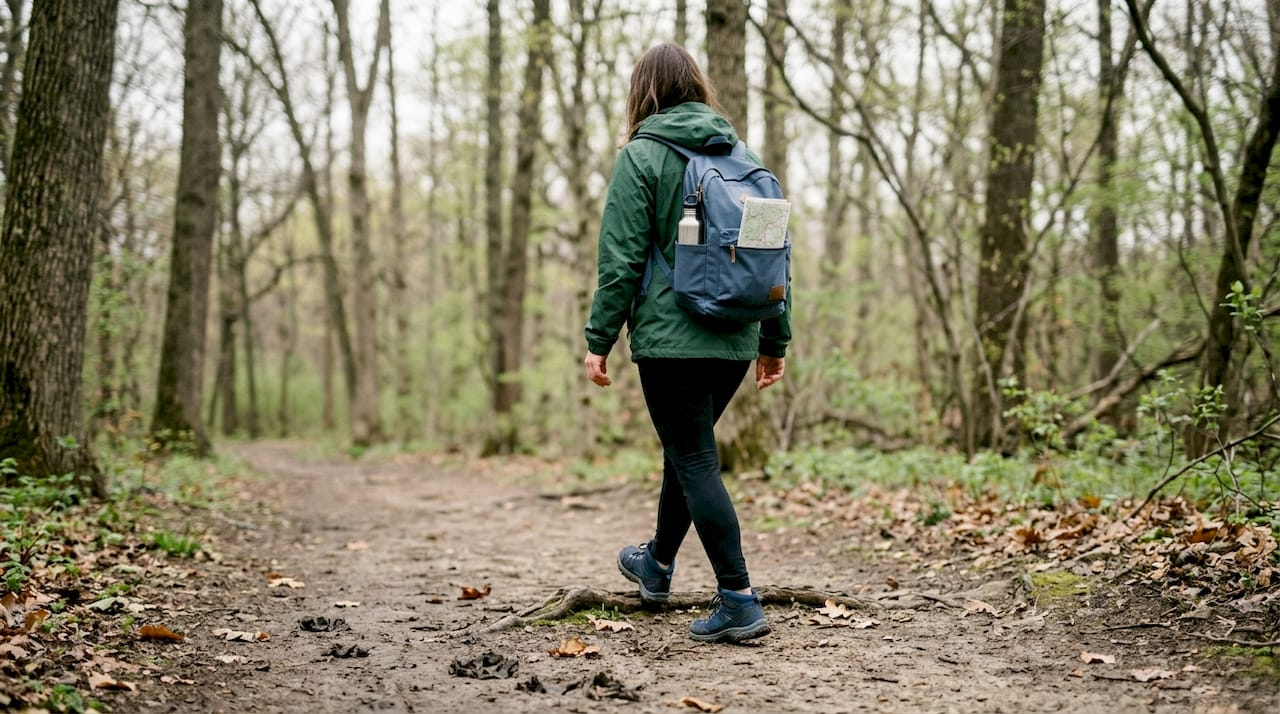
Most new hikers underestimate how quickly a fun trail can turn uncomfortable or even dangerous without the right preparation. Blisters, dehydration, wrong turns, and exhaustion are the top reasons first-timers swear off hiking forever. But here's the truth: none of those things have to happen to you. This guide walks you through everything you need before, during, and after your first hike, from choosing the right trail to packing smart gear and staying safe when things don't go as planned.
Key Takeaways
| Point | Details |
|---|---|
| Start small | Pick gentle trails under 5 miles and focus on building fitness gradually. |
| Pack the 10 Essentials | Always bring navigation, water, and basic gear for any hike. |
| Master safety basics | Tell others your plan and have a backup navigation method. |
| Hydrate smartly | Bring at least 0.5 liters of water per hour and monitor your needs. |
What every beginner needs before hiking
Hiking has one of the lowest barriers to entry of any outdoor sport. No special skills required, no expensive memberships, and almost any fitness level can start somewhere. But low barrier doesn't mean zero preparation. Skipping the basics is exactly how beginners end up injured, exhausted, or lost on their very first outing.
Before you hit any trail, build a base with your body. Short walks and the talk test are the two most practical tools for beginners: if you can hold a conversation while moving, you're working at a sustainable pace. Start with 20 to 30 minute walks on flat ground, then gradually add hills and uneven surfaces over a few weeks.
Hydration is another pre-hike essential most people ignore until it's too late. Drink water the morning of your hike, not just during it. Dehydration sets in faster than you think, especially when you're excited and moving more than usual.
Here's a quick checklist to confirm you're ready to head out:
- You've walked 20 to 30 minutes consistently for at least a week
- You can pass the talk test on a brisk walk
- You've checked the weather for your hike day
- You've told someone where you're going and when you'll be back
- You've downloaded or printed a trail map
- You've eaten a solid meal and pre-hydrated
For a deeper breakdown of how to get physically and mentally ready, our step-by-step hiking prep guide covers every stage in detail.
Pro Tip: Do a 30-minute walk in your hiking shoes before your first trail. This breaks them in and helps you spot any hot spots or rubbing before you're three miles from the trailhead.
Choosing the perfect beginner-friendly trail
With your foundation set, you'll need the right trail. Picking the wrong one is one of the most common beginner mistakes, and it's completely avoidable with a little research.
The golden rule for first-time hikers: trails under 5 miles with less than 500 feet of elevation gain give you a real outdoor experience without pushing your body past its limits. Anything steeper or longer can wait until you've built more trail time.
Here's how to read a trail listing before you go:
| Trail feature | Beginner-friendly range | What to avoid |
|---|---|---|
| Distance | Under 5 miles round trip | Over 8 miles for first hike |
| Elevation gain | Under 500 feet | Over 1,000 feet |
| Trail rating | Easy or moderate | Strenuous or expert |
| Surface type | Packed dirt or gravel | Loose scree or scrambling |
| Signage | Well-marked | Unmarked or unmaintained |
Follow these steps when selecting your first trail:
- Search AllTrails, Hiking Project, or your local parks website for trails near you
- Filter by "easy" rating and distance under 5 miles
- Read recent reviews to check current trail conditions
- Look at photos to understand the terrain and exposure
- Check the weather forecast for the day and the day before (wet trails change everything)
- Download the offline map before you leave home
Season matters too. Spring and fall offer the most comfortable temperatures in most regions. Summer hikes should start early in the morning to avoid heat. Winter trails require extra gear and experience, so save those for later.
Pro Tip: Always download your trail map for offline use before leaving home. Cell service disappears fast once you're in the trees, and a downloaded map works without signal.
Our trip planning guide walks you through building a full plan for any hike, including backup routes and emergency contacts.
Essential gear: What to bring on your first hike
Once your route is chosen, packing the right gear is your next line of defense and comfort. You don't need to spend a fortune, but you do need the right items.
The outdoor community uses a system called the 10 Essentials as the standard for day hike preparedness. These are the non-negotiables every hiker should carry, regardless of trail length.
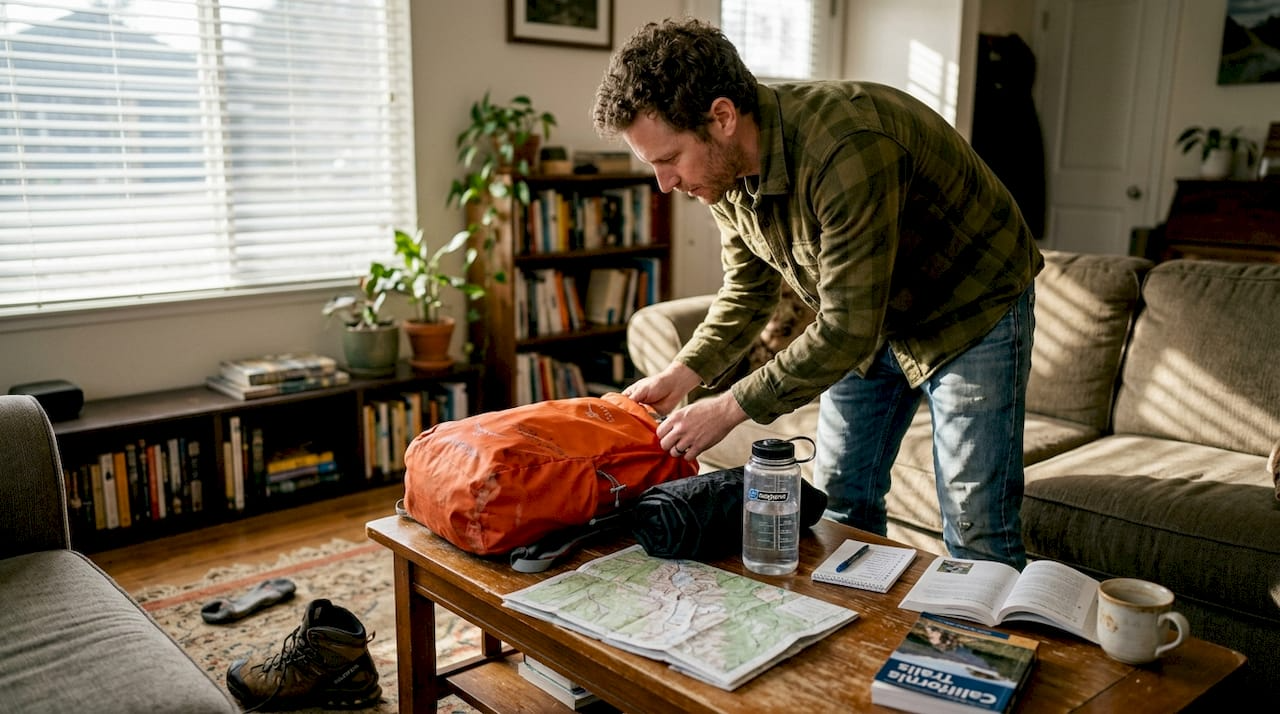
Here's a comparison of what each essential does and what a beginner-friendly option looks like:
| Essential | Purpose | Beginner option |
|---|---|---|
| Navigation | Find your way | Downloaded offline map + compass |
| Sun protection | Prevent burns and heat exhaustion | SPF 30+ sunscreen, sunglasses, hat |
| Insulation | Stay warm if weather changes | Lightweight fleece or packable jacket |
| Illumination | See in low light or emergencies | Compact headlamp with spare batteries |
| First aid | Treat minor injuries | Basic kit with bandages and blister pads |
| Fire | Emergency warmth or signaling | Waterproof matches or lighter |
| Repair tools | Fix gear on the trail | Duct tape, knife or multi-tool |
| Nutrition | Fuel your body | Trail mix, energy bars, real food |
| Hydration | Prevent dehydration | Water bottle plus filter or purification tabs |
| Emergency shelter | Survive an unexpected night out | Emergency bivy or space blanket |
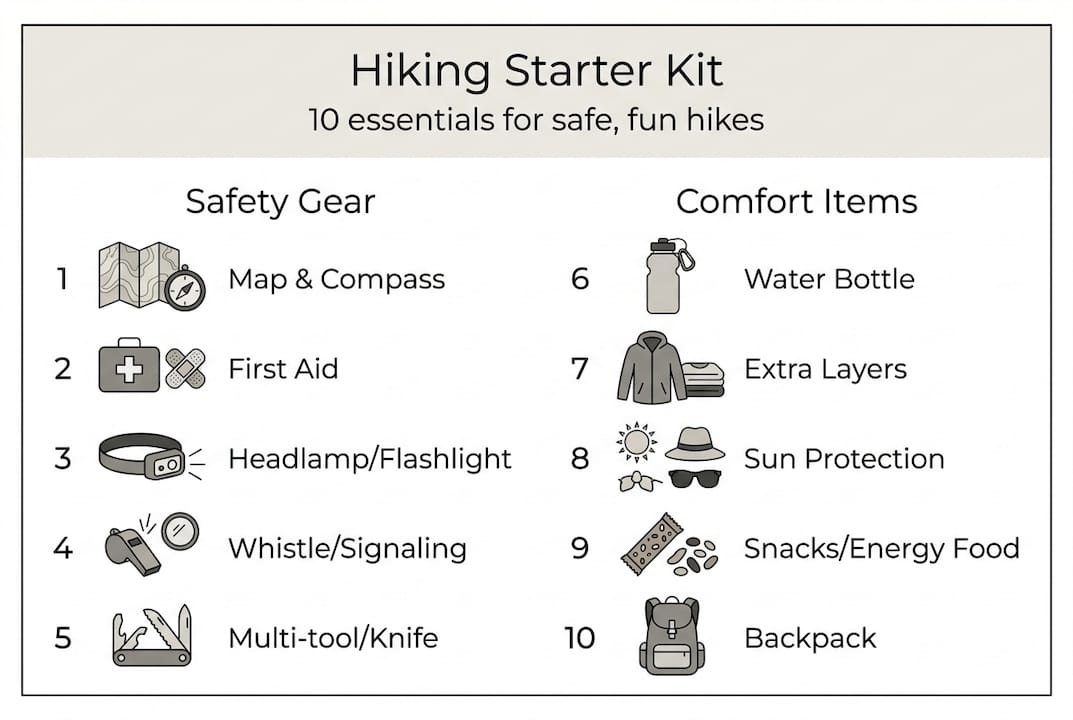
For a curated list of what we recommend for new hikers, check out our 8 must-have hiking items guide.
Now, about your clothing. This is where beginners make a surprisingly costly mistake.
"Cotton kills" is a phrase you'll hear from experienced hikers. Avoid cotton clothing and layer with synthetic fabrics or merino wool instead. Cotton holds moisture against your skin, which leads to chafing, cold, and discomfort fast.
Layering means wearing three types of clothing:
- Base layer: Moisture-wicking fabric that pulls sweat away from your skin (polyester or merino wool)
- Mid layer: Insulating layer for warmth (fleece or down jacket)
- Outer layer: Wind and rain protection (lightweight waterproof shell)
You can learn more about building a smart system in our guide to layering for comfort on the trail.
Pro Tip: Pack your layers even on sunny days. Weather in the mountains and forests changes fast, and being caught cold and wet with no insulation is a miserable experience that's 100% preventable.
Mastering hiking essentials: Safety, hydration, and navigation
You're packed, but how you use these essentials and what you do in tricky situations matters even more than having them.
Start with safety before you leave the house. Follow this pre-hike safety checklist:
- Share your trail name, start time, and expected return time with a trusted contact
- Save the local park ranger or emergency number in your phone
- Check the weather one final time the morning of your hike
- Confirm your map is downloaded and your phone is fully charged
- Pack your first aid kit and know where it is in your bag
Always carry a paper map and compass as a backup, and tell someone your plan and estimated return time. Phones die, apps crash, and GPS signals fail. A paper map never runs out of battery.
For more on staying safe when things go sideways, our outdoor survival basics guide and outdoor first aid steps resource are worth bookmarking before your first hike.
Hydration is where most beginners fall short. The benchmark is simple:
Carry at least 0.5 liters per hour of hiking. For a 3-hour hike, that means at least 1.5 liters minimum, and more in heat or high elevation.
Don't wait until you're thirsty to drink. Thirst is already a sign of mild dehydration. Sip consistently every 15 to 20 minutes, especially on uphill sections.
For navigation, your phone with an offline map is your primary tool. But always carry a physical backup. If you do get turned around:
- Stop moving the moment you're unsure of your location
- Retrace your steps to the last point you recognized
- Stay calm and avoid rushing, which leads to more wrong turns
- Use your whistle (three blasts is the universal distress signal)
- Call for help if you have signal and can't find your way back
Common mistakes and how to verify your hiking readiness
As you get ready to hit the trail, here's how to double-check your readiness and avoid common blunders that trip up first-timers.
Every year, around 4,000 hikers get lost in the U.S., and the majority of those incidents involve navigation failures that were entirely preventable. The good news is that most beginner mistakes follow a predictable pattern.
Here are the most common ones:
- Overpacking or underpacking: Carrying too much weight wears you out fast. Carrying too little leaves you unprepared. Stick to the 10 Essentials and leave the extras at home.
- Wrong footwear: Flip flops, flat sneakers, and brand-new boots all cause problems. Wear broken-in shoes with good grip and ankle support.
- Skipping the trip plan: Not telling anyone where you're going is the single biggest safety risk a beginner can take.
- Relying only on your phone: Phones die, break, and lose signal. Always have a paper map and a backup plan.
- Starting too late: Most trail accidents happen in the afternoon when hikers are tired, weather shifts, or daylight runs out. Start early.
Before you leave, run through this final readiness table:
| Checkpoint | Status |
|---|---|
| Trail selected and map downloaded | Ready |
| Weather checked for hike day | Ready |
| Emergency contact informed | Ready |
| 10 Essentials packed | Ready |
| Shoes broken in and worn | Ready |
| Water and snacks packed | Ready |
| Phone charged and offline map active | Ready |
For hikers who want to eventually move beyond day trails, our backcountry hiking guide is a great next step once you've built your trail confidence.
Upgrade your adventure with reliable hiking gear
Now that you know the foundations, upgrading your gear can make every hike smoother and more enjoyable. The difference between a frustrating first hike and an empowering one often comes down to having equipment you can actually trust.
At Life Camp Adventure, we've put together expert-reviewed guides and gear comparisons built specifically for people who are just getting started. Whether you're looking to compare camping tents for your first overnight trip or want to browse a full best camping gear comparison to find what fits your budget, we've got you covered. Our essential camping gear guide breaks down the seven categories every outdoor beginner should know before spending a dollar. Gear up smart, and every trail gets better from here.
Frequently asked questions
How do I choose the right hiking shoes as a beginner?
Pick comfortable shoes with good tread suited to your terrain. Trail runners work well for easy packed trails, while light hiking boots offer more ankle support on uneven ground.
How much water should I bring for a 2-hour hike?
Carry at least 1 liter for a 2-hour hike, based on the 0.5 liters per hour benchmark. Add more if it's hot, humid, or you're hiking at elevation.
Is it safe to hike alone as a beginner?
Yes, but always tell someone your plan and expected return time. Stick to well-marked, popular trails with good cell coverage until you build more experience.
What should I do if I get lost on a trail?
Stop moving, stay calm, and retrace your steps to a familiar landmark. With 4,000 hikers getting lost annually in the U.S., having a whistle and offline map before you go is the smartest prevention.
